
Table of Contents >> Show >> Hide
- What Exactly Is “Waves Blauvelt Blue”?
- The Design Story: Why the Pattern Looks Like Nature (Because It Is)
- Why “Blauvelt Blue” Works in Real Rooms
- Belgian Linen 101: The Material Behind the Magic
- Where Waves Blauvelt Blue Looks Best
- Styling Recipes: How to Build a Whole Room Around It (Without Overthinking)
- Care and Maintenance: Keeping Linen Happy
- Buying Smart: Swatches, Yardage, and Planning Like a Pro
- Hands-On: Experiences With Waves Blauvelt Blue ( of Real-World Vibes)
- Conclusion
Some fabrics scream, “Look at me!” and some whisper, “Relax, I’ve got this.” Waves Blauvelt Blue is the second one. It’s a blue-on-blue wave texture that behaves like the ocean: calming from far away, interesting up close, and oddly convincing at making a room feel like it just took a deep breath. If you’ve ever wanted that “coastal without the seashell decor” vibeor you simply like your textiles to have a little intelligencethis one deserves a spot on your mood board.
In this guide, we’ll break down what Waves Blauvelt Blue is, why it works, where it looks best (spoiler: almost everywhere), and how to care for it so it ages like your favorite denim jacket: softer, better, and slightly more charmingly rumpled with time.
What Exactly Is “Waves Blauvelt Blue”?
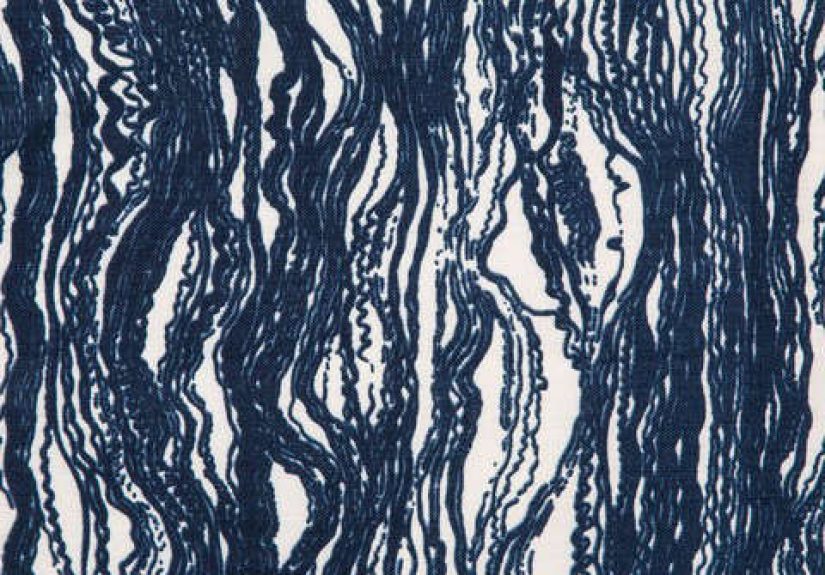
Waves Blauvelt Blue is a designer upholstery-and-drapery fabric from Rebecca Atwood’s textile line, offered as 100% Belgian linen and printed in Rhode Island. Think of it as the textile equivalent of a great soundtrack: it supports the whole room without demanding the spotlight.
The quick specs (a.k.a. the “Will this work for my project?” section)
- Material: 100% Belgian linen
- Colorway: Blauvelt Blue (a rich, coastal-leaning blue)
- Where it’s printed: Rhode Island, USA
- Printed width: 54 inches
- Repeat: 12 inches
Translation: it’s wide enough for drapery and substantial enough for statement pillows, bench cushions, and plenty of upholstery applications. The 12-inch repeat is also friendlybig enough to feel organic, not so huge that it becomes a math problem every time you cut a piece.
The Design Story: Why the Pattern Looks Like Nature (Because It Is)
The “waves” in Waves Blauvelt Blue aren’t cartoon surf. They’re inspired by the rippled pattern left in sand at low tidethose tidy, repeating ridges that look like the beach briefly decided to become a minimalist sculpture garden. The tonal shifts reference how shadows change toward the end of the day, and the design started as an original painting in the designer’s sketchbook.
That low-tide inspiration matters, because it explains why the pattern reads more like texture than “print.” It’s a “no-print print” effect: at a distance, you see depth and softness; up close, you notice the hand-drawn variation that keeps it from looking computer-perfect.
A quick nature intermission (no field guide required)
Tides are driven primarily by the moon’s gravitational pull, creating the regular rise-and-fall rhythm that shapes coastlines. As water moves in and out, sand is rearranged into ripples that can be symmetrical (back-and-forth wave action) or asymmetrical (a more one-direction current). In other words: the beach basically does screen-printing, just with physics and patience.
Why “Blauvelt Blue” Works in Real Rooms
Blue is famously versatile: it can be crisp, moody, airy, dramatic, traditional, modern, and “I swear I have my life together” all at once. This particular shade sits in that sweet spot where it feels grounded and sophisticated without turning your living room into a navy blazer convention.
Color psychology, without the woo-woo
Deep blues are often associated with calm and restorationexactly what you want in bedrooms, reading nooks, and any space where you’d like your nervous system to stop acting like it’s late for a meeting. Layering lighter and darker blues with neutrals (white, beige, soft gray) keeps the palette soothing rather than heavy. If you’re worried blue will feel “cool,” pairing it with warm naturals (oak, rattan, aged brass, camel leather) balances everything nicely.
Belgian Linen 101: The Material Behind the Magic
Linen is made from flax, and it’s beloved in interiors for its breathable, slightly nubby texture and its ability to look both relaxed and intentional at the same time. It’s durable, absorbent, and long-lasting with proper carebasically the friend who shows up early, brings snacks, and still looks good in candid photos.
Why designers keep reaching for linen
- Texture without chaos: Linen adds depth even in solid colors and subtle prints.
- Light behavior: Linen filters daylight beautifully, especially in curtains.
- Long-game softness: Linen tends to soften over time and laundering.
- Year-round comfort: It’s naturally breathable and temperature-friendly, especially in window treatments and bedding-adjacent uses.
Bonus: flax (the plant linen comes from) is often discussed as a comparatively lower-input fiber crop versus many alternativespart of why linen shows up in conversations about more sustainable textile choices. Like all global supply chains, it’s not a magic wand, but quality linen is generally a “buy fewer, use longer” kind of material.
Where Waves Blauvelt Blue Looks Best
This fabric shines in places where you want movement without busynessanywhere a bold print would feel loud, but a plain solid would feel flat. Here are high-impact, low-regret ways to use it.
1) Curtains and Roman shades
Linen curtains are a designer favorite because they read as casual elegance and can flex from sheer-ish to more substantial depending on lining and pleating. Waves Blauvelt Blue takes that a step further: the pattern adds depth when light hits it, so windows feel dressed even when the panels are open.
- For a tailored look: pinch pleats + lining (privacy and structure).
- For a breezy look: simple panels + airy hardware (let the fabric be the star).
- Pro tip: order a swatch and test it morning vs. eveningblues can shift under warm bulbs.
2) Pillows that don’t try too hard
If you’re nervous about committing to yardage, pillows are your gateway project. The pattern reads sophisticated in a 20″ square, and you can mix it with: chunky cream knits, narrow stripes, small-scale geometrics, or even a bold floral (the waves act like a “textured neutral”).
3) Bench cushions, banquettes, and that one chair everyone fights over
Upholstery is where the “no-print print” effect really earns its keep. On a larger surface, the pattern becomes almost architecturallike a shadow play. It’s especially good on:
- entry benches (durable, welcoming, photogenic)
- kitchen banquettes (blue hides life better than white does)
- accent chairs (instant focal point without shouting)
4) Table linens that feel special but still allow pizza night
Linen is classic for tablecloths and runners. In Blauvelt Blue, it can swing formal (with white porcelain and candles) or casual (with wicker, wood, and a salad that came from a bagno judgment). If you want “elevated everyday,” this is it.
Styling Recipes: How to Build a Whole Room Around It (Without Overthinking)
Recipe A: Coastal, not kitschy
- Base: warm whites + sandy neutrals
- Texture: jute or sisal rug, light oak, woven accents
- Blue moments: Waves Blauvelt Blue curtains + a couple solid blue pillows
- Finish: glass, ceramic, and a plant that you can’t kill (snake plant supremacy)
Recipe B: Modern classic blue-and-white
- Base: crisp white walls, black accents in small doses
- Statement: Waves Blauvelt Blue on a sofa pair of pillows + a patterned rug with tiny hints of blue
- Metals: polished nickel or brushed brass
- Art: monochrome photography or abstract line work
Recipe C: Moody and grown-up
- Base: deep navy or charcoal on one wall
- Layering: mix blues with softened greens to add warmth
- Texture: velvet or leather plus Waves Blauvelt Blue as the “breather” fabric
- Lighting: warm bulbs, dimmers, and at least one lamp that makes you feel like a protagonist
Care and Maintenance: Keeping Linen Happy
Linen’s reputation for wrinkles is… deserved. But it’s also kind of the point. Linen wrinkles the way a great linen shirt wrinkles: it looks lived-in, not messy. Still, you can keep it looking fresh with a few practical habits.
Washing (general best practices)
- Water temperature: cold or lukewarm
- Cycle: gentle/delicate
- Detergent: mild (skip harsh bleach and avoid fabric softeners)
- Avoid friction: don’t overload the machine; keep it away from heavy items and snaggy hardware
Drying and wrinkle strategy
- Best move: line dry or hang dry when possible
- Machine drying: low to medium heat; avoid overdrying
- Wrinkle hack: remove while slightly damp and smooth/steam for a relaxed finish
If you’re making upholstery or lined drapery, follow your workroom’s recommendations and consider professional cleaning for finished pieces. For removable covers, test cleaning methods on an inconspicuous area firstbecause nobody wants to discover “surprise fade” on the front of a cushion.
Buying Smart: Swatches, Yardage, and Planning Like a Pro
Designer fabric is an investment, and the easiest way to protect that investment is to plan before you click “Add to Cart” at 1:00 a.m. (Not that anyone here has ever done that.)
Before you order yardage
- Get a swatch: check color under daylight and evening light.
- Confirm use-case: curtains, upholstery, pillows, or table linens may need different linings/backings.
- Account for repeat: patterns require extra yardage for matching and layout (even subtle ones).
- Talk to your maker: your upholsterer or seamstress will tell you how much is realistic for your exact piece.
The beauty of Waves Blauvelt Blue is that it gives you that “designer layered look” with fewer moving parts. You can keep the rest of the room simpleneutrals, natural materials, a few well-chosen accentsand let the fabric do the visual heavy lifting.
Hands-On: Experiences With Waves Blauvelt Blue ( of Real-World Vibes)
Here’s what tends to happen when someone brings Waves Blauvelt Blue into a space: the room quietly starts acting more expensive. Not in a “marble statue in the foyer” waymore like a “this place has good coffee and a functional entryway” way. It’s the kind of textile that changes the mood without forcing you to redecorate your entire personality.
Experience #1: The curtain glow-up. A common first move is curtains, because windows are basically the face of a room and most of us have been walking around with the interior-design equivalent of chapped lips. When Waves Blauvelt Blue becomes a set of panels, the pattern reads like depth rather than decoration. In the morning, it can look crisp and cool; at night, it leans richer and cozier. People often notice the change in a funny order: first the light looks better, then the furniture looks better, and only then do they realize the fabric is doing the work.
Experience #2: The “one chair” effect. Upholster a single accent chair in this fabric and it becomes the seat everyone wants. Not because it’s louder than the sofa, but because it looks intentionallike you hired a designer who said words like “tonal variation” and “visual rhythm,” then left before you could ask what that costs. The wave texture also plays nicely with leather, boucle, and chunky knits, so you can mix materials without it feeling like a thrift-store gamble.
Experience #3: The banquette that survives real life. Kitchens and breakfast nooks are where good taste goes to be tested by syrup, sauce, and the laws of physics. A blue linen can be surprisingly forgiving day-to-dayespecially compared with pale solids that broadcast every crumb like it’s breaking news. The subtle pattern helps disguise minor wrinkles and “I sat here for two hours scrolling” creases. Add a wipeable liner under the cushion cover or choose a professional treatment recommended by your upholsterer, and you get a practical seat that still looks elevated.
Experience #4: The pillow experiment that turns into a theme. Plenty of people start with two pillows “just to see,” then realize they’ve accidentally created a color story. The fabric makes it easy to build a palette: add a creamy pillow for contrast, a stripe for structure, and one small accent color (rust, sage, or warm tan). Suddenly the room has layers, like you planned it on purpose instead of “buying things you liked individually.”
The overall experience is this: Waves Blauvelt Blue doesn’t dominate. It supports. It brings movement to flat spaces, calm to busy rooms, and a coastal sensibility that feels grown-upless souvenir shop, more slow Sunday morning. If you want a textile that looks considered even when you’re not feeling particularly considered, it’s a strong choice.
Conclusion
Waves Blauvelt Blue is proof that “subtle” can still be dramaticjust in a smarter way. With Belgian linen texture, a low-tide wave inspiration, and a blue that layers beautifully with neutrals, it’s a fabric that can anchor a room or quietly refine it. Whether you use it for curtains, pillows, or upholstery, the payoff is the same: a space that feels calmer, deeper, and more intentionalwithout trying too hard.






 Close
Close