
Table of Contents >> Show >> Hide
- What Is We Were Liars About?
- We Were Liars Show Summary
- We Were Liars Ending Explained
- Main Cast of We Were Liars
- How the Show Balances Mystery, Romance, and Family Drama
- Is the Series Faithful to the Book?
- Will There Be More?
- Final Thoughts
- Viewer Experience: What Watching We Were Liars Feels Like
- SEO Tags
If your ideal summer getaway includes blue water, family money, designer sweaters, emotional damage, and enough secrets to sink a yacht, We Were Liars understood the assignment. Prime Video’s adaptation of E. Lockhart’s bestselling novel takes a glossy island mystery and turns it into a moody, twisty, tear-friendly binge. It looks like a dream vacation. It feels like therapy with better lighting.
At first glance, the series is about rich people having rich-people problems on a private island. Then it becomes clear that the real subject is memory, guilt, class, race, grief, and the dangerous stories families tell themselves in order to stay shiny on the outside. In other words, this is not just a pretty beach show. It is a pretty beach show with a knife hidden in the picnic basket.
Below is a full spoiler-friendly guide to the We Were Liars show summary, the ending explained in plain English, the main cast, how the adaptation compares in spirit to the book, and what could be next. If you finished the finale and immediately sat in silence staring at the wall, welcome. You are among friends.
What Is We Were Liars About?
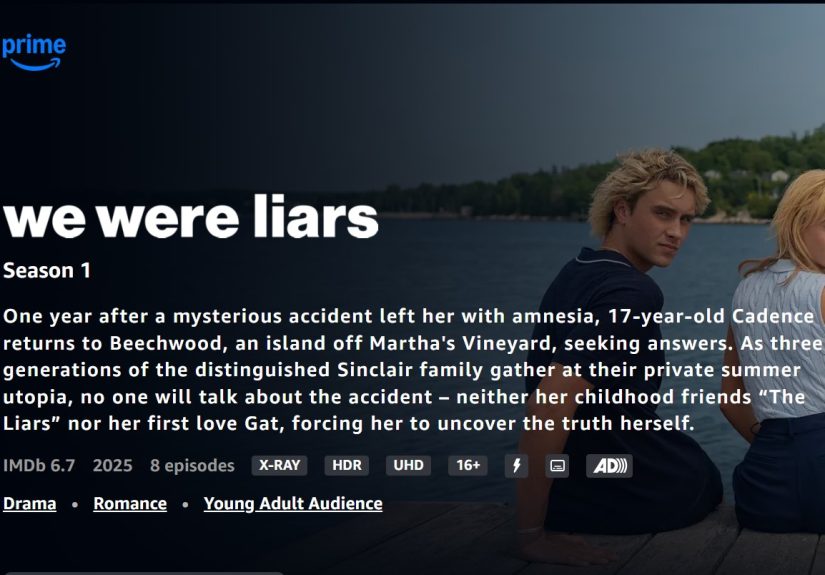
We Were Liars centers on Cadence Sinclair Eastman, known as Cady, the eldest grandchild in the wealthy Sinclair family. Every summer, the Sinclairs gather on Beechwood, their private island near Martha’s Vineyard. The family looks perfect from the outside: old money, polished smiles, ocean views, and the kind of inherited confidence that could intimidate a lighthouse.
But perfection is the Sinclair family’s favorite lie. By the time the show begins, Cady is returning to Beechwood after a mysterious accident from the previous summer left her with headaches, missing memories, and a deep sense that everyone around her knows more than they are saying. That includes her tight-knit trio of cousins and first love, collectively known as “the Liars”: Johnny, Mirren, and Gat.
The show unfolds like a puzzle box. Cady tries to reconstruct what happened during “Summer Sixteen,” while the people closest to her dodge questions, change subjects, or offer polished half-truths. The more she remembers, the more she realizes that the Sinclairs are built on control, denial, and emotional suppression. Everyone is performing. Everyone is protecting something. Everyone is, well, lying.
We Were Liars Show Summary
Cady Returns to Beechwood Looking for Answers
The first major engine of the series is Cady’s fractured memory. She knows she suffered a traumatic event the previous summer, but she cannot fully remember what happened or why everyone treats her like a fragile piece of family history. Her migraines and flashes of memory work like warning sirens: something devastating happened, and her mind has locked the door.
As Cady reconnects with the Liars, the island itself starts to feel haunted by omission. Conversations stop when she walks into a room. Family members keep offering careful, curated versions of events. And because the Sinclairs value appearances above all else, honest emotion is treated almost like bad manners.
The Sinclair Family Is the Real Mystery Machine
One of the smartest things the series does is make the family dynamic just as gripping as the central twist. Harris Sinclair, the family patriarch, holds power through money, approval, and the promise of inheritance. His daughters, Penny, Carrie, and Bess, orbit that power in different ways, each carrying resentment, insecurity, and old wounds. The younger generation inherits not just wealth, but also the pressure to protect the family image at all costs.
That pressure shapes everything. Johnny struggles under expectations. Mirren tries to balance performance with personal truth. Gat, as an outsider to the Sinclair bloodline, sees the family more clearly than most and often pushes back on its blind spots. Cady, caught between love and privilege, begins to realize that wanting justice and wanting comfort are not always compatible goals.
Romance, Tension, and a Growing Sense of Doom
The relationship between Cady and Gat gives the show much of its emotional heartbeat. Their connection is sincere, intense, and frequently strained by the inequalities and contradictions surrounding them. Gat challenges the world the Sinclairs have normalized. Cady loves him, but she is also still learning how deeply that world has shaped her.
As the season progresses, the mystery stops feeling like a whodunit and starts feeling more like a how-could-anyone-survive-this emotionally? That shift matters. The show is not only interested in revealing facts. It is interested in what happens when memory returns and forces a person to confront the ugliest version of themselves, their family, and the choices made in desperation.
We Were Liars Ending Explained
Now for the spoiler section, where the show takes the velvet gloves off.
In the finale, Cady finally remembers what happened during the fire at Clairmont, the Sinclair family’s main house. She and the other Liars decided to burn the house down as a radical act, partly to destroy the toxic inheritance system that was poisoning the family. It was a reckless, emotionally charged plan born from anger, hurt, and the belief that torching the symbol of Sinclair power might somehow free everyone from it.
That plan goes catastrophically wrong.
The devastating reveal is that Johnny, Mirren, and Gat died in the fire. For much of the season, Cady has been interacting with them as if they were alive and present on the island. In reality, she has been seeing them through a grief-soaked, trauma-altered lens while her mind protected her from the full truth. The people she has leaned on all summer are not simply distant or changed. They are gone.
That revelation reframes the entire series. It explains why nobody would talk plainly, why the atmosphere felt so strange, and why the island carried such a heavy emotional fog. Cady was not just solving a mystery. She was slowly waking up inside her own grief.
What Really Happened That Night?
The show makes clear that the fire was not some random accident descending from the heavens. It came from a decision. The Liars were trying to reject the corruption, manipulation, and inheritance games that Clairmont represented. But idealism without foresight can become disaster in a hurry. Their act of rebellion became a tragedy.
The series also sharpens Cady’s personal guilt. She is not only traumatized by the loss. She feels complicit in it. That emotional burden is crucial, because the ending is not just “surprise, they were dead.” It is “surprise, now live with the unbearable knowledge of what your choices cost.”
That is why the finale lands so hard. The twist is heartbreaking, but the aftermath is even more brutal. Cady does not get the comfort of simple innocence. She gets memory, grief, accountability, and the realization that love cannot undo consequences.
Why the Ending Works
The ending works because it is not there merely to shock viewers. It deepens the show’s central themes. The Sinclairs built their world on denial. Cady’s memory loss becomes the most intimate version of that denial imaginable. The family lies outwardly; Cady’s mind lies inwardly. The truth, once uncovered, destroys the fantasy.
The finale also highlights how grief can preserve people in strangely vivid ways. Johnny, Mirren, and Gat do not feel like twist devices. They still feel like the emotional center of the story even after the reveal. That is a big part of why viewers often finish the series feeling wrecked instead of merely tricked.
What the Final Moments Mean
The show closes on a note that suggests the emotional and possibly supernatural thread is not entirely finished. Rather than sealing the story shut, the adaptation leaves a little air in the room for future exploration. The result is a finale that respects the novel’s core tragedy while giving the series a reason to continue beyond one summer of pain.
In practical terms, the ending says this: the truth has finally surfaced, but healing has not. Cady may now understand what happened, yet understanding and recovery are not the same thing. The lies are over. The consequences are not.
Main Cast of We Were Liars
The Liars
Emily Alyn Lind as Cadence Sinclair Eastman: The emotional anchor of the series. Lind plays Cady with a mix of intelligence, vulnerability, entitlement, and genuine heartbreak, which is exactly what the role requires.
Shubham Maheshwari as Gat Patil: Gat is thoughtful, idealistic, observant, and deeply important to Cady’s emotional journey. He is also one of the clearest voices pushing against Sinclair mythology.
Esther McGregor as Mirren Sinclair Sheffield: Mirren brings style, sensitivity, and hidden depth. She could have been just “the artistic cousin,” but the series gives her a more resonant emotional presence.
Joseph Zada as Johnny Sinclair Dennis: Johnny provides charisma, humor, pain, and volatility. He often acts like the life of the party, which makes his vulnerability hit harder.
The Adults
David Morse as Harris Sinclair: A commanding presence as the family patriarch whose power shapes nearly every emotional conflict on the island.
Caitlin FitzGerald as Penny Sinclair: Cady’s mother, polished and strategic, with all the damage of someone raised to worship appearances.
Mamie Gummer as Carrie Sinclair: Carrie’s story carries some of the show’s most painful family history, and Gummer gives her a lived-in fragility.
Candice King as Bess Sinclair: Bess embodies a very specific kind of elegant unraveling: controlled on the surface, messy underneath.
Rahul Kohli as Ed Patil: Ed offers warmth and a perspective outside the Sinclair dynasty, which makes his presence especially important.
Wendy Crewson as Tipper Sinclair: Tipper contributes to the family mythology in ways both comforting and damaging.
How the Show Balances Mystery, Romance, and Family Drama
One reason We Were Liars stands out in the crowded field of YA adaptations is that it does not rely on just one genre hook. It is part mystery, part romance, part psychological drama, and part critique of inherited privilege. Some scenes feel like a dreamy summer love story. Others feel like a family board meeting sponsored by repression.
The visual mood helps too. Beechwood looks gorgeous, but the beauty is not comforting. It is the kind of beauty that makes you suspicious. Every perfect dinner table setting feels one argument away from collapse. Every sparkling shoreline seems to hide a scream. The show knows that wealth can create luxury, but it can also create insulation from accountability.
That is why the title matters so much. The “liars” are not only the teens. The whole family participates in selective storytelling. The younger characters simply inherit the habit and then pay for it in horrifying ways.
Is the Series Faithful to the Book?
In spirit, yes. The adaptation keeps the novel’s major emotional architecture: the mystery around Cady’s accident, the slowly reconstructed memories, the class and family tensions, and the tragic reveal at the end. Most importantly, it preserves the core feeling readers remember after finishing the book: that sharp, hollow ache when the truth finally clicks into place.
At the same time, the show expands the world in ways television almost has to. Supporting characters get more room. The adult family drama becomes richer. Some beats are adjusted to heighten Cady’s guilt and deepen the long aftershock of the reveal. These choices help the adaptation feel like a real series instead of a page-by-page reenactment in expensive knitwear.
Will There Be More?
Yes. We Were Liars was renewed for a second season, which means the story is not stranded on Beechwood forever with only one tragic summer to examine. That is good news for fans who wanted the finale’s lingering threads explored further, especially since the Sinclair family has enough unresolved dysfunction to fuel several more storms.
The biggest question is how the next chapter will build on what season 1 established. There is rich material in Lockhart’s broader story world, and the ending of the first season clearly leaves room for more emotional fallout, more family history, and more consequences. Translation: nobody should put away the dramatic boat shoes just yet.
Final Thoughts
We Were Liars is the kind of show that lures viewers in with beauty and mystery, then hits them with grief, guilt, and the realization that curated family mythology can be its own kind of violence. It succeeds because the twist is not the only thing worth discussing. The performances, the mood, the critique of old-money performance, and the emotional wreckage all give the series substance.
If you came for the island aesthetics, you will get them. If you came for the romance, you will get that too. But if you stay, it will probably be because the show understands a painful truth: sometimes the hardest mysteries to solve are the ones our families trained us not to name.
And yes, the ending hurts. That is the point. The series is not interested in giving audiences a tidy little bow. It hands you a shattered ribbon, a guilty conscience, and a scenic ocean backdrop, then politely asks you to cry into your iced coffee.
Viewer Experience: What Watching We Were Liars Feels Like
Watching We Were Liars is a strangely specific experience, and that is one reason it sticks. The first few episodes feel almost deceptive in the best way. You settle in expecting a sleek summer mystery with attractive people, complicated flirting, and rich-family tension. The show absolutely gives you those things, but it also starts slipping emotional splinters under the skin almost immediately. A look lasts a beat too long. A conversation ends too cleanly. A room full of relatives feels more dangerous than warm. Even when the series is being quiet, it is still making noise in your head.
For many viewers, the strongest part of the experience is how the island setting changes meaning over time. At first, Beechwood seems dreamy, even enviable. It is all sailboats, sunlight, white dresses, and expensive family traditions. Then episode by episode, that same beauty starts feeling suffocating. The island becomes a pressure cooker where privilege and silence trap everyone in roles they did not exactly choose but still keep performing. That shift is satisfying because it mirrors Cady’s own journey. The place does not change. Your understanding of it does.
The emotional rhythm of the show is another big part of why people react so strongly to it. We Were Liars does not sprint the whole time. It drifts, circles, hints, and lets dread accumulate. That can be frustrating if someone wants immediate answers, but it is rewarding if they enjoy stories that trust atmosphere. By the time the truth begins snapping into place, the audience has already been trained to sit with uncertainty. So when the finale finally opens the trapdoor, the impact is not just intellectual. It is physical. Viewers often describe that kind of ending as a punch, and here that feels accurate.
The show is also an interesting communal watch. It is the sort of series that inspires instant post-episode discussions: “Did you notice that line?” “Why was everyone acting like that?” “Wait, was that memory real?” It practically invites theories. Then, after the reveal, those conversations usually change tone. Instead of guessing the mystery, people start dissecting guilt, grief, responsibility, and whether the family system made tragedy inevitable. A series that can pivot a group chat from theories to emotional analysis has done something right.
There is also the adaptation factor. People who loved the book often watch with a mixture of excitement and dread, wondering whether the screen version will preserve the novel’s emotional blow. Meanwhile, newcomers get to experience the story with no built-in warning signs. That creates two very different but equally intense viewing paths. One group is bracing for heartbreak; the other is walking directly into it wearing sandals and optimism.
In the end, the experience of We Were Liars is less about solving a mystery than living inside a feeling. It is the feeling that something is wrong beneath all the beauty. The feeling that memory can be both protection and prison. The feeling that love does not cancel damage. And maybe most of all, it is the feeling of finishing a finale and realizing the title was not being clever. It was being honest.







 Close
Close