
Table of Contents >> Show >> Hide
- What Are MCTs, Exactly?
- Foods That Naturally Contain MCTs
- Which Foods Have the Most MCTs?
- MCT Oil vs. Coconut Oil: Why People Mix Them Up
- Potential Benefits of MCT-Rich Foods
- Are There Any Downsides?
- How to Add MCT-Containing Foods to Your Diet
- Best MCT Foods at a Glance
- Final Thoughts
- Real-Life Experiences With MCT-Rich Foods
If nutrition trends had a movie trailer voice, MCTs would be introduced as “the fat that moves fast.” And, to be fair, that is a decent elevator pitch. Medium-chain triglycerides, or MCTs, are a type of fat your body handles differently from the longer-chain fats found in many everyday foods. They are absorbed more quickly, travel to the liver faster, and have made a name for themselves in conversations about energy, keto diets, sports nutrition, and digestive support.
But here’s where the plot thickens: not every food marketed as an “MCT source” is equally rich in MCTs, and not every claim attached to MCTs deserves a standing ovation. Some foods naturally contain meaningful amounts of these fats, while others offer only small traces. Coconut oil gets most of the attention, dairy gets less credit than it deserves, and MCT oil often gets mistaken for being the same thing as coconut oil. Spoiler alert: it is not.
If you have been wondering what foods have medium-chain triglycerides, which options contain the most, and whether adding them to your diet actually makes sense, this guide breaks it all down in plain English. No nutrition drama, no magical thinking, and no pretending that one spoonful of trendy oil turns breakfast into a medical breakthrough.
What Are MCTs, Exactly?
MCTs are fats made from medium-length fatty acids. In nutrition discussions, these usually include caproic acid (C6), caprylic acid (C8), capric acid (C10), and sometimes lauric acid (C12). The reason people talk about them so much is simple: your body tends to digest and absorb them faster than long-chain triglycerides, or LCTs.
That faster handling is why MCTs often come up in conversations about quick energy, ketone production, ketogenic diets, and certain medical nutrition plans. But this is also where confusion begins. Coconut oil contains fatty acids often grouped with MCTs, yet a large share of its fat is lauric acid, which behaves more like a long-chain fat than the shorter MCTs used in many studies. In other words, coconut oil and purified MCT oil are cousins, not twins.
So when people hear that “MCTs may help with energy,” then pour half a mug of coconut oil into coffee like they are fueling a lawn mower, they may be expecting results from a different product than the one actually studied.
Foods That Naturally Contain MCTs
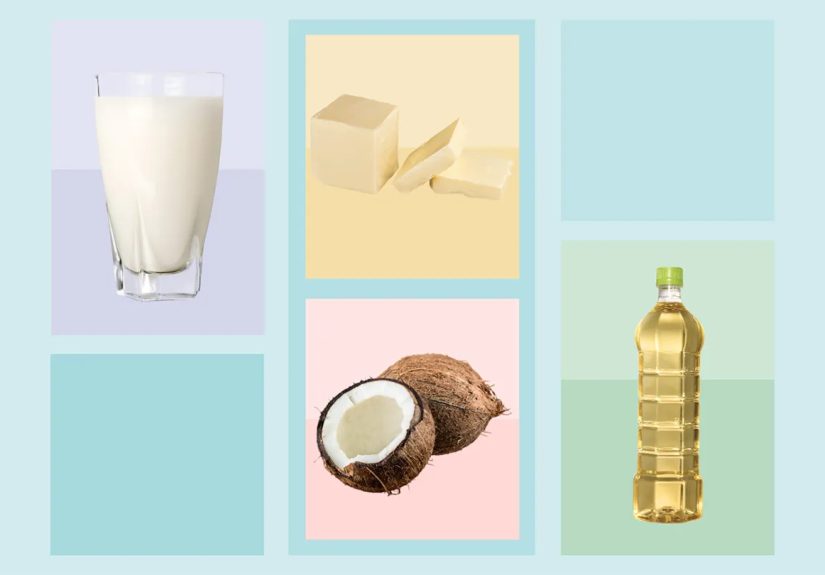
The natural food supply of MCTs is not huge. This is not like fiber, where you can point to beans, berries, oats, and vegetables and say, “The gang’s all here.” MCTs are concentrated in only a handful of foods, and some of the richest sources are also high in saturated fat.
1. Coconut Oil
Coconut oil is the best-known natural source of MCT-related fats. It is popular in keto recipes, smoothies, coffee add-ins, and baked goods because it is shelf-stable, easy to use, and carries a mild tropical flavor. It is also one of the reasons MCTs became a household buzzword in the first place.
That said, coconut oil is not pure MCT oil. It contains a mix of saturated fats, and much of its “MCT reputation” comes from lauric acid. That matters because purified MCT oil is usually richer in caprylic and capric acid, the shorter fats that are more rapidly absorbed and more commonly used in research. So yes, coconut oil contains MCTs, but no, it should not automatically be treated like concentrated MCT oil.
From a practical standpoint, coconut oil is a meaningful food source of MCTs, but it is also high in saturated fat. That means it can fit into some eating patterns in modest amounts, but it is not the nutritional equivalent of a superhero cape.
2. Coconut Meat and Coconut Cream
Whole coconut products, such as coconut meat and coconut cream, also provide MCT-related fats. These foods can appear in curries, desserts, smoothies, chia puddings, and grain-free recipes. Compared with coconut oil, whole coconut products may bring a little more texture and culinary versatility to the table, and some forms also add fiber.
Still, the same caution applies: coconut products are not automatically “heart healthy” just because they are plant-based. They remain a significant source of saturated fat, so portion size matters.
3. Palm Kernel Oil
Palm kernel oil is another rich source of MCTs. It is different from palm oil, which comes from the fruit’s flesh; palm kernel oil comes from the seed, and its fatty acid profile is closer to coconut oil. It may be found in processed foods, specialty products, and some supplements.
In everyday home cooking, most people are far more likely to use coconut oil than palm kernel oil. But nutritionally speaking, palm kernel oil belongs on the short list of foods highest in MCTs.
4. Full-Fat Milk
Cow’s milk contains small natural amounts of MCTs. You are not getting a giant dose here, but it still counts. Whole milk provides a mix of fats, including some medium-chain fatty acids, which is why dairy repeatedly shows up in discussions of natural MCT sources.
If your main goal is simply to include foods that naturally contain MCTs, full-fat dairy can contribute. If your goal is to dramatically increase MCT intake, however, milk is more of a supporting actor than the lead.
5. Goat’s Milk
Goat’s milk is often mentioned alongside cow’s milk because it also contains naturally occurring MCTs. Some people prefer it for flavor, digestion, or cooking, and goat milk products can be a reasonable way to include modest amounts of MCTs in a regular diet.
It is not a miracle food, but it is one more natural option on the MCT map.
6. Yogurt
Full-fat yogurt, especially plain varieties, contains some MCTs because it is made from milk fat. Yogurt also brings protein, calcium, and, in many cases, probiotics to the party. That makes it one of the more practical foods on this list because it offers more than just fat.
A bowl of plain whole-milk yogurt with fruit and nuts will not flood your system with MCTs, but it can be a realistic, balanced way to get a small natural amount without taking a supplement.
7. Cheese
Cheese contains small amounts of MCTs, especially in full-fat forms. Like yogurt, cheese is more of a modest contributor than a concentrated source. Still, it belongs in the conversation because dairy fat naturally includes some medium-chain fatty acids.
The obvious catch is that cheese is also a source of saturated fat and sodium, depending on the type. Translation: enjoy it, but maybe do not declare a cheese board your new performance nutrition strategy.
8. Butter
Butter is another dairy food that naturally contains some MCTs. It is frequently listed among natural MCT sources, although the amount is much smaller than what you would get from purified MCT oil or even coconut oil. Butter can certainly count, but it should be viewed as a minor source rather than the star player.
If someone tells you they are getting their MCTs mainly from butter, they are technically not wrong. They are just speaking with the confidence of someone who uses one parsley leaf to describe a salad.
Which Foods Have the Most MCTs?
If you rank foods by how much MCT content they are known for, the list gets much shorter and much clearer.
Highest natural sources
Coconut oil and palm kernel oil are the main natural foods richest in MCTs. Coconut meat and coconut cream also contribute meaningful amounts, though usually less than the oils themselves.
Moderate to small natural sources
Full-fat dairy foods such as milk, yogurt, cheese, butter, and goat milk provide smaller amounts. These are not “MCT power foods,” but they do contain naturally occurring medium-chain fats.
Most concentrated non-food product
MCT oil is the most concentrated supplemental form. It is typically made by extracting and concentrating medium-chain fats from coconut oil or palm kernel oil. It is not a whole food, but it is the product most people mean when they talk about “taking MCTs.”
MCT Oil vs. Coconut Oil: Why People Mix Them Up
This confusion deserves its own section because it trips up a lot of readers. Coconut oil contains MCT-related fats, but it is still a broad mix of saturated fatty acids. MCT oil is a refined product designed to provide a higher concentration of the shorter medium-chain fats, especially C8 and C10.
That means MCT oil is generally more potent for the specific metabolic effects people are chasing, such as ketone production. Coconut oil, meanwhile, is better understood as a cooking fat that happens to contain MCT-related components. It is not interchangeable with MCT oil in every health claim, and it should not be treated as if every study on MCT oil automatically proves something about coconut oil.
That is one of the biggest misconceptions online. The internet loves to grab one study, add a palm tree emoji, and call it science.
Potential Benefits of MCT-Rich Foods
MCTs are popular for a few main reasons. Some research suggests they may support quicker energy use, increased ketone production, and better tolerance in certain clinical nutrition settings. They are also used in some ketogenic diets and medical meal plans.
However, the evidence for everyday benefits like effortless weight loss, huge boosts in metabolism, or dramatic brain optimization is more limited than marketing headlines suggest. Some studies are promising, some are mixed, and some involve purified MCT oil rather than natural foods like coconut oil or yogurt.
That does not make MCTs useless. It just means expectations should be realistic. Adding a modest amount of MCT-rich food to a balanced diet is one thing. Expecting it to replace sleep, exercise, and overall eating quality is another thing entirely, and sadly there is still no oil powerful enough to cancel out three drive-thru meals and four hours of sleep.
Are There Any Downsides?
Yes. The first issue is saturated fat. Many of the richest natural sources of MCTs, especially coconut oil and palm kernel oil, are also high in saturated fat. For people watching cholesterol or heart disease risk, this matters. More is not automatically better.
The second issue is digestive tolerance. Larger amounts of MCT oil can cause stomach upset, cramping, bloating, nausea, or diarrhea, especially when taken quickly or on an empty stomach. Even people who love MCT coffee often learn this lesson the hard way and, unfortunately, at a speed that leaves little room for reflection.
The third issue is overhype. MCTs can be useful in specific contexts, but they are not required for good health. Many people do perfectly well without using MCT oil at all.
How to Add MCT-Containing Foods to Your Diet
If you want to include more natural MCT sources without turning your kitchen into a supplement showroom, start with real food. Here are a few practical ideas:
Use coconut strategically
Add a small amount of coconut milk or coconut cream to soups, curries, or smoothies. Use coconut oil occasionally in baking or for flavor in recipes where it makes sense.
Choose full-fat dairy thoughtfully
Whole-milk yogurt, plain kefir, goat milk yogurt, and moderate portions of cheese can add small natural amounts of MCTs while also providing protein and calcium.
Do not treat MCT oil like a beverage
If you use MCT oil, start with a small amount and take it with food. More is not better if your stomach starts filing complaints.
Keep the big picture in mind
Your overall dietary pattern matters more than one ingredient. A diet rich in vegetables, fruit, whole grains, legumes, nuts, seeds, lean protein, and mostly unsaturated fats still does the heavy lifting for long-term health.
Best MCT Foods at a Glance
For readers who like the answer fast and neat, here is the short version:
- Richest natural MCT foods: coconut oil, coconut meat, coconut cream, palm kernel oil
- Smaller natural sources: whole milk, goat milk, yogurt, cheese, butter
- Most concentrated supplemental source: MCT oil
- Most important caution: many natural MCT-rich foods are also high in saturated fat
Final Thoughts
So, what foods have medium-chain triglycerides? The most meaningful natural sources are coconut oil, coconut products, and palm kernel oil, while dairy foods such as milk, yogurt, cheese, butter, and goat milk provide smaller amounts. If you are after the highest concentration, MCT oil is the more targeted option, but that is a supplement, not a whole food.
The smart takeaway is not to fear MCTs and not to worship them either. They are one interesting type of fat with some useful applications, some promising research, and a lot of internet hype wrapped around them like a gift basket no one asked for. Used thoughtfully, MCT-containing foods can fit into a balanced diet. Used recklessly, they can turn breakfast into an upset stomach and a confusing cholesterol conversation.
If your goal is better nutrition, the best strategy is still refreshingly boring: eat mostly real food, understand what the ingredient actually is, and do not let social media convince you that one trendy fat has personally solved human metabolism.
Real-Life Experiences With MCT-Rich Foods
In everyday life, people usually do not talk about MCTs in chemistry terms. They talk about what happened after they started adding coconut yogurt to breakfast, swapped a splash of cream for full-fat Greek yogurt at snack time, or tried MCT oil in coffee because the internet promised “clean energy” and “laser focus.” Real-world experiences tend to be more practical, more mixed, and honestly more useful than flashy claims.
One common experience is that MCT-rich foods feel easiest to work into routines when they come in familiar forms. A person may not want to measure oil into a smoothie every morning, but they will happily eat whole-milk yogurt with berries, use coconut milk in a weeknight curry, or enjoy a little goat cheese on roasted vegetables. In those cases, MCT intake rises almost by accident. The food feels normal, tasty, and sustainable, which is often the secret sauce behind healthy habits that actually last.
Another frequent experience is the difference between whole foods and supplements. Many people report that eating foods that naturally contain MCTs feels gentler and more satisfying than jumping straight into MCT oil. A bowl of yogurt or a meal made with coconut milk tends to come with protein, texture, and fullness. A tablespoon of MCT oil, on the other hand, can feel like a science experiment wearing a breakfast disguise. Some people love it. Others learn very quickly that their digestive system was not consulted.
Taste also shapes the experience. Coconut products bring a noticeable flavor that works beautifully in some recipes and absolutely not in others. Coconut curry? Wonderful. Coconut-flavored scrambled eggs? That is a personal journey. Dairy-based MCT sources, like cheese and yogurt, often fit more smoothly into everyday American eating patterns because they do not announce themselves with tropical enthusiasm.
People pursuing lower-carb or ketogenic eating patterns often describe MCT-rich foods as convenient tools. They may say coconut oil helps add richness to meals, or that MCT oil makes it easier to stay in ketosis. But even in those circles, the people who stick with it long term are usually the ones who learn moderation. They figure out their tolerance, use small amounts, and stop expecting one fat source to perform emotional, metabolic, and spiritual miracles before lunch.
There is also a learning curve around labels. Many shoppers assume that anything with “coconut” on the package is automatically packed with useful MCTs. Then they realize sweetened coconut snacks can still be dessert, coconut creamers can still be highly processed, and “made with MCT oil” can mean anything from a meaningful amount to a marketing whisper. Over time, experience teaches people to look past the buzzwords and pay attention to the full nutrition picture.
Perhaps the most relatable experience is this: once the hype fades, MCT-rich foods work best when they are treated like foods, not magic. A person might enjoy whole-milk yogurt because it is convenient and filling. They may use a small amount of coconut milk because it makes soup taste fantastic. They may decide MCT oil is useful before workouts, or they may retire it after one too many stomach complaints. Either way, the healthiest experience usually comes from experimentation, moderation, and honesty about what actually feels good in real life.







 Close
Close