
Table of Contents >> Show >> Hide
- Mars Would Feel Familiar for About Ten Minutes
- The Weather Would Be Both Mild and Terrible
- You Would Live Indoors, and Indoors Would Mean Everything
- Breathing, Drinking, and Eating Would Be Engineering Projects
- Going Outside Would Feel Like a Mini Expedition Every Time
- The Biggest Challenge Might Be Psychological, Not Just Physical
- Would Mars Ever Feel Normal?
- A Grounded Imagination: What a Day on Mars Might Feel Like
- Conclusion
- SEO Tags
Mars has a terrific publicist. It is red, dramatic, mysterious, and just close enough to make humans think, “You know what? I bet I could live there.” Then reality enters the room wearing a space suit and carrying a repair manual. Life on Mars would not be a rugged camping trip with amazing sunsets and a cool rover parked outside. It would be a carefully managed, highly engineered existence inside sealed habitats, where every breath, sip of water, and salad leaf would feel like a small miracle.
Still, Mars is not just science fiction wallpaper. It is one of the few places beyond Earth where scientists seriously discuss long-term human settlement. The planet has water ice, a day length surprisingly close to Earth’s, recognizable seasons, and enough geological intrigue to keep explorers busy for generations. So what would life on Mars actually be like? In short: beautiful, dangerous, repetitive, awe-inspiring, dusty, lonely, and probably full of checklists.
Mars Would Feel Familiar for About Ten Minutes
The first strange thing about Mars is that it would seem almost normal at first glance. A Martian day, called a sol, lasts about 24 hours and 39 minutes. That is close enough to Earth’s daily rhythm that people could adapt to a familiar sleep-work cycle without their brains filing a formal complaint. Mars also has seasons because its axis is tilted in a way that is broadly similar to Earth’s. The catch is that a Martian year lasts 687 Earth days, so every season drags on like a winter that forgot how calendars work.
Gravity would also feel weirdly manageable. Mars has about 38% of Earth’s gravity. You would weigh much less, and moving heavy equipment might become easier, at least until your body reminded you that muscles and bones like regular resistance. Carrying supplies up a ladder? Easier. Standing up too quickly and discovering your coordination is not what it used to be? Also easier.
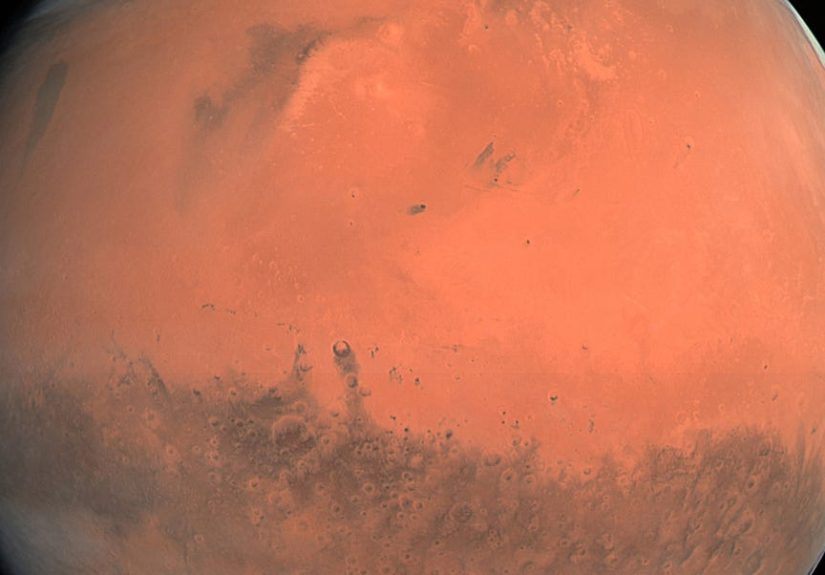
Outside, the landscape would be stunning in a stark, serious kind of way. The sky would often look butterscotch or hazy red because fine dust hangs in the thin atmosphere. Sunrises and sunsets could appear blue near the Sun because of how Martian dust scatters light. Volcanoes, canyons, craters, dunes, frost, and endless open terrain would make the planet feel cinematic. In other words, Mars would be gorgeous if you were looking through a helmet and not currently worrying about oxygen.
The Weather Would Be Both Mild and Terrible
Mars does have weather, but it does not throw a cheerful forecast your way. Average surface temperatures are brutally cold, and conditions swing widely depending on location, season, and time of day. Near the equator at midday, temperatures can occasionally climb to something almost friendly. By night, however, the cold returns with enthusiasm. In many places, Mars is so cold and dry that exposed liquid water is unstable, which is bad news if you were hoping for a pond, a lake, or even a heroic puddle.
Then there is the atmosphere, which is incredibly thin and made mostly of carbon dioxide. It offers almost none of the cozy benefits Earth people take for granted. You could not breathe it. It would not provide enough pressure for bare-skin survival. It also does a poor job of protecting the surface from radiation and micrometeoroids. So even if the temperature were perfect, Mars would still be very much not a “grab a jacket and step outside” kind of planet.
Dust would be one of the great annoyances of Martian life. Mars is famous for local, regional, and sometimes planet-encircling dust storms. Even when winds are not especially fierce by Earth standards, the fine dust can get into seals, joints, instruments, suits, filters, and your patience. If Earth dust is that guest who tracks dirt onto the carpet, Mars dust is that guest who somehow ends up inside the toaster, your keyboard, and the emotional center of your week.
You Would Live Indoors, and Indoors Would Mean Everything
Forget the classic dream of strolling across the Martian surface in a light shirt while potatoes grow nearby. Realistically, early Martian life would revolve around pressurized habitats. These living spaces would need to provide breathable air, stable pressure, temperature control, water recycling, waste processing, radiation shielding, and protection from dust. In other words, your home on Mars would be part apartment, part laboratory, part submarine, part emergency procedure binder.
Habitats would probably be designed with multiple layers of defense. Engineers have long discussed using Martian soil, also called regolith, as shielding piled over structures to reduce radiation exposure. Inflatable or rigid habitats might be buried, covered, or built into terrain for added safety. Airlocks would be essential. Redundancy would be sacred. If something critical breaks on Earth, you call a technician. If something critical breaks on Mars, you may be the technician, the assistant technician, and the person holding the flashlight.
Personal space could be limited, especially in the early years. That means daily life would require the social grace of a considerate roommate and the discipline of a long-distance sailor. You would need routines for cleaning filters, checking seals, monitoring systems, conserving water, and managing supplies. Mars would reward people who label things clearly and do not say, “I’ll fix it later.” On Mars, “later” is how small issues audition for disaster.
Breathing, Drinking, and Eating Would Be Engineering Projects
On Earth, air is free, water falls from the sky, and food can be summoned with a grocery run or an app. Mars would laugh at that entire system. Every basic need would depend on infrastructure. Oxygen might be produced from local resources and from recycling systems inside habitats. Water would likely come from recycled wastewater, shipped reserves, and eventually extracted ice. Researchers have identified significant subsurface water ice on Mars, especially in certain latitudes, which makes future human missions more plausible than they would otherwise be.
Food would probably arrive in phases. Early crews would rely heavily on packaged supplies. Over time, settlers would want fresh produce for nutrition, variety, and morale. That means greenhouses, growth chambers, or other controlled agricultural systems would become central to long-term living. Plants could help recycle carbon dioxide, provide oxygen, and improve mental well-being. Fresh lettuce may never have carried so much emotional importance.
However, Mars does not simply hand over clean dirt and say, “Best of luck with the tomatoes.” Martian regolith contains perchlorates, chemicals that can be hazardous to human health and problematic for water and food systems if not managed properly. Any use of local soil or water would require treatment, filtering, or specially designed growing systems. So yes, farming on Mars is possible in principle, but it is less “rustic garden life” and more “chemistry set with basil.”
Going Outside Would Feel Like a Mini Expedition Every Time
Extravehicular activity on Mars would be more common than on the Moon in some mission concepts, but it would never be casual. Getting ready to step outside would involve suit checks, tool prep, route planning, communication protocols, and strict timing. Suits would have to protect against cold, dust, radiation exposure, pressure loss, and mechanical wear. Even a short trip to inspect equipment or collect samples would feel like a small mission.
That said, surface work would also be one of the great rewards of Mars living. Settlers would explore ancient riverbeds, examine layered rocks, drill for ice, repair power systems, expand infrastructure, and test the limits of what humans can do on another world. Every footprint would feel historic. Every successful repair would feel heroic. Every dropped wrench would probably trigger language not suitable for mission transcripts.
Transportation would likely include pressurized rovers for longer trips. These vehicles could serve as mobile labs, field shelters, and commuting systems rolled into one. Over time, a Martian settlement might develop roads, marked routes, utility corridors, and connected habitat zones. The first generation of Martian “traffic” might be glorified buggies moving carefully through dust while everyone indoors says, “Please do not scratch the solar panels again.”
The Biggest Challenge Might Be Psychological, Not Just Physical
Much of the public conversation about Mars focuses on rockets, habitats, and life-support systems. Those are essential, of course. But one of the hardest parts of living on Mars may be the human mind. Mars is far from Earth, and that distance changes everything. Communication delays mean you cannot have a real-time conversation with people back home. Depending on the positions of the planets, a message can take many minutes each way. A question asked in stress or confusion might not get an immediate answer. On Mars, autonomy would not be a personality trait. It would be a survival skill.
Isolation and confinement can strain mood, sleep, teamwork, and decision-making. Research from Mars analog missions and long-duration confinement studies suggests that small crews in remote environments face real psychological pressures. Even if everyone is competent and well-trained, monotony, interpersonal friction, and separation from Earth can wear people down. Imagine being in a tiny community where nobody can really leave, resupply is limited, privacy is precious, and your nearest quick weekend trip is on another planet.
To cope, Martian life would need rituals, recreation, and emotional design, not just engineering design. Good lighting, shared meals, private quarters, greenery, exercise, creative hobbies, and meaningful schedules would matter a lot. So would the ability to laugh. Human beings can survive incredible conditions, but we do best when life includes beauty, routine, purpose, and the occasional dumb joke in the greenhouse.
Would Mars Ever Feel Normal?
That depends on what “normal” means. Mars would never become Earth Lite. The risks are too great, the environment too hostile, and the infrastructure too dependent on constant maintenance. But humans are very good at adapting. Sailors adapt to ships. Researchers adapt to Antarctic stations. Astronauts adapt to orbit. Given enough time, a Mars crew would likely build habits that make the extraordinary feel ordinary. Checking oxygen levels could become as normal as checking your phone battery. Reviewing radiation shelter procedures might feel as routine as knowing where the fire extinguisher is.
Children born and raised on Mars, if that ever happens, might view the planet very differently from the first settlers. They might think in sols, not weekdays. They might find Earth’s thick atmosphere, heavy gravity, and open oceans astonishing. They might see domes, tunnels, greenhouses, and rover bays not as heroic inventions but as everyday background. The first generation would think, “We made this possible.” The second might say, “Can you please stop being dramatic? I am late for hydroponics class.”
In that sense, life on Mars would be both alien and deeply human. The setting would be extreme, but the goals would be familiar: stay alive, build community, solve problems, raise food, make room for hope, and try not to lose the screwdriver again.
A Grounded Imagination: What a Day on Mars Might Feel Like
You wake to a soft light programmed to mimic morning on Earth because your habitat knows that human brains enjoy a little theater. The air is dry, carefully filtered, and faintly mechanical, like every room has just finished whispering to a life-support system. For a second, before memory fully loads, it feels almost ordinary. Then you glance at the habitat wall display and see the outside temperature, the radiation status, the pressure differential, and the sol count. Right. Mars.
Breakfast is practical but not joyless. Maybe rehydrated eggs, greenhouse greens, and coffee so precious it deserves diplomatic protection. At the next table, someone is reviewing a maintenance checklist while another crew member complains that the basil is judging them again. Meals matter here. They are not just fuel. They are structure, morale, and the closest thing the settlement has to a neighborhood kitchen.
Your morning task is an exterior inspection, so the next hour is suit prep. Every seal is checked, every connector confirmed, every tool tethered. The airlock routine is so familiar you could do it half-asleep, which is exactly why you force yourself not to. The outer hatch opens, and Mars appears in a silence so complete it feels theatrical. The horizon is wide, dusty, and ancient. Nothing rustles. Nothing chirps. Nothing waves in the wind because, frankly, the wind barely has enough atmosphere to make a proper entrance.
Walking feels strange but strangely good. You are lighter than on Earth, able to move with an easy bounce, but every motion still requires care. The ground is uneven, the suit is stubborn, and the dust is determined to participate in every activity. In the distance, a rover creeps along a marked route like a patient beetle. Above you, the sky has that muted, rusty glow that makes noon look like a memory of sunset.
You inspect solar equipment, brush dust from critical surfaces, log a sensor anomaly, and collect a sample near a trench where future crews may extract ice. Work is slow, methodical, and oddly intimate. On Mars, you notice everything: the sound of your own breathing, the resistance of your gloves, the small triumph of tightening a bolt correctly on the first try. Tiny successes feel enormous because they are stacked against an environment that is, at all times, unconvinced you belong there.
Back inside, the habitat feels instantly cozy, even if “cozy” is mostly a matter of pressure, warmth, and not dying. You send a message to Earth, knowing the reply will not come quickly. That delay changes the emotional weather of the day. Homesickness arrives differently when comfort cannot answer in real time. So you adapt. You exercise. You help in the greenhouse. You join the evening briefing. You laugh too hard at a terrible joke because terrible jokes are now a recognized survival resource.
Before sleep, you pause by a small port window. Outside is a world of rock, dust, cold, and possibility. Inside is a bubble of human stubbornness. And that, perhaps, is what life on Mars would feel like most of all: not like conquering a planet, but like building a fragile, brilliant little island of Earth habits in a place that keeps reminding you it is not Earth at all.
Conclusion
Life on Mars would be extraordinary, but not in the easy, glamorous way people sometimes imagine. It would be a life shaped by low gravity, harsh radiation, thin air, cold temperatures, dust, isolation, and relentless dependence on technology. At the same time, it could also be deeply meaningful. Mars offers water ice, workable day-night rhythms, scientific treasure, and the chance to test how adaptable human beings really are. The people who live there would need courage, patience, technical skill, and a sense of humor sturdy enough to survive a dust storm and a recycled-air dinner.
So what would life on Mars be like? It would be difficult, disciplined, collaborative, and full of wonder. It would be less about planting a flag and more about maintaining a habitat, growing fresh food, protecting one another, and learning how to belong in a world that was never built for us. Not exactly a beach vacation, then. But as chapters in human history go, it would be one heck of a page-turner.






 Close
Close