
Table of Contents >> Show >> Hide
- First, What “Deepfakes” Mean in Movie Land
- The Awkward Truth: Studios Have Already Started
- Why Studios Want Deepfakes (And Why They’ll Pretend They Don’t)
- What’s Slowing the Deepfake Boom: Consent, Cash, and Control
- The Trust Problem: Audiences Don’t Like Feeling Tricked
- Provenance and Labeling: The Industry’s Next Headache
- So… When Will Deepfakes Become “Normal” in Hollywood?
- How Studios Can Use Deepfakes Without Becoming the Villain of the Week
- Real-World Experiences: What Deepfakes Feel Like in Practice (About )
Hollywood has always been in the business of “that never happened, but please cry anyway.” So when deepfakes showed upsoftware that can swap faces,
mimic voices, and re-stage reality with unnerving precisionthe real question wasn’t if studios would use them. It was:
how soon, how often, and under what rules.
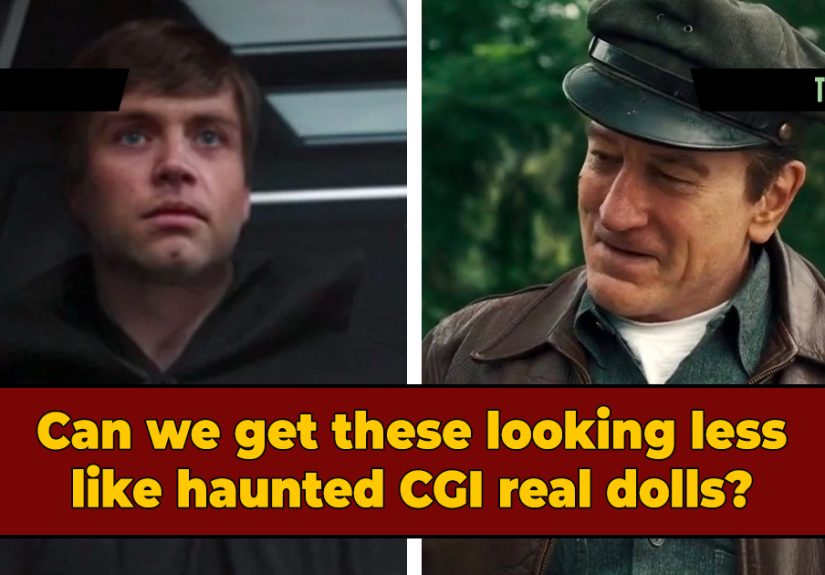
Cracked joked back in 2020 that movie deepfakes would be for visual effects, not blackmail (comforting!), and that framing still holds. The tech is most
useful when it helps filmmakers do what they already do: preserve performances, fix continuity, and make the impossible look routine. But now there’s a new
twist: deepfakes don’t just change what’s on screenthey change who owns a face, a voice, and a performance.
First, What “Deepfakes” Mean in Movie Land
Online, “deepfake” usually means a face-swap clip made to prank people, spread misinformation, or convince your aunt that the Pope is secretly a DJ.
In film and TV, the term gets used more loosely. In practice, studios lump several techniques into the “synthetic media” bucket:
- AI-assisted face replacement (swap a performer’s face onto a double, or adjust a facial performance).
- AI de-aging / age progression (make an actor look younger or older while keeping their acting intact).
- Digital replicas (a licensed “digital double” of an actor’s likeness or voice for specific uses).
- AI dubbing / lip-sync translation (match mouth movements to a new language while keeping the original performance style).
Traditional CGI has done versions of these for years, but modern machine-learning tools can make some steps faster and more convincingespecially when the
goal is to keep a human performance feeling human. That’s the sweet spot: deepfakes work best when they’re invisible, not when they’re the whole show.
The Awkward Truth: Studios Have Already Started
If “start” means “use deepfake-style tools in professional pipelines,” that train left the stationand then got digitally de-aged to look like it left the
station in 1997. One of the clearest signals came when a fan-made deepfake “fix” of a famous TV cameo got attention, and the creator was later hired into
the professional ecosystem. That wasn’t a studio saying, “We love internet chaos.” It was a studio saying, “We love results.”
Meanwhile, big-budget productions have pushed de-aging and face work hard. The direction of travel is obvious: less time wrestling with clunky post-production
workflows, more time preserving the original on-set performance, and more ability to make changes without reshoots.
A recent turning point: real-time (or near real-time) de-aging
One headline-making example described how a feature film used generative AI to de-age major actors across decades, aiming to deliver age shifts on set rather
than waiting for months of post-production. Whether the final look is “wow” or “why does this feel like my phone’s beauty filter learned to act?” depends on
artistry, supervision, and restraintbut the workflow direction matters. Real-time tools lower friction, and lower friction leads to wider adoption.
Why Studios Want Deepfakes (And Why They’ll Pretend They Don’t)
Studios rarely say, “We’re adopting deepfakes because it’s cool.” They say, “We’re improving the pipeline.” Translation: it saves time, protects schedules,
and reduces the number of expensive problems that require expensive humans to fix them.
1) De-aging and age-jumping without recasting
De-aging used to mean heavy VFX work and careful planning. High-end productions built specialized capture setups and custom software to preserve subtle facial
acting across decades. AI tools don’t eliminate craft, but they can reduce manual labor in parts of the processespecially when you have enormous libraries of
reference footage for well-known actors.
2) Face replacement for stunts, pickups, and “we forgot that shot” moments
Film sets are chaos with better catering. Sometimes the best take is from a stunt performer. Sometimes weather destroys continuity. Sometimes an actor is
unavailable for a pickup shot. Face replacement can solve these problemsif it’s done carefully enough that audiences never notice.
3) Dubbing and localization that keeps the original performance
Traditional dubbing can feel like watching a movie through a slightly off karaoke machine. Newer AI approaches aim to match lip movements to translated lines
while preserving the vibe of the original performance. That’s a big deal for global releases: it’s not just “understand the words,” it’s “feel the acting.”
4) Ethical “cleanup” versus unethical “replacement”
The line studios want to sell is: “We’re polishing what we already shot.” The line workers fear is: “We’re replacing people we could have hired.”
That differenceenhancement versus substitutionis where labor agreements and laws have focused a lot of energy.
What’s Slowing the Deepfake Boom: Consent, Cash, and Control
Deepfakes in movies aren’t blocked by technology so much as by permissionand the consequences of getting permission wrong. The last few
years brought major, specific guardrails from unions and lawmakers that shape what “normal” can look like.
SAG-AFTRA: digital replicas come with rules
SAG-AFTRA has publicly emphasized AI protections and “digital replica” terms that center on consent and compensation. The industry takeaway is simple:
if a studio wants to use a performer’s face or voice as data, the performer’s rights can’t be an afterthought or a sneaky paragraph on page 47.
WGA: writers pushed back on AI “source material” games
The Writers Guild has also laid out protections around AI use in covered projectssuch as disclosure obligations when AI-generated material is provided and
limits on treating AI-generated work as source material. This matters for deepfakes because synthetic media doesn’t exist in a vacuum: it changes scripts,
rewrites scenes, and reshapes what productions ask humans to create.
California and New York: laws are getting more specific
States have started passing laws aimed at digital replicas and disclosure. California’s performer-focused measures highlight consent standards around digital
replica use, including guardrails against contractual tricks that swap a human’s labor for a synthetic substitute without real, informed agreement.
New York has also moved toward transparency requirements for AI avatars in advertising and consent for commercial use of a deceased person’s likeness.
Translation: studios can’t rely on “we’ll figure it out later.” They need documented consent workflows, compensation policies, and a legal map that varies
by jurisdictionbecause nothing says “fun creative project” like a compliance spreadsheet.
The Trust Problem: Audiences Don’t Like Feeling Tricked
Here’s the paradox: deepfakes work best when nobody notices. But the moment audiences do notice, the conversation changes from “cool VFX” to
“did they just puppeteer a person?” That reaction can be amplified when:
- A deceased performer’s likeness is used in a way that feels like a cash grab.
- A living performer appears to “say” or “do” something that wasn’t part of their original acting choices.
- The effect lands in the uncanny valley, turning drama into unintentional horror-comedy.
Studios also worry about brand safety. Deepfake tech is tied (fairly or not) to scams and misinformation. If the public hears “deepfake,” they don’t think
“responsible VFX pipeline.” They think “why is this video trying to steal my bank password?”
Provenance and Labeling: The Industry’s Next Headache
As synthetic media becomes easier to generate, industries are pushing provenance standardsways to record where media came from and how it was edited.
The C2PA standard (often discussed through “Content Credentials”) is one approach to attaching cryptographic provenance info to images and video.
But a standard is only as useful as its adoption. Investigations have shown that even when content includes provenance metadata, platforms may not preserve
or display it reliably. For film studios, provenance tools could become part of the chain-of-custody for assetsless about “labeling the movie” and more
about protecting the production itself from leaks, fraud, and reputation damage.
So… When Will Deepfakes Become “Normal” in Hollywood?
The most honest answer is: deepfake-style tools are already normal in certain cornersespecially de-aging, face replacement, and performance
polish. What’s not normal (yet) is the fully automated, “swap any actor into anything” fantasy. That version hits too many tripwires:
rights, contracts, public perception, and ethical blowback.
What will make deepfakes feel routine isn’t a single breakthrough. It’s a checklist of boring-but-essential conditions:
Condition 1: clear consent workflows
Studios need standardized, auditable processes: what was captured, what it can be used for, how long the rights last, what approvals are required,
and how the performer gets paid. “We asked nicely” is not a workflow.
Condition 2: compensation models that don’t feel like a trap
If a digital replica saves the production money, performers will expect a fair shareespecially if their likeness becomes reusable value.
The long-term future likely looks like licensed usage, defined scope, and negotiated ratesmore like music licensing than a one-time day rate.
Condition 3: audience trust (and fewer uncanny failures)
When audiences consistently see high-quality results that respect performersplus occasional transparency around “how it was done”the stigma will fade.
Not disappear. Fade. This is Hollywood: we never fully recover from anything. We just put better lighting on it.
How Studios Can Use Deepfakes Without Becoming the Villain of the Week
If movie studios want deepfakes to be a tool instead of a scandal, best practices look like this:
- Get explicit, informed consent for each meaningful use of a performer’s digital likeness or voice.
- Limit scope: define the project, scenes, platforms, territories, and time window.
- Pay transparently: treat digital replica usage as a compensable performance asset, not a loophole.
- Preserve creative intent: use synthetic tools to support the performance, not overwrite it.
- Build provenance into the pipeline: track assets, approvals, and edits to reduce misuse risk.
Do that, and deepfakes become just another VFX techniquelike color grading, wire removal, or making a city explode on a Tuesday.
Skip it, and deepfakes become a headline generator in the worst way.
Real-World Experiences: What Deepfakes Feel Like in Practice (About )
In real productions, “deepfakes” rarely look like a single button labeled MAKE ACTOR YOUNG. They feel more like a chain of small, practical moments
spread across departments. For performers, it often starts with scanning and capture: multiple camera angles, controlled lighting, neutral expressions,
and sometimes a short performance session designed to map how the face moves. It can be oddly clinicallike a photo shoot run by engineersand the emotional
tone depends on trust. When the performer knows exactly what the replica is for (and how it’s paid), the session can feel like routine prep. When the scope
feels vague, it can feel like signing away a piece of identity.
For directors, the experience is less “we’re faking a human” and more “we’re saving a scene.” A de-aged sequence might be motivated by story clarity:
the audience must instantly read a character’s age, and recasting would fracture continuity. On set, real-time previews (where available) can change how
scenes are staged. If a director can see an approximate de-aged look while shooting, they may adjust lighting, lens choices, or blocking to avoid highlighting
artifacts. That’s not cheatingit’s craft, the same way filmmakers light a set to flatter makeup or hide a seam.
VFX artists describe a different kind of pressure: deepfake-assisted work can be fast to prototype but merciless in final delivery. Early tests may look
amazing on a laptop and fall apart on a theater screen. The “experience” becomes iterative: test, refine, compare against reference footage, check for
subtle mismatches around eyes and mouth, and then do it again because a new cut changed the timing by twelve frames. In de-aging work, the hard part isn’t
only making skin smoothit’s keeping the micro-expressions that sell humanity. When the audience believes a character is thinking, the effect has won.
Legal and production teams have their own lived reality: approvals. A responsible pipeline can involve sign-offs that feel closer to music clearance than to
traditional VFX. What exactly is being used (face, voice, body motion)? Is it limited to this project? Does the performer get to approve the final shots?
How are downstream uses handledtrailers, promos, international versions, streaming thumbnails, and future recaps? Each “yes” needs documentation, and each
“maybe” becomes a meeting. Deepfake tech reduces some creative friction while increasing contractual friction, and studios are learning that the second kind
of friction doesn’t disappear just because the render time is shorter.
There’s also a human, psychological layer: performers and crew members talk about the weirdness of seeing a “you” that you didn’t exactly perform. Even when
consent is clear, it can be unsettlinglike hearing your voicemail greeting spoken in a tone you never used. That’s why many ethical debates in Hollywood
focus less on whether the pixels are convincing and more on whether the use respects intent. The best experiences tend to happen when the synthetic work is
framed as protection of the original performance: keeping an actor’s acting choices while solving a technical or narrative need. The worst experiences happen
when the tech is treated as replacement rather than collaboration.
Put simply: deepfakes become “normal” when the day-to-day experience becomes boringstandard forms, clear rates, clear approvals, and results that audiences
accept without feeling manipulated. Hollywood’s favorite kind of magic is the kind nobody notices.







 Close
Close