
Table of Contents >> Show >> Hide
- The Big Idea: Earth Is Cooling From the Inside Out
- So Which Side Is Getting Colder?
- Why Oceans Let More Heat Escape
- The Role of Pangaea: A Planetary Blanket With Attitude
- Why the Pacific Is Still So Geologically Active
- Does This Affect Climate Change?
- What Scientists Learned From Modeling 400 Million Years
- Why Continental Insulation Matters
- Rodinia: The Older Supercontinent Behind the Mystery
- What This Means for Earth’s Future
- Common Misunderstandings About One Side of Earth Cooling
- Why This Discovery Matters
- Experience-Based Reflections: What This Topic Feels Like in the Real World
- Conclusion: A Colder Side, a Hotter Question
At first glance, the phrase “one side of Earth is rapidly getting colder” sounds like the opening line of a disaster movie in which someone in a lab coat drops a coffee mug and whispers, “We have 48 hours.” Thankfully, that is not what is happening. Your neighborhood is not about to become a popsicle because the Pacific side of the planet misplaced its thermostat.
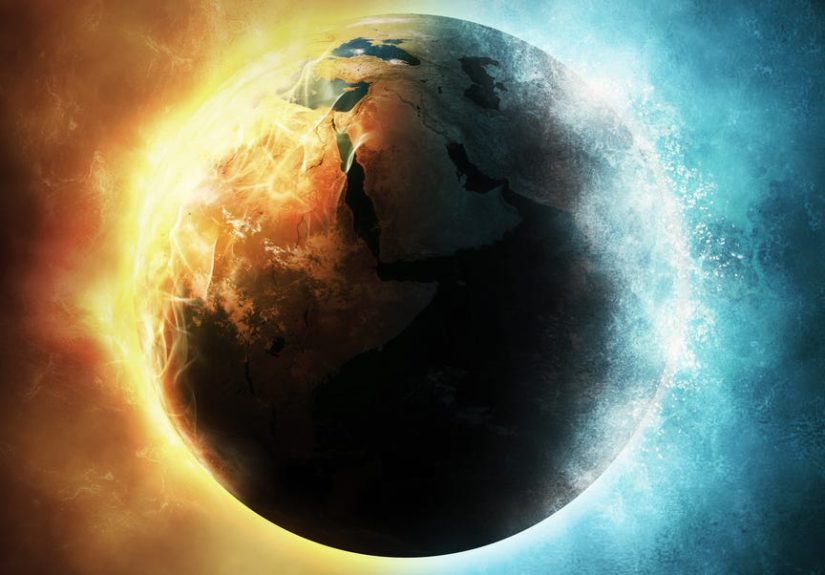
The real story is stranger, slower, and arguably more fascinating. Scientists studying Earth’s deep interior have found that the Pacific hemisphere has lost internal heat faster than the hemisphere centered around Africa. This is not about tomorrow’s weather forecast, and it does not mean global warming has suddenly reversed. It is about the planet’s long-term geologic cooling: the gradual escape of heat from Earth’s mantle over hundreds of millions of years.
In simple terms, Earth is still cooling from the fiery drama of its formation more than 4.5 billion years ago. It also produces heat through radioactive decay inside the planet. That heat leaks outward, powering mantle convection, plate tectonics, volcanism, earthquakes, and the restless reshaping of continents. The surprising part is that this heat loss is not evenly distributed. One broad side of the planet appears to have acted more like a vent, while the other has behaved more like a blanket.
The Big Idea: Earth Is Cooling From the Inside Out
Earth may look calm from space, all blue oceans and polite cloud swirls, but inside it is a slow-motion heat engine. Beneath the crust lies the mantle, a thick layer of hot rock that moves over geologic time. Below that sits the outer core, a liquid metallic layer involved in generating Earth’s magnetic field, and deeper still is the solid inner core.
Heat from this interior does not simply sit there like soup in a thermos. It escapes. Some of it travels through the crust by conduction. Some is transported by mantle convection, where hotter material rises and cooler material sinks. This movement helps drive plate tectonics, the process that creates ocean basins, mountain ranges, earthquakes, trenches, and volcanoes.
Over billions of years, this internal heat loss gradually cools the planet. But “gradually” is doing a lot of work here. We are talking about changes measured across millions to hundreds of millions of years. If humans are impatient because a microwave burrito takes two minutes, Earth geology is the opposite: it takes an entire era to finish one paragraph.
So Which Side Is Getting Colder?
The faster-cooling side is known as the Pacific hemisphere. It is not exactly the same as saying “the western half of Earth” or “the ocean side” in everyday map terms, but it broadly refers to the half of the planet dominated by the Pacific Ocean. The opposite half, often called the African hemisphere in this research context, includes much of Africa, Europe, and Asia, along with large continental masses that have shifted and reorganized over deep time.
Researchers modeled Earth’s surface heat loss over roughly the last 400 million years. They divided the planet into grid cells and reconstructed how continents and ocean basins moved through time. Their conclusion was dramatic in geologic terms: the Pacific hemisphere appears to have cooled significantly more than the African hemisphere, with estimates around 50 Kelvin more cooling in the Pacific mantle domain over that span.
That does not mean the Pacific Ocean is suddenly turning into an ice bath. It means the mantle beneath that broad side of the planet has lost more internal heat through geologic processes. The difference is about Earth’s interior, not a cold front ruining your beach vacation.
Why Oceans Let More Heat Escape
The most important clue is the difference between oceanic and continental lithosphere. Lithosphere is the rigid outer shell of Earth, made of the crust plus the uppermost mantle. Oceanic lithosphere is generally thinner, denser, and younger than continental lithosphere. Continental lithosphere is thicker, older, and better at insulating the mantle below.
Think of continents as a heavy winter blanket and ocean basins as a thinner sheet. Heat escapes through both, but not at the same rate. A thick continental lid can slow the escape of internal heat. A thinner oceanic plate, especially one constantly created at mid-ocean ridges and recycled at subduction zones, allows heat to leave more efficiently.
The Pacific side of the world has long been dominated by ocean basin. That matters because oceanic plates are part of Earth’s heat-release system. New seafloor forms where plates pull apart, then cools as it moves away from ridges. Eventually, older oceanic lithosphere may sink back into the mantle at subduction zones. This cycle is like Earth running a conveyor belt through a very slow industrial kitchen.
The Role of Pangaea: A Planetary Blanket With Attitude
The story becomes even more interesting when we bring in supercontinents. Around 300 million years ago, many of Earth’s landmasses assembled into Pangaea. This giant supercontinent did not just rearrange maps; it changed how heat escaped from the planet.
When a large landmass sits over one part of the mantle, it can act like insulation. During much of the last 400 million years, the African hemisphere was covered by more continental material. That helped trap heat underneath compared with the ocean-heavy Pacific hemisphere. As a result, the Pacific side had more opportunity to release heat into space through thinner oceanic lithosphere.
This is one reason researchers connect uneven cooling to the distribution of continents and oceans. Earth is not a perfect billiard ball with identical panels. It is a lopsided, moving, heat-leaking machine with continents wandering around like furniture being rearranged by a very patient giant.
Why the Pacific Is Still So Geologically Active
Here is the twist: even though the Pacific hemisphere has lost more heat, it is also associated with intense tectonic activity. The Pacific Ring of Fire surrounds much of the Pacific Ocean and includes many of the world’s major subduction zones, earthquakes, volcanic arcs, and deep ocean trenches.
At first, that may sound contradictory. If the Pacific side has cooled more, why is it so lively? The answer is that heat loss, plate motion, and mantle structure interact in complex ways. Faster-moving plates can remove heat more efficiently. Subduction can drag cold slabs into the mantle while also helping organize deep circulation. A side of the planet can lose heat quickly because it is tectonically active, not because it is geologically sleepy.
Imagine a busy restaurant kitchen. The side with the most open doors, vents, and moving staff may lose heat fastest, but it is also the most active part of the building. The Pacific hemisphere is not cold and dead; it is more like the part of Earth where the machinery has been working overtime.
Does This Affect Climate Change?
This is where we need to separate two very different kinds of “cooling.” Earth’s interior cooling is a geologic process that unfolds over millions and billions of years. Human-caused climate change is a surface and atmospheric energy-balance problem unfolding over decades and centuries.
The planet’s surface is currently warming because greenhouse gases trap more outgoing heat in the climate system. Oceans absorb the majority of that excess heat, which is why ocean heat content is one of the clearest indicators of modern global warming. That surface warming is not canceled out by the slow cooling of Earth’s interior.
So no, the Pacific hemisphere losing internal heat faster does not mean climate change is fake, paused, or politely packing its bags. These are different processes operating at different scales. One concerns heat leaking from deep inside Earth over hundreds of millions of years. The other concerns energy trapped near the surface by the atmosphere in the modern era.
What Scientists Learned From Modeling 400 Million Years
To study uneven cooling, researchers used reconstructions of plate positions, seafloor age, continental distribution, and lithospheric heat flow. By looking backward through time, they estimated how much heat different regions likely lost as continents drifted and ocean basins opened or closed.
This matters because scientists cannot simply place a thermometer under the Pacific mantle and wait for a neat reading. Earth does not offer a convenient “deep interior settings” menu. Instead, researchers combine observations, physics, plate reconstructions, and computer models to estimate how the planet’s thermal engine behaved in the past.
The research suggests that heat loss was not only uneven between hemispheres, but also stronger in the past than today. That makes sense because Earth was hotter earlier in its history. A hotter planet has more energy available to lose. As it cools, its internal engine gradually changes, although not in a smooth or perfectly predictable way.
Why Continental Insulation Matters
Continents are more than dry land where humans build cities, farms, highways, and occasionally questionable theme restaurants. In deep Earth science, continents are thick, buoyant, long-lived structures that affect how heat moves out of the mantle.
Because continental lithosphere can be much thicker than oceanic lithosphere, it can reduce heat flow from below. This does not mean continents stop heat completely. It means they change the pattern and timing of heat escape. Over hundreds of millions of years, even modest differences become enormous.
That is why the Africa-centered hemisphere, with its long association with major continental masses, appears to have retained more mantle heat. The Pacific hemisphere, dominated by oceanic lithosphere, released more. The geography of the surface shaped the thermal story of the deep interior.
Rodinia: The Older Supercontinent Behind the Mystery
The study also raises a fascinating possibility involving Rodinia, an ancient supercontinent that existed long before Pangaea. If a major landmass once covered what later became the Pacific mantle domain, it may have trapped heat there in the distant past. That could help explain why the Pacific side may have started hotter, moved plates faster, and then lost heat more rapidly over the last 400 million years.
This is one of the reasons the topic is so intriguing. The Pacific side may not simply be “colder because ocean.” It may have a deeper thermal history shaped by older supercontinents, changing plate speeds, mantle circulation, and the long memory of Earth’s interior.
In other words, the planet has receipts. They are just written in subducted slabs, ancient crust, volcanic rocks, magnetic signals, and models that require more math than most of us want near our breakfast cereal.
What This Means for Earth’s Future
Earth will continue cooling internally. Over extremely long timescales, that cooling may affect volcanic activity, plate tectonics, mantle convection, and perhaps even the magnetic field generated by the core. But this future is not arriving next Tuesday.
Eventually, if a rocky planet loses enough internal heat, it can become less geologically active. Mars is often used as a comparison because it is smaller, cooled faster, and no longer has plate tectonics like Earth’s. Earth, however, remains large, warm, dynamic, and tectonically alive.
The uneven cooling of the Pacific hemisphere helps scientists understand how planets evolve. It may also improve models of exoplanets, especially rocky worlds where surface conditions, crustal thickness, oceans, and internal heat may determine whether the planet remains geologically active.
Common Misunderstandings About One Side of Earth Cooling
Misunderstanding 1: One side of Earth is freezing
No. The “cooling” refers mainly to Earth’s interior heat loss, not surface temperature. The Pacific side is not turning into a giant snow cone.
Misunderstanding 2: This disproves global warming
No again. Modern global warming concerns the atmosphere, oceans, land surface, ice, greenhouse gases, and Earth’s radiation balance. Interior cooling is a separate geologic process.
Misunderstanding 3: The planet is becoming dangerous overnight
Also no. This is a long-term process measured over hundreds of millions of years. It helps explain Earth’s deep past and long future, not tomorrow morning’s commute.
Misunderstanding 4: The Pacific is geologically quiet because it cooled faster
Actually, the Pacific is extremely active. Faster plate motion and heat loss can go together. The Pacific Ring of Fire is proof that “cooling faster” does not mean “boring.”
Why This Discovery Matters
The uneven cooling of Earth is important because it links surface geography to deep planetary behavior. Continents, oceans, plate motion, mantle temperature, and volcanic activity are not separate stories. They are chapters in one massive planetary biography.
By studying how one hemisphere lost more heat than another, scientists can better understand why tectonic activity is distributed the way it is today. They can also refine models of mantle convection, supercontinent cycles, and Earth’s long-term habitability.
It is a reminder that Earth is not just a place we live on. It is a living system in the geologic sense: moving, cooling, recycling, cracking, melting, and rebuilding itself over time. The ground beneath us may feel solid, but on deep time scales it is basically slow-motion choreography with lava in the orchestra pit.
Experience-Based Reflections: What This Topic Feels Like in the Real World
One of the best ways to understand this topic is to think about everyday experiences with heat. If you have ever held a hot mug of coffee, you already know that materials matter. A thin paper cup loses heat quickly. A thick ceramic mug holds warmth longer. A thermos does an even better job because it is designed to slow heat transfer. Earth’s continents and ocean basins work nothing like coffee cups in detail, of course, but the basic intuition helps: structure controls how heat escapes.
Now imagine standing on a rocky coastline along the Pacific. Waves crash, the air smells like salt, and everything looks peaceful. Yet beneath that view is one of the most active geologic systems on the planet. Offshore, plates may be moving, sinking, grinding, or spreading. Far below, mantle heat is part of the story. The surface scene is calm enough for postcards, while the deep Earth is running a billion-year engineering project without asking anyone for a permit.
People who live around the Pacific Rim often experience reminders of this activity through earthquakes, volcanoes, hot springs, mountain ranges, and tsunami awareness signs. Those features are not random decorations. They are surface expressions of plate tectonics. When scientists say the Pacific hemisphere has lost heat faster, they are describing the deeper thermal background behind a region already famous for geologic energy.
There is also something humbling about the timescale. Human life is measured in years. Nations rise and fall over centuries. But Earth’s cooling patterns unfold over hundreds of millions of years. A continent can assemble, split apart, drift across the globe, and reshape the planet’s heat budget while generations of life evolve above it. Compared with that, our daily complaints about slow Wi-Fi are adorable.
This topic also changes how we see maps. Most maps show borders, oceans, cities, and mountain ranges. A geologist sees motion. A climate scientist sees energy. A geophysicist sees heat escaping through different kinds of lithosphere. The Pacific Ocean is not merely a large blue area on the map; it is part of a planetary heat-loss system connected to seafloor spreading, subduction, mantle convection, and the long history of supercontinents.
For students, science fans, and curious readers, the biggest takeaway is that Earth is not uniform. One side can behave differently from another because the planet’s surface has never been evenly arranged. Oceans and continents move. Plates speed up or slow down. Ancient supercontinents leave thermal fingerprints. The result is a planet with personalitymessy, dynamic, and slightly dramatic, like a geology professor who owns too many rock samples and somehow still needs “just one more.”
Finally, this story is a useful lesson in reading science headlines carefully. “One side of Earth is rapidly getting colder” sounds immediate and alarming. The real science is more subtle: the Pacific hemisphere has experienced faster internal cooling over geologic time. That is still amazing, but it is not a surface-weather emergency. The best science stories often begin with a wild-sounding headline and become even more interesting once the facts are unpacked.
Conclusion: A Colder Side, a Hotter Question
One side of Earth is not rapidly freezing in the way a movie trailer might suggest. Instead, the Pacific hemisphere appears to have lost internal heat faster than the African hemisphere over the last 400 million years. The main reason is the uneven distribution of oceans and continents. Oceanic lithosphere tends to let heat escape more efficiently, while thick continental lithosphere acts more like insulation.
This discovery helps explain how Earth’s deep interior, moving plates, supercontinent cycles, and surface geography are connected. It also shows why the Pacific region is so geologically active and why long-term planetary cooling is far more complex than a simple countdown from hot to cold.
Most importantly, this research does not conflict with modern climate change. Earth’s interior may be cooling over geologic time, while Earth’s surface climate is warming because of greenhouse gases. Both can be true because they operate on different systems and timescales.
The planet beneath our feet is not static. It is cooling, shifting, recycling, and remembering its ancient past. And if Earth could talk, it would probably say, “I’m not getting older. I’m just undergoing complex hemispheric thermal evolution.” Honestly, classic Earth.
Editorial note: This article is written for public science education and SEO publication. It explains peer-reviewed geologic research in accessible language and distinguishes long-term internal Earth cooling from modern surface climate change.






 Close
Close