
Table of Contents >> Show >> Hide
- The Biggest Reason: The Game Library Was Ridiculously Good
- Price Still Gave the Switch a Serious Edge
- The Switch Family Let You Buy the Version That Fit Your Life
- Switch 2 Did Not Automatically Make the Original Switch a Bad Buy
- Nintendo’s Strength Was Never Raw Power Anyway
- Nintendo Switch Online Added More Value Than People Give It Credit For
- The Switch Was Still the King of “Actually Living With It”
- Of Course, the Switch Was Not Perfect
- Who Should Have Bought a Nintendo Switch in 2025?
- Final Verdict
- Real-World Experiences: What Buying a Switch in 2025 Actually Felt Like
Buying a console in the same year a newer console shows up usually feels a little silly. It is like buying the “old” phone the week your tech-savvy cousin starts bragging about the new one. On paper, that sounds like a bad move. In real life, though, the Nintendo Switch was still a genuinely smart buy in 2025.
Why? Because value is not just about raw power. It is about what you actually get for your money, what you want to play, how you like to play, and whether the system fits your life instead of just your wish list. In 2025, the Nintendo Switch still checked a surprising number of boxes. It had a gigantic library, a lower price barrier than newer hardware, excellent exclusives, unmatched couch co-op energy, and enough flexibility to appeal to everyone from kids and commuters to tired adults who just wanted to farm turnips in peace after work.
So yes, the Switch was aging in 2025. Yes, newer hardware existed. And yes, some players wanted sharper visuals and more horsepower. But none of that changed one simple truth: if your goal was to play great games without spending a small fortune, the Nintendo Switch still made a lot of sense.
The Biggest Reason: The Game Library Was Ridiculously Good
Let’s start with the obvious thing, because it is also the most important thing: games. Consoles do not win because they are powerful. They win because they are fun. And the Switch had fun falling out of its pockets in 2025.
By that point, the system had years of first-party hits, evergreen sellers, indie favorites, ports, party games, RPGs, platformers, cozy titles, and family games. This was not a “buy now and wait six months for something worth playing” situation. This was a “buy now and immediately get buried under a backlog the size of a small mountain” situation.
If you wanted blockbuster Nintendo exclusives, the menu was almost comically stacked. Mario Kart 8 Deluxe remained one of the easiest recommendations in gaming. The Legend of Zelda: Breath of the Wild and Tears of the Kingdom were still major system-sellers. Animal Crossing: New Horizons had not lost its relaxing magic. Super Smash Bros. Ultimate, Super Mario Odyssey, Super Mario Bros. Wonder, Pikmin 4, Metroid Dread, and Kirby and the Forgotten Land gave buyers a library that felt curated by someone who actually liked joy.
And that is before you even get to the indie catalog. The Switch became one of the best homes for games like Hades, Hollow Knight, Stardew Valley, Balatro, Dead Cells, Dave the Diver, and a long list of smaller titles that somehow made “I’ll play for 20 minutes” turn into “Why is it 2:13 a.m.?”
In other words, the Nintendo Switch in 2025 was not surviving on nostalgia. It was thriving on depth. When a platform has that many proven games across that many genres, buying into it late is not a weakness. It is actually a perk. You get to skip the drought years and walk straight into the feast.
Price Still Gave the Switch a Serious Edge
In 2025, price mattered more than ever. Gaming is not cheap. Consoles cost more, accessories cost more, storage costs more, and somehow even the phrase “special edition controller” has become code for “please hand over more money.” That is exactly why the original Switch family stayed appealing.
Compared with newer hardware, the Switch remained the friendlier point of entry. You could choose the model that matched your budget and your habits instead of being forced into a single expensive path. The base Switch still delivered the hybrid experience. The Switch Lite gave portable players a cheaper, no-fuss option. The OLED model offered the premium version of the same idea without pushing the price into “maybe I should sit down and open a spreadsheet” territory.
That price flexibility mattered. Not everyone needed the newest machine on the market. Plenty of buyers in 2025 just wanted a console for Mario, Zelda, Pokémon, party games, and indies. For them, the Switch was still the smarter financial move. Why pay more just to end up playing the same comfort games on a shinier machine while your wallet quietly files a complaint?
It also helped that Nintendo’s software lineup had real staying power. A Switch purchased in 2025 did not feel like a panic buy. It felt like buying into a mature ecosystem that already knew how to entertain you.
The Switch Family Let You Buy the Version That Fit Your Life
One of the most underrated reasons the Nintendo Switch was still a good buy in 2025 was that it was not really just one system. It was a family of systems with different strengths.
Nintendo Switch Lite: Best for pure handheld players
If you mainly play on the couch, in bed, on the bus, or while pretending to listen during family gatherings, the Switch Lite remained a strong choice. It was compact, light, and built specifically for handheld gaming. That made it ideal for younger players, commuters, students, and anyone who wanted a dedicated portable without extra fuss.
Nintendo Switch: Best all-around balance
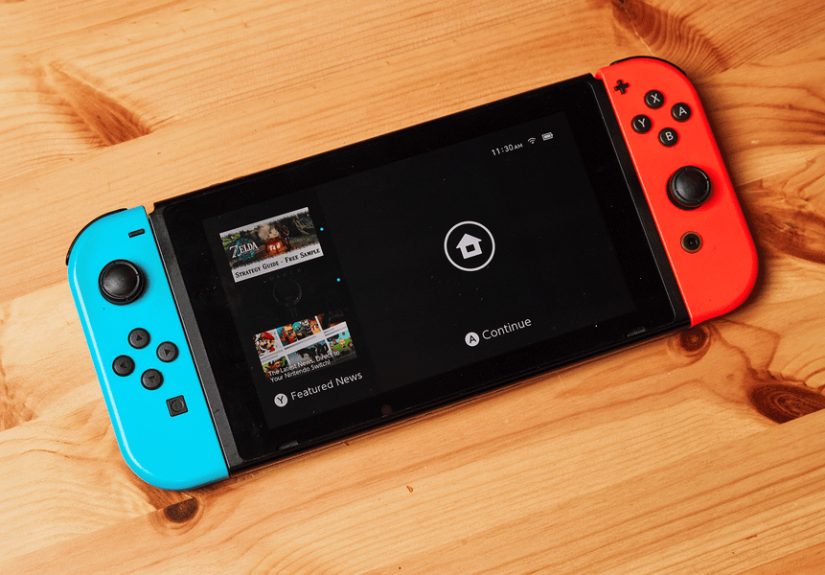
The standard Switch still did the core trick beautifully: handheld mode, tabletop mode, and TV mode in one machine. That hybrid design is no longer shocking, but it is still incredibly useful. You can play a few races in handheld mode, dock the system for party play later, then toss it in a bag for the weekend. That convenience is not flashy. It is just excellent.
Nintendo Switch OLED: Best version for most new buyers
For many people in 2025, the OLED model was the sweet spot. The bigger, more vivid screen made handheld play look better, the kickstand was far more practical, the improved audio was a nice bonus, and the wired LAN port helped online players. It did not magically turn the Switch into a 4K monster, but it made the existing experience feel more polished. If you wanted the best version of the original Switch concept, the OLED model was usually it.
Switch 2 Did Not Automatically Make the Original Switch a Bad Buy
This is where the conversation gets interesting. A lot of people assumed that once Nintendo’s newer hardware entered the chat, the original Switch instantly became bad value. But that is not how real buying decisions work.
Newer systems are not just “better.” They are also more expensive, less established, and sometimes still waiting for the kind of library that justifies the jump. In 2025, the original Switch family had a huge advantage over any fresh platform: certainty. Buyers knew exactly what they were getting.
The newer hardware improved the formula, sure. It offered more power and nicer tech. But for many shoppers, especially families and casual players, the more practical question was not “Which console is stronger?” It was “Which console gives me the most fun for the least drama?” On that front, the original Switch still had a strong case.
There was another reason not to panic: if you later upgraded, your software investment aged better than it did in many previous console transitions. A lot of the value of buying Switch games carried forward more gracefully than buyers feared. That reduced the feeling that buying a Switch in 2025 meant throwing money into a time capsule.
Nintendo’s Strength Was Never Raw Power Anyway
If you judge the Switch by teraflops, frame-rate discourse, and internet arguments written in all caps, then no, it was not the most impressive machine in 2025. But Nintendo has almost never won by trying to out-muscle Sony or Microsoft in a hardware arm-wrestling contest.
Nintendo wins by making games that people actually want to play with other humans in the same room. It wins by designing systems around accessibility, portability, charm, and flexibility. It wins by reminding everyone that graphics are nice, but laughing because your friend drove off Rainbow Road is also a valid use of technology.
The Switch still excelled at that in 2025. It was probably the easiest modern console to recommend to mixed households. Kids could use it. Parents could figure it out. Couples could share it. Friends could play together without a seminar on settings menus. That kind of ease matters more than tech enthusiasts sometimes admit.
And because the system had been on the market for years, the hardware quirks, best accessories, must-play games, and buying options were all easy to understand. You were not buying into an experiment. You were buying into a finished, well-understood platform.
Nintendo Switch Online Added More Value Than People Give It Credit For
The Switch in 2025 was not just about buying cartridges and digital downloads one at a time. Nintendo Switch Online added a layer of long-term value, especially for players who liked retro games, cloud saves, and online multiplayer.
The base membership gave players online play, classic libraries, and save-data backup for most games. The Expansion Pack pushed the value further with access to classic Nintendo 64, Game Boy Advance, and Sega Genesis games, plus selected DLC. That meant the platform’s appeal was not only about the newest release. It also had a built-in museum of older favorites and bonus content that made the ecosystem feel fuller.
If you were the kind of player who likes to hop between modern games and retro comfort food, the Switch handled that beautifully. One minute you could be exploring Hyrule. The next you could be revisiting classic games that remind you why your thumbs have trust issues.
The Switch Was Still the King of “Actually Living With It”
Some devices are impressive in a product page kind of way. Others are impressive in a “wow, I use this constantly without thinking about it” kind of way. The Switch belonged to the second group.
It was easy to carry, easy to suspend and resume, easy to share, easy to set up, and easy to fit into small chunks of time. That made it one of the best consoles for adults who do not always have three uninterrupted hours to sit in front of a television like a majestic gaming statue.
You could play in bed, at a desk, at the airport, in the living room, or while waiting for your food delivery to arrive. That kind of flexibility sounds old news now because the Switch made it feel normal. But in 2025, it was still one of the machine’s biggest superpowers.
The system also remained one of the best places for local multiplayer. That alone kept it relevant. A console that can turn a quiet evening into a four-player Mario Kart grudge match still has cultural value. Maybe not Nobel Prize value, but definitely “the group chat is active again” value.
Of Course, the Switch Was Not Perfect
To be fair, buying a Nintendo Switch in 2025 was not the right move for everyone.
If you cared most about technical performance, high-end third-party ports, or future-proof specs, the Switch had clear limits. Some games looked softer, loaded slower, or ran less smoothly than on more powerful machines. If you wanted a console primarily for big new multiplatform releases at the best possible visual settings, the Switch was not your hero.
There were also long-standing annoyances to keep in mind. Joy-Con drift remained part of the Switch conversation. The system did not offer the kind of cutting-edge display and performance features some players expected in 2025. And if you already owned a working Switch, upgrading to another original-family model was not always necessary unless you specifically wanted the OLED benefits.
But those caveats did not erase the core value proposition. They simply clarified who the Switch was best for: people who prioritize games, convenience, and cost over chasing the latest spec sheet trophy.
Who Should Have Bought a Nintendo Switch in 2025?
The Switch was still a very good buy in 2025 if you fell into one of these groups:
First-time Nintendo players: You got access to years of elite first-party games immediately.
Families: The library, local multiplayer options, and approachable design made the system easy to recommend.
Handheld fans: The Lite and OLED models offered two very different but equally compelling portable experiences.
Budget-conscious buyers: You could spend less than the cost of newer hardware and still get a terrific console.
Indie lovers and cozy gamers: The Switch remained one of the best homes for pick-up-and-play titles that feel great on a handheld.
If that sounds like you, then the answer in 2025 was not “wait because something newer exists.” It was “buy the thing that fits your life now.”
Final Verdict
The Nintendo Switch was still a good buy in 2025 because it offered something many newer devices forget to prioritize: clear, practical value. It was not the newest machine, and it was not the strongest. But it had one of the best game libraries in the industry, several hardware options for different budgets, excellent portability, strong multiplayer appeal, and enough charm to remain relevant even as the market shifted around it.
Sometimes the smartest gaming purchase is not the console with the loudest launch trailer. It is the one with the games you already know you will love, the price that does not make you sweat, and the flexibility to work whether you are on the couch, on a train, or hiding from your responsibilities for 45 glorious minutes.
That was the Nintendo Switch in 2025: older, yes. Outclassed in some ways, absolutely. Still a genuinely good buy? Without question.
Real-World Experiences: What Buying a Switch in 2025 Actually Felt Like
Here is the part that spec sheets cannot really explain. The Nintendo Switch still felt good to buy in 2025 because it fit into everyday life better than a lot of supposedly “better” gaming hardware.
Imagine a college student buying a Switch Lite because it is cheaper, easier to carry, and perfect for quick sessions between classes. That player is not sitting around upset that the system does not push cutting-edge graphics. They are playing Mario Kart 8 Deluxe, building islands in Animal Crossing, or sneaking in a run of Hades before heading to the next lecture. The console is doing exactly what it is supposed to do: making gaming convenient.
Now think about a parent buying a standard Switch or OLED model for the living room. One kid wants Mario Party. Another wants Pokémon. The adults want something easy to jump into after dinner. That machine starts earning its keep very quickly. A single purchase can become family entertainment, party machine, travel companion, and rainy-day lifesaver. In that situation, the Switch does not feel old. It feels useful.
Then there is the buyer who skipped the system for years and finally decides to jump in during 2025. Honestly, that might have been the best kind of Switch customer. Instead of waiting years for must-play exclusives, this person gets immediate access to one of the strongest back catalogs Nintendo has ever assembled. They can go from Breath of the Wild to Tears of the Kingdom, from Odyssey to Wonder, from Smash to Pikmin 4, without ever asking, “So what am I supposed to play next?” The answer is always: too many things.
There is also a psychological benefit to buying a mature platform. In 2025, the Switch did not feel risky. You knew which games people loved. You knew which accessories were worth buying. You knew whether you wanted the Lite, the base model, or the OLED. You were not beta-testing a future. You were stepping into a platform with years of proof behind it.
And maybe that is the best way to describe the Switch experience in 2025. It felt settled in the best possible sense. Comfortable. Reliable. Well-understood. The system did not need to impress you with promises. It could impress you with results. You could buy one on a Friday, download a few games, and by Saturday night already feel like the purchase made sense.
That is why the Nintendo Switch still landed so well in 2025. It was not just a console people admired from a distance. It was a console people actually used, shared, packed, docked, undocked, argued over, and returned to again and again. And when a machine keeps becoming part of people’s routines instead of just their wish lists, that is usually the clearest sign it is still worth buying.




 Close
Close