
Table of Contents >> Show >> Hide
- What Counts as a Micro-Sexist Behavior?
- 12 Micro-Sexist Things That Are So Normalized People Miss Them
- 1. Assuming the woman in the room should take notes
- 2. Interrupting women, then calling it “a lively discussion”
- 3. Repeating her idea and getting the applause for it
- 4. Calling women “bossy” for behavior men get praised for
- 5. Treating appearance like public property
- 6. Assuming women are naturally better at emotional labor
- 7. Expecting women to be the default caregivers, always
- 8. Turning sexism into a joke and calling critics humorless
- 9. Explaining basic things to women who already know them
- 10. Questioning women’s judgment as “emotional”
- 11. Assuming women should be grateful just to be included
- 12. Acting like these patterns are “too minor” to matter
- Why These Behaviors Stick Around
- How Micro-Sexism Shows Up Beyond the Office
- What People Can Do Instead
- Experiences Related to the Topic: What This Looks Like in Real Life
- Conclusion
- SEO Tags
No, sexism does not always show up wearing a villain cape and announcing itself like a cartoon bad guy. More often, it strolls in quietly, steals a woman’s point in a meeting, asks her to “smile,” assumes she is the default party planner, and then acts shocked when she seems annoyed. That is what makes micro-sexist behavior so slippery: it often looks small, casual, and totally ordinary. It is baked into habits, jokes, workplace routines, family expectations, and social scripts that many people have been taught not to question.
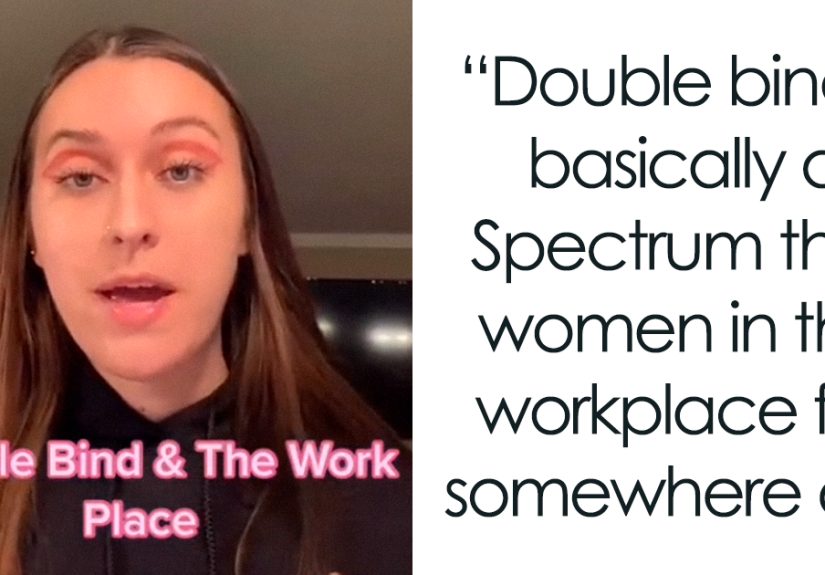
That is exactly why the conversation around everyday sexism matters. When one woman points out the tiny slights that are so normalized people barely notice them, she is not “making everything about gender.” She is naming patterns that shape who gets heard, who gets respected, who gets the credit, and who gets stuck carrying invisible labor. One awkward comment may seem minor. Fifty of them can feel like death by a thousand eye-rolls.
This article takes a closer look at the micro-sexist things women deal with every day, why they are often dismissed, and why they are not nearly as harmless as they are made out to be. Spoiler alert: “It was just a joke” has entered the chat, and it is not helping.
What Counts as a Micro-Sexist Behavior?
Micro-sexist behavior refers to subtle, normalized forms of sexism that communicate women are less competent, less authoritative, too emotional, mainly decorative, or naturally responsible for care work. These moments are often brief and deniable. That is part of their power. They are easy for the speaker to brush off and hard for the target to challenge without being labeled dramatic, difficult, or “too sensitive.”
In other words, micro-sexism is rarely just about one comment. It is about the larger message underneath it. A woman may hear, over and over again, that she should be warmer, prettier, less assertive, more assertive, less intense, more nurturing, and somehow magically available to take notes at the same time. If that sounds impossible, congratulations, you have discovered the point.
12 Micro-Sexist Things That Are So Normalized People Miss Them
1. Assuming the woman in the room should take notes
This is one of the most polished classics in the everyday sexism playlist. A meeting begins, everyone looks around, and somehow the pen drifts toward the nearest woman as if controlled by ancient office spirits. She is asked to organize, coordinate, schedule, or capture action items, even when none of that is part of her role.
The issue is not that note-taking is beneath anyone. The issue is that women are disproportionately treated as the support staff for the room, even when they are the strategist, manager, lawyer, engineer, or decision-maker. Small pattern, big message: your real job may be leadership, but your expected job is service.
2. Interrupting women, then calling it “a lively discussion”
Few things are more revealing than a man cutting off a woman mid-sentence and then congratulating the group for having “great energy.” Women are often interrupted, spoken over, or forced to fight harder to finish a thought. When they do push back, they risk being seen as rude. When they stay quiet, the room assumes they had nothing more to say. What a convenient little trap.
This kind of behavior matters because speaking time influences authority. The people who are heard are often treated as the people who lead, whether or not they had the best ideas in the first place.
3. Repeating her idea and getting the applause for it
A woman suggests something. The room nods politely and moves on. Five minutes later, a man repackages the same point with slightly different seasoning, and suddenly everyone acts like Edison just invented the lightbulb again. This is not rare. It is one of the most complained-about forms of subtle sexism in professional spaces.
The problem is not only stolen credit. It is the underlying assumption that an idea becomes more legitimate when it comes from a male voice. Over time, this affects visibility, confidence, promotions, and reputation.
4. Calling women “bossy” for behavior men get praised for
If a man is direct, he is decisive. If a woman is direct, she might get labeled difficult, abrasive, cold, intimidating, or everyone’s favorite vague insult, “a lot.” The standards are not equal, and women notice it fast.
This double standard teaches women to perform leadership while cushioning every sentence with a smile, a disclaimer, or three extra thank-yous so no one mistakes competence for confidence. Exhausting? Just a bit.
5. Treating appearance like public property
Women are still judged and commented on in ways men often are not. “You look tired.” “You should smile.” “That outfit is distracting.” “You look too young to be in charge.” “You’d be prettier if…” None of these comments are as innocent as people pretend.
Appearance-based remarks shift the focus away from expertise and toward presentation. They remind women that, in many spaces, they are expected to be both qualified and visually pleasing, which is a lovely and totally unnecessary extra assignment.
6. Assuming women are naturally better at emotional labor
Who remembers birthdays, smooths over tension, checks on the coworker who is upset, plans the goodbye card, and notices when the team is melting down? Very often, a woman. Not always because she wants to. Often because the room silently expects her to.
Emotional labor is real work, even when it does not appear on a job description. It takes time, energy, attention, and social risk. Yet it is frequently treated as a personality trait instead of labor that deserves recognition and shared responsibility.
7. Expecting women to be the default caregivers, always
Many women are still asked questions men are less likely to face: Who is watching your kids? Are you sure you want a demanding role? Can you travel with a family? Why do you need flexibility? These assumptions can appear “practical,” but they are often rooted in old gender scripts that cast women as the permanent backup system for everyone else’s needs.
At home, this shows up in equally familiar ways: women are expected to remember school forms, birthday gifts, dentist appointments, grocery shortages, and whether the dog food is running low. Somehow, the mental load is still treated like a magical female instinct instead of work with a pulse and a planner.
8. Turning sexism into a joke and calling critics humorless
Sexist jokes are often defended as harmless fun, but humor is a fast and efficient way to signal who belongs, who gets diminished, and what kinds of bias the group is willing to tolerate. Once a stereotype gets framed as comedy, anyone objecting risks being painted as uptight.
That social pressure keeps plenty of people silent. Laughing along can feel easier than becoming “the problem,” even when the punchline quietly reinforces disrespect.
9. Explaining basic things to women who already know them
You do not need a degree in social psychology to recognize the phenomenon where a woman states her expertise, and someone still explains her own field back to her as if she wandered into the room by accident. It happens in workplaces, hardware stores, medical visits, classrooms, and family discussions.
The issue is not simply being annoying, though it is extremely gifted in that department. It is the assumption that women are less likely to be the expert, even when the credentials are right there, metaphorically waving.
10. Questioning women’s judgment as “emotional”
Women are frequently told they are overreacting, too sensitive, too emotional, or taking things personally. This is one of the easiest ways to dismiss a legitimate concern without addressing it. If the reaction becomes the story, the original behavior escapes scrutiny.
It is especially frustrating because many women are not reacting to one isolated comment. They are reacting to a pattern. The person hearing only today’s sentence may think, “That was small.” The person living the pattern knows it was number eighty-seven.
11. Assuming women should be grateful just to be included
Sometimes bias shows up as low expectations dressed as generosity. A woman gets invited into a room and is expected to feel lucky, even if she is ignored, underestimated, or tokenized once she arrives. She may be visible without being truly heard, present without being empowered, praised without being promoted.
Representation matters, but participation matters too. Nobody wants a seat at the table if the chair is decorative.
12. Acting like these patterns are “too minor” to matter
This may be the most normalized micro-sexist move of all: minimizing the entire conversation. People often say, “That is not real sexism,” because they are imagining only the loudest, most obvious version of discrimination. But subtle bias shapes daily life precisely because it is constant, cumulative, and socially excused.
A thousand tiny signals can affect whether women speak up, apply for roles, trust their instincts, report problems, or feel they belong. The cuts are small. The bruise is not.
Why These Behaviors Stick Around
Micro-sexist habits survive because they are familiar. They are embedded in what many people were taught about leadership, likability, care work, beauty, authority, and gender roles. Some are passed off as manners. Some are reinforced by workplaces that reward confidence differently depending on who shows it. Some are maintained by people who genuinely do not notice the pattern because the pattern benefits them or simply feels normal.
Another reason they stick around is deniability. A person can always insist, “I didn’t mean it like that.” And sometimes they did not. Intent does matter, but impact matters too. You can accidentally step on someone’s foot and still need to move.
There is also the issue of scale. Each act is so small that calling it out can feel inconvenient or even absurd. But that is exactly why women keep naming them. Small things repeated over time become culture.
How Micro-Sexism Shows Up Beyond the Office
Workplace sexism gets most of the headlines, but everyday sexism is not confined to conference rooms and Slack messages. It shows up in medical settings when women’s symptoms are brushed off. It appears in households when women become the unpaid project managers of family life. It lurks in classrooms, hobby groups, political spaces, customer interactions, and social media comment sections where women are judged faster and forgiven less.
It can also hit differently depending on race, disability, age, class, sexuality, or cultural background. Women of color, for example, often face bias that is not just sexist but layered with racial stereotypes. Women with disabilities may have their competence questioned more often or be described as overly emotional when asserting themselves. That is why conversations about micro-sexism are strongest when they are honest about intersectionality instead of pretending all women experience bias in the same way.
What People Can Do Instead
Notice the pattern, not just the moment
If a woman says something feels off, resist the urge to judge the single incident in isolation. Ask whether this behavior happens repeatedly and who it tends to happen to. Patterns tell the real story.
Interrupt the interruption
A simple “I want to hear her finish” can change the tone of a room. So can circling credit back where it belongs: “That builds on the point Maria made earlier.” Tiny corrections can prevent tiny disrespect from becoming routine.
Stop assigning invisible labor by default
Rotate support tasks. Share emotional labor. Ask who has capacity instead of assuming who will handle it. A team culture changes quickly when helpful work is treated as shared work.
Retire appearance policing
Unless someone has spinach in their teeth and an important presentation in two minutes, there is a good chance their face does not require your commentary. Revolutionary concept, truly.
Believe women when they describe cumulative bias
Not every experience needs a courtroom drama level of evidence before it is taken seriously. If multiple women describe the same kind of subtle treatment, that is a clue worth following, not dismissing.
Experiences Related to the Topic: What This Looks Like in Real Life
The clearest way to understand micro-sexism is through lived experience, because these moments are rarely dramatic in isolation. Picture a young project manager who walks into a meeting she is leading. Before she starts, someone asks if she can grab coffee for the group since she is “heading that way anyway.” Ten minutes later, she explains the rollout plan, only to be interrupted twice by a colleague who then restates her idea in a deeper voice and receives approving nods. Nothing illegal, nothing explosive, nothing that becomes a formal complaint by lunch. But by the end of the week, she feels smaller in a room she is supposed to run.
Now picture a mother working full time from home. She is also the one who knows the pediatrician’s number, the class login, the soccer schedule, the neighbor’s phone number, the birthday gift deadline, and what is left in the fridge. Her partner might genuinely believe chores are split “pretty evenly” because he helps when asked. She is still the one doing the noticing, remembering, tracking, and prompting. That mental load is a classic example of normalized sexism because it is often invisible even inside the same household.
Then there is the woman in a male-dominated field who cannot ask one technical question without someone answering it like she is a curious intern instead of a qualified professional. She knows the material. She may have more experience than the man explaining it to her. Yet she is still treated as though competence is surprising on her. Again, the message is subtle but constant: prove yourself first, then maybe we will assume you belong.
Another common experience happens in social settings. A woman says she does not want children or does not want to marry, and suddenly half the room treats her decision like a temporary software glitch. She is told she will “change her mind,” warned not to get “too career-focused,” or nudged toward the idea that caretaking is her inevitable destiny. These remarks are often framed as concern, but they still assume that womanhood comes with a default script and that women are unusual when they do not follow it.
Even simple comments about mood can carry a sexist charge. A woman raises a valid concern at work and is told she seems emotional. A man raises the same concern and is praised for passion or high standards. One person is interpreted as irrational; the other is interpreted as serious. Over time, women learn that they are not just managing the issue at hand. They are managing everyone else’s reaction to them having an opinion in the first place.
That is why conversations like this resonate so strongly. Women are not reacting to one random joke, one weird comment, or one awkward meeting. They are reacting to years of repeated signals that tell them to be brilliant but not threatening, organized but not controlling, attractive but not distracting, assertive but not unlikeable, committed to work but always available for care. It is a ridiculous balancing act, and many women are tired of pretending it is normal.
Conclusion
When a woman points out the micro-sexist things that have become normalized, she is not nitpicking modern life into oblivion. She is doing something useful: making the invisible visible. That matters because subtle sexism is often the machinery that keeps bigger inequality running smoothly in the background.
The good news is that normalized behavior can be un-normalized. Meetings can be run differently. Labor can be shared differently. Comments can be filtered through basic respect before they leave someone’s mouth. The first step is noticing what has been hiding in plain sight all along. The second step is refusing to laugh it off just because it arrived in a small package.





 Close
Close