
Table of Contents >> Show >> Hide
- First: Is This a Question…or a Detour?
- Whataboutism 101: Naming the Move Without Starting a Flame War
- The “Perfect Response” Formula
- Ready-to-Use Scripts (Pick Your Level of Polite)
- What If They Actually Name a Men’s Issue?
- How to Spot Bad Faith Fast (So You Don’t Waste Your Day)
- A More Powerful Pivot: “OkayWhat Are You Doing About It?”
- Why This Response Works (Even When the Person Doesn’t Deserve Your Patience)
- Conclusion: You Can Care About Men Without Using Them to Silence Women
- Bonus: of Real-World Experiences (and How This Plays Out Off the Internet)
You’re in the middle of a conversation about women’s rightspay equity, harassment, reproductive freedom, safety, representation, take your pickwhen someone
slides in like a Roomba that’s detected a crumb and announces: “But what about men’s rights?”
If you’ve ever felt your brain briefly blue-screen, you’re not alone. Because sometimes that question is sincere…and sometimes it’s a conversational smoke bomb.
The trick is responding in a way that doesn’t reward the derail, but does leave the door open for good-faith discussion. And yes: there’s a way to do it
that’s firm, factual, and low-dramalike a verbal seatbelt.
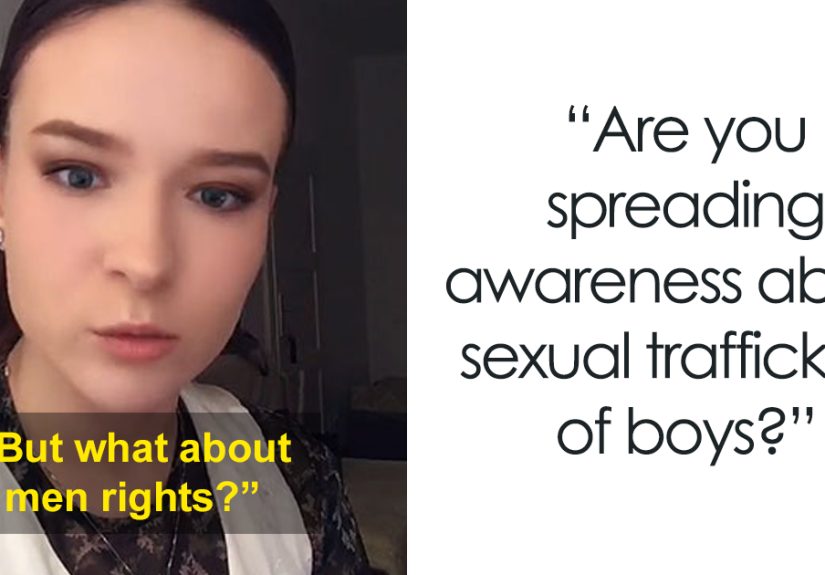
In 2021, a TikTok creator named Alla (known online as TheRussianRoulette) went viral for giving what many viewers called a “perfect” response:
she challenged the timing of the question, asked whether the person had done any real work on men’s issues, and pointed out that using “men’s rights”
as an interruption doesn’t actually help men. That’s the model we’ll build onthen we’ll turn it into practical scripts you can use in real life.
First: Is This a Question…or a Detour?
“But what about men’s rights?” can mean at least two very different things:
1) The good-faith version
Someone genuinely wants to talk about men’s issuesmental health stigma, workplace risk, custody questions, social expectations, isolation, violence, or
the pressure to “man up” until they emotionally fossilize. That’s a real conversation, and it deserves seriousness.
2) The derail version (a.k.a. “Whataboutism in a trench coat”)
Someone uses men’s issues as a counterweight to stop the conversation about women. The goal isn’t to help men; it’s to make sure women don’t get discussed
without an interrupting disclaimer. Men’s rights becomes a rhetorical “UNO Reverse” card.
The giveaway is usually the timing. If a person only “discovers” men’s rights at the exact moment women’s rights come up, that’s not advocacyit’s heckling with a cause.
Whataboutism 101: Naming the Move Without Starting a Flame War
Whataboutism is the habit of responding to one issue by throwing out a different issueoften to muddy the waters, shift attention, or avoid accountability.
In everyday conversations about gender, it often sounds like:
- “Okay, but men get hurt too.”
- “Men have problems as well, you know.”
- “Why is nobody talking about men?” (asked on a post where people are, in fact, talking.)
The key idea: Two things can be true at once. Men can face serious harms, and women can face serious harms. The “perfect response” refuses the false
competition and insists on basic conversational integrity: we can talk about men’s issues without using them to silence women’s issues.
The “Perfect Response” Formula
Here’s a reliable, non-theatrical approach that works across family dinners, comment sections, and that one coworker who treats meetings like open-mic night.
It’s three steps: Validate → Clarify → Redirect to Action.
Step 1: Validate (briefly) so you don’t get stuck defending your right to speak
Try:
“Men’s issues matter too.”
Or:
“Absolutelymen deserve safety, health, and fairness.”
This is not surrender. It’s removing the “gotcha” bait. You’re taking away the excuse for them to pretend you don’t care about men.
Step 2: Clarify (specifically) so the conversation can’t stay vague forever
Try:
“Which men’s rights issue are you talking about?”
Or:
“What’s one men’s issue you’d like to focus on after we finish this point?”
Vague concern is often a sign of bad faith. Specificity is the entrance exam for sincerity.
Step 3: Redirect to Action (the part that separates advocacy from heckling)
Try:
“If you care about that, what have you done to support it?”
Or:
“I’m happy to talk about men’s issueslet’s not use them to derail women’s issues.”
Notice what you’re doing: you’re making it socially awkward to use men’s rights as a prop. Because real concern comes with…actual concern.
Not just a pop-up ad in the middle of someone else’s sentence.
Ready-to-Use Scripts (Pick Your Level of Polite)
The calm, classroom version
“Men’s rights matter. This conversation is about women’s rights right now. If you want to discuss men’s issues, I’m open to thatwhat specific issue do you mean?”
The “I see what you did there” version
“That sounds like whataboutism. Men’s issues are real, but bringing them up only when women’s rights come up doesn’t help men.”
The boundary version (for repeat offenders)
“If your only contribution is to interrupt women’s issues with ‘what about men,’ I’m not continuing this conversation.”
The “put it on the calendar” version
“Let’s finish this topic first. Then I’m happy to spend the next 10 minutes on men’s issuesyour pick. What do you want to start with?”
This last one is sneaky-good. It calls the bluff without calling the person a name. People who truly care will pick an issue. People who just wanted a derail will
suddenly develop a scheduling conflict with reality.
What If They Actually Name a Men’s Issue?
Great. Now you can do something rare on the internet: have a productive conversation.
Here’s how to respond without letting the original topic evaporate.
Use the “Both/And” bridge
Try:
“Yesmen’s mental health is a big deal. And we can talk about that. Right now we’re discussing women’s safety at work. Both matter.”
Connect the dots: patriarchy hurts men, too
Many men’s issues are tied to rigid gender expectations: emotional suppression, risky behavior rewarded as “toughness,” reluctance to seek care, pressure to
be the provider at any cost. You don’t have to turn this into a lecture; just make the point:
“A lot of men’s problems come from the same gender system that harms women. Fighting sexism helps everyone.”
Offer real examples of men’s issueswithout making them a weapon
If you want to show you’re not dismissing men, bring up issues where there’s solid evidence and broad agreement:
- Mental health and suicide: men die by suicide at far higher rates than women in the U.S.
- Workplace danger: men account for the overwhelming majority of workplace fatalities.
- Life expectancy: men in the U.S. have a shorter average life expectancy than women.
- Violence and victimization: men can be victims of violence (including sexual violence and domestic violence), and they deserve support and services.
You don’t need to “win” with these facts. You’re making a simple point: men’s issues are realand treating them as a debate tactic is disrespectful to men.
How to Spot Bad Faith Fast (So You Don’t Waste Your Day)
Some signs you’re not in a conversationyou’re in a performance:
- They refuse to name a specific men’s issue.
- They only bring up men when women are being discussed.
- They mock women’s experiences, then demand empathy for men’s experiences.
- They jump from topic to topic so nothing gets addressed.
- They treat “equality” as a way to stop progress, not make it.
In those moments, the “perfect response” is sometimes a full stop:
“I’m not debating my humanity with you.”
A More Powerful Pivot: “OkayWhat Are You Doing About It?”
This is where the viral response hits hardest: it flips the burden back where it belongs.
If someone claims to care about men’s rights, it’s fair to ask what that care looks like in real life.
Try questions like:
- “Which organization, policy, or program do you support for that?”
- “Do you talk to your friends about mental health, or only bring it up online?”
- “When was the last time you checked on a struggling guy you know?”
- “What would you like to changeand what’s your plan?”
The goal isn’t to shame someone into silence. It’s to separate genuine concern from conversational vandalism.
Real advocacy has follow-through.
Why This Response Works (Even When the Person Doesn’t Deserve Your Patience)
The approach is effective because it does three things at once:
- It refuses the false choice. You don’t have to pick “Team Women” or “Team Men.”
- It protects the original topic. Women’s rights don’t get shoved offstage.
- It invites responsibility. Concern becomes actionor it gets exposed as a prop.
And if you sprinkle in a little humor, it keeps you from sounding like a robot reading terms and conditions:
“Men’s rights aren’t an emergency exit you pull whenever women start talking.”
Conclusion: You Can Care About Men Without Using Them to Silence Women
The best response to “But what about men’s rights?” isn’t rage, and it isn’t a 40-minute TED Talk with a laser pointer.
It’s a grounded reminder that timing matters, specificity matters, and action matters.
If someone wants to talk about men’s issues, that can be a meaningful conversationone that supports men as full human beings,
not as a rhetorical shield. And if someone wants to derail women’s issues, your response can be calm, clear, and boundary-rich:
“Yes, men matter. Now let’s stop using them as an interruption.”
Bonus: of Real-World Experiences (and How This Plays Out Off the Internet)
In real life, “But what about men?” rarely shows up in a neat debate club format. It pops up in messy placesfamily gatherings, group chats, classrooms,
break rooms, and comment sections that look like they were moderated by a tumbleweed. And the emotional whiplash is part of the point: derailing works best
when it scrambles you.
A common experience people describe is the workplace conversation that starts with a story about being talked over in meetings, only to get hit with:
“Men get interrupted too.” The problem isn’t that men never get interruptedit’s that the response is designed to make the original speaker prove the right to speak.
A useful reply here is: “Sure. I’m talking about a pattern women report at work. Can we stay on this point for one minute?” It’s polite, time-bound,
and it keeps the discussion from turning into an Olympic event where everyone tries to qualify for “Most Oppressed.”
Another scenario is the family dinner pivot. Someone mentions abortion access or maternity care, and an uncle (it’s always an uncle in the legend,
even when it’s not) says: “Men don’t get rights in divorce court.” If you want to keep the peace without endorsing the derail, you can say:
“Custody and family law are importantlet’s talk about them next. Right now we’re discussing women’s health decisions.” Then do something powerful:
actually follow through later. Bad faith hates follow-through. It thrives on drive-by objections.
In school or campus settings, the derail can be more subtle: “If women want equality, why do men have to register for selective service?”
That’s a real policy question. The best responses don’t dismiss it; they contextualize it:
“That’s a fair point. Gendered obligations like that are part of the same system we’re criticizing. We can oppose sexism and also oppose unequal burdens on men.”
You’re modeling a grown-up idea: equality isn’t a pie with limited slicesit’s a redesign of the bakery.
Online, the experience is often the comment-section swarm: someone shares a statistic about harassment or violence against women, and replies flood in
with “Men get abused too!” The most sanity-preserving response is the “both/and” plus a boundary:
“Yes, men can be victims, and they deserve support. This post is about women. If you want to discuss services for male survivors, start that threaddon’t hijack this one.”
It’s direct, and it makes the norm clear: support is welcome; derailment isn’t.
People also report a more personal version: the friend who deflects. You try to talk about sexism you’ve faced, and a male friend says,
“Women have it easier in dating.” This is where tone matters. If you care about the relationship, go softer:
“I’m not saying men don’t have struggles. I’m asking you to hear mine without changing the subject.” If they can’t do that, the issue isn’t “men’s rights.”
It’s empathy.
And finally, there’s the experience of choosing not to engage. Sometimes the safest, healthiest response is to opt out:
“I’m not having this conversation with someone who isn’t here in good faith.” That’s not weakness. That’s time management. Your energy is not a public utility.
Save it for people who can listen, learn, and actually care about men and women as humanswithout turning either into a debate tool.






 Close
Close