
Table of Contents >> Show >> Hide
- What Happened: The Post, the Boots, and the Wave of Worry
- Why People React So Intensely to Britney Spears
- “You Need Mental Help” Is Not Concern. It’s Stigma in a Hoodie.
- Body Autonomy vs. Public Alarm: Both Can Be True
- What the “Messy Home” Moment Reveals (and What It Doesn’t)
- How Social Media Turns Concern into a Mob
- What Responsible Concern Looks Like (Without the Stigma)
- Media Literacy Check: What We Actually Know vs. What We Assume
- The Bigger Conversation: Why “Worry” About Britney Keeps Returning
- How to Talk About Celebrity Mental Health Without Being Gross About It
- Conclusion: Concern Isn’t a License to Stigmatize
- Experiences Related to the Topic (Real-World Patterns People Recognize)
The internet has a special talent: it can watch a 10-second clip, zoom in like it’s auditioning for a detective show,
and then confidently deliver a diagnosisno medical degree, no context, just vibes and Wi-Fi.
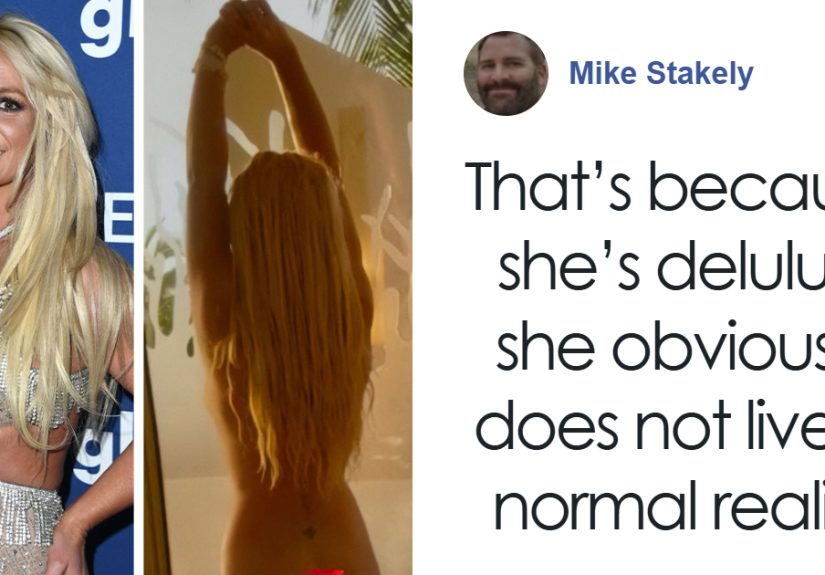
So when Britney Spears shared a revealing Instagram photo featuring knee-high boots (and little else),
the reaction wasn’t just “wow” or “scroll.” It was “concern,” “outrage,” “think pieces,” and the cruelest kind of armchair
advice: “You need mental help.”
Let’s be clear: it’s possible to feel worried about a public figure and still talk like a decent human.
It’s also possible to support someone’s autonomy and still acknowledge that the way we consume celebrity lives can get…
weird. This article breaks down what happened, why it hit a nerve, and what a healthier, more responsible conversation
looks likeespecially when mental health is being tossed around like a comment-section dodgeball.
What Happened: The Post, the Boots, and the Wave of Worry
Britney Spears’ social media has long been a mix of personal diary, performance art, and “please stop psychoanalyzing my
curtains.” In late summer 2025, she posted content that sparked renewed debate: a nude (but partially censored) photo that
emphasized her boots, plus earlier posts that some viewers interpreted as chaotic or unsettling.
The boots photo itself is straightforward in format: a highly revealing image, comments restricted, and the internet doing
what it doesturning a single post into a referendum on her life. Some people framed it as body autonomy and self-expression.
Others framed it as proof that something is “wrong.” And a loud subset turned it into an insult disguised as concern.
What made the reaction louder was timing. Around the same period, Britney shared a video filmed at home that some viewers
described as messy and concerning. The combination“unfiltered home video” plus “provocative photo”created a storyline
people felt licensed to narrate: “She’s spiraling.” Even when nobody outside her inner circle can actually know that.
Why People React So Intensely to Britney Spears
1) Parasocial relationships: the “I know her” illusion
A parasocial relationship is a one-sided bond where an audience member feels connected to someone who doesn’t know them.
Celebrities (and influencers) can feel like friends, family, or former classmates you keep up withexcept they’re not.
When you’ve watched a person perform, interview, and be covered in headlines for decades, your brain can confuse familiarity
with access.
That’s why Britney isn’t treated like “a pop star posting on Instagram.” She’s treated like a shared cultural memory.
People feel protective. People feel entitled. People feel like they’re watching a relative make “bad choices”and then they
comment like they’re calling a family meeting in the middle of a public street.
2) The conservatorship hangover
Britney’s history matters. Her conservatorship dominated public conversation for years and ended in 2021 after intense legal
battles and widespread activism. Even after its termination, the public has continued to interpret her behavior through a
single lens: “Is she okay?” That question isn’t automatically malicious, but it can become controlling when it slides into
“We should take her freedom back because we’re uncomfortable.”
There’s a tension here that never fully goes away: Britney has fought for autonomy, and the public has learned to view her
autonomy as a crisis. That is a recipe for nonstop scrutiny.
3) The internet’s favorite sport: forensic concern
Online platforms encourage “pattern spotting.” If someone posts a lot, posts emotionally, posts provocatively, or posts
differently than you expect, the algorithm practically whispers, “Make it a story.”
People analyze lighting, captions, accents, background clutter, and facial expressions like they’re grading a final exam in
“What’s Really Going On Here?”
But mental health is not a scavenger hunt. And a messy room is not a clinical assessment tool.
“You Need Mental Help” Is Not Concern. It’s Stigma in a Hoodie.
The phrase “You need mental help” gets used online as a blunt instrument. Sometimes it’s said with real worry. Often it’s
said as a put-downone that leans on stigma: the idea that mental health challenges make someone less worthy of respect,
privacy, or control over their life.
Here’s what that kind of language does:
- It turns mental health into an insult. That makes it harder for everyday people (not celebrities) to seek support.
- It encourages public diagnosis. Speculation becomes “fact” because it’s repeated loudly.
- It removes personhood. The person becomes a spectaclesomething to fix, police, or punish.
It’s also lazy. “You need mental help” skips the uncomfortable truth: we don’t actually know what’s happening. We only know
what we saw. And what we saw may be self-expression, trolling, artistic play, distress, loneliness, or a thousand other
possibilities. The internet wants one answer because one answer is easier to post in all caps.
Body Autonomy vs. Public Alarm: Both Can Be True
Two things can be true at once:
- Britney has the right to post what she wants (within platform rules and legal boundaries).
- Viewers can feel uneasy if the content seems risky, impulsive, or out of step with what they expect.
The problem isn’t having a reaction. The problem is what people do with it.
Do they respond with empathy and boundariesor do they respond with humiliation and control?
A revealing photo can be:
- Confidence (“This is my body. I’m owning it.”)
- Provocation (“I know this will break the internet. Watch.”)
- Reclamation (“I’m done being managed.”)
- Expression (“This is art to me.”)
It can also coexist with complicated feelingsloneliness, grief, anger, or stresswithout meaning the person is incapable
of making decisions.
What the “Messy Home” Moment Reveals (and What It Doesn’t)
Much of the worry around Britney’s posts wasn’t about the boots photo alone. It was about a broader narrative that formed
when viewers saw a home-video clip with a background some people described as cluttered and troubling. The online leap went
like this:
Messy environment → messy mind → danger → intervention needed.
That leap is emotionally satisfying for spectators because it creates a simple storyline: “We saw signs. We know the truth.”
But real life isn’t that tidy. Homes can be messy for dozens of reasons: pets, moving, depression, ADHD, busy schedules,
renovations, chronic illness, stress, or simply not caring about a clean backdrop for a video.
Even if a video genuinely suggests someone is struggling, the ethical next step is not public shaming. It’s compassion and
restraint.
How Social Media Turns Concern into a Mob
1) Comment migration
When a celebrity limits comments on Instagram, the conversation doesn’t disappearit relocates. People move to X, TikTok,
Reddit, Facebook, or YouTube and speak with even fewer brakes because the celebrity is less likely to see it (and because
the crowd is larger). It becomes “public discussion,” which often means “public pile-on.”
2) Engagement rewards extremes
Algorithms don’t reward nuance. They reward certainty, outrage, and spectacle. “I hope she has support” will never travel as
far as “SHE’S LOSING IT!!!” even if the first one is kinder and more accurate.
3) The collapse of boundaries
The internet blurs the line between “public work” and “private life.” Britney is a performer, but Instagram isn’t a stage
with ushers and exit signs. It’s a windowsometimes intentionally opened, sometimes left open when it shouldn’t be.
That doesn’t mean strangers get to climb through it.
What Responsible Concern Looks Like (Without the Stigma)
If you feel worried about a public figure, here are better ways to respond than “You need mental help”:
Use language that’s human, not humiliating
- Instead of: “She’s crazy.”
- Try: “I hope she has a supportive circle around her.”
- Instead of: “Someone needs to lock her up.”
- Try: “I’m uncomfortable speculating. I hope she’s safe and supported.”
Separate safety concerns from moral judgment
A revealing photo is not a moral failure. If your reaction is “This makes me uncomfortable,” name that as your
discomfortnot proof of someone else’s instability.
Don’t diagnose. Don’t pretend you can.
Mental health conditions are complex and require assessment over time by qualified professionals. A single post can’t tell
you what’s happening. “I don’t know” is not weakness; it’s accuracy.
Remember the ripple effect
When you use “mental help” as an insult against a celebrity, a teenager reading your comment learns a lesson:
mental health is mockable. That lesson lands on real people with real strugglesquietly and painfully.
Media Literacy Check: What We Actually Know vs. What We Assume
Let’s do a quick reality audit. What we know from public reporting and Britney’s own online behavior:
- Britney posts frequently, sometimes provocatively, sometimes emotionally, often with comments restricted.
- Her conservatorship ended in 2021, and legal disputes related to it continued afterward.
- Her posts can trigger debate because the public has a long history of interpreting her life through crisis narratives.
What we do not know:
- Her current mental health status.
- What care, support, or professionals she may or may not have in her life.
- Whether a post is impulsive, planned, artistic, humorous, or simply personal.
The gap between those lists is where the internet invents stories. And invented stories are not the same thing as concern.
The Bigger Conversation: Why “Worry” About Britney Keeps Returning
Britney Spears is a symbol to different groups of people:
- To fans: resilience, nostalgia, and unfinished protection.
- To critics: a cautionary tale they think they’re watching in real time.
- To media: a high-engagement headline generator.
- To activists: a reminder that control can masquerade as “care.”
When someone carries that many meanings, every post becomes more than a post. It becomes a canvas for everyone else’s
feelings. That’s not fair to herand it’s not healthy for the audience, either.
How to Talk About Celebrity Mental Health Without Being Gross About It
If you’re writing, posting, or discussing this topic publiclyespecially for a blog, podcast, or social feeduse these
guardrails:
- Lead with humility: “We can’t know what’s going on; we can only discuss public reactions and ethics.”
- Focus on systems, not speculation: stigma, online harassment, privacy, platform moderation, and media incentives.
- Avoid dehumanizing language: “crazy,” “psycho,” “needs to be locked up,” “mental case.”
- Don’t turn vulnerability into entertainment: if you feel amused, pause and ask why.
And if you’re worried about someone in your real life, channel your energy therewhere you can actually help. Check in.
Offer support. Encourage professional help when appropriate. The internet can’t “save” a stranger through comments.
Conclusion: Concern Isn’t a License to Stigmatize
Britney Spears posting a revealing boots photo after a wave of online worry is not just celebrity gossipit’s a mirror.
It reflects how quickly we confuse familiarity with entitlement, how easily “concern” becomes control, and how often mental
health gets used as a punchline.
If the goal is truly compassion, the assignment is simple (and hard): speak with care, admit what you don’t know, and stop
using mental health as a weapon. Britney deserves autonomy. The public deserves better media habits. And everyone deserves a
world where “help” isn’t delivered as an insult.
Experiences Related to the Topic (Real-World Patterns People Recognize)
Conversations like this don’t stay confined to celebrity newsthey spill into everyday life. Here are a few common
experiences people describe that echo the “boots photo + worry” moment, without pretending we know Britney’s private reality.
The longtime fan who feels protective… and exhausted
Some fans describe growing up with Britney’s music as a soundtrackschool dances, first heartbreaks, car rides with friends.
When they see a post that triggers concern, it can feel oddly personal, like watching someone from your past struggle in
public. But many also describe a second feeling: exhaustion. The cycle of “viral concern → harsh commentary → defensive
counter-commentary” becomes emotionally draining, and fans start to step back for their own mental well-being. The lesson
they learn is surprisingly mature: you can care about someone and still set boundaries with how much of their life you
consume.
The person who’s been judged from a single photo
Plenty of non-famous people have experienced a smaller version of this dynamic: posting something bold or different and
having others assume it means you’re “not okay.” A revealing outfit gets interpreted as attention-seeking. A messy room in
the background becomes “evidence.” A weird joke turns into “a cry for help.” People who’ve lived through that often say the
worst part isn’t the confusionit’s the certainty. When others decide they know what’s happening inside your head, they stop
listening to what you actually say.
The mental health advocate who winces at comment sections
Advocates often talk about the whiplash of seeing mental health discussed constantlyand poorly. They’ll say: it’s good that
people are more aware, but harmful that “awareness” sometimes looks like insults dressed up as advice. In their experience,
the phrase “You need mental help” is especially damaging because it frames help as shameful. They’ve seen people hesitate to
seek therapy or medication because they don’t want to be labeled the way celebrities are labeled online. Their practical
advice is boring but powerful: if you wouldn’t say it to a friend who’s struggling, don’t say it to a stranger for
entertainment.
The social media manager who knows how the internet escalates
People who work in social mediawhether for brands, creators, or public figuresoften describe comment restriction as a
double-edged sword. Turning off comments can reduce direct harassment, but it can also push speculation elsewhere, where the
tone is harsher and the rumors travel faster. They’ve watched “concern” morph into conspiracy threads in hours. Their
takeaway: platforms are not designed for delicate, ethical conversation. They are designed for velocity. If you want nuance,
you have to choose it intentionallybecause the algorithm won’t.
The therapist who sees the “diagnosis culture” problem
Clinicians sometimes talk about a growing cultural habit: labeling. People slap diagnostic terms on strangers, exes, and
celebrities because it feels like clarity. But real mental health work is slower and more respectful. It involves context,
consent, and careful assessmentnot a screenshot and a hot take. Therapists frequently remind people that it’s okay to name
your reaction (“This worried me”) without naming someone else’s condition. In everyday life, that distinction can prevent a
lot of harm: it keeps the focus on empathy instead of judgment.
Put together, these experiences point to a simple conclusion: the healthiest response to viral “worry” isn’t louder
speculation. It’s better language, better boundaries, and a refusal to turn someone’s humanity into a group project.







 Close
Close