
Table of Contents >> Show >> Hide
Punk gets treated like a costume aisle: leather jacket, ripped jeans, attitude sold separately. But the original punk lifestyle
wasn’t about looking “rebellious” for a photoit was about living like the system couldn’t hand you a permission slip if it tried.
DIY wasn’t a vibe; it was the operating system. Community wasn’t a hashtag; it was the floor you slept on after a show because gas
money went to the van (and the van went to the mechanic, again).
The bands below didn’t just play punk. They treated punk like a daily practice: self-releasing music, resisting industry
pressure, building scenes, challenging authority, and sometimes making everyone a little uncomfortable on purpose (because comfort
has always been overrated). Think of this list as ten case studies in what “punk ethos” looks like when it isn’t being filtered
through a merch table.
1) Black Flag
If punk had an employee-of-the-month award for sheer stubbornness, Black Flag would’ve framed it, stapled it to a telephone pole,
and driven a thousand miles to play a show that might get shut down anyway. Their legacy isn’t just the musicit’s the blueprint:
run your own label, book your own tours, and build a national hardcore punk circuit by showing up where nobody else bothers to go.
How they lived it
Black Flag embodied the DIY punk ethic in motion: relentless touring, rough conditions, and a “we’ll do it ourselves” mindset that
inspired countless local scenes. In practice, that meant hauling gear, sleeping wherever you could, and proving that independent
music didn’t need corporate oxygen to breathe.
Why it still matters
Their grind made punk feel attainable. You didn’t need industry validationyou needed a band, a plan, and the willingness to play
for a half-broken PA in a room that smelled like spilled soda and civic disapproval.
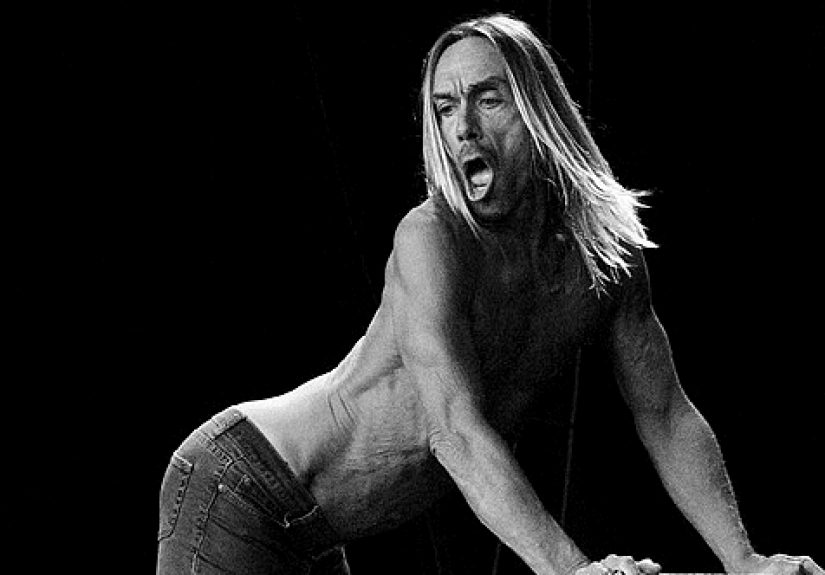
2) The Stooges
The Stooges were punk before punk had a namelike a caveman inventing fire and immediately using it to scare everyone at the village
meeting. Their sound was raw, loud, and confrontational, and their stage presence helped define the idea that rock could be a
full-body, full-risk event.
How they lived it
They didn’t polish the edges; they celebrated the splinters. The Stooges weren’t chasing mainstream approval so much as daring it
to look away. That refusal to behave became foundational for punk attitude: messy, human, and proudly allergic to “professional.”
Why it still matters
Punk lifestyle isn’t always about rulesit’s often about rejecting the unspoken rules. The Stooges helped write that rejection in
capital letters.
3) Crass
Crass treated punk less like a genre and more like a moral argument with a drum kit. They weren’t interested in being famous; they
were interested in being consistentpolitically, ethically, and artistically. If your version of punk doesn’t include praxis, Crass
would like a word. Several, actually. Possibly in all caps.
How they lived it
They pushed anarcho-punk as both message and method: releasing work on their terms, embracing anti-authoritarian politics, and
centering activism and direct action as part of the band’s identitynot a side project for when touring slows down.
Why it still matters
Crass is proof that punk lifestyle can be disciplined rather than self-destructive: a deliberate commitment to live differently,
not just loudly.
4) Butthole Surfers
Some bands rage against the machine. Butthole Surfers looked at the machine, made prolonged eye contact, and then showed up with a
projector, a nightmare collage, and the kind of sonic chaos that makes polite society reach for the “Is this… allowed?” handbook.
How they lived it
Their live reputation was the point: performance-as-assault (artfully), humor-as-weapon, and experimentation without asking
permission. They leaned into discomfort and spectacleless “clean rebellion,” more “beautiful mess that won’t sit still.”
Why it still matters
Punk isn’t obligated to be tasteful. Butthole Surfers made a career out of reminding everyone that “safe” art is usually just
decoration.
5) Minor Threat
Minor Threat didn’t last long, but they left a crater. Beyond the speed and intensity of their hardcore sound, they built a punk
lifestyle around clarity: do it yourself, keep it honest, and don’t let the scene’s worst habits become your personality.
How they lived it
The band’s disciplined approach and the straight edge spark they helped ignite made a statement: you can reject mainstream culture
and reject self-destruction. That’s not “less punk.” That’s punk refusing to be told what rebellion must look like.
Why it still matters
Minor Threat proved punk ethics can include boundaries. For a lot of people, that was radical: a counterculture that didn’t require
wreckage as an entry fee.
6) Sonic Youth
Sonic Youth didn’t try to “keep punk pure.” They treated punk like a permission slip to experimentthen shredded the slip, taped it
to a guitar, and detuned the guitar until it sounded like a city arguing with itself. Their punk lifestyle was about refusing the
obvious choice.
How they lived it
Coming out of New York’s experimental art scene, they pushed noise rock into spaces that weren’t supposed to fit it: alternate
tunings, prepared guitars, long-form tension, and an insistence that weirdness could be serious craft.
Why it still matters
Punk isn’t only a soundit’s an attitude toward creation. Sonic Youth made that attitude feel limitless, and they did it without
sanding off the edges that made it matter.
7) Bad Brains
Bad Brains were a lightning strike in human form: blistering speed, razor-sharp musicianship, and a genre-crossing identity that
refused to stay in its lane (because lanes are for traffic, not art). They also carried an ethosPositive Mental Attitudethat
stood out in a scene that sometimes equated misery with authenticity.
How they lived it
As an all-Black band in a largely white punk world, Bad Brains broke barriers by existing loudly and brilliantly. They blended
hardcore with reggae and carved out a space where punk could be furious and uplifting without turning into a greeting card.
Why it still matters
Punk lifestyle is about defying expectations. Bad Brains did that musically, socially, and spirituallywithout losing an ounce of
intensity.
8) Minutemen
The Minutemen made punk feel like real life: short songs, big ideas, zero rock-star pretending. They were the working-class brain
trust of American punkfunny, sharp, and allergic to ego. Their motto “jam econo” wasn’t branding; it was how they survived and
created.
How they lived it
Their thrift-forward approach to touring and recording matched their music: efficient, inventive, and fiercely independent. They
folded funk, jazz, politics, and minimalism into punk without asking the genre police for a permit.
Why it still matters
If punk lifestyle means turning limitations into identity, the Minutemen were masters. They didn’t “overcome” constraintsthey used
them as fuel.
9) Dead Kennedys
Dead Kennedys turned punk into a courtroom-level stress test for free speech, political satire, and cultural hypocrisy. Their songs
skewered power with the kind of humor that isn’t trying to be liked. And when controversy arrived, it didn’t bounce offit stuck,
cost money, and still didn’t change the band’s willingness to poke the bear.
How they lived it
They fused fast, abrasive punk with sharp political commentary, then backed it up by weathering real-world consequencesmost
infamously the Frankenchrist-related obscenity case that dragged their art into legal scrutiny. That’s punk lifestyle in high
contrast: not just talking about authority, but colliding with it.
Why it still matters
Plenty of bands claim “anti-establishment” until it gets expensive. Dead Kennedys made it expensive and kept going anyway.
10) Fugazi
Fugazi are the rare band that people cite as a “business model” and a “moral compass” without it sounding like a corporate LinkedIn
post. They treated punk lifestyle as a set of practical choices: keep ticket prices low, keep shows all-ages, avoid merch-as-identity,
and protect the community space you’re creating.
How they lived it
They leaned hard into accessibility and ethicspolicing their own shows, refusing the usual rock-star machinery, and maintaining
an approach that made fans feel like participants rather than customers. Their enormous archive of live performances also reflects a
mindset of documentation and transparency: the work matters, the history matters, and the community matters.
Why it still matters
Fugazi show that punk lifestyle can be sustainable. Not “soft,” not “watered down”just consistent, principled, and stubbornly
human.
What “Punk Lifestyle” Really Means (and What These Bands Have in Common)
Across wildly different soundsproto-punk, anarcho-punk, hardcore, noise rock, art punkthese bands share a few unmistakable punk
values:
- DIY independence: making, releasing, touring, and building without waiting for institutional approval.
- Anti-authoritarian backbone: challenging power, norms, and the idea that art must be “respectable.”
- Community over celebrity: scenes, zines, all-ages shows, and local networks that outlast any one band.
- Integrity under pressure: resisting the easy sellout path, even when it’s inconvenient (or legally annoying).
- Creative risk: valuing expression over polishwhether that means speed, noise, satire, or all three at once.
of Real-World Punk Experiences You’ll Recognize (or Want to Try)
If you’ve ever been near punk as a living culturenot just a playlistyou know the “punk lifestyle” is mostly made of small choices
that add up. It’s buying a ticket because the show is all-ages and your little cousin wants to go. It’s watching a band sell CDs
for a fair price and realizing you’re not being treated like a walking wallet. It’s the moment you learn a zine exists because
somebody got tired of waiting for mainstream media to notice their scene, so they stapled their own news together and made it real.
It’s also the strangely wholesome chaos of a cramped venue where the sound system is questionable but the energy is perfect. You
don’t “attend” a punk show the way you attend a formal event. You become part of a temporary cityone built out of sweat, feedback,
and mutual agreement that tonight matters. Someone’s taping a flyer to a wall with the urgency of a political campaign. Someone’s
explaining a band’s lyrics like it’s a survival manual. Someone else is selling patches with a hand-lettered sign that basically
says, “Support art, not algorithms.”
Then there’s the DIY logisticsthe unglamorous stuff that’s secretly the whole point. You learn how to carry gear without whining
because everybody carries something. You learn that “touring” might mean sleeping on a floor, eating whatever’s cheap, and still
playing like it’s Madison Square Gardenbecause the people who showed up deserve that respect. You learn that community is the real
headliner: the local promoter who took a risk, the friend who lent a drum kit, the person at the door who keeps the space safer by
paying attention.
Punk lifestyle also includes the uncomfortable education. You see how a scene can get threatenedby violence, by gatekeeping, by
bigotry, by people who mistake intimidation for “being hardcore.” And you see how scenes fight back: bands calling it out onstage,
crowds refusing to give hate a home, organizers making rules and enforcing them. It’s not always pretty, but it’s real. Punk
teaches you that freedom isn’t passive; it’s maintained.
Most of all, the punk experience is the permission it gives you. You realize you can start a band even if you’re not a virtuoso.
You can make art even if nobody “invited” you. You can build a tiny label, book a show, print a zine, form a collective, or just be
the person who shows up consistently and helps the scene stay alive. That’s why these ten bands still feel punk in 2025 and beyond:
they didn’t just represent rebellionthey practiced it, in ways you can still imitate without needing a time machine or a trust fund.
Conclusion
The funniest thing about punk is that people keep trying to turn it into a product, even though punk’s main hobby is refusing to be
a product. These ten bands lived the punk lifestyle by choosing independence over ease, ethics over hype, and community over
celebrity. Whether they were touring relentlessly, documenting scenes through zines, pricing shows so regular humans could attend,
or daring authority to blink first, they proved punk is less about what you wear and more about what you won’t compromise.




 Close
Close