Table of Contents >> Show >> Hide
- 1. Canada Has the Longest Coastline on the Planet
- 2. Canada Is the Undisputed Lake Champion of the World
- 3. One Province Basically Banned Rats
- 4. There’s a Town Called the “Polar Bear Capital of the World”
- 5. Part of Canada Has “Missing” Gravity
- 6. Canada Dominates the Maple Syrup World
- 7. It’s Bilingualand Incredibly Multilingual
- 8. Canada Officially Loves Hockey and Lacrosse
- 9. The Beaver and the Maple Leaf Are More Than Cute Symbols
- 10. It Stretches From Mild Rainforests to Arctic Tundra
- Bonus: What It’s Like to Experience These Canada Facts in Real Life
- Conclusion
Mention Canada and most people picture maple syrup, polite neighbors, and a lot of snow.
While none of that is exactly wrong, the real Canada is far more surprising. This huge
North American country hides strange science, quirky wildlife capitals, and enough lakes
and coastline to make any geography teacher giddy. Think of this as a Listverse-style
countdown of Canada facts: part trivia night goldmine, part travel inspo, and just a
little bit weird.
Below are 10 fascinating facts about Canada that go beyond clichés. We’ll talk about
gravity that mysteriously goes “missing,” an entire province that declared war on rats,
and a small town where polar bears outnumber people in the busy season. Whether you’re
a student, a traveler, or just a curious human, these Canada facts will give you a fresh
look at the world’s second-largest country.
1. Canada Has the Longest Coastline on the Planet
Where three oceans welcome one country
Canada doesn’t just have a long coastline; it has the longest coastline in the world,
stretching over 200,000 kilometers (more than 125,000 miles) when you trace every bay,
inlet, and island edge. That’s almost five times longer than the coastline of any other
country. It touches three major oceans: the Atlantic, the Pacific, and the Arctic.
If you tried to walk the entire thing at a modest 20 kilometers a day, you’d need
decades and a very sturdy pair of boots.
This massive coastline shapes Canadian life in countless ways. Coastal communities rely
on fishing, shipping, and tourism, while the country’s marine ecosystems help regulate
climate, store carbon, and support a huge variety of wildlife. From the foggy shores
of Newfoundland to the orca-filled waters off British Columbia, “coast life” in Canada
is anything but one-size-fits-all.
2. Canada Is the Undisputed Lake Champion of the World
So many lakes, you’ll run out of names
If you like lakes, Canada is your happy place. By many estimates, it has more lakes than
all other countries combinedhundreds of thousands of them, from tiny backcountry ponds
to the enormous Great Lakes that it shares with the United States. Together, Canada’s
lakes hold a huge percentage of the world’s fresh surface water.
This lake overload means summer in Canada often involves cottages, canoes, and mosquito
spray. It also has serious environmental importance: those lakes store freshwater, provide
habitat for fish and birds, and help regulate regional climates. The country’s relationship
with water is so central that many Canadian cities and towns proudly market their lakefront
lifestyles to both residents and tourists.
3. One Province Basically Banned Rats
Alberta’s quiet war against the world’s least-loved rodent
Alberta has a claim that sounds like an urban legend: it is essentially rat-free. Unlike
most of North America, where Norway rats are just part of the scenery (and sometimes the
subway), Alberta decided early on that rats were not invited. Starting in the 1950s, the
province set up a strict “rat control zone” along its eastern border, trained inspectors,
and aggressively eliminated any rats that crossed into the province.
Today, a combination of legal rules, public education, and rapid-response pest control
teams keeps rat populations from establishing permanent footholds. A rat sighting in
Alberta is serious enough to make the news. It’s not a total impossibilityrats do
occasionally show upbut the province’s program is widely considered one of the most
successful large-scale pest control efforts in the world. If you’re terrified of rats,
Alberta might be your dream destination.
4. There’s a Town Called the “Polar Bear Capital of the World”
Churchill, Manitoba, where the bears roam and tourists follow
On the western edge of Hudson Bay lies Churchill, Manitoba, a small town with a very big
nickname: the “Polar Bear Capital of the World.” Every autumn, hundreds of polar bears
migrate through the area, waiting for the sea ice to form so they can head out to hunt
seals. During peak season, you can literally see bears wandering near townsafely viewed
from special tundra vehicles, of course.
Churchill has turned this natural phenomenon into a thriving ecotourism industry, with
guided tours, wildlife viewing platforms, and strict safety rules. It’s also a fantastic
place to spot beluga whales in summer and the northern lights in winter. Few places on
Earth give you such a dramatic reminder that humans are sharing space with one of the
world’s top predators.
5. Part of Canada Has “Missing” Gravity
Hudson Bay’s strange physics lesson
Here’s a Canada fact that sounds like sci-fi: some areas around Hudson Bay have slightly
lower gravity than much of the rest of the planet. No, you won’t float away, and you’re
not going to instantly lose weight for swimsuit season. But precise satellite measurements
show that the gravitational pull there is measurably weaker than average.
Scientists think this oddity is due to two main factors. First, the region was once buried
under a massive ice sheet during the last Ice Age. As that ice melted, Earth’s crust has
been slowly “rebounding,” and the redistribution of mass affects gravity. Second, complex
movements in the mantle deep below the surface also shift mass around. The result is a
gravity “anomaly” that turns Canada’s north into a real-world physics classroom.
6. Canada Dominates the Maple Syrup World
Liquid gold from the sugar maple
Maple syrup isn’t just a cute souvenir; it’s big business and a deep cultural symbol.
Canada produces the vast majority of the world’s maple syrupoften around three-quarters
or more of global supply in a given yearwith the province of Quebec responsible for the
lion’s share. Every spring, maple farmers tap trees, collect sap, and boil it down into
the thick, amber “liquid gold” stacked on breakfast tables worldwide.
Maple syrup has Indigenous roots, long predating European settlement. Indigenous peoples
developed techniques for tapping maple trees and boiling sap, and those methods evolved
into today’s modern sugaring operations. The industry is now tightly organized, complete
with quality controls, export markets, and even infamous syrup heists. When you drizzle
real Canadian maple syrup over your pancakes, you’re tasting a centuries-old tradition.
7. It’s Bilingualand Incredibly Multilingual
English, French, and far beyond
Officially, Canada is a bilingual country: English and French both have federal status,
and you’ll see both languages on everything from cereal boxes to road signs. Quebec is
the only province that is officially French-speaking, while New Brunswick is officially
bilingual. The rest of the country is predominantly English-speaking, but that’s only
the start of the story.
Thanks to immigration and vibrant Indigenous communities, Canada is truly multilingual.
Indigenous languages such as Inuktitut, Cree, and Ojibwe are spoken across the country,
and there are sizable communities that use Punjabi, Mandarin, Tagalog, Arabic, and many
other languages at home. Canada’s multiculturalism policy doesn’t just look good in
brochuresit’s woven into the sounds you hear on city streets and public transit every day.
8. Canada Officially Loves Hockey and Lacrosse
Two national sports, endless debates
Canadians are famous for their love of hockey, and for good reason. Ice hockey is the
official national winter sport and a major part of Canadian identity. NHL franchises in
cities like Toronto, Montreal, Edmonton, Calgary, Vancouver, Winnipeg, and Ottawa draw
passionate fans, and “Hockey Night in Canada” has been a cultural ritual for generations.
But hockey doesn’t get all the official glory. Canada’s national summer sport is lacrosse,
which has Indigenous origins dating back centuries. Early versions of lacrosse were not
just games but also ceremonial events involving hundreds of players and lasting for days.
Modern lacrosse has grown into a fast-paced, high-scoring sport played in schools, clubs,
and professional leagues, reminding Canadians that their sporting history started long
before ice rinks and Zambonis.
9. The Beaver and the Maple Leaf Are More Than Cute Symbols
From fur trade to flag
Canada’s national symbols might look adorable on T-shirts, but they come with serious
history. The beaver became an official emblem in the 1970s, but its importance dates
back to the fur trade, when beaver pelts were a key driver of the colonial economy.
European demand for beaver hats helped shape trade routes, alliances, and conflicts,
especially involving Indigenous nations and European companies.
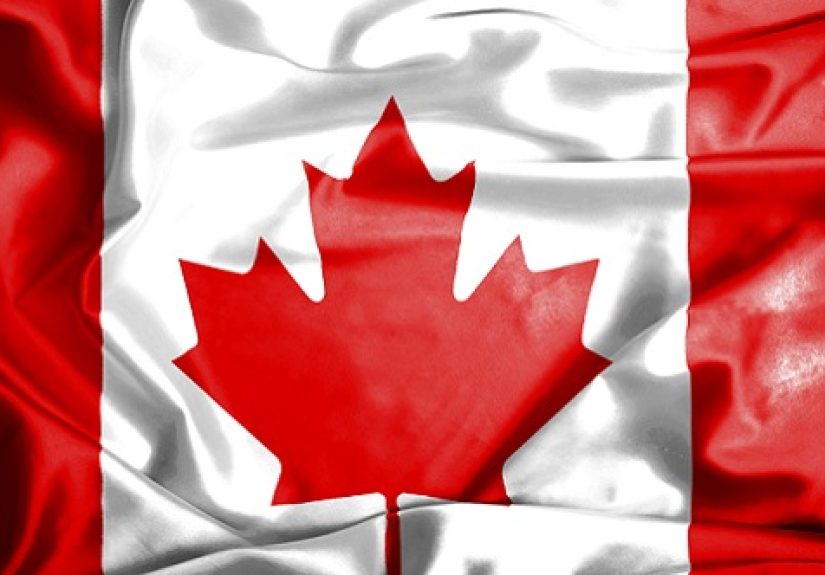
The maple leaf, now front and center on the Canadian flag, also has deep roots. Maple
trees were vital for both sap and timber, and the leaf emerged as a symbol of Canadian
nature and identity by the 19th century. When Canada adopted its modern red-and-white
flag in 1965, the single stylized maple leaf put that symbolism on full display. Today,
both the beaver and the leaf signal “Canada” instantly around the globe.
10. It Stretches From Mild Rainforests to Arctic Tundra
One country, almost every climate
Canada covers such a huge slice of the Northern Hemisphere that it packs in an impressive
range of climates. On the Pacific coast, parts of British Columbia have mild, rainy
winters and lush temperate rainforests. Move inland, and you’ll find prairie provinces
with bitterly cold winters and hot, sometimes stormy summers. Farther north, the Arctic
and subarctic regions experience long, dark winters and brief summers filled with
midnight sun.
Canada also holds some extreme weather records. The coldest recorded temperature in the
country was around –63°C (about –81°F) in the Yukon, cold enough to freeze your eyelashes
solid. Yet Canadian cities like Vancouver and Victoria can go entire winters with barely
any snow. Put simply, there is no single “Canadian weather”just a lot of very different
local experiences under one flag.
Bonus: What It’s Like to Experience These Canada Facts in Real Life
From the Trans-Canada Highway to northern lights safaris
Knowing these fascinating facts about Canada is one thing; feeling them is another.
Imagine starting your journey on the Atlantic coast in Nova Scotia, watching waves
crash against cliffs while seabirds circle overhead. Here the coastline fact becomes
real: you sense how the ocean shapes daily life, from seafood-heavy menus to the fog
horns echoing at dawn. Drive inland and you quickly realize that distances on a map do
not match how they feel in your legs and your fuel tankthe country is just that big.
As you head west along the Trans-Canada Highway, lakes begin to appear so often that
you stop counting. In northern Ontario, stretches of road weave past water on both
sides, lined with dense forests that glow orange and red in autumn. You might pull
off at a tiny roadside park, dip your toes in a clear lake, and share a picnic table
with a family that casually mentions they come here “most weekends,” as if having a
private postcard view is no big deal. It’s here that Canada’s freshwater wealth stops
being a statistic and starts feeling like a lifestyle.
Further west, in the Prairies, you might detour into Alberta and see signs proudly
advertising the province’s rat-free status. Locals talk about it with a mix of genuine
pride and dry humor: “We have long winters, but at least we don’t have rats.” It’s a
reminder that public policy can be oddly specific and surprisingly effective. At the
same time, you’ll notice how multicultural the cities arefood courts where you can
order poutine, pho, samosas, and sushi within a few stepsshowing off Canada’s
multilingual, multicultural reality without anyone needing to give a speech about it.
If you push north to Churchill, Manitoba, the trip takes on a different energy. You board
a small plane or an overnight train and step out into crisp Arctic air. Suddenly, the
polar bear fact is no longer triviait’s safety instructions in your hotel lobby and
stories from guides who know individual bears by their behavior. You climb into a tundra
vehicle and watch a massive white silhouette emerge from the snow, sniffing the air and
glancing at the curious humans behind glass. Later that night, you walk outside (with a
guide, just in case) and see ribbons of green aurora sweeping across the sky. Canada’s
vast, cold, and beautiful north stops feeling abstract and becomes deeply personal.
In Quebec or New Brunswick, you might visit a sugar shack during maple season. Buckets
or plastic tubes hang from maple trees like decorations, and the air smells faintly of
smoke and caramel. You taste hot maple taffy poured onto snow, then hardened and rolled
onto a stick, and suddenly Canada’s dominance in maple syrup production makes perfect
sense. It’s not just an export industry; it’s comfort food, childhood memories, and a
small, sweet ritual at the end of a long winter.
Finally, if you end your journey in Vancouver or Victoria, you’ll swap parkas for rain
jackets. People jog along the seawall in January, cherry blossoms pop earlier than you’d
expect in a “cold” country, and mountains rise straight out of the ocean. On a clear day,
you can ski in the morning and paddleboard in the afternoon. It’s one more reminder that
Canada’s climate can’t be summed up by snowflakes alone. When you fly home, those “fun
facts about Canada” you once read online now carry the smell of pine trees, the crunch
of lake ice, and the taste of pure maple syrup.
That’s the real magic of these fascinating facts: once you’ve walked the coastline,
shivered under an Arctic sky, or sipped maple syrup at the source, the trivia turns
into stories you’ll keep telling long after your passport is stamped.
Conclusion
From gravity anomalies and rat-free zones to maple syrup empires and polar bear
hotspots, Canada is full of surprises hiding behind its polite reputation. These
fascinating facts about Canada show how geography, history, Indigenous traditions,
and modern multicultural life all collide in one enormous, diverse country.
Whether you’re planning a trip, prepping for a quiz, or just expanding your
Canada trivia, this list is a reminder that there’s always more to discover north
of the border.