
Table of Contents >> Show >> Hide
- Why Drought-Tolerant Shrubs Are a Smart Long-Term Investment
- 12 Drought-Tolerant Shrubs That Stay Beautiful With Less Water
- 1) California Lilac (Ceanothus)
- 2) Manzanita / Bearberry Types (Arctostaphylos spp.)
- 3) Rockrose (Cistus)
- 4) Texas Sage / Texas Ranger (Leucophyllum frutescens)
- 5) Fragrant Sumac (Rhus aromatica)
- 6) Ninebark (Physocarpus opulifolius)
- 7) Juniper (Juniperus spp.)
- 8) Yaupon Holly (Ilex vomitoria)
- 9) Groundsel Tree / Silverling (Baccharis halimifolia)
- 10) Shrubby Cinquefoil (Dasiphora fruticosa / Potentilla fruticosa)
- 11) Glossy Abelia (Abelia × grandiflora)
- 12) Spirea (Spiraea spp.)
- Quick Planning Matrix: Match Shrub to Site
- Common Mistakes That Make “Drought-Tolerant” Shrubs Fail
- Conclusion
- 500-Word Experience Section: Real-World Lessons From Water-Wise Shrub Gardens
If your yard has ever looked at your watering can and said, “That all you got?”, this guide is for you.
The best drought-tolerant shrubs are not just survivors. They are structure plants: they hold color, shape,
and pollinator value when the forecast says “sunny, sunny, and also sunny.”
This article synthesizes practical, research-based guidance from U.S. university extensions, federal water-efficiency
recommendations, and botanical garden plant profiles. The core takeaway: “drought-tolerant” does not mean
“plant-and-forget forever.” It means smart plant choice, smart placement, and smart establishment. Once roots are established,
these shrubs can dramatically reduce irrigation demand while keeping your landscape beautiful and functional.
Why Drought-Tolerant Shrubs Are a Smart Long-Term Investment
Water-wise shrubs lower monthly water use, reduce maintenance chores, and improve resilience in heat waves.
Many also support birds and pollinators, especially native or near-native species. Compared with thirsty annual-heavy
beds, shrub-forward designs generally require less frequent irrigation and fewer emergency interventions.
What “Low-Maintenance” Actually Means
- Less frequent watering once established (not zero water forever).
- Fewer pest and disease issues when planted in the right site.
- Less pruning, usually seasonal shaping instead of weekly haircut duty.
- Better stress tolerance in heat, wind, and lean soils.
The 5 Rules Before You Plant Anything
- Match shrub to USDA hardiness zone and your summer heat reality.
- Prioritize drainage; many drought shrubs hate soggy roots more than dry air.
- Plant in fall or cooler weather when possible for stronger root establishment.
- Mulch 2–3 inches to reduce evaporation and moderate soil temperature.
- Water deeply, then less often to train deeper root systems.
12 Drought-Tolerant Shrubs That Stay Beautiful With Less Water
Below are 12 proven options with practical notes on where they shine, how to care for them, and what to watch out for.
Think of this as your “choose your own low-water adventure,” but with fewer plot twists and more flowers.
1) California Lilac (Ceanothus)
A pollinator-friendly, flowering shrub known for blue-toned bloom clouds and strong dry-soil performance once established.
Great for sunny borders, slope plantings, and informal hedges in appropriate climates.
- Best for: Full sun, well-drained sandy or rocky soils.
- Maintenance: Low; light pruning after bloom.
- Pro tip: Avoid wet, heavy soils to reduce root stress.
2) Manzanita / Bearberry Types (Arctostaphylos spp.)
Evergreen texture, sculptural branches, and excellent low-water performance make this a designer favorite for modern
and native-inspired landscapes.
- Best for: Lean, sharply drained soils; sun to light shade depending on type.
- Maintenance: Very low once settled.
- Pro tip: Keep irrigation conservative; excessive summer water can invite problems.
3) Rockrose (Cistus)
Fast-growing evergreen shrub with papery flowers and year-round structure. Rockrose is a classic choice for coastal
and Mediterranean-style gardens.
- Best for: Full sun, poor-to-average soils, coastal exposures.
- Maintenance: Low; minimal pruning.
- Pro tip: Excellent for dry banks and hot reflected-heat areas.
4) Texas Sage / Texas Ranger (Leucophyllum frutescens)
Silvery foliage, humidity-triggered bloom flushes, and serious heat tolerance. If your garden feels like an outdoor
pizza oven by July, this shrub is ready.
- Best for: Full sun, hot climates, excellent drainage.
- Maintenance: Very low once established.
- Pro tip: Avoid overwatering; this plant prefers a conservative irrigation schedule.
5) Fragrant Sumac (Rhus aromatica)
Native-friendly, tough, and useful on slopes. Offers seasonal interest and good tolerance of varied soils.
- Best for: Sun to part shade, erosion-prone sites, broad adaptability.
- Maintenance: Low to moderate (manage spread and shape).
- Pro tip: Great option for stabilizing banks and filling difficult dry areas.
6) Ninebark (Physocarpus opulifolius)
A rugged native shrub with exfoliating bark, pollinator flowers, and colorful foliage cultivars. It tolerates
drought and challenging soils better than many “pretty but fussy” alternatives.
- Best for: Mixed shrub borders, mass plantings, wildlife gardens.
- Maintenance: Low; periodic thinning keeps it tidy.
- Pro tip: Choose compact cultivars where space is tight.
7) Juniper (Juniperus spp.)
Evergreen workhorse for structure, screening, and year-round color. Many forms are drought tolerant and thrive
in lean, sunny sites.
- Best for: Full sun, dry-to-average soils, low-maintenance designs.
- Maintenance: Low.
- Pro tip: Excellent choice where you need reliable evergreen bones in a xeric plan.
8) Yaupon Holly (Ilex vomitoria)
Adaptable evergreen shrub with high landscape utility: hedge, screen, specimen, or clipped form. Drought and salt tolerance
make it especially useful in southern and coastal landscapes.
- Best for: Sun to shade, varied soils, coastal exposure.
- Maintenance: Low; responds well to pruning.
- Pro tip: Plant male + female selections if you want strong berry display.
9) Groundsel Tree / Silverling (Baccharis halimifolia)
Fast, tough, and tolerant of heat, drought, and salt. A useful option for naturalized edges and difficult coastal conditions.
- Best for: Coastal or rough sites, habitat-style plantings.
- Maintenance: Low, but monitor spread.
- Pro tip: Avoid using where aggressive self-seeding would be a problem.
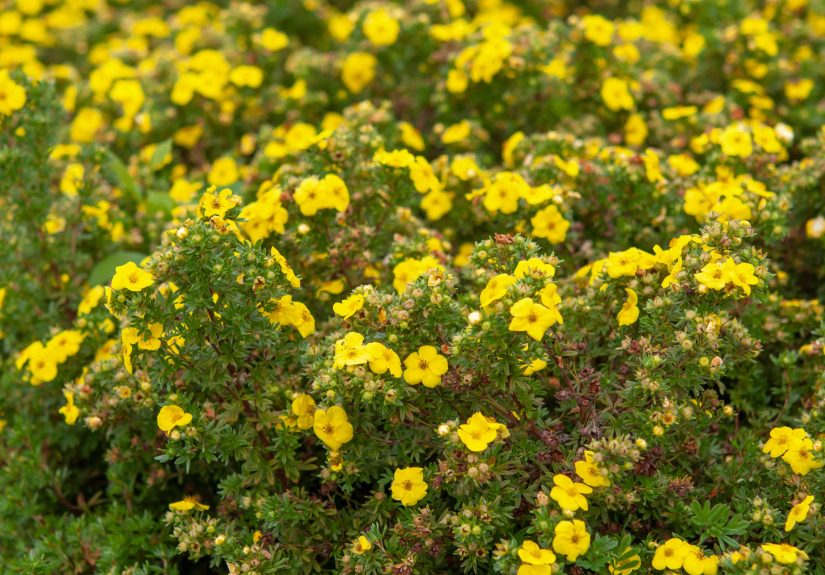
10) Shrubby Cinquefoil (Dasiphora fruticosa / Potentilla fruticosa)
Long bloom season, compact habit, and drought tolerance in well-drained soils. A practical shrub for sunny, cooler-climate gardens.
- Best for: Full sun, cooler regions, mixed borders.
- Maintenance: Low; light rejuvenation pruning as needed.
- Pro tip: In humid regions, give extra air circulation to limit fungal issues.
11) Glossy Abelia (Abelia × grandiflora)
A long-blooming shrub with pollinator appeal and strong tolerance once established. Works in hedges, massing, and foundation beds.
- Best for: Full sun to partial shade, well-drained soils.
- Maintenance: Low; late-winter shaping if needed.
- Pro tip: Great “set it and enjoy it” choice for busy homeowners.
12) Spirea (Spiraea spp.)
Fast-growing, versatile shrubs with reliable bloom and broad landscape use. Once established, many spireas show good drought tolerance.
- Best for: Borders, foundation plantings, quick fill-in areas.
- Maintenance: Low to moderate depending on cultivar and size goals.
- Pro tip: Prune after flowering; mulch helps preserve root-zone moisture.
Quick Planning Matrix: Match Shrub to Site
| Site Condition | Top Picks | Why They Work |
|---|---|---|
| Hot reflected heat (south/west walls) | Texas Sage, Rockrose, Juniper | Heat tolerance + low water demand |
| Dry slope / erosion concern | Fragrant Sumac, Ceanothus, Juniper | Strong root systems and slope performance |
| Coastal salt exposure | Yaupon Holly, Rockrose, Groundsel Tree | Salt tolerance + resilience |
| Pollinator-friendly dry garden | Ceanothus, Abelia, Manzanita | Nectar/seasonal flower value |
| Cooler climate sunny border | Ninebark, Shrubby Cinquefoil, Spirea | Hardy and dependable in seasonal climates |
Common Mistakes That Make “Drought-Tolerant” Shrubs Fail
1) Overwatering in Year Two and Beyond
The biggest irony in water-wise landscapes: too much kindness with the hose. Deep, infrequent watering beats
frequent shallow watering for root depth and long-term resilience.
2) Ignoring Soil Drainage
Many drought-tolerant shrubs can handle heat, wind, and lean soil, but not wet feet. If your site stays soggy,
improve drainage, raise planting zones, or choose species adapted to periodic moisture.
3) Skipping the Establishment Window
Even low-water shrubs need consistent irrigation until roots establish. Think of year one as training camp:
smart watering now, less drama later.
4) Planting by Looks, Not by Microclimate
Same yard, different worlds: slope, reflected heat, wind tunnel corners, and winter shade all matter.
Group plants by water need (hydrozoning) and exposure for better performance.
Conclusion
The phrase “always thrive” sounds bold, but in landscaping it really means this: choose the right shrub for the right place,
establish it correctly, then let the plant do what it was built to do. With a thoughtful water-wise design, these 12 shrubs
can deliver beauty, biodiversity, and lower maintenance for years. Your garden can look lush without acting thirsty, and
your weekend can involve more coffee and less emergency sprinkler repair.
500-Word Experience Section: Real-World Lessons From Water-Wise Shrub Gardens
In practical landscape work across dry and drought-prone regions, one pattern appears again and again: homeowners who switch
from high-water mixed beds to shrub-based hydrozones almost always report less stress by the second summer. The first season
can feel counterintuitive because drought-tolerant plants still need scheduled establishment watering. Once that mindset shift
clicks, outcomes improve quickly.
A common example is a hot front-yard strip along a driveway where reflected heat bakes turf and annuals. Replanting that strip
with Texas sage, compact juniper, and rockrose often changes everything. Instead of patchy grass and constant hose time, the area
becomes structurally attractive with seasonal bloom pulses. Maintenance drops to occasional pruning and mulch refresh. Residents
often describe this as the moment they realize “low-water” can still look intentional and polished.
On sloped properties, fragrant sumac and ceanothus combinations tend to outperform shallow-rooted ornamental fillers. The reason
is not magic; it is root behavior and site matching. Once these shrubs are established, slopes that previously eroded in heavy rain
events become more stable. Homeowners also report fewer bare patches where weeds used to invade. In these spaces, mulch depth and
early weeding matter more than fertilizer. In fact, too much fertilizer often leads to weak, fast growth that needs extra pruning.
Coastal and salt-exposed landscapes provide another strong lesson. Yaupon holly repeatedly earns praise for flexibility: it can be
clipped into formal hedges, used as informal screens, or shaped into softer mounds. In mixed coastal designs, pairing yaupon with
rockrose gives a practical balance of evergreen form and bloom. People who previously replaced storm-burned shrubs every year often
see dramatically better survival with this combo.
In cooler-zone gardens, ninebark and shrubby cinquefoil are frequent “comeback” plants after failed attempts with high-input shrubs.
Gardeners like ninebark for bark texture and foliage color, while cinquefoil fills the role of long-blooming color with relatively
modest irrigation once rooted. The main adjustment is spacing and airflow: cramming plants too close creates disease pressure and
makes maintenance harder than it needs to be.
One of the most useful field habits is keeping a simple watering log during year one: date, duration, weather notes, and plant response.
It sounds nerdy, and yes, it is a little nerdy. But it prevents the classic cycle of overwatering after hot days and underwatering after
windy spells. By year two, most gardeners can reduce irrigation frequency and rely more on observation than guesswork.
The broadest experience-based lesson is this: successful drought landscaping is less about finding a single miracle plant and more about
building a resilient plant community. Combine compatible shrubs, mulch properly, water deeply during establishment, and prune with purpose.
Do that, and your landscape stops fighting your climate and starts cooperating with it.





 Close
Close