
Table of Contents >> Show >> Hide
- Window Box Basics: The 6 Rules That Prevent Sad, Floppy Displays
- A Quick Plant Cheat Sheet for Fall Window Boxes
- 16 Fall Window Boxes to Create a Stunning Display
- 1) The Pumpkin-Spice Classic (but make it classy)
- 2) Harvest Market Greens (edible + adorable)
- 3) The “First Frost Glow-Up” Box
- 4) Burgundy + Blush Boutique
- 5) Silver + White “Grown-Up Neutral”
- 6) The Autumn Sunset Ombre
- 7) Woodland Cottage Charm
- 8) The Modern Minimalist (aka “I like plants, not chaos”)
- 9) Jewel-Toned Party Box
- 10) The “Moody Goth Garden” (but still friendly)
- 11) The Pollinator-Stopover Box
- 12) The Classic “Mums + Grasses” Power Duo
- 13) The Shade-Saver Box (for windows that barely see the sun)
- 14) The “Herby, Not Nerdy” Kitchen Window Box
- 15) The Farmhouse Wheat + Greens Arrangement
- 16) The Holiday-Ready Transition Box
- Keep It Looking Good Until the Holidays
- of Real-World Window Box Experiences
- Conclusion
- SEO Tags
Fall window boxes are the underrated superheroes of curb appeal. They work overtime while your summer annuals are
quietly clocking out, and they do it with crunchy leaves, jewel tones, and just enough drama to make your front
door look like it has a publicist.
Below you’ll find 16 “recipes” for fall window boxes that look designer-level without requiring a
design degree (or a pep talk from your wallet). Each idea is built around real container-gardening principles:
matching sun needs, mixing textures, and using the classic thriller/filler/spiller layout so your box looks
lush from the sidewalk instead of… politely confused.
Window Box Basics: The 6 Rules That Prevent Sad, Floppy Displays
1) Drainage isn’t optional (your window box is not a bathtub)
Your plants want evenly moist soil, not a swampy spa weekend. Make sure your box has drainage holes. If you’re
using a liner, confirm the liner drains too. A strip of landscape fabric over the holes can help keep potting mix
from washing out while still letting water escape.
2) Use potting mix, not garden soil
Garden soil compacts in containers, which can suffocate roots and mess with drainage. A quality potting mix stays
lighter and is designed for containers. Translation: healthier roots and fewer “why do you hate me?” moments from
your plants.
3) Build in layers: thriller, filler, spiller
This simple design formula is why professional containers look intentional:
thrillers add height, fillers add body, and spillers cascade to
soften the edge. In a standard 24–30 inch window box, a common starting point is:
1 thriller + 2–3 fillers + 2 spillers. Adjust based on how full you like your “plant lasagna.”
4) Match plant personalities (sun, water, and temperature)
Combine plants with similar needs. Full-sun mums + deep-shade ferns is a relationship that will not last. Also,
fall containers often face cooler nights and wind, so pick plants that don’t collapse the first time autumn says
“boo.”
5) Go heavy on texture
Fall color is fun, but texture is what makes a window box look expensive. Think ruffled ornamental kale, feathery
grasses, glossy ivy, velvety pansies, and the occasional twig that looks like it wandered in from a photo shoot.
6) Add accents like a stylist, not a hoarder
Mini pumpkins, gourds, pinecones, seed pods, and cut branches can elevate a fall window boxif they’re used on
purpose. Keep accents in odd numbers (3 looks planned, 4 looks like you gave up), and anchor taller pieces deep
into the soil so wind doesn’t redecorate for you.
A Quick Plant Cheat Sheet for Fall Window Boxes
Best bets for full sun (6+ hours)
Mums, asters, ornamental peppers, ornamental kale/cabbage, sedum (stonecrop), ornamental grasses, Swiss chard,
thyme, rosemary (in mild areas).
Part sun/part shade (3–6 hours)
Pansies/violas, heuchera (coral bells), small grasses, ivy, dusty miller, sedum, certain hardy herbs.
Shade (under 3 hours)
Ferns, ivy, heuchera, carex (sedges), some pansies/violas in cool conditions, and leafy textures that don’t demand
nonstop sun.
16 Fall Window Boxes to Create a Stunning Display
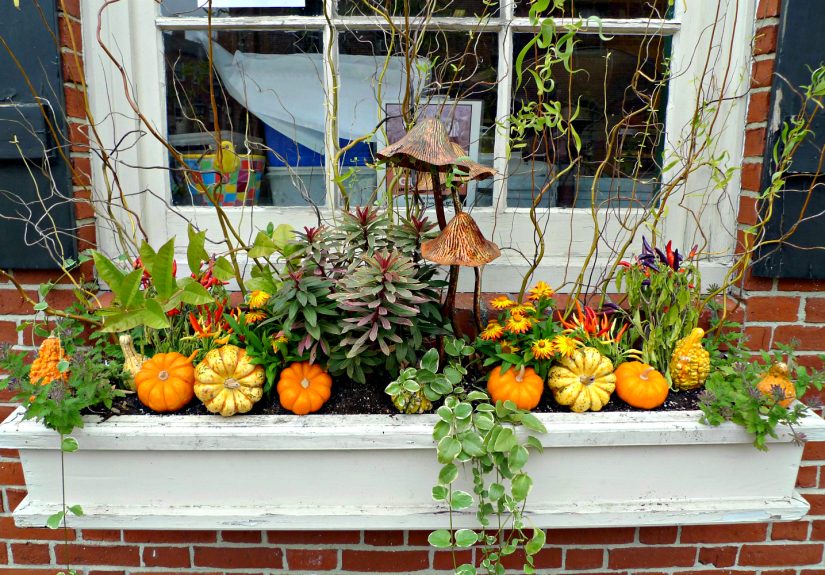
1) The Pumpkin-Spice Classic (but make it classy)
Look: Warm, welcoming, and basically the plant version of a cozy sweater.
Plant recipe: Bronze/orange mums (filler), ornamental kale (filler), creeping jenny or ivy (spiller),
plus 2–3 mini pumpkins tucked low.
Pro tip: Keep pumpkins on top of the soil, not buriedno one wants surprise compost.
2) Harvest Market Greens (edible + adorable)
Look: Farm-stand vibes without waking up at 5 a.m.
Plant recipe: Swiss chard (thriller for color + height), curly kale (filler), thyme or oregano (filler),
nasturtium or ivy (spiller), with a few ornamental peppers for pop.
Pro tip: You can harvest lightly and still keep the display looking full.
3) The “First Frost Glow-Up” Box
Look: Better as the weather gets cooler (yes, plants can do that).
Plant recipe: Ornamental cabbage/kale (filler), pansies (filler), trailing ivy (spiller), and a small
grass (thriller).
Pro tip: This combo tends to stay attractive deeper into fall than many bloom-only boxes.
4) Burgundy + Blush Boutique
Look: Rich, moody, and slightly mysteriousin a good way.
Plant recipe: Burgundy mums (filler), heuchera (filler), dusty miller (filler), sweet potato vine in a
purple tone (spiller).
Pro tip: Repeat one color (like burgundy) in two different textures to make it feel designed.
5) Silver + White “Grown-Up Neutral”
Look: Clean, modern, and totally not boring.
Plant recipe: White ornamental kale/cabbage (filler), dusty miller (filler), white pansies (filler),
variegated ivy (spiller), and 2–3 mini white pumpkins as accents.
Pro tip: Neutrals shine when you mix matte (dusty miller) and glossy (ivy).
6) The Autumn Sunset Ombre
Look: Gradient color that reads “designer” from across the street.
Plant recipe: Mums in yellow, orange, and red (fillers), plus a trailing spiller like ivy or sweet potato
vine.
Pro tip: Plant in color blocks (yellow on one side, red on the other) instead of mixing everything evenly.
7) Woodland Cottage Charm
Look: Like your house has a tiny forest stylist living inside the siding.
Plant recipe: Fern (thriller), heuchera (filler), pansies (filler), ivy (spiller), plus a few birch twigs
or pinecones.
Pro tip: Keep accents natural-toned so the foliage textures do the talking.
8) The Modern Minimalist (aka “I like plants, not chaos”)
Look: Sleek lines, fewer colors, big impact.
Plant recipe: A compact ornamental grass (thriller), sedum (filler), ornamental kale (filler), and one
trailing element (spiller).
Pro tip: Limit yourself to 2–3 colors. Restraint is the new wow.
9) Jewel-Toned Party Box
Look: Bright, saturated, and happy to be seen.
Plant recipe: Purple pansies (filler), orange mums (filler), deep green kale (filler), and chartreuse
creeping jenny (spiller).
Pro tip: Use chartreuse as a “highlighter” colorit makes everything else look richer.
10) The “Moody Goth Garden” (but still friendly)
Look: Dark foliage that feels dramatic, not depressing.
Plant recipe: Dark-leaved coleus (filler), black mondo grass or a dark grass (thriller), purple basil
(filler), and purple sweet potato vine (spiller).
Pro tip: Add one lighter element (silver dusty miller or pale pansies) so it doesn’t turn into a black hole.
11) The Pollinator-Stopover Box
Look: Pretty for you, helpful for late-season visitors.
Plant recipe: Asters (filler), sedum (filler), pansies (filler), and trailing alyssum or ivy (spiller).
Pro tip: Deadhead spent blooms to keep things tidy and encourage repeat flowering where possible.
12) The Classic “Mums + Grasses” Power Duo
Look: Tall, swishy texture with reliable color.
Plant recipe: Compact fountain grass (thriller), mums (fillers), ornamental kale (filler), ivy (spiller).
Pro tip: Position the grass slightly off-center for a more natural, modern silhouette.
13) The Shade-Saver Box (for windows that barely see the sun)
Look: Lush foliage that doesn’t need a tan.
Plant recipe: Fern (thriller), heuchera (filler), ivy (spiller), and cool-season pansies/violas (filler)
if your temps are mild.
Pro tip: Go heavier on leaves and lighter on bloomsshade boxes win with texture.
14) The “Herby, Not Nerdy” Kitchen Window Box
Look: Useful, fragrant, and surprisingly pretty.
Plant recipe: Upright rosemary or sage (thriller in mild climates), thyme (filler), oregano (filler), and
trailing thyme or ivy (spiller). Add ornamental kale for color if you want a fall vibe.
Pro tip: If frost hits hard in your area, treat rosemary as seasonal or move it to shelter.
15) The Farmhouse Wheat + Greens Arrangement
Look: Rustic and tidylike a magazine cover that also owns work boots.
Plant recipe: Ornamental kale/cabbage (filler), pansies (filler), ivy (spiller), plus a few wheat stalks
or dried stems tucked in as vertical accents.
Pro tip: Use dried stems sparingly; too many and it becomes “hay bale cosplay.”
16) The Holiday-Ready Transition Box
Look: Starts as fall, slides gracefully toward winter.
Plant recipe: Ornamental cabbage/kale (filler), pansies (filler), ivy (spiller), plus evergreen clippings
(accent) added later as temps drop.
Pro tip: When blooms fade, swap in more evergreens and berries to carry the box through the holidays.
Keep It Looking Good Until the Holidays
- Water smarter, not harder: In fall, containers often need less frequent watering than in summer. Check soil before wateringaim for evenly moist, not soggy.
- Skip heavy feeding: Many fall plantings are meant to shine for a season. Too much fertilizer can push weak growth right when the weather is cooling.
- Rotate the “front row”: If one side looks tired, turn the whole liner/box (if possible) so it gets more even light and wind exposure.
- Remove mushy bits fast: Spent blooms and damaged leaves invite rot and look messy. Quick snips make everything look “freshly styled.”
- Secure tall accents: Branches and grasses should be anchored deep. If your area is windy, keep the tallest elements shorter and sturdier.
of Real-World Window Box Experiences
Here’s what tends to happen in actual, living, breathing fall window box lifewhere the weather changes its mind
hourly and squirrels behave like they pay property taxes.
First, the “I planted it and I’m done forever” feeling is powerful… and temporary. Window boxes dry
out faster than in-ground beds because they’re exposed to sun, wind, and the heat that can radiate off your house.
Then fall rolls in and tricks you, because cooler air makes you assume the plants need less water (sometimes true),
but wind can still wick moisture out like a tiny leafy vacuum. The sweet spot is checking the soil with a finger.
If the top inch feels dry, water. If it feels damp, step away from the watering can like it’s a text from your ex.
Next, you’ll notice that fall texture is the real glow-up. Mums are great, but foliage is what keeps
your box looking good when blooms get tired. Ornamental kale and cabbage are famous for looking better in cool
weather, pansies can hang in there with light frost in many climates, and grasses add motion even when nothing is
flowering. This is why the most satisfying window boxes aren’t just “all mums, all the time.” Variety means
resilienceand fewer emergency garden-center runs.
Speaking of emergency runs: your first “hard rain + gravity” lesson is memorable. If your box is packed
right to the rim, heavy rain can splash potting mix out, leaving you with a weird crater landscape. Leaving about an
inch of space at the top helps, and so does planting a little more firmly so plants don’t shift. Also: if your box’s
drainage holes clog, you’ll find out when the plants start looking sulky and the soil stays wet. A quick check and a
clear-out can save the whole arrangement.
Then there’s the wildlife commentary. Birds may flick mulch around. Squirrels might dig because they’re
convinced you buried treasure (you did not; you buried potting mix on sale). If this happens, top-dress with a little
heavier mulch, use decorative branches as a “do not dig here” visual barrier, and accept that nature is part of the
aesthetic. A little messy sometimes reads “cozy,” as long as you tidy the truly chaotic bits.
Finally, the most fun moment: the neighbor effect. When one fall window box looks great, it inspires
othersbecause curb appeal is contagious. Suddenly you’re the person people ask, “What did you put in there?” and
you get to say something cool like “ornamental kale, pansies, and ivy,” as if that wasn’t discovered after three
rounds of standing in the garden center holding plants up to each other like a fashion show.
Conclusion
A stunning fall window box isn’t about complicated rulesit’s about smart plant choices, good structure, and a
little seasonal personality. Start with drainage and potting mix, pick a simple color direction, layer your
thriller/filler/spiller, and add just enough harvest flair to make it feel like autumn moved in on purpose.






 Close
Close