
Table of Contents >> Show >> Hide
- 1. Start With a Simple “Look-Out-the-Window” Plan
- 2. Make the Walkway Feel Like an Invitation, Not a Maze
- 3. Frame the Front Door With Symmetry (Even If the House Isn’t)
- 4. Upgrade Foundation Plantings (No More Shrub “Meatballs”)
- 5. Add a “Buffer” Bed Along the Street for Instant Lushness
- 6. Plant One Statement Tree (Right Tree, Right Place)
- 7. Call 811 Before You Dig (Yes, Even for Shrubs)
- 8. Create Clean Bed Lines and Crisp Edges
- 9. Refresh Mulch the Right Way (No “Mulch Volcanoes”)
- 10. Use Evergreens for “Year-Round Good Hair”
- 11. Layer Plants by Height (So the Yard Looks “Designed”)
- 12. Repeat Colors and Shapes (That’s How Pros Make It Look Expensive)
- 13. Add Seasonal Color With Bulbs and Perennials
- 14. Choose Low-Maintenance Ground Covers Where Grass Struggles
- 15. Try a Low-Mow or Pollinator-Friendly “Bee Lawn” Section
- 16. Install Landscape Lighting That Guides and Glows
- 17. Water Smarter With Efficient Irrigation (Or a Simple Drip Line)
- 18. Add a Rain Garden or Swale Where Water Collects
- 19. Use Permeable Hardscaping for Paths and Parking Areas
- Real-World Experiences: What Actually Makes Front Yards Look Better (and What Backfires)
- Conclusion
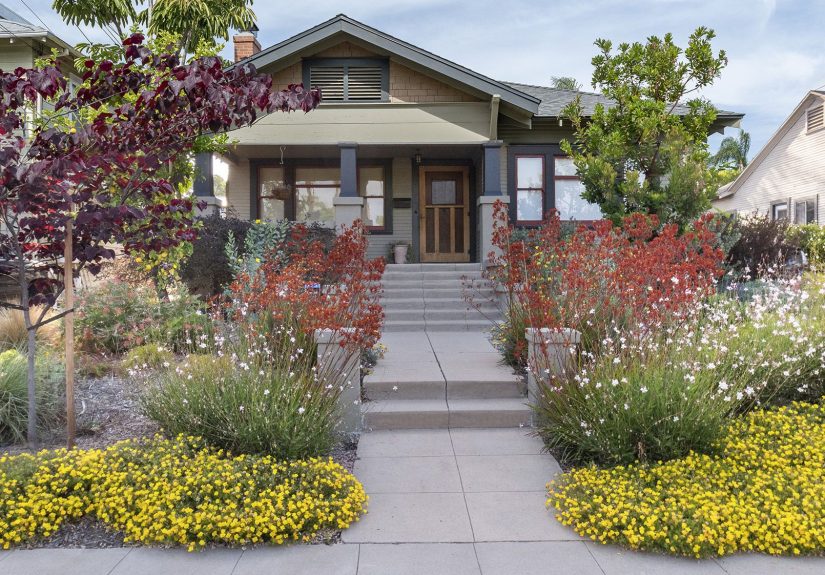
Your front yard is basically your home’s handshake. It doesn’t have to be a firm, intimidating grip (hello, 47-pruned-boxwoods-in-a-row). But it should feel confident, welcoming, andmost importantlyintentional. The good news: boosting curb appeal isn’t about copying a fancy magazine spread. It’s about using a few proven design moves: clear lines, balanced scale, repeatable plant choices, and practical upgrades that make your yard look “pulled together” even on a random Tuesday.
Below are 19 front yard landscaping ideas you can mix and matchwhether you’ve got a postage-stamp lawn, a sprawling corner lot, or a front yard that currently looks like it’s waiting for a plot twist.
1. Start With a Simple “Look-Out-the-Window” Plan
Before you buy a single plant, take a week to observe your yard. Notice where the sun lands, where water puddles, and what you see from inside your house. Curb appeal isn’t only for passersbyif you’re going to live there, you should enjoy the view too.
Quick win
- Stand at the street and take a photo of your home.
- Circle the spots that look empty, messy, or “random.”
- Pick one main improvement zone (entry, walkway, foundation, or driveway edge) and start there.
2. Make the Walkway Feel Like an Invitation, Not a Maze
Your walkway is the front yard’s “red carpet.” If it’s too narrow, cracked, or unclear, the whole yard feels offno matter how pretty the plants are. A primary path that’s comfortable for two people side-by-side instantly reads as welcoming and well-designed.
Specific example
If your front path is 30 inches wide, consider widening it (or visually widening it with border plantings and lighting) so it feels closer to a generous main-entry path. Even a gentle curve can soften a boxy house and create a more gracious approach.
3. Frame the Front Door With Symmetry (Even If the House Isn’t)
A front entry looks “finished” when it has a framelike a picture. Symmetry is the easiest way to get that effect fast. It doesn’t have to be perfectly mirrored; it just needs balance.
Try this
- Matching planters on both sides of the door
- Two upright evergreens (or tall grasses) anchoring the steps
- Layered plants that step down in height toward the walkway
4. Upgrade Foundation Plantings (No More Shrub “Meatballs”)
Foundation beds are meant to soften the hard line where house meets groundnot create a green wall of identical shrubs. A stronger approach is layering: taller plants near corners, medium shrubs for structure, and lower plants at the front edge.
What this looks like in real life
Instead of ten matching shrubs in a row, use two anchor plants at corners, a few repeating shrubs in the middle, and a ribbon of low perennials (or ground cover) along the front. The result looks designed, not “planted because the store had a sale.”
5. Add a “Buffer” Bed Along the Street for Instant Lushness
If your front yard feels exposed (or noisy), a planted buffer between sidewalk and house can make the whole property feel calmer and more upscale. Mixing plant textures also makes a small yard look bigger because your eye keeps moving through layers.
Low-maintenance tip
Use a simple palette: one ornamental grass, one flowering shrub, and one repeating perennial. Repeat them in drifts instead of using 17 different plants once each.
6. Plant One Statement Tree (Right Tree, Right Place)
A well-placed tree can do more for curb appeal than a truckload of flowers. It adds scale, shade, and structureand it makes your house feel grounded. The key is choosing a tree that fits the space and won’t pick a fight with utilities later.
Placement rules that save headaches
- Choose a mature size that won’t swallow your roofline.
- Keep safe distance from the house so roots and branches aren’t future problems.
- Watch for overhead lines and buried utilities before digging.
7. Call 811 Before You Dig (Yes, Even for Shrubs)
This isn’t the “fun” idea, but it’s the “keep your weekend from becoming a disaster movie” idea. Before planting trees, installing edging, or setting posts, locate underground utilities. It’s one of the smartest curb appeal moves you can makebecause your yard looks best when it isn’t on fire.
8. Create Clean Bed Lines and Crisp Edges
Edging is the secret handshake of a well-kept yard. Even if your plants are still small, clean borders make everything look intentional and maintained.
Options
- Spade-cut edge (simple and classic)
- Metal edging (modern and tidy)
- Brick or stone edging (traditional and durable)
9. Refresh Mulch the Right Way (No “Mulch Volcanoes”)
Mulch is like concealer for landscaping: it hides a multitude of sins and makes everything look polished. But too much mulch piled against trunks can harm trees and shrubs. Aim for a neat, even layer that suppresses weeds and holds moisturewithout smothering plants.
Best practice
- Keep mulch to a shallow, even layer.
- Pull mulch back from tree trunks and shrub stems (think “donut,” not “volcano”).
- Use mulch to unify beds so plantings feel cohesive.
10. Use Evergreens for “Year-Round Good Hair”
Flowers are great, but evergreens are what keep your front yard looking alive in winter and respectable in early spring. A few evergreen anchors make the whole landscape look more mature and thoughtfully planned.
Easy evergreen structure ideas
- Two upright evergreens at the entry or corners
- Low mounding evergreens along the foundation
- One sculptural evergreen as a focal point in a front bed
11. Layer Plants by Height (So the Yard Looks “Designed”)
Layering is the easiest design trick to learn and the hardest one to unsee once you do. Put tall plants in back, medium in the middle, low in front. Repeat. Admire your own brilliance.
Example planting combo
Back: ornamental grass or a flowering shrub. Middle: compact evergreen or rounded shrub. Front: low perennials or ground cover. Add a few seasonal pops (bulbs or annuals) near the edge.
12. Repeat Colors and Shapes (That’s How Pros Make It Look Expensive)
“Random” is the enemy of curb appeal. Repetition creates rhythm, and rhythm reads as intentional. Pick 2–3 main colors and repeat them in multiple spots. Do the same with shapes: rounded shrubs, spiky grasses, mounding perennials.
13. Add Seasonal Color With Bulbs and Perennials
Want that “something is always blooming” vibe? Use a sequence: spring bulbs, summer perennials, fall color, winter structure. You don’t need a garden that blooms nonstopyou need a garden that never looks empty.
Simple seasonal lineup
- Spring: tulips/daffodils + early perennials
- Summer: long-blooming perennials + flowering shrubs
- Fall: ornamental grasses + late bloomers
- Winter: evergreens + interesting branches/seed heads
14. Choose Low-Maintenance Ground Covers Where Grass Struggles
If a patch of lawn always looks sad (shade, slopes, tree roots, drought), stop fighting it. Ground covers can look lush, suppress weeds, and reduce mowing. The best curb appeal yards don’t force plants to suffer “for the aesthetic.”
15. Try a Low-Mow or Pollinator-Friendly “Bee Lawn” Section
Traditional turf can be high maintenance, especially in areas with water restrictions or summer heat. A low-mow zoneor a small pollinator-friendly lawn sectioncan reduce mowing and add ecological benefits without making your yard look wild.
How to keep it curb-appeal friendly
- Keep edges crisp (this signals “intentional”).
- Limit it to a defined area, not the whole yard (unless you’re fully committed).
- Pair it with a neat walkway and structured foundation plants for balance.
16. Install Landscape Lighting That Guides and Glows
Lighting is one of the fastest “wow” upgrades for curb appealespecially at night. Good lighting makes your home feel welcoming and safer, and it highlights your best features.
Lighting moves that work
- Path lights spaced for guidance (not runway brightness)
- Uplighting on a focal tree or architectural detail
- Soft lighting near steps for safety
17. Water Smarter With Efficient Irrigation (Or a Simple Drip Line)
A beautiful front yard that looks crisp in July is usually the result of consistent wateringnot daily panic-soaking. Smart controllers, pressure-regulated sprinkler components, and drip irrigation for beds can reduce waste and keep plants healthier.
Water-wise habit that helps
Inspect and adjust your irrigation regularly so it waters plants, not sidewalks. Your driveway does not need hydration for emotional support.
18. Add a Rain Garden or Swale Where Water Collects
If runoff rushes down your driveway or pools near the foundation, a rain garden can turn an ugly problem into a curb appeal feature. Rain gardens are shallow planted areas designed to capture and soak up stormwater, helping reduce runoff and improving drainage.
Where it works best
- Low spots where water already gathers
- Near downspouts (with thoughtful placement and grading)
- Areas that can handle occasional wetness without becoming a mud pit
19. Use Permeable Hardscaping for Paths and Parking Areas
If you’re redoing a walkway or adding a small parking pad, consider permeable options. They allow water to infiltrate rather than running straight into the street, and they can reduce puddles and ice patches while adding a high-end finish.
Great uses in front yards
- Permeable pavers for walkways
- Gravel with stable grid for side strips
- Permeable entry pads near steps or gates
Real-World Experiences: What Actually Makes Front Yards Look Better (and What Backfires)
Front yard landscaping sounds glamorous until you’re standing in the garden center holding two carts, three questionable impulse buys, and the haunting realization that you don’t know what “mature spread” means. Over and over, the best curb appeal transformations come down to a few lived-in lessonsthings homeowners tend to discover after a season (or two) of trial, error, and muttering at sprinklers.
First: people almost always underestimate how much clean structure matters. When homeowners focus on plants first, they often end up with a yard that’s colorful but chaotic. The biggest “before and after” difference usually comes from edges, bed shapes, and a clear path to the door. A crisp bedline makes even small plants look intentional. It’s like the landscaping equivalent of putting your outfit on a hanger instead of the floor: suddenly, you look like someone with a plan.
Second: repetition is the cheat code. Many front yards look messy because they have too many one-off plantsone purple thing here, one spiky thing there, one shrub that was clearly adopted on clearance. When homeowners start repeating a few reliable plants in groups, the yard calms down. It feels cohesive. It feels “designed.” And it often costs less than constantly experimenting with new varieties.
Third: scale is where curb appeal either sings or squeaks. A common experience is planting tiny shrubs close to the house because they look cute at the timethen discovering later that they either (a) disappear visually and never “anchor” anything, or (b) outgrow the space and swallow windows like a leafy horror film. The happiest front yards tend to use plants sized to the home: taller anchors at corners, medium structure in the middle, and lower plants at the edge where you actually see them.
Fourth: water problems don’t stay politely hidden. Homeowners often learn that if the yard has a soggy corner, a perpetually muddy strip, or a downspout that blasts a trench every storm, planting “something pretty” won’t fix it. Addressing drainageredirecting runoff, adding a rain garden, or using permeable materialsdoesn’t just protect the house. It also makes the front yard easier to maintain. Once water behaves, plants behave. Funny how that works.
Fifth: mulch is both hero and villain. Many people try to make beds look “finished” by piling mulch highespecially around treesbecause it photographs well for about five minutes. Then they hear the phrase “mulch volcano” and realize they’ve built a tiny mountain of regret. The experience most homeowners share is that neat, shallow mulch with a clean gap at trunks looks just as polished, lasts longer, and keeps plants healthier. Plus, it’s easier to refresh without turning your yard into a wood-chip swamp.
Finally: lighting is the surprise MVP. Plenty of homeowners don’t think about landscape lighting until they see a neighbor’s softly lit walkway and realize their own front yard disappears into darkness like it owes someone money. When lights are added thoughtfullyguiding the path, highlighting a tree, making steps saferthe house instantly looks more welcoming and “finished,” even if the plantings are still growing in.
The most consistent “success story” is simple: start with one zone, make lines clean, repeat a small plant palette, and solve practical problems (like water and access) before chasing perfection. Curb appeal isn’t about having the fanciest plants. It’s about making your yard look cared forand making it easy enough to keep that way without turning Saturday into a landscaping hostage situation.
Conclusion
Boosting curb appeal doesn’t require a complete front-yard demolition (or a second job at the garden center). Start with the basics: a welcoming walkway, balanced foundation plantings, clean edges, and a few smart upgrades like lighting and water-wise design. Then build from thererepeating plants, layering heights, and choosing options that fit your climate and maintenance style. The best front yards aren’t the most complicated. They’re the most intentional.







 Close
Close