
Table of Contents >> Show >> Hide
- The Snap, the Blip, and the Strange Logic of Cosmic Population Control
- 20 Wild MCU Takes That Would Make Thanos Proud
- 1. Thanos Accidentally Created the Biggest Climate Win in History
- 2. The Blip Created a New “Founders Generation” of Survivors
- 3. Hulk’s Blip May Have Caused Instant, Global Overcrowding
- 4. The Snap Probably Broke Every Insurance and Pension System Overnight
- 5. Some People Probably Wanted to Stay Gone
- 6. The Soul Stone Might Have Hosted the Weirdest Group Therapy Session Ever
- 7. The Snap Quietly Targeted Certain Worlds More Than Others
- 8. The Snap Was the Ultimate Data Wipe
- 9. The Blip Is the MCU’s Built-In Origin Story for Mutants and Weird Powers
- 10. The Five-Year Gap Created a New Class of “Blip Orphans”
- 11. Airplanes, Surgeries, and Spacewalks: The Dark Logistics of the Snap
- 12. Post-Snap Governments Almost Certainly Went Authoritarian
- 13. The Avengers Are Heroes… and Also the Universe’s Biggest Disruptors
- 14. The Snap Turned Grief Into a Permanent Background Vibration
- 15. The Snap May Have Saved Some Worlds from Even Worse Fates
- 16. The Blip Gave Every Religion Free Marketing
- 17. “Blip Trauma” Would Be Its Own Medical Specialty
- 18. The Snap Turned Everyday People into Secret Supervillains
- 19. The Five-Year Gap Is the MCU’s Ultimate Story Gold Mine
- 20. Thanos Accidentally Proved How Interconnected the Universe Really Is
- Living Through the Snap and the Blip: Imagining the Experience
If you walked out of Avengers: Infinity War staring at your hands and whispering “I don’t feel so good,” you’re not alone. The Snap and the Blip might be fictional events in the Marvel Cinematic Universe (MCU), but they’ve sparked some very real debates, memes, and late-night arguments about ethics, economics, relationships, and, yes, cosmic population control.
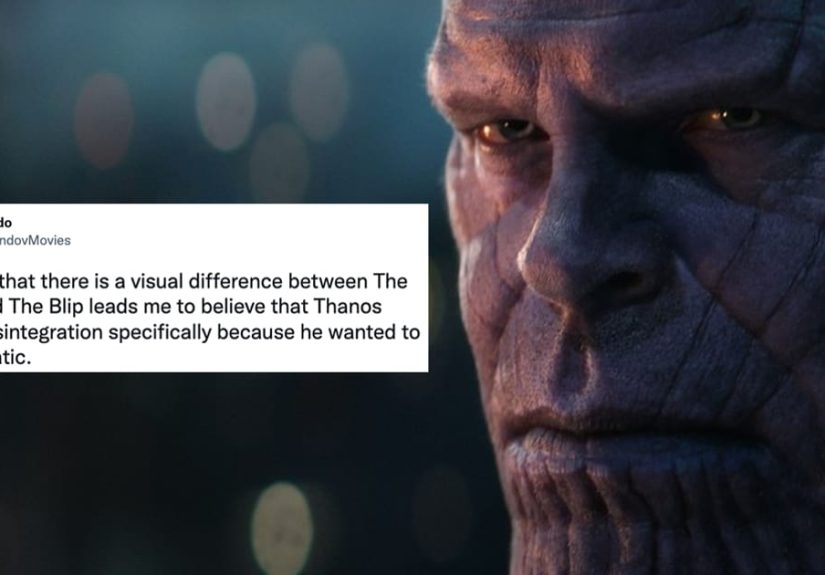
On paper, Thanos’ Snap erased half of all life in the universe. Five years later, Hulk’s Blip brought everyone back. Simple, right? Absolutely not. The more you think about it, the more messy, darkly funny, and philosophically weird it gets. So let’s lean into the chaos with 20 wild takes on the Snap and the Blip that would probably make even a grim, purple space tyrant grin.
The Snap, the Blip, and the Strange Logic of Cosmic Population Control
The MCU treats the Snap (Thanos’ finger snap in Infinity War) and the Blip (Hulk’s reversal in Endgame) as the ultimate “hard reset” events. Entire governments, economies, and families are rearranged. Kids stay the same age. Formerly dead people suddenly show up at the dinner table like they just came back from the grocery store. And in the middle of it all sits a moral question: was the universe actually “better” after the Snap, at least for a while?
With that unsettling thought in mind, let’s dive into 20 pretty wild takes that explore just how bizarre life in a post-Snap, post-Blip MCU would really be.
20 Wild MCU Takes That Would Make Thanos Proud
1. Thanos Accidentally Created the Biggest Climate Win in History
Cutting half of all lifeincluding people, animals, and probably a lot of industrial activitywould have slashed energy use, emissions, and resource demand overnight. Cities would be quieter. Traffic gone. Air pollution down. For five years, the Earth got an unintended “cosmic climate policy.” It’s a horrifying way to get there, but from a purely environmental perspective, the planet probably had a brief golden window of cleaner air and recovering ecosystems… until the Blip slammed all that demand back online in an instant.
2. The Blip Created a New “Founders Generation” of Survivors
Those who survived the Snap essentially became the “Founders Generation” of the new world order. They rebuilt infrastructure, filled power vacuums, and formed new relationships and families. Five years later, when the Blipped returned, they walked into a society whose rules, cultures, and power structures were set by people who had lived through five brutal years without them. That kind of generational divide would echo for decadesand therapy bills would be out of this world.
3. Hulk’s Blip May Have Caused Instant, Global Overcrowding
When Hulk brought everyone back, he didn’t phase them in gently. People reappeared in the exact spot they disappeared from. Planes, apartments, hospital beds, prisons, refugee campseverywhere. Even with “comic logic” saving most from immediate disaster, there’s no way this didn’t lead to brutal overcrowding in some places. Imagine blipping back into a town where your house is now a coffee shop and all your stuff was auctioned off years ago. Awkward doesn’t begin to cover it.
4. The Snap Probably Broke Every Insurance and Pension System Overnight
Life insurance? Useless. Pensions? Nuked. Wills? Chaotic. Half the beneficiaries vanished; half the policyholders vanished. Lawyers and insurers would spend years untangling who technically “died,” who was presumed dead, who inherited what, and whether returning from the Blip reversed any of those legal decisions. Somewhere in the MCU, there’s definitely a billionaire who got rich off Blip-era legal loopholesand another who got ruined when the original owners walked back in the door.
5. Some People Probably Wanted to Stay Gone
We tend to assume that everyone who was dusted wanted to come back, but that’s very human-centric thinking. What about people who were terminally ill, deeply depressed, or stuck in abusive situations? For them, the Snap might have felt like an abrupt, strangely peaceful end. Being yanked back into a body, back into trauma, back into unpaid bills… that might feel more like a curse than a rescue. The Blip wasn’t asked forit was imposed.
6. The Soul Stone Might Have Hosted the Weirdest Group Therapy Session Ever
We get glimpses of a strange, orange, Soul Stone “plane” when Thanos and later Tony Stark use the Gauntlet. One wild take? Everyone snapped by Thanos briefly shared a collective consciousness there. Imagine millions or billions of people experiencing the same quiet, limbo-like reality, slowly piecing together that they’d all died at the same moment. When they’re Blipped back, they would return with hazy memories of this shared “afterlife,” giving rise to new religions, cults, and spiritual movements that worship the “Orange World.”
7. The Snap Quietly Targeted Certain Worlds More Than Others
We’re told the Snap is random, affecting “all life” equally. But with the Infinity Stones channeling cosmic forces, “random” might not feel random at ground level. Maybe planets that were already overpopulated or more technologically advanced lost a slightly higher percentage. Maybe worlds with powerful beingslike Earth, Xandar, or Asgard’s refugeeswere subconsciously “favored” or “penalized” by the Gauntlet’s wielder. It’s the kind of conspiracy theory that would fuel in-universe documentaries and endless Reddit threads.
8. The Snap Was the Ultimate Data Wipe
When half of all life vanished, so did the people who maintained systems, updated databases, and held critical institutional knowledge. Servers might still run, but passwords are gone. Encryption keys lost. Proprietary formulas, secret recipes, and classified intel died with the people who knew them. Post-Blip, some of that knowledge comes back, but by then, new systems have replaced old ones. In the MCU, the Snap isn’t just a population eventit’s a civilization-wide hard-drive crash.
9. The Blip Is the MCU’s Built-In Origin Story for Mutants and Weird Powers
We already know the MCU loves blaming cosmic phenomena for superpowers. One wild (but very convenient) idea: the Snap and Blip bathed the universe in so much cosmic, gamma, and reality-warping energy that it triggered dormant genes, reorganized DNA, and seeded future mutations. You want a lore-friendly explanation for mutants showing up? “Yeah, it was the Snap. Also the Blip. And maybe some residual cosmic radiation. Don’t worry about it, just enjoy the X-Men.”
10. The Five-Year Gap Created a New Class of “Blip Orphans”
We focus a lot on the people who vanished, but what about the children who were born during those five years? They never experienced the Snapbut every adult in their life did. Their parents might be traumatized, their schools underfunded, their cities half empty and then suddenly full again. Then the Blip happens, and now these kids live in a world where half the people around them remember a time before the Snap and half have a five-year blank. Talk about a generational identity crisis.
11. Airplanes, Surgeries, and Spacewalks: The Dark Logistics of the Snap
The MCU politely sidesteps the really gnarly stuff, but the implications are brutal. If a surgeon vanished mid-operation, what happened to the patient? If half a flight crew vanished, did planes crash? Did astronauts disappear from space stations and leave partners stranded? One fan-friendly explanation is that the Stones “accounted” for follow-on casualties so that exactly half of all life was removed, including indirect deaths from the chaos. Still, the people who survived those moments would have nightmares for the rest of their lives.
12. Post-Snap Governments Almost Certainly Went Authoritarian
When half of your population vanishes, states don’t just shrug and carry on. They declare emergencies. They pass sweeping security laws. They centralize power. In The Falcon and the Winter Soldier, we see hints of displaced people, border conflicts, and refugee crises in the wake of the Blip. But it’s easy to imagine that for five years, many governments quietly embraced “temporary” powers that were never fully rolled backeven after everyone returned.
13. The Avengers Are Heroes… and Also the Universe’s Biggest Disruptors
To most people, the Avengers will always be the team that brought everyone back. But there’s another way to read their legacy: they froze the world in a five-year trauma loop. Societies that were finally stabilizing had their demographics suddenly re-shuffled again. Some world leaders, corporate elites, and organized groups probably thrived in a half-empty world. When the Blip hit, their carefully built power structures shattered. In back rooms and villain monologues, “the Avengers” are very likely blamed for destroying a more “manageable” universe.
14. The Snap Turned Grief Into a Permanent Background Vibration
In the MCU, grief becomes a shared cultural baseline. Support groups like the one Steve Rogers runs aren’t just nice touches they’re survival tools. The Snap normalized mass loss on a scale that no one had language for. Then the Blip layered an entirely new kind of grief on top: the pain of having your closure undone, your new life invalidated, or your unfinished emotional business forced back into the room with you. Therapists, counselors, and spiritual leaders would be the most overworked people on the planet.
15. The Snap May Have Saved Some Worlds from Even Worse Fates
Here’s a very Thanos-friendly angle: by halving the population of countless planets, the Snap might have temporarily delayed wars, civil collapses, and planetary extinctions that were already in motion. For worlds on the brink of resource collapse, losing half their people could have shifted the timeline away from immediate doom. It’s a cruel, utilitarian argumentbut exactly the sort of cosmic math a self-appointed “Mad Titan” would smirk at.
16. The Blip Gave Every Religion Free Marketing
Imagine being a religious leader who spent years preaching about resurrection, judgment, or life after deathand then half the population literally disintegrates and returns five years later. Attendance would skyrocket. New sects would form around Blip survivors’ stories. Competing explanationsscientific, mystical, alien, technologicalwould clash in the public square. The Snap and Blip aren’t just cosmic events; they’re catalysts for an explosion of spiritual experimentation and religious realignment.
17. “Blip Trauma” Would Be Its Own Medical Specialty
Doctors and psychologists would eventually classify entirely new conditions: Blip-based PTSD, Snap-related survivor’s guilt, returnee disorientation, time-gap anxiety. Hospitals might set up Blip Clinics dedicated to reintegrating people who’d been gone for five yearshelping them catch up on medical care, vaccination schedules, and basic life skills (like figuring out why everyone is suddenly paying with different apps). If someone like Sam Wilson can become a symbol for healing, imagine the everyday frontline workers quietly doing the same work off camera.
18. The Snap Turned Everyday People into Secret Supervillains
When half the world vanishes, opportunities open up for people with flexible morals. Faked deaths, stolen identities, looted propertiesplenty of people would have used the chaos to reinvent themselves. Then the Blip hits, and their old lives literally walk back in. Some would panic. Others would double down and go darker, turning into black-market brokers, deep-fake masters, or underworld bosses who built empires in the five-year vacuum and have zero interest in giving them up.
19. The Five-Year Gap Is the MCU’s Ultimate Story Gold Mine
Even in-universe, people would be obsessed with the “Blip Years.” Documentaries, podcasts, dramatized series, exposés on what really happened in Wakanda, Madripoor, or New York during that timeall of it would dominate entertainment. Everyone wants to know: Who rose? Who fell? Who snapped (emotionally, not cosmically)? Marvel has only scratched the surface of this period, but from a storytelling perspective, it’s the richest, darkest sandbox they’ve ever created.
20. Thanos Accidentally Proved How Interconnected the Universe Really Is
Thanos thought in clean, brutal fractions: “half.” But the Snap revealed that life is not a neat equation. Remove half, and you don’t get balanceyou get cascading failure, grief, and unintended consequences. The Blip then showed the opposite problem: you can’t just plug half the universe back in without stress fractures. Together, these events prove the thing Thanos never fully understood: the universe isn’t a ledger to be balancedit’s a web. Pull one thread, and everything trembles.
Living Through the Snap and the Blip: Imagining the Experience
It’s one thing to analyze the Snap and Blip from the safety of a movie seat; it’s another to imagine what it would feel like to live through them. The MCU gives us glimpseslike people reappearing in a hospital corridor in WandaVision or high-schoolers popping back into existence in Spider-Man: Far From Homebut the day-to-day reality would be far more intense.
Picture this: you’re on a crowded subway, scrolling your phone, when half the passengers around you turn to dust mid-ride. No sound effects. No warning. Just empty seats, abandoned bags, and a pile of questions that no government briefing can possibly answer. For weeks or months, you jump whenever someone coughs too hard or the lights flicker. Every missing person report feels like a fresh wound.
Fast forward five years. You’ve adapted, kind of. Maybe you moved to a smaller place. Maybe you remarried after your spouse disappeared. Maybe you clawed your way up in your company because the people above you were snapped, and you never stopped feeling like an impostor. You’ve built a life on top of the crater the Snap left behind.
Then one afternoon, you walk into your kitchen and there they areyour spouse, your best friend, your teenagerstanding exactly where they were five years ago, holding the same mug, the same backpack, the same expression. For them, no time has passed. For you, everything has.
The emotional whiplash would be hard to describe. Relief and joy slam into guilt and panic. Do you tell them about the person you dated after they were gone? Do you bring them to the grave that bears their name? Do you admit that, at some point, you stopped expecting them to return?
Even for those who weren’t directly snapped, the Blip would reopen wounds. Imagine losing a job you only got because someone else vanished. Or watching your carefully rebuilt community get flooded with people who have no idea what you endured while they were “paused.” The sense of unfairness could be overwhelming.
On the flip side, if you were snapped, your experience would feel like a cosmic jump cut. One moment you’re in Wakanda, New York, or downtown Tokyo; the next, you’re in the same spot, except the skyline has changed, your little brother is now taller than you, and every conversation starts with “Okay, so… there’s something I need to tell you.” Time didn’t move for you, but it did for everyone else. You’d spend months or years catching upnot just on tech or politics, but on the subtle emotional currents running through your family and friends.
Fan culture has mirrored this strange mix of horror and fascination. People still argue online about whether Thanos “had a point,” take online quizzes to see if they would have survived his snap, and joke about dusting away minor annoyances. At the same time, the Blip has become a metaphor for real-world disruptionslong absences, global crises, and those moments when life changes so completely that your “before” and “after” selves barely recognize each other.
Maybe that’s why these events hit so hard. The Snap and the Blip aren’t just big CGI momentsthey’re emotional experiments. They let us ask scary questions at a safe distance: What would you rebuild after everything fell apart? Who would you be if the world moved on without you? And if you had the power of a fully loaded Infinity Gauntlet, would you really, honestly, do better than a Mad Titan with a terrible plan and weirdly decent branding?
In the end, the wildest take might be this: the Snap and the Blip work because they’re less about power and more about perspective. Whether you’re a god, a hero, or just a person trying to hold it together, you’re one event away from having your entire worldview turned to dustand maybe, just maybe, brought back again.





 Close
Close