
Table of Contents >> Show >> Hide
- Animated Lightning Rods
- 1) South Park “200” & “201” (Season 14)
- 2) South Park “Super Best Friends” (Season 5)
- 3) Family Guy “Partial Terms of Endearment”
- 4) The Ren & Stimpy Show “Man’s Best Friend”
- 5) The Simpsons “Stark Raving Dad”
- 6) The Simpsons “The City of New York vs. Homer Simpson”
- 7) Pokémon “Electric Soldier Porygon”
- 8) Cow & Chicken “Buffalo Gals”
- 9) The Powerpuff Girls “See Me, Feel Me, Gnomey”
- 10) The Boondocks “The Story of Jimmy Rebel”
- When Sitcoms Meet a Cultural Reckoning
- 11) Community “Advanced Dungeons & Dragons”
- 12) 30 Rock Four Episodes Featuring Blackface
- 13) It’s Always Sunny in Philadelphia Multiple Episodes
- 14) The Office (U.S.) “Dwight Christmas” (Edited)
- 15) Scrubs Three Episodes
- 16) Seinfeld “The Puerto Rican Day”
- 17) Arthur “Mr. Ratburn and the Special Someone” (Local Ban)
- 18) Postcards from Buster “Sugartime!”
- “Too Much” for Primetime Drama
- Kids’ TV, But Make It Scary (or “Scary”)
- Sketches, Specials & Oddballs
- Why Episodes Get Pulled (and Why They Come Back)
- How to Watch the “Unwatchable” (Legally)
- Conclusion
- Extra: of First-Hand “Experience” & Lessons from Chasing Lost TV
There’s “edgy TV,” and then there’s “call Legal, cancel the promo, and hide the master in a temperature-controlled vault” TV. From sitcoms that crossed cultural lines to dramas that went full nightmare fuel, here are 27 real cases where episodes were yanked, delayed, shelved, or surgically edited. We’ll explain what happened, why it mattered, and how some of these hot potatoes eventually snuck back via DVD, late-night cable, or streamingif they returned at all.
Animated Lightning Rods
1) South Park “200” & “201” (Season 14)
Comedy Central aired themthen smothered them in bleeps and blackout bars after threats and a security scare over depictions and even mentions of Muhammad. They’ve since been notoriously absent or altered on multiple platforms.
2) South Park “Super Best Friends” (Season 5)
An earlier Muhammad appearance cruised by in 2001; after 2010, the episode largely vanished from official streaming packages. History didn’t repeatit was erased.
3) Family Guy “Partial Terms of Endearment”
Fox refused to air this abortion-themed episode stateside. It later surfaced on DVD, proving the only thing stronger than network skittishness is a home-video department meeting quarterly targets.
4) The Ren & Stimpy Show “Man’s Best Friend”
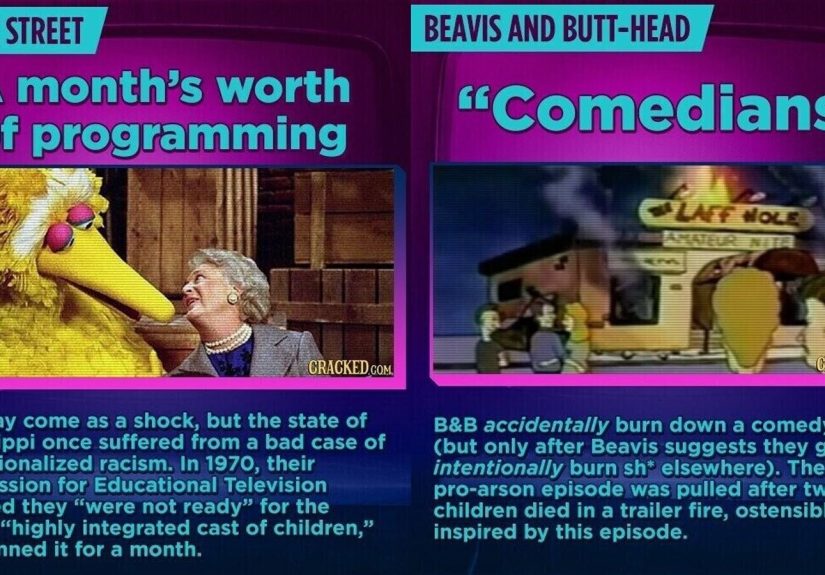
Nickelodeon balked at the infamous, ultra-violent George Liquor beatdown. The episode didn’t air on Nick; years later, it resurfaced on the show’s adult revival. Childhood saved, sort of.
5) The Simpsons “Stark Raving Dad”
Featuring an (uncredited) Michael Jackson voice cameo, this fan favorite was removed from circulation in 2019 after new allegations revived old questions. Disney+? Don’t bother searching.
6) The Simpsons “The City of New York vs. Homer Simpson”
Temporarily withdrawn post-9/11 due to extensive World Trade Center scenes, it later returned to syndicationcontext restored, jokes intact, history complicated.
7) Pokémon “Electric Soldier Porygon”
Rapid red/blue flashes triggered photosensitive seizures in hundreds of viewers in Japan in 1997. The episode has never aired again, and poor Porygon took the career hit Pikachu arguably earned.
8) Cow & Chicken “Buffalo Gals”
A biker gang named the Buffalo Gals (with blunt stereotypes) broke into homes to gnaw on carpetCartoon Network pulled it after one airing. Subtlety was… not invited.
9) The Powerpuff Girls “See Me, Feel Me, Gnomey”
A rock-opera detour that never aired in the U.S. amid concerns about religious imagery and flashing effects. Canada got it; the U.S. got rumors and forum debates.
10) The Boondocks “The Story of Jimmy Rebel”
A razor-sharp satire of racism that’s been MIA on most streaming and TV reruns. It lives on primarily via DVDwhere edgy animation goes to hibernate.
When Sitcoms Meet a Cultural Reckoning
11) Community “Advanced Dungeons & Dragons”
Removed from Netflix and Hulu in 2020 due to Chang’s dark-elf makeup, the episode later reappeared on other streamers with the broader context of anti-bullying intact. The internet rolled a nat-20 for discourse.
12) 30 Rock Four Episodes Featuring Blackface
At Tina Fey’s request, NBCU pulled multiple installments in 2020. The show that skewered TV’s worst instincts also joined the industry’s long-overdue clean-up.
13) It’s Always Sunny in Philadelphia Multiple Episodes
Five episodes vanished from streaming lineups for blackface/brownface content. The gang later tackled the issue head-on with “Lethal Weapon 7.” Satire met accountabilityover a beer, probably.
14) The Office (U.S.) “Dwight Christmas” (Edited)
A brief Zwarte Piet gag was cut in 2020. The joke aimed at critiquing a racist tradition; the image itself didn’t age. The edit stuck.
15) Scrubs Three Episodes
Pulled in 2020 for blackface content at the creators’ request, with talk of edited returns. The “we were making fun of it” defense lost its punchline.
16) Seinfeld “The Puerto Rican Day”
Flag-burning gag, protests, an NBC apology, and a syndication time-out. It eventually returned to rerunssame footage, older we are, perhaps wiser too.
17) Arthur “Mr. Ratburn and the Special Someone” (Local Ban)
Public TV aired the teacher’s same-sex wedding nationwide in 2019except Alabama Public Television, which refused to broadcast it. The kids at Lakewood Elementary rolled with it gracefully, as always.
18) Postcards from Buster “Sugartime!”
PBS yanked national distribution in 2005 over an episode featuring a lesbian couple in Vermont. One scene, decades of debate about public broadcasting and representation.
“Too Much” for Primetime Drama
19) The X-Files “Home”
Fox aired it once in 1996, then quietly retired it from reruns for years. A famously disturbing tale of an isolated family and the line between horror and exploitation.
20) Buffy the Vampire Slayer “Earshot” (Delayed)
Scheduled a week after Columbine, this episode about a perceived school threat was postponed until that fall. Timing mattersso does intent.
21) Hannibal “Œuf”
NBC pulled it days before broadcast in 2013, amid sensitivity around violence involving children. It later surfaced as webisodes/iTunes; other territories aired the full cut.
22) Law & Order: SVU “Unstoppable”
A Trump-adjacent storyline bounced around NBC’s schedule in 2016 before being shelved indefinitely. Peak “ripped from the headlines” collided with the actual headlines.
Kids’ TV, But Make It Scary (or “Scary”)
23) Sesame Street Episode 847 (The Wicked Witch)
Margaret Hamilton returned as the Wicked Witch in 1976; kids freaked, parents wrote in, rebroadcasts were cancelled. Decades later, the episode resurfacedcarefully.
24) Futurama “A Tale of Two Santas”
Deemed too rough for its early time slot, Fox delayed the murderous Robot Santa sequel a year and pushed it late. Nothing says Christmas like ballistic holly.
Sketches, Specials & Oddballs
25) Saturday Night Live “Conspiracy Theory Rock” (TV Funhouse)
A Schoolhouse Rock-style jab at media consolidation aired once in 1998, then disappeared from reruns. Corporate synergy met cartoon anarchy; synergy won.
26) American Dad! “Stan of Arabia” (Parts 1 & 2)
Not outright banned in the U.S., but the post-9/11 cultural climate and overseas sensitivities made this two-parter a perennial controversy magnet and occasional schedule headache.
27) Seinfeld Just Kidding, We Already Did That So Here’s a Bonus: The Boondocks & Platform-Era Pulls
From Golden Girls mud-mask misunderstandings to platform-specific removals (South Park, Sunny, Scrubs), the streaming era turned syndication edits into whack-a-mole. Today’s “pulled” can mean geo-blocked, season-locked, or DVD-only.
Why Episodes Get Pulled (and Why They Come Back)
Context changes. Tragedies (Columbine, Sandy Hook, the Boston Marathon bombing, 9/11) led networks to delay or cancel planned airings to avoid painful parallels. Culture changes. The 2020 reckoning around blackface and representation sent libraries back to the shop for edits or removals. Lawyers change things, too. Threats, potential incitement, or libel anxiety spur last-minute bleeps and “we’re not airing this” emails. And sometimes, the medium changes. What couldn’t air in 1999 sneaks onto a 2011 DVD, then quietly into (or out of) a 2025 streaming catalog.
How to Watch the “Unwatchable” (Legally)
Check official season box sets (DVD/Blu-ray) for “lost” episodes; some include the original cuts or commentary that explains the saga. Streamers update rightsand sensibilitiesover time; episodes that vanished in 2020 have reappeared with context cards or trims. Museum screenings, archives, and network anniversary specials also dust off “forbidden” chapters for curated viewing.
Conclusion
Television is a time capsule with a nervous gatekeeper. Episodes get pulled not just because they “went too far,” but because the world movedand the same scene means something different today. Sometimes those vaults open again, sometimes they don’t; either way, the story of a pulled episode always tells us as much about us as it does about the show.
sapo: Some TV episodes didn’t just push boundariesthey got locked out of primetime. This definitive, funny-but-factual guide rounds up 27 controversial episodes that networks pulled, delayed, or buried, from animated lightning rods (South Park, Family Guy) to dramas too intense for reruns (The X-Files, Hannibal). Learn what triggered the backlash, how cultural context changed the rules, and where (if anywhere) these “lost” episodes can be seen today.
Extra: of First-Hand “Experience” & Lessons from Chasing Lost TV
Ask any veteran TV nerd (hi) about the first time they discovered an episode had been “disappeared,” and you’ll get the same origin story: you swear you saw it oncelate at night, on a fuzzy UHF affiliateand then it was gone. For me, the hunt started with The X-Files’ “Home.” I caught a single airing in the ’90s and then spent years trying to convince friends that, yes, there really was a network episode with an under-the-bed horror that felt smuggled in from a banned VHS. When it finally resurfaced on cable, it played like a dare: is this too far, or just horror doing what horror does?
The second lesson arrived courtesy of Buffy’s “Earshot.” Back then, delays felt like censorship; in hindsight, the postponementafter a national tragedyreads more like programming triage. Same text, different timing, totally different reception. When I eventually watched it, the story wasn’t glorifying violence. It was about misperception, empathy, and the messiness of teen life. Scheduling can be a moral act.
Then there’s the modern streaming shuffle. In 2020, I woke up to find favorite comedies suddenly missing episodes. Some removals made immediate sense, others felt like algorithmic overcorrection. But the more creator statements I read, the more I saw a pattern: people wrestling with the gap between satire’s aim and an image’s impact. The old defense“We were mocking racism”collides with an audience that has to absorb the imagery first and parse the intent second, if at all. It’s not that satire is dead; it just has to work harder than a still frame.
On the animation front, you learn fast that “banned” has layers. Ren & Stimpy’s “Man’s Best Friend” never aired on Nick but later popped up in an adults-only context, unchanged. South Park’s “200/201” aired, then became Schrödinger’s episodes: existing, but only as memories, leaks, and season box sets. Pokémon’s Porygon fiasco is its own cautionary talean entire character line stigmatized by one production choice that literally made viewers ill.
Archival screenings have been the most surprising teacher. Watch a “lost” Sesame Street with a room full of adults and you’ll see something rare: a children’s show confronting fear directly… and the adults projecting their fear right back. Similarly, seeing network disclaimers before returning episodes (30 Rock, The Office) reframes them as historical documents, not endorsements. The chapters didn’t vanish; they got a museum placard.
Last, the collector’s rule: physical media matters. A commentary track can be a Rosetta Stone, turning a scandal into a thoughtful post-mortem. And you realize that what we call “banned” is often “recontextualized,” “geo-fenced,” or “rights-entangled.” The vault door isn’t always moral; sometimes it’s legal. Which is why these 27 episodes tell a bigger story than their scandals: they map the moving border between taste, timing, law, and the endlessly renegotiated pact between creators and usan audience that changes every year, then pretends we didn’t.





 Close
Close