
Table of Contents >> Show >> Hide
- Before You Start: What Makes a Paper Garland Look “Good” (Not Just “Made”)
- Method 1: Classic Paper Chain Garland (Fast, Nostalgic, Always Works)
- Method 2: Tissue Paper Tassel Garland (Party Energy in Garlands Form)
- Method 3: Sewn Paper Shape Garland (The “Wait, You Made That?” Option)
- How to Hang Your Paper Garland Without Turning Your Wall Into Swiss Cheese
- Quick Planning Math: How Much Paper Do You Need?
- FAQs
- Conclusion: Pick Your Paper Garland Style and Run With It
- Real-World Experiences: What People Learn After Making Paper Garlands (The Helpful Stuff You Don’t See in Perfect Photos)
Paper garlands are the rare craft that checks every box: cheap, cute, customizable, and surprisingly addictive.
You start out thinking, “I’ll make a little decoration,” and suddenly you’re 47 loops deep wondering if you should
open an Etsy shop called Chain Reaction Chic.
Whether you’re decorating for a birthday, baby shower, classroom party, wedding brunch, or just trying to make your
living room feel less like a “place where laundry lives,” a DIY paper garland is a fast win. In this guide, you’ll learn
three crowd-pleasing methodseach with clear steps, smart tips, and upgrades that make the finished result look
intentionally styled (not “I panicked at 11:48 p.m.”).
Before You Start: What Makes a Paper Garland Look “Good” (Not Just “Made”)
A great-looking paper garland isn’t about fancy toolsit’s about a few practical choices:
Choose the right paper for the vibe
- Construction paper: Classic, kid-friendly, matte, forgiving. Great for chains.
- Cardstock: Sturdier and more polished, but can be harder to curve into tight loops.
- Scrapbook paper (double-sided): Patterned and party-ready. Ideal when the garland will twist and move.
- Wrapping paper: Budget heroespecially if you’re using leftovers. Watch for tearing on thin sheets.
- Tissue paper / crepe paper: Perfect for tasselslight, fluffy, and festive.
- Old book pages or music sheets: Vintage charm (and a great use for damaged pages you’re not preserving).
Pick an attachment method you won’t hate halfway through
- Stapler: Fastest, great for chains, surprisingly strong.
- Glue stick: Cleaner look, slower drying, less durable in humid climates.
- Double-sided tape: Excellent for tissue tassels and quick paper joins.
- Sewing machine: The “how is this so professional?” option for shape garlands.
Color strategy (a.k.a. the secret sauce)
If you want your DIY paper garland to look styled, try one of these:
monochrome (all one color, multiple shades), two-tone (classic and crisp),
or three-color repeat (the easiest way to look “designed” without overthinking).
Method 1: Classic Paper Chain Garland (Fast, Nostalgic, Always Works)
This is the OG paper garland DIYthe one you made in school and forgot was actually adorable. It’s also the most
flexible: you can go thin and delicate, or chunky and bold. You can make it traditional, modern, maximalist,
minimalist, or “I used wallpaper samples and now I feel fancy.”
Supplies
- Paper (construction, scrapbook, wrapping paper, or cardstock)
- Scissors or a paper trimmer
- Stapler, tape, or glue stick
- Ruler (optional, but helpful)
- Optional: removable hooks, clear fishing line, or string for hanging
Recommended strip sizes
- Classic look: 1″–1.5″ wide × 6″ long strips
- Chunky/trendy look: 2″ wide × 8″–11″ long strips
- Personality upgrade: alternate two lengths (for example, 6″ and 4.5″)
Step-by-step
- Cut your strips. Make a stack. You’ll always need more than you thinkpaper garlands have a magical ability to “eat” strips.
- Make the first loop. Wrap one strip into a ring and secure the ends with a staple, tape, or glue.
- Thread the next strip through. Slide a new strip through the first loop, form another ring, and secure.
- Repeat until you reach your desired length. Keep your loop direction consistent so the chain lays nicely.
- Measure as you go. A quick trick: build one “color cycle” (like red-white-pink), measure it, then multiply your sections to hit the right length.
Pro tips (so your chain looks intentional)
- Use double-sided paper (or make your strips double-layered) so patterns don’t “flip to blank” when it twists.
- Vary the loop size for a designer lookmixing two strip lengths adds depth without extra work.
- Staples are fine. They’re usually hidden by the next loop, and they hold up better than many glues in real life.
- Upcycle for texture. Wrapping paper, sheet music, or wallpaper samples can make a basic chain look boutique.
Troubleshooting
- Loops popping open? Use two staples per loop or switch to stronger tape. If using glue, let it dry fully before tug-testing.
- Paper tearing? Narrow strips tear more easily on thin paper. Go wider, or switch to sturdier stock.
- Chain looks “wimpy” on the wall? Make it chunky, double it up (two chains layered), or hang it in gentle swags instead of a straight line.
Method 2: Tissue Paper Tassel Garland (Party Energy in Garlands Form)
Tassel garlands are what you make when you want “celebration” without “balloon arch stress.” They photograph well,
fill space fast, and look great over dessert tables, mantels, photo backdrops, and doorways.
Supplies
- Tissue paper or crepe paper (solid, patterned, or metallic/mylar if you’re brave)
- Scissors
- Twine, ribbon, or a thick string
- Double-sided tape (strongly recommended)
- Optional: ruler, cutting mat, or rotary cutter for neat edges
Step-by-step (long tassels)
- Stack and cut your tissue. For regular tissue, you can cut multiple sheets at once. If using metallic/mylar, cut fewer layers because it slips and tears.
- Fringe it. Cut fringe strips from one long edge, leaving an uncut “top band” so the tassel stays together. Aim for fringe about 3/4″ widewider is easier, narrow is fussier.
- Separate two layers. Two layers per tassel gives a nice balance of fullness and manageability.
- Roll from the unfringed side. Roll tightly into a tube, keeping the fringe aligned. Pause occasionally to gently untangle fringe with your fingers.
- Twist the top. Twist the unfringed section into a “stem,” then fold it over your string to create a loop.
- Tape it down. Use double-sided tape inside and outside to secure the loop. For a cleaner finish, wrap a thin strip of tissue around the taped area like a little tassel “collar.”
- Space and repeat. Lay out your color order before taping everything downtissue tassels can be stubborn to reposition once attached.
Style upgrades that actually matter
- Ombre effect: Fade from dark to light or warm to cool (great for birthdays and baby showers).
- Mixed materials: Alternate tissue tassels with a few paper-chain sections for texture.
- Vary tassel lengths: A few shorter tassels sprinkled in keeps the garland from looking like uniform fringe curtains.
Troubleshooting
- Tassels look limp? Use slightly more tissue per tassel or switch to crepe paper for extra body.
- Fringe tangling? Fringe a little wider and avoid over-crushing the tassel while rolling.
- Tape not sticking? Some metallic tissues resist tape. Use a stronger double-sided tape or add a small dot of glue under the wrap strip.
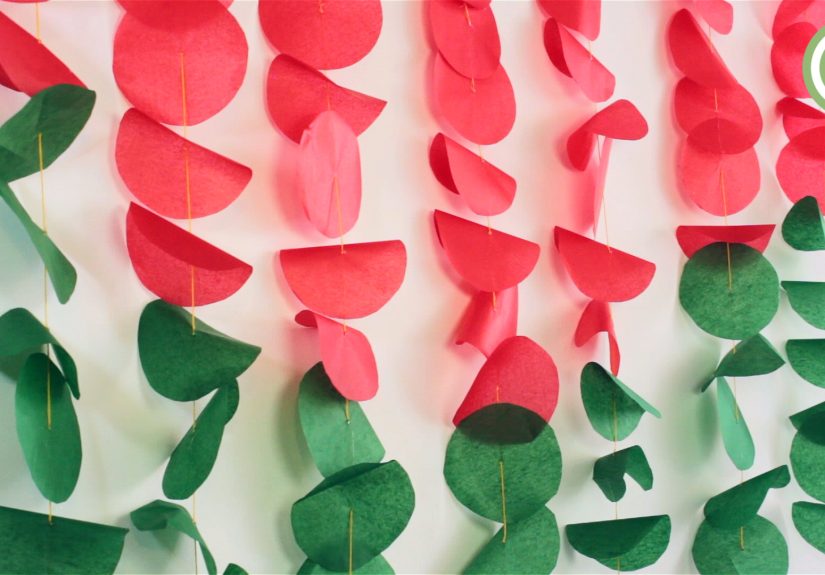
Method 3: Sewn Paper Shape Garland (The “Wait, You Made That?” Option)
If you want a paper garland that looks boutique and moves beautifully, sew it. The sewing machine method is fast once
you start, and the results look professionally finishedespecially with clean shapes like circles, stars, or scallops.
No sewing machine? You can still mimic the look with hand stitching or careful taping, but machine stitching is the smoothest.
Supplies
- Lightweight paper (text-weight paper, scrapbook paper, or thinner cardstock)
- Hole punch (1 3/4″ makes great circles) or a template for stars/hearts
- Sewing machine + thread (straight stitch)
- Scissors
- Optional: ribbon for hanging loops
Step-by-step (machine-sewn shapes)
- Punch or cut a pile of shapes. Yes, a pile. Your future self will thank you for batching this step. Circles are fastest; stars are dramatic; scallops feel festive.
- Set up a straight stitch. No fancy stitch neededsimple is best.
- Add a hanging loop (optional but useful). Fold an 8″ ribbon in half and place the cut ends between two paper shapes. Start sewing with a couple of backstitches to lock the thread.
- Sew through the center. Stitch straight down the middle of your paired shapes.
- Leave tiny gaps between shapes. Let the machine sew a couple stitches with no paper before feeding in the next pair. That little “thread gap” prevents one solid paper strip and gives you a flexible, drapey garland.
- Finish with another loop and backstitch. Add ribbon at the end the same way, lock the stitches, and trim threads.
No-sew alternative (still cute)
- Hand-sewn look: Use a sturdy needle and thread; pierce the centers, knot every few shapes if you want extra security.
- Tape method: Lay string across the back of each shape and tape it down with neat, small pieces of clear tape.
Design ideas
- Holiday: alternating stars and circles in metallics and deep jewel tones
- Kids’ party: bright circles with a repeating pattern every five shapes
- Wedding / shower: neutral palette with subtle textures (cream, blush, soft gold)
How to Hang Your Paper Garland Without Turning Your Wall Into Swiss Cheese
Your paper garland ideas deserve better than “taped directly to the wall until it falls down.” Try these cleaner methods:
- Removable hooks: Great for chains and tasselsespecially across door frames.
- Clear fishing line: Makes garlands look like they’re floating.
- Tension rod trick: For doorways or windows, a tension rod can hold garland without nails or drilling. Wrap or zip-tie the garland to the rod.
- Layering: Combine two garlands (like a paper chain plus greenery or lights) for a fuller, styled look.
Quick Planning Math: How Much Paper Do You Need?
For a classic paper chain garland using 6″ strips, a good estimate is 40–55 links for a 6-foot garland,
depending on overlap and how tight you make your loops. If you’re alternating strip sizes, add a few extrabecause nothing
says “DIY drama” like coming up two links short.
FAQs
What’s the best DIY paper garland for kids?
The paper chain garland wins. It’s forgiving, safe (with supervision), and doesn’t require precision. Tassels are doable
but can tangle; sewn garlands are better as an adult-led project.
How do I keep a paper garland from sagging?
Use more hanging points (every 2–3 feet), keep paper lighter (especially for long spans), and hang in gentle swags rather than a tight straight line.
For heavy chains, break it into sections and connect them after hanging.
Can I reuse paper garlands?
Yesespecially chains and sewn shape garlands. Store them in a box or large zip bag, and keep them away from humidity. Tissue tassels can be reused,
but they’re more likely to crush; store them loosely.
Conclusion: Pick Your Paper Garland Style and Run With It
If you want quick and classic, make a paper chain garland. If you want big party energy, go for a
tissue paper tassel garland. And if you want a polished, “how is this so cute?” finish, the
sewn paper shape garland is your best friend.
The best part of a paper garland DIY is that it’s endlessly adjustable: colors, textures, shapes, and scale can all shift
to match your theme. You don’t need perfectionjust a repeatable process and a little willingness to embrace the chaos of scissors,
scraps, and suddenly owning way too many paper punches.
Real-World Experiences: What People Learn After Making Paper Garlands (The Helpful Stuff You Don’t See in Perfect Photos)
Most paper garland projects begin with confidence and end with a new respect for scissors. That’s normal. In real homes and real parties,
a garland isn’t just “a craft”it’s a logistical event involving timing, cleanup, and the sudden realization that paper has opinions about humidity.
Here are some common, highly practical lessons people tend to learn after making these three garlands a few times.
First: prep is everything. The difference between “this was fun” and “I never want to see tissue paper again” is batching.
People who enjoy making garlands usually do one step at a time: cut all strips first, then loop all links; fringe all tissue first, then roll all tassels;
punch all circles first, then sew. That assembly-line approach turns a messy craft into a calming routineand it’s the easiest way to keep your spacing consistent.
Second: paper choice can save (or ruin) your mood. Wrapping paper feels like a genius budget hack until it tears at the staple point.
If the wrapping paper is thin, going wider on the strip helps, and a tiny extra overlap makes the loop stronger. Scrapbook paper is the “looks amazing instantly”
option, especially when it’s double-sided, because the garland will twist no matter how politely you ask it not to. Tissue paper is pure celebrationbut it’s
also fragile. People often discover that metallic tissue is pretty and dramatic and also a little chaotic: it slides while cutting and can rip once fringed,
so working with fewer layers is a sanity-saving move.
Third: hanging is part of the craft. A gorgeous paper garland can look sad if it’s taped up with random angles or droops like a tired noodle.
In practice, using more anchor points makes everything look better. Many decorators hang garlands in shallow swags (gentle curves) because it hides minor length
miscalculations and makes the garland feel fuller. Another real-world trick: if you’re worried about wall damage, tension rods and removable hooks are a game-changer,
especially for door frames and windows.
Fourth: the “professional look” is usually just spacing. With tassels, people often like the result more when tassels aren’t packed too tightly.
Leaving breathing room between tassels lets the fringe show off its shape instead of becoming one big fuzzy mass. With sewn shapes, the biggest “aha” moment is
the tiny gap between shapesletting the machine stitch a couple stitches in the air before feeding the next circle or star. That small detail is what keeps the
garland flexible and drapey instead of stiff like a paper fence.
Finally: paper garlands are the ultimate “fix it fast” decor. People use them for last-minute birthdays, classroom celebrations, and holiday
corners that feel bare. A paper chain instantly fills vertical space (doorways, stair rails), tassels create a party backdrop in minutes, and sewn circles add
that boutique, styled texture that photographs beautifully. The common theme across all these experiences? Your garland doesn’t need to be perfectit needs to
be finished, hung with intention, and enjoyed. And if one link is a little crooked, congratulations: you made something handmade. That’s the point.







 Close
Close