
Table of Contents >> Show >> Hide
- Plant Facts About Leaves, Water, and Green Engineering
- 1) Plants have tiny adjustable “mouths” called stomata.
- 2) Stomata don’t stay open all the time.
- 3) Most of the water a plant absorbs is lost through transpiration.
- 4) Transpiration helps cool plants down.
- 5) Transpiration also helps move materials inside the plant.
- 6) Wilted plants aren’t always “dead”they may be losing turgor pressure.
- 7) Roots need oxygen too.
- 8) Most roots live in the upper layers of soil.
- 9) Some desert plants open their stomata at night.
- 10) Drought can slow photosynthesis even before leaves look terrible.
- Plant Behavior Facts That Make Plants Seem Almost… Strategic
- 11) Plants use hormones to “communicate” within themselves.
- 12) Auxin helps control apical dominance.
- 13) Plants respond directionally to light and gravity.
- 14) Shoots often grow “away from darkness,” not just “toward light.”
- 15) Roots and shoots respond to gravity in opposite directions.
- 16) Plants have internal clocks.
- 17) Young sunflowers track the sun, but mature ones usually stop.
- 18) Venus flytraps don’t snap shut from just any tiny touch.
- 19) Carnivorous plants still photosynthesize.
- 20) Fruits and vegetables keep respiring after harvest.
- Flower, Fruit, and Seed Facts That Will Change How You See Produce Aisles
- 21) Pollination and fertilization are not the same thing.
- 22) The ovule becomes the seed, and the ovary becomes the fruit.
- 23) Tomatoes are fruitsand so are cucumbers, squash, and eggplants.
- 24) Pineapples and figs are examples of “multiple fruits.”
- 25) Some plants have separate male and female flowers on the same plant.
- 26) Other plants have male and female flowers on separate plants.
- 27) Seeds are tiny survival kits.
- 28) Seed dormancy is a survival strategy, not a malfunction.
- 29) Different seeds need different “wake-up calls.”
- 30) Fire can help some plants reproduceand entire forests can be one plant.
- Bonus Plant Weirdness for Gardeners and Nature Nerds
- Conclusion
- Related Experiences: Why Plant Facts Suddenly Feel Personal (Approx. )
Plants have a reputation problem. They sit quietly, look decorative, and mind their chlorophyll. So people assume they’re simple. Meanwhile, plants are out here running chemical factories, tracking sunlight, managing water pressure, forming partnerships with fungi, and timing growth with internal clocks like tiny green geniuses. In other words: your houseplant is not “just sitting there.” It’s busy.
If you love gardening, plant biology, or random facts that make you stare at a tomato and say, “Wait… that counts as a fruit?”, this guide is for you. Below are 30 surprising plant facts based on real science and extension-level botany information, written in plain English (with a little humor, because plants deserve personality too).
Plant Facts About Leaves, Water, and Green Engineering
1) Plants have tiny adjustable “mouths” called stomata.
Stomata are small openings in leaves, and each one is controlled by guard cells. These guard cells open or close the pore to regulate the movement of water vapor, oxygen, and carbon dioxide. It’s like each leaf has thousands of microscopic bouncers controlling who gets in and out.
2) Stomata don’t stay open all the time.
In many plants, stomata usually close in darkness and may also close during hot, dry conditions to reduce water loss. That means plants are constantly balancing gas exchange for photosynthesis with water conservation. They’re basically running a budget meeting all day: “Do we spend water, or do we keep the lights on?”
3) Most of the water a plant absorbs is lost through transpiration.
A lot of people think plants “drink” water mainly to store it. In reality, a huge amount of water taken up by roots is lost through transpiration (water vapor leaving the plant, mostly through stomata). This process is a major part of how plants functionnot a wasteful accident.
4) Transpiration helps cool plants down.
Transpiration is not just water loss; it also cools plant tissues through evaporation. On a hot day, your leafy plants are doing their own version of air-conditioning. No thermostat, no electricity, just physics and excellent leaf design.
5) Transpiration also helps move materials inside the plant.
As water exits the leaves, it helps pull more water upward through xylem. That upward movement supports the transport of minerals from the soil and helps move plant chemicals, including hormones. Plants don’t have a heart, but they do have a very clever fluid transport system.
6) Wilted plants aren’t always “dead”they may be losing turgor pressure.
When plants lose water faster than they can absorb it, their cells lose firmness (turgor pressure), and leaves droop. That dramatic “I have perished” look is often a pressure problem before it becomes permanent damage. Plants can be a little theatrical, but with a valid point.
7) Roots need oxygen too.
Yes, roots need oxygen to grow and stay healthy. In oversaturated or compacted soils, oxygen becomes limited, and roots can suffer or die. This is why “more water” is not always better in gardening and houseplant care.
8) Most roots live in the upper layers of soil.
Many roots are concentrated in the top foot or two of soil because that’s often where oxygen is more available. This surprises people who imagine roots going straight down like tree-shaped anchors. Many plants spread wide and relatively shallow instead.
9) Some desert plants open their stomata at night.
Cacti and many succulents use CAM photosynthesis (Crassulacean Acid Metabolism). They keep stomata closed during hot daytime hours to reduce water loss, then open them at night to take in carbon dioxide. In other words, these plants do their “breathing work” on the night shift.
10) Drought can slow photosynthesis even before leaves look terrible.
When stomata close to conserve water, less carbon dioxide enters the leaf, so photosynthesis slows down. A plant may look mostly okay while still experiencing reduced growth and stress. Plants are masters of coping quietlyuntil they’re not.
Plant Behavior Facts That Make Plants Seem Almost… Strategic
11) Plants use hormones to “communicate” within themselves.
Plants don’t have nerves, but they do use hormones and signaling chemicals to coordinate growth, stress responses, and reproduction. Different tissues can produce hormones, and those signals move through the plant to trigger changes. It’s a chemical messaging system with surprisingly sophisticated results.
12) Auxin helps control apical dominance.
Auxin, a plant hormone, helps the main stem tip suppress the growth of side buds. That’s why pinching or pruning the tip of some plants often makes them branch out and look bushier. Gardeners call it pruning; plants call it “a management restructuring.”
13) Plants respond directionally to light and gravity.
Directional growth responses are called tropisms. Phototropism is growth response to light, and gravitropism (or geotropism) is response to gravity. These are not random bendsplants are actively adjusting growth patterns based on environmental cues.
14) Shoots often grow “away from darkness,” not just “toward light.”
That sounds like a tiny wording change, but it matters. In many cases, cell elongation happens on the darker side of the stem, causing the shoot to curve. The result looks like it’s chasing the light, but the mechanism is more like strategic uneven growth.
15) Roots and shoots respond to gravity in opposite directions.
A germinating seed sends roots downward and shoots upward because different tissues respond differently to gravity. This built-in directional logic is one reason seeds can sprout successfully even when planted in awkward orientations. Plants are surprisingly good at finding “up.”
16) Plants have internal clocks.
Plants use circadian rhythms to time growth and responses across the day-night cycle. Research has shown that hormone responses such as auxin signaling can be gated by time of day. So yes, plants have scheduleswithout ever buying a planner.
17) Young sunflowers track the sun, but mature ones usually stop.
Sunflower buds and young flowers often move across the sky during the day, following the sun. Mature flower heads, however, tend to settle and face east. That’s one of those plant facts that sounds fake until you see a whole field and realize the adults are all facing the same direction.
18) Venus flytraps don’t snap shut from just any tiny touch.
The trap usually needs stimulation of trigger hairs in a way that helps reduce false alarms (like random debris or raindrops). This makes the Venus flytrap more selective than people assume. It’s not a chaotic plant monsterit’s an energy-efficient hunter.
19) Carnivorous plants still photosynthesize.
Carnivorous plants are not “living off bugs” alone. They photosynthesize like other plants and typically capture prey to supplement nutrientsespecially in nutrient-poor soils. Think of insects as fertilizer with dramatic packaging.
20) Fruits and vegetables keep respiring after harvest.
Plant tissues don’t instantly shut down when harvested. Many fruits and vegetables continue respiration, which affects freshness and shelf life. That’s part of why temperature and humidity management matter so much in storage.
Flower, Fruit, and Seed Facts That Will Change How You See Produce Aisles
21) Pollination and fertilization are not the same thing.
Pollination is the transfer of pollen to a stigma. Fertilization happens later, when sperm cells from pollen unite with egg cells in the ovule. People often use the terms interchangeably, but in plant reproduction they’re separate steps.
22) The ovule becomes the seed, and the ovary becomes the fruit.
This is one of the most useful plant biology facts to know. After successful fertilization, the ovule develops into a seed, while the ovary matures into the fruit. Once you learn this, every flower starts to look like a before-and-after story.
23) Tomatoes are fruitsand so are cucumbers, squash, and eggplants.
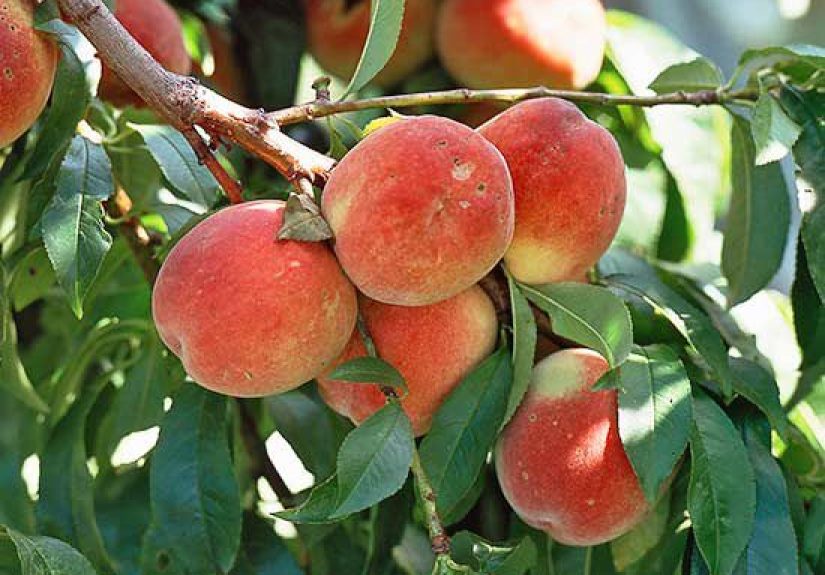
Botanically speaking, many foods people call vegetables are fruits because they develop from a flower’s ovary and contain seeds. Your salad has been hiding a fruit basket in plain sight.
24) Pineapples and figs are examples of “multiple fruits.”
Not all fruits come from one ovary in one flower. Some, like pineapples and figs, develop from clusters of flowers. Plant reproduction gets complicated fast, which is exactly why botany is fun.
25) Some plants have separate male and female flowers on the same plant.
These are called monoecious plants. Corn and pecan are classic examples, and some crops like squash can produce male flowers first and later produce both sexes. The plant world is more flexible than most people expect.
26) Other plants have male and female flowers on separate plants.
These are dioecious species, such as holly and ginkgo. If you want fruit on a dioecious plant, you often need a male and female plant near enough for pollination. Gardening tip: romance matters in landscaping too.
27) Seeds are tiny survival kits.
A seed contains an embryo, stored food (like endosperm or cotyledons, depending on species), and a protective coat. It’s a full starter package for a future plant, which is why seeds can look so simple while being biologically brilliant.
28) Seed dormancy is a survival strategy, not a malfunction.
Many seeds are built to wait. Dormancy helps prevent germination at the wrong time, increasing the chances that the next generation survives. If your seeds don’t sprout immediately, they may not be stubbornthey may be smart.
29) Different seeds need different “wake-up calls.”
Some seeds need water, oxygen, and a certain temperature. Others also need light or darkness, or treatments like scarification (scratching/weakening the seed coat) and stratification (a period of cool, moist conditions). Nature doesn’t do one-size-fits-all.
30) Fire can help some plants reproduceand entire forests can be one plant.
In fire-adapted ecosystems, heat can open serotinous lodgepole pine cones and release seeds when conditions become favorable after fire. Meanwhile, quaking aspen can form clonal colonies connected by underground rootsPando in Utah is a famous example. Plants are not just individuals; sometimes they’re systems.
Bonus Plant Weirdness for Gardeners and Nature Nerds
Here’s one more fun reality check: plants can also team up with fungi through mycorrhizae, a symbiotic relationship that helps improve nutrient and water uptake, while the fungi receive plant-made carbohydrates. Add in seagrasses (yes, flowering plants in marine environments) and chemical interactions like black walnut juglone effects that can influence neighboring plants, and suddenly “plants are simple” becomes a very hard argument to make.
Conclusion
Plants are doing far more than decorating your yard or surviving in a pot by the window. They regulate gas exchange with stomata, move water through xylem, respond to light and gravity, time growth with internal clocks, build fruits from flower ovaries, and deploy survival strategies that include dormancy, night-time gas exchange, and even fire-triggered seed release. The next time someone calls plants boring, feel free to hand them a sunflower, a pineapple, and a cactus and say, “Let’s talk.”
Whether you’re into gardening facts, plant biology, or just want to win a weird trivia round, these 30 facts about plants show that the green world is full of surprises. And the best part? This is barely the tip of the leaf.
Related Experiences: Why Plant Facts Suddenly Feel Personal (Approx. )
One of the funniest things about learning plant facts is how quickly everyday experiences start making sense. You notice a droopy basil plant at 2 p.m., water it, and a few hours later it looks like it has recovered from a Victorian illness. Before learning about turgor pressure and transpiration, that feels mysterious. Afterward, it feels like watching plant physiology happen in real time. Suddenly, your kitchen herb isn’t being dramatic (okay, maybe a little); it’s responding to water balance and heat stress exactly the way a living system should.
The same thing happens in gardens after heavy rain. A lot of people assume more water automatically means happier plants, but then a plant starts struggling anyway. Once you understand that roots need oxygen, soggy soil stops being “extra hydration” and starts looking like a traffic jam underground. That one fact alone changes how people water houseplants, raised beds, and even lawns. You stop treating watering like a number on a schedule and start treating it like a relationship with contextweather, soil type, drainage, plant species, and timing all matter.
Another experience many people have is rotating a houseplant because it leans toward a window. It seems simple, but it becomes much more interesting when you know about phototropism and auxin. That leaning pothos or peace lily is not “growing crooked” out of spite. It’s responding to directional light and reallocating growth. Once you know that, plant care becomes less about forcing symmetry and more about working with biology. Rotating the pot, adjusting light, and pruning strategically all start to feel like informed decisions instead of guesswork.
Even grocery shopping can change. After learning that tomatoes, cucumbers, squash, and eggplants are botanical fruits, produce aisles become a mini botany exhibit. Pineapples and figs stop being just snacks and start being examples of how weird and creative plant reproduction can be. It’s the kind of knowledge that sneaks into conversation at dinner and makes everyone pause mid-bite. (“Wait, this is a fruit?” “Technically, yes.” “Please pass the salad-fruit.”)
Then there are outdoor experiences that hit differently once you know what to look for: seeing a field of mature sunflowers mostly facing east, noticing how fast new growth appears after pruning, or walking through an aspen stand and realizing many stems may be connected underground. These moments make nature feel less like a background and more like a living, active system full of patterns. Plant facts don’t just add triviathey add a lens. And once you start seeing plants through that lens, you realize the world has been showing off this whole time.






 Close
Close