
Table of Contents >> Show >> Hide
Hollywood loves an origin story. The scrappy unknown. The big break. The glow-up montage. The standing ovation that lasts just long enough for everyone to forget you’re a human with cartilage in your knees and feelings in your chest.
But the internet? The internet loves the sequel: the stumble, the scandal, the meltdown, the tragedy, the exile, the slow fade into “whatever happened to…?” That’s why a viral thread asking for the biggest “falls from grace” hits like a bingeable docuseries32 episodes, no commercials, and the comment section acting like a jury that never sleeps.
Why “falls from grace” go viral
A fall from grace isn’t just “famous person did bad thing.” Sometimes it’s “famous person did a public thing,” and the public decided it meant something about their character, their talent, their worth, or their right to keep working. In other words: it’s not only about actionsit’s about storytelling.
Fame runs on narratives: “America’s Dad,” “the nicest host on TV,” “the comeback kid,” “the tortured genius,” “the teen idol,” “the misunderstood rebel.” When reality doesn’t match the brand, the whiplash can be brutal.
One thread, 32 stories, and a whole lot of nuance
Here’s the twist: viral lists like this often mix very different kinds of “falls.” Some are about harm (crimes, abuse, exploitation). Some are about public disgrace (a single ugly moment captured forever). And some are about the machine (mental health crises, addiction, tabloid cruelty, blacklisting, or an industry deciding a person is “difficult” or “unprofitable”).
So read this list the way you’d read a messy group text: it’s revealing, emotional, and occasionally unfair. The goal isn’t to rubber-stamp the internet’s judgmentit’s to understand why certain celebrity downfalls stick in our cultural memory.
The 32 “falls from grace” the internet can’t stop debating
Below are the 32 names and stories highlighted in the viral thread that inspired the conversationkept in the same order and framed with context. For cases involving allegations or legal outcomes, this summary sticks to widely reported, publicly documented information and avoids rumor-as-fact.
- Bill Cosby Once branded as a wholesome American icon, his legacy collapsed under decades of sexual assault allegations and a criminal conviction that was later overturned on procedural grounds, leaving a cultural crater either way.
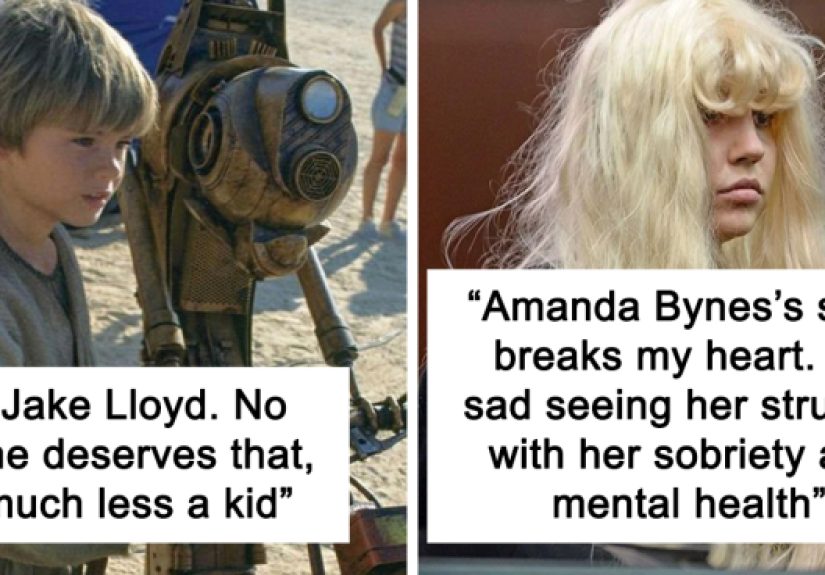
- Jake Lloyd A child actor who became a lightning rod for adult fandom rage. His “fall” says less about talent and more about what happens when the internet treats kids like customer service reps for grown-up disappointment.
- O.J. Simpson A rare case of celebrity, sports stardom, and Hollywood crossover turning into a pop-culture trial phenomenon. Acquitted criminally, found liable in civil court, and permanently associated with a tragedy bigger than any role he played.
- Mel Gibson A blockbuster star and director whose public image was scorched by a highly publicized DUI-era antisemitic outburst, followed by years of reputational fallout and debate about forgiveness versus accountability.
- Ellen DeGeneres The “be kind” brand took a hit when workplace allegations and reporting painted a harsher behind-the-scenes culture than viewers expected, proving that a public persona can be both powerful and fragile.
- Amanda Bynes A beloved comedic talent whose struggles played out in tabloids. Her story often reads less like “downfall” and more like a reminder that mental health isn’t entertainmentno matter how clickable it is.
- Jussie Smollett A rapid rise, a headline-grabbing alleged hoax, and years of legal twists. Even with later court rulings, the reputational damage illustrates how some narratives become permanent before the legal system finishes its sentences.
- Alison Mack From TV fame to criminal consequences tied to NXIVM, her case stands out because it wasn’t just being “caught up” in somethingit involved active participation in a harmful organization.
- Amy Winehouse A generational voice whose struggles were photographed, mocked, and monetized in real time. The “fall” here is inseparable from the way celebrity culture treats addiction like a spectator sport.
- Kevin Spacey A towering career derailed by multiple allegations and industry rejection. Even with notable acquittals, the broader story shows how reputations can collapse faster than legal clarity arrivesand how civil claims can keep the storm alive.
- Lindsay Lohan A child-star-to-icon trajectory interrupted by relentless tabloid coverage, legal troubles, and public mockery. Her later projects highlight how a “fall” can become a long, uneven negotiation with adulthood.
- Shia LaBeouf Once framed as a wildly gifted chameleon, later defined by a swirl of controversies and abuse allegations. His story is a case study in how “messy genius” stops being charming when it starts hurting people.
- Child stars (as a category) The thread calls out the pattern itself: fame too young, boundaries too thin, money too loud. Memoirs and documentaries have pushed the public to ask: was it a “fall,” or was it a system that never built a floor?
- Elvis Presley The myth is glittering; the reality was complicated: fame, control, health decline, and an identity that became a product. His “fall” is often framed as tragedy inside a machine that wouldn’t slow down.
- Chris Farley A comedic force whose life ended in addiction-related tragedy. The “fall” wasn’t from talentit was from the collision of pressure, access, and pain, with the public watching from the cheap seats.
- Ezra Miller A rising franchise star whose legal issues and public incidents became inseparable from their work, putting studios, fans, and co-workers in the uncomfortable position of doing damage control in real time.
- Winona Ryder A single legal incident became a cultural label (“the shoplifting era”) that overshadowed her artistry for a stretch. Her later resurgence shows how some falls become footnoteseventually.
- Philip Seymour Hoffman Widely respected for craft and range, his death from overdose turned into a cultural gut punch: proof that brilliance doesn’t immunize anyone from relapse or risk.
- Michael Richards A racist onstage tirade became the defining moment of a career, not because it was a “mistake,” but because it revealed something viewers couldn’t unsee once it was said out loud.
- Whitney Houston “The Voice” became a tabloid storyline, then a tragedy. Her fall-from-grace framing often exposes how cruelly culture treats women’s strugglesespecially when they happen in public.
- Stephen Collins Once cast as a TV “family man,” later associated with admissions and allegations of sexual misconduct involving minors. It’s the kind of reversal that permanently poisons the earlier image.
- Judy Garland A classic example of the old studio system’s dark side: extraordinary talent paired with exploitation, control, and health consequences that feel less like “downfall” and more like industrial harm.
- Louis C.K. A comedian whose career shifted sharply after misconduct revelations and his own admissions. The conversation around him often centers on power, consent, and what “accountability” should look like in comedy.
- Will Smith A single live-TV slap became a cultural supernova: memes, think pieces, and professional consequences. A reminder that even an A-list brand can hinge on one impulsive minute.
- Shelley Duvall A singular screen presence whose later life was publicly speculated about and, at times, exploited. Her story often gets cited as proof that “fame” and “care” are not the same thing.
- Britney Spears A pop superstar turned cautionary tale by tabloids, then re-seen through a lens of autonomy and control. Her conservatorship and its end reshaped how people talk about celebrity, consent, and guardianship.
- Charlie Chaplin A fall rooted in politics and moral panic: targeted, investigated, and effectively pushed out during a paranoid era. His case is an early reminder that “cancelation” is older than social media.
- Sinéad O’Connor A protest on live television turned into years of backlash and professional punishmentfollowed later by widespread reassessment as the issues she protested became undeniable.
- Avicii A global music phenomenon who struggled with health and pressure, stepping back from touring before his death. The “fall” here reads as burnout at stadium volumetoo much demand, too little rest.
- Aaron Carter A teen idol whose adulthood became tabloid-fueled chaos, public concern, and, ultimately, a tragic death. His story is a harsh example of how early fame can distort a whole life.
- Anne Heche A career marked by talent and volatility, ending in a horrifying crash and death. Her inclusion in “fall” lists often blurs tragedy with judgmentsomething the thread itself debates.
- Brendan Fraser A rare “fall” where the internet largely argues he didn’t fall by wrongdoing at allhe was sidelined, endured personal and professional hardship, and later returned to acclaim. A “grace regained” story.
Patterns behind the headlines
1) The “brand” trap
Some downfalls feel shocking because the public was sold a simple identity: wholesome, kind, safe, unproblematic. When the brand cracks, people don’t just feel disappointedthey feel tricked. That emotional whiplash is rocket fuel for viral sharing.
2) The machine is loud, and it doesn’t do aftercare
Several names on this list point to something uncomfortable: not every “fall” is a moral failure. Sometimes it’s untreated mental illness. Sometimes it’s addiction. Sometimes it’s being famous at 12 and never learning what a normal Tuesday feels like. The industry is excellent at creating starsand historically terrible at keeping them alive, healthy, or private.
3) The internet confuses “accountability” with “content”
Accountability matters. So does accuracy. So does compassion. Viral threads can do real cultural work by refusing to forget harmbut they can also flatten complicated lives into punchlines. If there’s a better way to talk about celebrity downfall, it starts with separating “they hurt people” from “people hurt them.”
: The Experience of Watching a Celebrity Fall
There’s a specific kind of emotional static that happens when a famous person falls from grace. It starts as surpriselike you’ve walked into your favorite diner and discovered the cook has been replaced by a raccoon holding a spatula. Your brain does a quick inventory: “Wait… is this real? Did I misread that headline? Is this satire? Please tell me this is satire.”
Then comes the strange intimacy of it. Most of us don’t know celebrities, but we feel like we do. We grew up with their movies on repeat. Their songs got glued to key memories: first crush, first heartbreak, first time driving alone with the windows down like we were in our own music video. So when their public image collapses, it can land like a personal betrayaleven though the relationship was always one-way.
The internet amplifies that intimacy into a group activity. People process in real time: threads, memes, hot takes, reaction videos, “I always knew something was off,” and the unavoidable “here’s a 47-part timeline.” The speed is the point. It’s not just information; it’s emotional choreography. Outrage arrives with a soundtrack. Schadenfreude shows up wearing a tuxedo. Sympathy tries to speak but gets interrupted by a trending hashtag.
What’s most unsettling is how easily different kinds of “falls” get bundled together. Criminal harm and personal tragedy can end up sitting next to each other like they’re both just flavors of the same cultural snack. That’s where the experience turns from entertaining to uncomfortable. You catch yourself asking: “Am I learning something here, or am I rubbernecking?” Some stories demand accountability; others demand compassion; a few demand both at once. But the timeline wants a single emotion, preferably one that fits in a caption.
And yetpeople keep reading these lists because they’re also cautionary tales. Fame looks glamorous, but it’s also surveillance, pressure, access, temptation, and isolation. It can reward worst instincts and punish vulnerability. Watching someone fall forces an uneasy realization: the same system that built the pedestal also built the trapdoor.
The healthiest way to experience these stories might be to treat them less like gossip and more like a mirror. What do we reward? What do we excuse? What do we demand? And when someone breakswhether by choice, by harm, or by circumstancedo we want justice, healing, or entertainment? The answer changes from case to case. The internet hates that. Real life insists on it.




 Close
Close