
Table of Contents >> Show >> Hide
- The 3 “Addressing Spots” That Matter (So You Don’t Panic Later)
- Way 1: Addressing a Member of Congress (Senators & Representatives)
- Way 2: Addressing Executive Leaders (President, Vice President, Governors, Mayors, Agency Heads)
- Way 3: Addressing Judges and Courts (With a Big, Important Caution)
- Way 4: Addressing Agencies, Boards, and “Name Unknown” Officials
- Quick Cheat Sheet: Inside Address & Salutation Examples
- Common Mistakes (And How to Avoid Them Without Breaking a Sweat)
- Mail vs. Email: Do the Rules Change?
- Conclusion: Respectful, Correct, and Easy to Route Wins
- Real-World Experiences: What People Typically Run Into (and What Helps)
- Experience #1: “I wrote my Senator and got a reply… from a staffer.”
- Experience #2: Writing to a mayor or city council feels more personaland sometimes it is
- Experience #3: Agencies love documentation (and your future self will, too)
- Experience #4: Writing to a judge is a special casefollow the rules first
- Experience #5: The “name unknown” situation happens constantlyand it’s not a failure
Addressing a government official in writing feels a little like showing up to a fancy event with a
dress code you didn’t read. You can walk in wearing jeans, but you’ll spend the whole time wondering
if everyone is silently judging you (which, to be fair, is also how most people feel at the DMV).
The good news: in the United States, formal addressing is less about being “old-fashioned” and more about being
clear, respectful, and correctly titled. When you get the address block and salutation right, you signal:
“I’m serious, I’m organized, and I know who you are.” That’s a strong openingwhether you’re asking for help,
supporting a bill, appealing a decision, or simply trying to get someone to notice that the pothole on Maple Street
has achieved sentience.
Below are four reliable, real-world ways to address letters to government officialsby type of office.
Each section includes what to put in the inside address (the block at the top of your letter) and the
salutation (the “Dear…” line). You’ll also get quick templates, common pitfalls, and practical examples.
The 3 “Addressing Spots” That Matter (So You Don’t Panic Later)
Before the four ways, let’s name the three places people accidentally freestyle:
1) The envelope (or mailing label)
This is for delivery. It can be more streamlined than your letter. USPS formatting matters here: clean lines,
consistent spacing, and the correct ZIP code help your letter arrive faster.
2) The inside address (top of the letter)
This is where you show proper formality. In U.S. government correspondence, you’ll often see
“The Honorable” in the inside address for many elected and high-ranking appointed officials.
3) The salutation (“Dear …”)
The salutation usually uses the title (Senator, Governor, Mayor, Judge, Secretary) and the person’s
last name. In American English, formal letters typically end the salutation with a colon
(yes, punctuation has feelings, and the colon’s feelings are “official”).
Way 1: Addressing a Member of Congress (Senators & Representatives)
When writing to Congress, your main goals are: (1) identify the correct chamber, (2) use the official title,
and (3) keep the inside address formal and the salutation clear.
U.S. Senator (United States Senate)
Inside address: “The Honorable” + full name, then “United States Senate,” then the Washington, DC address.
Salutation: “Dear Senator [Last Name]:”
Template (Senator):
U.S. Representative (U.S. House of Representatives)
Inside address: “The Honorable” + full name, then “U.S. House of Representatives,” then the Washington, DC address.
Salutation: “Dear Representative [Last Name]:” (or “Dear Congressman/Congresswoman [Last Name]:” if you prefer.)
Template (Representative):
Pro tips that make your letter feel “real” (in a good way)
- Write to your own officials. Congressional offices prioritize messages from constituents.
- Use the office’s preferred name. Some officials use middle initials or a preferred first name publiclymatch what appears on their official site.
- Keep it clean. One topic per letter is easier for staff to route and respond to.
Example scenario: You’re writing to support a bill about veterans’ benefits. If it’s a Senator, use “Dear Senator Lee:”
If it’s a Representative, use “Dear Representative Garcia:”. Same idea, different chamber, different ZIP.
Way 2: Addressing Executive Leaders (President, Vice President, Governors, Mayors, Agency Heads)
Executive officials come in two flavors: top-of-office titles (President, Governor, Mayor) and
department/agency leaders (Secretary, Administrator, Attorney General). The inside address is often
formal; the salutation leans title-forward.
The President of the United States
Inside address: Use the office title (often “The President”) or “The Honorable [Name]” depending on context; both appear in real examples.
Salutation: “Dear Mr. President:” or “Dear Madam President:”
Practical template (President):
The Vice President of the United States
Inside address: “The Vice President” (commonly used), with the Executive Office address.
Salutation: “Dear Mr. Vice President:” or “Dear Madam Vice President:”
Practical template (Vice President):
Governor
Inside address: “The Honorable [Full Name]” + “Governor of [State]” (or “Governor” line) + official address.
Salutation: “Dear Governor [Last Name]:”
Template (Governor):
Mayor
Inside address: “The Honorable [Full Name]” + “Mayor of [City]” + city hall address.
Salutation: “Dear Mayor [Last Name]:”
Template (Mayor):
Cabinet Secretary / Federal Agency Head
Inside address: “The Honorable [Full Name]” + “Secretary of [Department]” (or “Administrator of…”) + department/agency name and address.
Salutation: “Dear Mr./Madam Secretary:” or “Dear Secretary [Last Name]:” (both are commonly used; choose one and stay consistent.)
Template (Cabinet Secretary):
Humor-with-a-purpose note: Don’t stack titles like a pancake tower. “The Honorable Senator Smith, Chairman”
is usually unnecessary and can look messy. One clean title line beats three crowded ones every time.
Way 3: Addressing Judges and Courts (With a Big, Important Caution)
Courts take procedure seriously. So addressing a judge correctly mattersbut so does how you communicate.
If you are a party to an ongoing case, writing directly to a judge about the case can be considered an
ex parte communication (a one-sided contact) and is generally not allowed. If you have a case,
follow court rules, file through the clerk, and provide copies to other parties as required.
General format for judges
Inside address: “The Honorable [Full Name]” + the court name + court address.
Salutation: “Dear Judge [Last Name]:” (or “Dear Chief Judge [Last Name]:” if applicable.)
Template (Judge):
Supreme Court Justices (and other “Justice” titles)
For a justice, the salutation commonly becomes “Dear Justice [Last Name]:” and the address block uses the justice title
and the court name.
Template (Justice):
Avoid this classic mistake
Don’t write “Honorable Judge [Last Name].” In the U.S., “The Honorable” is a style used in the address block;
“Judge” is the title used in the salutation. Combining them in the same phrase can sound redundant.
Example scenario: You’re sending a cover letter with a motion that’s properly filed and served. You might use
“Dear Judge Nguyen:” in the cover letter (following local rules), while still keeping the inside address as
“The Honorable [Full Name].”
Way 4: Addressing Agencies, Boards, and “Name Unknown” Officials
Sometimes you don’t have a single famous title like “Senator” or “Governor.” You’re writing to a
director, a commissioner, a board chair, or an office that handles your request
(benefits, permits, records requests, licensing, complaints, etc.).
If you know the person’s name
- If they are an elected official or a high-level appointee: use “The Honorable [Full Name]” in the inside address.
- If they are a career official (not typically styled “The Honorable”): use Mr./Ms./Mx. plus their name and job title.
Template (Agency Director, named):
If you don’t know the name (totally normal)
When you can’t find a specific name, address the office. This is common for agencies and local departments.
Your goal is to make it easy for staff to route your letter.
Template (Name unknown):
Examples that work well: “Dear Records Custodian:”, “Dear Permitting Director:”, “Dear Benefits Appeals Unit:”
or “Dear Office of Constituent Services:”. It’s not glamorous, but it’s effectivelike comfortable shoes.
For boards and committees
If writing to a group (city council, school board, planning commission), you can use:
“Dear Members of the City Council:” or “Dear Chair [Last Name] and Members of the Board:”
Quick Cheat Sheet: Inside Address & Salutation Examples
Use this as your “I have five minutes and coffee hasn’t kicked in yet” reference.
| Office | Inside Address (start) | Salutation |
|---|---|---|
| U.S. Senator | The Honorable [Full Name] United States Senate |
Dear Senator [Last Name]: |
| U.S. Representative | The Honorable [Full Name] U.S. House of Representatives |
Dear Representative [Last Name]: |
| President | The President The White House |
Dear Mr./Madam President: |
| Vice President | The Vice President Eisenhower Executive Office Building |
Dear Mr./Madam Vice President: |
| Governor | The Honorable [Full Name] Governor of [State] |
Dear Governor [Last Name]: |
| Mayor | The Honorable [Full Name] Mayor of [City] |
Dear Mayor [Last Name]: |
| Cabinet Secretary | The Honorable [Full Name] Secretary of [Department] |
Dear Mr./Madam Secretary: |
| Judge | The Honorable [Full Name] [Court Name] |
Dear Judge [Last Name]: |
| Justice | The Honorable [Full Name] [Court Name] |
Dear Justice [Last Name]: |
Common Mistakes (And How to Avoid Them Without Breaking a Sweat)
1) Mixing up “The Honorable” and the salutation
Think of “The Honorable” as the official name tag for the address block. Your salutation usually uses the job title:
“Dear Senator…”, “Dear Governor…”, “Dear Judge…”.
2) Using the wrong title
“Congressman” is often used informally, but “Representative” is a safe, clear salutation in writing.
For Senators, “Senator” is the standard.
3) Guessing when you can verify
If the official’s website uses “Chair,” “Madam Chair,” “Commissioner,” or a specific leadership title,
mirror it. If you’re unsure, use the broader office title (Director, Chair, Mayor, Senator).
4) Writing to a judge about an active case the wrong way
If you’re involved in a case, don’t send a private letter to the judge about the issues in dispute.
Use the proper filing process and follow the court’s communication rules.
5) Being overly casual too soon
Avoid first names and slang. You can be warm and human without being informal:
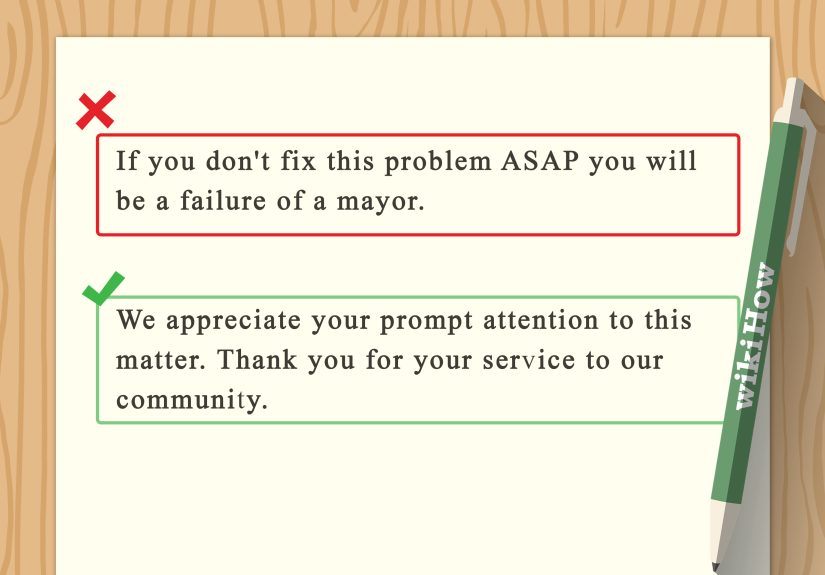
“Thank you for your service” lands better than “Hey bestie.”
Mail vs. Email: Do the Rules Change?
The core rules stay the same. Titles and salutations are still your best friends.
What changes is how much of the address block you include.
For a physical letter
- Use the full inside address block.
- Use a colon after the salutation.
- Keep formatting clean and readable (your letter should look like it pays its taxes on time).
For email or a web form
- You can shorten the address block, but keep the salutation formal.
- Use a clear subject line: “Constituent Request: [Issue]” or “Support for [Bill/Policy]”.
- End with full contact info (especially your city and state) so staff can confirm you’re a constituent.
Conclusion: Respectful, Correct, and Easy to Route Wins
Addressing a letter to a government official isn’t about sounding fancy. It’s about accuracy and respectand making it easy
for the right person (or the right staffer) to read your message and act on it. If you remember the basics
match the office, use “The Honorable” where appropriate, and keep salutations title-forwardyou’ll avoid the most common
mistakes and look polished from the first line.
And if you forget everything else, remember this: in government correspondence, the title is the GPS. Without it,
your letter can still arrive… but it may take the scenic route.
Real-World Experiences: What People Typically Run Into (and What Helps)
Let’s talk about what it’s actually like when people write government officialsbecause the addressing rules are only half the story.
The other half is: what happens next. While every office is different, certain patterns show up again and again,
and knowing them helps you write smarter letters and set realistic expectations.
Experience #1: “I wrote my Senator and got a reply… from a staffer.”
This is normaland not a brush-off. Congressional offices handle huge volumes of mail and email, and staff members are trained
to respond, track issues, and brief the Member. A properly addressed letter (“Dear Senator [Last Name]:”) signals
you understand the role. Adding your city/state and a clear ask (“Please support/oppose…” or “Please help me with…”) helps the
office route your message to the right legislative assistant or constituent services team.
People often report faster responses when they: (1) write about a single issue, (2) include a bill number if relevant,
and (3) keep the first paragraph painfully clear: who they are, where they live, and what they want. The addressing format
won’t guarantee a personal responsebut it does reduce the odds your letter gets stuck in the “needs clarification” pile.
Experience #2: Writing to a mayor or city council feels more personaland sometimes it is
Local offices can be more direct. People writing about neighborhood safety, zoning, trash pickup, street repairs, or small-business permits
often find that “Dear Mayor [Last Name]:” or “Dear Members of the City Council:” gets read by someone who can actually move the issue
within daysnot months. The best letters in these scenarios usually include specifics:
the intersection, the date/time of the problem, and what a reasonable solution looks like (a stop sign review, a crosswalk repaint,
a lighting inspection). In other words: your letter should be a flashlight, not a fog machine.
Experience #3: Agencies love documentation (and your future self will, too)
When people write to agencies about benefits, licenses, permits, or complaints, the “addressing” challenge is often that the correct
recipient isn’t a personit’s a unit. Letters that begin “Dear Benefits Appeals Unit:” or “Dear Records Custodian:” tend to do better
than “To Whom It May Concern,” because they read like you know where your request belongs.
A common experience: you’ll be asked for identifiers (case number, application ID, dates). If you include those in the first page,
you reduce back-and-forth. People also do better when they keep copies of everything they send and include a short attachment list.
The tone that works best is calm, factual, and organizedthink “help me resolve this,” not “I will now perform an interpretive dance
of frustration in paragraph form.”
Experience #4: Writing to a judge is a special casefollow the rules first
People sometimes want to write a judge for a character reference, an administrative matter, or a request like rescheduling jury duty.
The addressing format (“The Honorable [Full Name]” and “Dear Judge [Last Name]:”) is important, but the process matters more.
Courts have strict rules about one-sided contact regarding active cases. If the letter relates to a pending matter, people generally
have to file it properly and ensure all parties receive copies, or the court may refuse to consider it.
The experience here is often surprising: even a well-meaning letter can create a fairness issue. So the practical takeaway is:
use correct addressing, but also confirm the court’s communication rules and the correct channel (clerk’s office, filing system,
or published procedures). Formality isn’t just tradition in courtit’s part of how due process stays fair.
Experience #5: The “name unknown” situation happens constantlyand it’s not a failure
People often get stuck because they can’t find a specific person to address. In reality, many offices prefer you address the role:
“Dear Director,” “Dear Constituent Services,” “Dear Chair,” or “Dear Office of the [Agency Name].”
Staff can route office-addressed mail quickly, and it avoids misdirecting your letter to the wrong person (which is the bureaucratic
equivalent of putting your food in the microwave and realizing you forgot to remove the foilnothing good happens fast).
Bottom line: correct forms of address help your letter look credible, but clarity and routing-friendly details help it work.
If you combine both, you’re not just being politeyou’re increasing the odds your message lands on the right desk with the right context.







 Close
Close