
Table of Contents >> Show >> Hide
Every few years, the design world rediscovers something humble, practical, and charming enough to make us wonder why we ever left it behind. Enter the rag rug: the cheerful, hardworking floor covering that once lived in country kitchens, breezy porches, and grandma-approved hallways everywhere. Now it is back, and not in a dusty museum-piece kind of way. The new generation of rag rugs feels fresh, layered, sustainable, and surprisingly stylish.
That revival makes perfect sense. Homeowners are craving rooms that feel lived-in instead of staged, tactile instead of slick, and personal instead of copied from a showroom. Rag rugs deliver all of that. Their woven stripes, soft imperfections, and casual texture can warm up minimalist spaces, relax formal rooms, and make even a brand-new home feel like it has a story to tell. They are the decorating equivalent of saying, “Yes, I own nice things, but I also sit on my couch and eat toast like a real person.”
Best of all, rag rugs are not precious. Many are made from cotton or recycled textiles, many are flatwoven and reversible, and many work beautifully in the most chaotic corners of the house. In other words, this is not a trend that only looks good for five minutes on social media. It works in actual homes, with actual shoes, actual pets, and actual life.
Why Rag Rugs Are Having a Real Comeback
The rag rug’s return is tied to several bigger decorating shifts. First, texture is having a major moment. As interiors move away from overly polished looks, designers are leaning into handmade details, chunky weaves, visible craftsmanship, and materials that soften clean-lined furniture. Rag rugs fit right into that mood. They add movement to a room without needing loud prints or dramatic colors.
Second, people want pieces that feel emotionally warm. A rag rug has instant memory power. It can evoke cottage houses, Scandinavian simplicity, American craft traditions, summer cabins, farmhouse kitchens, or old-school braided mats by the back door. That nostalgia is part of the appeal, but the new styling keeps it from feeling costume-y. Pair a rag rug with plaster walls, oak furniture, matte black accents, or a sculptural lamp, and suddenly the whole thing feels collected instead of kitschy.
Third, rag rugs offer a sustainability story that is more than marketing fluff. Traditionally, they were made from leftover strips of fabric, and that spirit still resonates today. Even when you are buying a modern version rather than weaving one yourself, the appeal remains the same: less waste, more texture, and more personality. It is home design with a little conscience and a lot less snobbery.
The 5 Rag Rug Favorites Worth Bringing Home
1. The Classic Striped Cotton Runner
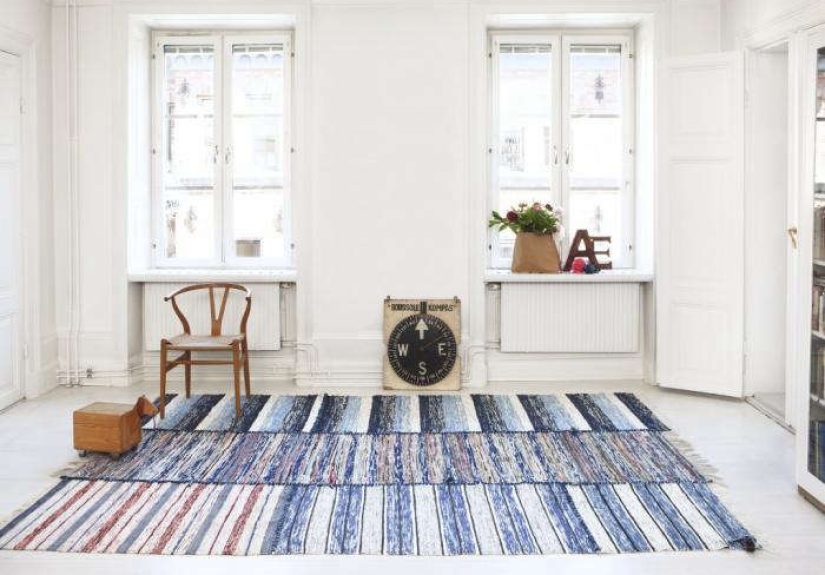
If the rag rug comeback had a campaign manager, it would be the striped cotton runner. This is the easiest, most useful, most impossible-to-mess-up version of the trend. It works in entryways, kitchens, mudrooms, laundry rooms, and narrow hallways where you need softness without bulk. The stripes bring motion and energy, while the flat weave keeps the look tailored.
Choose one in soft neutrals if you want a quiet, coastal, or Scandinavian feel. Go for red, blue, green, or mixed-color stripes if you want a room with more bounce. In a small entry, a striped rag rug can visually lengthen the space and immediately make the house feel friendlier. It says, “Welcome in,” instead of, “Please admire my expensive flooring from a respectful distance.”
2. The Denim Rag Rug
There is something wonderfully unfussy about a denim rag rug. It has the relaxed spirit of jeans, the texture of handwoven cotton, and enough color variation to hide the occasional crumb, paw print, or mystery mark from modern life. A denim rag rug is especially good in family rooms, kids’ rooms, casual bedrooms, and work-from-home spaces that need warmth without looking too delicate.
Style-wise, denim rag rugs shine with white walls, natural wood, cane furniture, leather details, and vintage artwork. They also play nicely with Americana-inspired decorating, but they do not have to feel patriotic or themed. Think sun-faded blue, cream upholstery, a ceramic lamp, and a stack of books. Comfortable, layered, and not trying too hard. Which, frankly, is most of the battle in home design.
3. The Swedish-Style Patchwork Rag Rug
If you love a room that mixes rustic soul with modern restraint, a Swedish-style patchwork rag rug is the overachiever of the category. These rugs often combine recycled or vintage textile elements into something that feels artistic, imperfect, and deeply tactile. They are fantastic in living rooms, under dining tables, or in open-concept spaces where you want the rug to feel like a conversation piece rather than background filler.
The beauty here is in the contrast. A patchwork rag rug can ground sleek furniture, clean architecture, and minimal palettes by adding softness and history. It prevents a room from looking sterile. At the same time, because the best versions are flat and textural rather than fluffy and overdesigned, they do not overwhelm the space. They bring character without shouting for attention every time someone walks in the room.
4. The Braided Rag Rug
Braided rag rugs have been around forever, and for good reason: they are cheerful, flexible, and weirdly good at making a room feel instantly established. The oval versions are especially classic, but round and rectangular options work too. If you are decorating a breakfast nook, a guest room, a cottage-style bathroom, or a reading corner, a braided rag rug can add that “someone actually lives here and probably bakes on weekends” energy.
To keep the look current, skip anything too sugary or overly themed. Instead, try muted color combinations, washed tones, or a mix of earthy hues. Pair the rug with plain linens, painted wood, antique frames, and one or two contemporary accents. The goal is charm, not a set from a historical reenactment. You want “timeless craft,” not “gift shop by the jam jars.”
5. The Washable Rag-Rug Look
Some people love the look of a traditional rag rug but need something that can survive muddy sneakers, spaghetti night, and pets who treat rugs like abstract art projects. That is where washable flatweaves and rag-rug-inspired designs come in. They capture the casual stripes, softness, and low-profile practicality of the original while giving busy households a little more peace of mind.
This is a smart pick for dining areas, playrooms, kitchens, and entry zones where mess is not a possibility but a recurring theme. Look for options with a lived-in weave, heathered colors, or uneven stripes so the rug still feels organic. A washable rug that looks too crisp can lose the handmade magic. The sweet spot is functional, soft underfoot, and just imperfect enough to feel real.
How to Style a Rag Rug Without Making the Room Feel Dated
The biggest trick is balance. Rag rugs look best when the rest of the room gives them room to breathe. If your rug is colorful, let nearby furniture be quieter. If your rug is neutral, layer in bolder art, lighting, or textiles. The point is not to match everything perfectly. It is to create a room that feels relaxed and collected.
Scale matters too. One of the fastest ways to make any rug look wrong is choosing a size that is too small. In living rooms, aim for a rug that at least catches the front legs of the main furniture pieces. In bedrooms, make sure there is enough rug underfoot when you get out of bed. In dining rooms, leave enough room for chairs to stay on the rug when they are pulled back. Rag rugs are casual, yes, but they still need proper proportions. Casual is not the same thing as accidental.
Color choice also changes the mood. For smaller spaces, lighter or medium-toned rag rugs tend to feel airier than very dark or busy designs. For high-traffic rooms, multicolored weaves are your friend because they disguise wear more gracefully than solid pale shades. And in modern spaces that feel a little cold, a rag rug with warm undertones can do the emotional heavy lifting that a throw pillow simply cannot.
What to Know Before You Buy
First, check the material. Cotton rag rugs are soft, breathable, and usually easier to move and clean than heavier wool rugs. They are great for casual rooms and everyday use. If you want more durability or a stronger structure, some modern versions blend cotton with sturdier fibers. Just remember that a super-light rug may need a quality rug pad to stay put.
Second, think about thickness. Rag rugs are often flatwoven, which is great for layering, door clearance, and cleaning. That low profile makes them especially practical in kitchens, entryways, and beneath tables. If you want the room to feel cushier, use a rug pad underneath instead of automatically choosing a thicker rug. Your shins, your vacuum, and your swinging doors will all be less offended.
Third, consider maintenance. Reversible rag rugs give you a little extra life. Washable versions are ideal for messy rooms. Handmade or vintage options may need gentler care, but they usually reward you with more character. And because rag rugs are meant to age with some grace, they often look better with a little wear than hyper-perfect rugs that panic at the sight of a cereal flake.
Why This Trend Has Staying Power
Some home trends are fun but fragile. They depend on a very specific color, shape, or influencer-approved angle, and then vanish the second the algorithm gets bored. The rag rug is different because it solves real decorating problems. It warms up hard flooring, softens modern rooms, adds craft to mass-market furniture, and introduces color without demanding a full redesign.
It also crosses style lines with unusual ease. Rag rugs can look right at home in farmhouse kitchens, pared-down Scandinavian spaces, bohemian bedrooms, traditional cottages, modern cabins, and even city apartments that need a little texture therapy. That versatility is exactly why the best versions never truly disappear. They just wait patiently until the rest of us catch up again.
Living With Rag Rugs: What the Experience Is Really Like
The most convincing thing about rag rugs is not how they look in a perfect photo. It is how they behave after a few weeks of real life. In an entryway, a rag rug immediately changes the mood of the house. Instead of stepping into a hard, echoey, purely functional space, you get a softer landing. Shoes seem less bossy. Bags dropped by the door feel slightly more intentional. Even the daily routine of coming and going feels calmer because the room has some visual warmth built into it.
In kitchens, rag rugs are especially rewarding. A flatwoven runner in front of the sink or between the island and the counters adds comfort without creating a tripping hazard. It also breaks up the sameness of cabinets, stone, and flooring. Kitchens can be beautiful, but they can also become a sea of hard surfaces that feels a little too polished. A rag rug fixes that in seconds. Suddenly the room feels less like a showroom and more like the kind of place where someone actually cooks, talks, spills a little coffee, and lives happily ever after with a toaster.
Bedrooms benefit in a different way. A rag rug beside the bed is not dramatic, but it is deeply satisfying. There is something comforting about stepping onto woven cotton instead of a cold floor first thing in the morning. And because rag rugs tend to have visual movement, they make a bedroom feel layered without needing piles of extra decor. If you are the type who wants a calm room but not a boring one, this is where the rag rug quietly earns its paycheck.
They also age well emotionally. Some decor gets old because it was chosen for novelty. Rag rugs do the opposite. The longer they stay, the more believable the room feels. Slight fading, softened fibers, and tiny signs of wear often make them better, not worse. They become part of the home’s rhythm. That quality is especially valuable if you are trying to build rooms that feel personal rather than trend-chasing. A rag rug rarely steals the show, but it often ends up being the thing that makes the whole room make sense.
And then there is the personality factor. Rag rugs carry a kind of low-pressure charm that many homes need more of. They are friendly. They are tactile. They can be colorful without being loud and rustic without being rough. They let a space feel designed without feeling uptight. In a decorating culture that sometimes takes itself much too seriously, the rag rug is a refreshing reminder that style can be smart, useful, and relaxed all at once. Not every hero wears a cape. Some just lie there quietly and make the room better.
Conclusion
The return of the rag rug is not just another nostalgia loop. It reflects what people genuinely want from their homes right now: comfort, texture, practicality, and pieces with a little soul. Whether you choose a striped cotton runner, a denim weave, a patchwork statement piece, a braided classic, or a washable rag-rug look, the appeal is the same. These rugs are approachable, versatile, and wonderfully human.
If your floors feel a little too bare, your room a little too serious, or your space a little too polished to be believable, a rag rug might be the easiest fix in the house. It adds softness without fuss, charm without clichés, and character without the need for a complete redesign. That is not a comeback built on hype. That is a comeback built to last.





 Close
Close