
Table of Contents >> Show >> Hide
- The Fast Answer: Can You Make a Highway U-Turn?
- Why a U-Turn on the Highway Is So Dangerous
- What the Rules Generally Mean Across the U.S.
- The Rare Exceptions That Confuse People
- What To Do If You Missed Your Exit
- Common Real-World Scenarios
- Could You Get a Ticket?
- How To Avoid Missing Exits in the First Place
- Bottom Line
- Related Driving Experiences and Situations Drivers Commonly Run Into
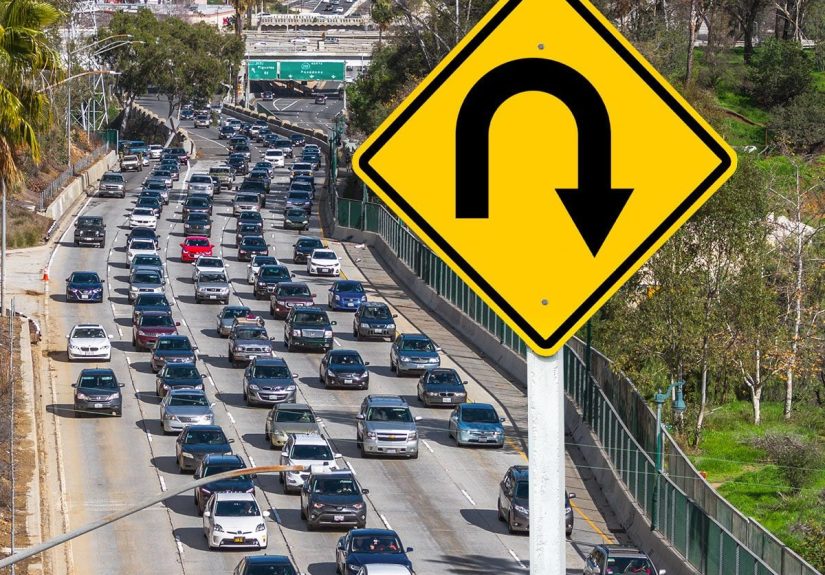
You know the moment. Your GPS says, “Take the exit on the right,” and your brain says, “Absolutely,” but your car is somehow already auditioning for the next county. Now the panic sets in: Can you make a U-turn on the highway if you missed your exit? It is a fair question, but the answer is not the one your stressed-out inner backseat driver wants to hear.
In most situations, no, you should not make a U-turn on the highway. On an interstate or limited-access expressway, trying to flip directions after missing an exit is usually illegal, dangerous, or both. Even where state laws differ in wording, the practical advice is amazingly consistent across official driver handbooks: keep going, take the next exit, and turn around legally and safely.
That may sound boring, but boring is underrated when the alternative is becoming the lead character in a traffic report. This guide breaks down why highway U-turns are such a bad idea, the rare exceptions that confuse drivers, what the rules generally mean in real life, and exactly what to do after you miss your exit.
The Fast Answer: Can You Make a Highway U-Turn?
Usually no. If you missed your exit, the right move is to continue to the next exit or safe turnaround point. On most interstates and other controlled-access highways, making a U-turn on the main roadway is not something regular drivers are supposed to do. It can put you in conflict with fast-moving traffic, create a wrong-way driving situation, and lead to a ticket, a crash, or a truly unforgettable insurance phone call.
Some divided highways have designated median openings or special crossover points where U-turns are allowed. That is where people get confused. They see a break in the median and think, “Aha! Secret reset button.” But a legal U-turn opening on a divided highway is not the same thing as permission to swing your vehicle around wherever your exit-related regret kicks in. If the road is limited-access, if signs prohibit it, if there is no designed opening, or if visibility and traffic conditions make it unsafe, the answer is still no.
Why a U-Turn on the Highway Is So Dangerous
1. Highway speeds leave almost no room for mistakes
On a neighborhood street, a bad U-turn might trigger a horn and a dramatic glare. On a highway, the same bad decision happens around much faster traffic. Drivers behind you are not expecting a vehicle to slow sharply, stop, angle across lanes, or attempt a turn across a median. At highway speeds, even one second of confusion can turn into a chain-reaction crash.
2. You can create a wrong-way driving disaster
One of the biggest highway risks is accidentally entering a lane, ramp, or roadway in the wrong direction. That is not just embarrassing. It is one of the most severe crash scenarios on high-speed divided highways. A driver who tries to improvise after missing an exit can end up facing oncoming traffic or cutting into a ramp geometry the road was never designed to support.
3. Medians are not invitations
A median break can look harmless from behind the wheel, especially when you are frustrated and convinced your destination is now emotionally unavailable. But many median areas are designed only for emergency access, maintenance vehicles, law enforcement, or specific turning movements at lower-speed locations. Crossing a barrier, curb, strip of land, or double yellow setup to turn around is a fast way to turn a small navigation mistake into a large legal mistake.
4. Sight distance matters more than most drivers realize
U-turns require space, time, and visibility. On or near curves, hills, ramps, and merges, other drivers may not see you until it is too late. That is why many rules specifically restrict U-turns near crests, curves, and areas with limited sight distance. If approaching traffic cannot clearly see your vehicle, the turn is not just risky. It is often prohibited.
What the Rules Generally Mean Across the U.S.
Traffic laws are state-based, so the exact wording changes. Still, the pattern across U.S. driver handbooks is very clear:
- Many states flatly tell drivers never to make a U-turn on a highway or interstate.
- Some states allow U-turns only where they can be made safely and where signs or roadway design allow them.
- Limited-access expressways and interstates are treated much more strictly than regular surface roads.
- If you miss an exit, official guidance commonly says to continue to the next exit rather than slow down, back up, or turn around.
That last part is the real headline for everyday drivers. The question is not only “Is it technically legal somewhere under some unusual condition?” The question is “What should a normal driver do when they miss an exit on a real highway in real traffic?” The answer is almost always: keep moving and correct your route later.
The Rare Exceptions That Confuse People
Now for the nuance, because roads love nuance almost as much as they love construction barrels.
Designed median openings on divided highways
On some divided highways, especially those that are not fully controlled-access interstates, engineers may provide designated median openings for legal U-turns. These are planned features, not random gaps. They are placed where sight distance, spacing, and turning movement have been evaluated. In plain English, the road was built to let certain drivers turn there without causing chaos.
That does not mean you can invent your own U-turn spot. If there is no opening, no sign allowing it, or the setting is an interstate mainline, do not do it.
Intersections near frontage roads or service roads
In some highway-adjacent road systems, especially in urban or suburban areas, drivers may legally use frontage roads, service roads, or intersections to reverse direction. That is not really a highway U-turn in the dramatic “swing across the freeway” sense. It is just a legal route correction using connected roads the way they were intended.
Authorized vehicles and emergency situations
Police, highway maintenance crews, and emergency responders may use crossover points or special access areas that ordinary drivers cannot use. Watching one of those vehicles make a maneuver does not mean you have discovered a life hack. It means you are watching a vehicle with different authority and training.
What To Do If You Missed Your Exit
This is the part that saves the day, or at least saves you from starring in a dashcam compilation.
Stay calm and keep driving
The first rule is emotional, not mechanical. Do not panic. Missing an exit is inconvenient, not catastrophic. The moment you react like it is catastrophic, your driving gets weird. Weird driving is expensive.
Do not stop, reverse, or cross a gore area
If you miss the exit, do not brake suddenly in the travel lane. Do not back up on the shoulder. Do not swerve across solid lane markings or the striped area near the exit split. Those are classic “I can still fix this” moves that usually make things worse in a hurry.
Take the next exit
This is the boring hero move. Continue to the next exit, then use a legal road, intersection, parking lot, or turnaround point to get back on track. In most cases, your delay is measured in minutes, not hours. Your GPS may sound mildly disappointed, but it will recover.
Let navigation reroute you
Modern maps are excellent at cleaning up our mistakes. Let the app reroute you, but keep your eyes on the road and your brain engaged. Technology is helpful. It is not your designated driver.
Signal early and move one lane at a time
If you are trying to reach the next exit, avoid the frantic multi-lane dive that says, “I have made several bad choices and would like to add one more.” Signal, check blind spots, and make one safe lane change at a time.
Common Real-World Scenarios
You missed an interstate exit by 50 feet
It feels absurd to drive another mile or two just because your exit got away from you at the last second. Still, that is exactly what you should do. Fifty feet is not enough room to safely reverse a highway decision. The next exit is the correct answer.
You see a break in the median right after the exit
That median opening may be for maintenance access, emergency response, or a specifically signed movement from another road segment. Unless signage and road design clearly allow your turn, assume it is not for you. The highway is not a buffet. You do not get to sample every opening.
You are on an urban expressway with heavy traffic
This is where people are tempted to make dramatic moves because traffic is slow enough to feel “manageable.” But dense traffic creates a different danger: more vehicles, more blind spots, more sudden braking, more confusion, and more opportunities for someone to hit you while you are trying to do something the road does not expect.
You are in construction and the signs were confusing
Construction zones are where missed exits become a team sport. Even then, the fix is still the same: keep going, follow detour signage, and turn around legally when the road gives you a safe option. Construction is not a permission slip for improvisation.
Could You Get a Ticket?
Yes. Depending on the state and the exact maneuver, a highway U-turn can lead to citations for an improper U-turn, unsafe turning movement, driving on the wrong side of a divided highway, failure to obey signs, or related violations. If the move contributes to a crash, the consequences can get much worse very quickly.
There is also the practical side: even if an officer never appears from the horizon like a disappointed traffic wizard, the danger remains. A maneuver can be both illegal and unsafe, or legal only in narrow circumstances but still reckless in the moment you attempted it. That is why the safest rule for ordinary drivers is simple enough to remember under stress: missed exit equals next exit.
How To Avoid Missing Exits in the First Place
Plan a little earlier than your GPS expects
Know the highway number, exit number, and general side of the road before you get close. If your navigation says the exit is coming up in two miles, that is your cue to start paying attention, not your cue to ponder snacks.
Stay out of the far-left lane when your exit is approaching
This sounds obvious, yet many exits are missed because drivers camp in the left lane until the last possible moment and then discover physics. If you know your exit is coming, gradually work right ahead of time.
Do not depend entirely on voice navigation
Audio prompts help, but they can lag, glitch, or arrive a beat too late in dense traffic. Use signs, lane guidance, and common sense together. The map is a tool, not a magic spell.
Accept that missing an exit is normal
Honestly, one of the best highway safety habits is emotional maturity. Everyone misses exits. Calm drivers recover safely. Panicked drivers create stories that begin with, “So there I was, trying to save 90 seconds…” Those stories rarely end well.
Bottom Line
Can you make a U-turn on the highway if you missed your exit? In most real-world situations, no. On interstates and limited-access highways, the correct move is almost always to continue to the next exit and reroute from there. Even on divided highways where some U-turns are allowed, they are generally limited to specifically designed, signed, and safe locations, not random moments of regret between lanes.
So the next time your exit flashes by and your soul briefly leaves your body, remember this: a missed exit is not an emergency. A bad U-turn can become one. Keep driving, take the next legal turnaround, and let your GPS recalculate while your dignity regroups.
Related Driving Experiences and Situations Drivers Commonly Run Into
One of the most relatable experiences on the road is the split-second realization that your exit is already behind you. It usually happens in the least cinematic way possible. You are checking mirrors, watching traffic, listening to navigation, maybe wondering whether the truck in front of you plans to move sometime this century, and then suddenly the exit sign whips past like it had somewhere better to be. In that moment, almost every driver feels the same surge of frustration and temptation. You start bargaining with the road. Could you squeeze over? Could you stop? Could you just sort of rotate the car and pretend this is all very reasonable? That emotional spike is exactly why so many official rules are written so plainly. They are designed to protect people from the bad decisions stress encourages.
Another common experience happens in unfamiliar cities. A driver is on a busy expressway with four or five lanes, signs stacked like a puzzle, and exits arriving in rapid-fire sequence. Missing one exit can feel like missing a flight connection. Suddenly the route changes, the travel time jumps, and the driver feels punished for a tiny mistake. But that is where calm matters most. In practice, the “huge detour” is often a few extra minutes. The truly dangerous part is not the reroute. It is the desperate maneuver people consider to avoid the reroute.
Drivers also get confused by roads that look highway-like but are not quite full interstates. A divided highway may have occasional median openings, frontage-road connections, or turnarounds farther ahead. That can give people false confidence. They start thinking every opening is fair game, when in reality some are signed for specific uses, some are placed only where sight lines are adequate, and some are meant for special vehicles. The experience of seeing another vehicle turn somewhere unusual can make the confusion worse. Many drivers assume, “Well, that person did it, so it must be allowed.” But that other driver might be law enforcement, highway maintenance, or simply another person making a terrible choice in real time.
There is also the late-night version of this problem. You are tired, visibility is lower, traffic is lighter, and a missed exit feels especially annoying because the road ahead looks empty. Ironically, that emptiness can make risky behavior feel safer than it is. Fewer cars do not erase the danger of limited sight distance, ramp confusion, or wrong-way entry. A quiet highway can still become a deadly one in seconds if a driver turns where no one expects a vehicle to appear.
And then there is the recovery experience, which is the good one. The driver keeps going, takes the next exit, loops back legally, and arrives mildly irritated but perfectly safe. Five minutes later, the whole event is just a story, not an incident report. That is the experience worth aiming for every single time. Missing an exit is common. Missing judgment does not have to be.





 Close
Close