
Table of Contents >> Show >> Hide
- What Molasses Actually Does in Recipes (So You Can Replace It Smartly)
- Before You Swap: A 30-Second Checklist
- Quick Conversion Snapshot (So You Don’t Have to Scroll Mid-Recipe)
- 5 Molasses Substitutes (With Ratios, Best Uses, and Pro Tips)
- When a Blend Beats a Single Substitute
- Recipe-Specific Tips (Because Not All Molasses Moments Are Equal)
- Troubleshooting: If Your Substitute Changes the Results
- Shopping and Storage Tips (So This Doesn’t Happen Again)
- Real-World Kitchen Experiences With Molasses Substitutes (500+ Words)
You’re halfway through making gingerbread, baked beans, or that “secret family” barbecue sauce when you discover the molasses jar is… tragically empty.
(Cue dramatic music. A single cookie sheet clatters to the floor.)
Good news: you can still get the sweetness, moisture, and deep caramel-like flavor molasses bringsif you pick the right stand-in and use the right ratio.
This guide breaks down five reliable molasses substitutes, exactly when to use each one, and how to tweak your recipe so your baked goods don’t come out
tasting like they got lost on the way to the party.
What Molasses Actually Does in Recipes (So You Can Replace It Smartly)
Molasses isn’t just a sweetener. It’s more like a supporting actor who quietly makes the lead look better. Depending on the recipe, molasses can:
- Add deep, warm flavor (caramel, toffee, a gentle bitterness, sometimes a little tang).
- Boost moisture and chew (especially in cookies and bars).
- Darken color (those classic mahogany cookies and glossy sauces).
- Help with browning (which can mean more flavor… and quicker over-browning if you’re not watching).
- Bring a touch of acidity (important in some baking soda–based recipes).
That’s why the “best” substitute depends on what role molasses plays: flavor, moisture, color, chemistryor all of the above.
Before You Swap: A 30-Second Checklist
-
How much molasses is in the recipe?
If it’s a tablespoon or two, almost any liquid sweetener can work with minimal drama. If it’s 1 cup, you’ll want a closer match. -
Is this sweet baking or savory cooking?
Cookie dough is pickier than a slow cooker. Sauces are forgiving; delicate cakes are not. -
What type of molasses does the recipe assume?
Many American baking recipes mean unsulphured “regular” molasses (often robust/dark). Blackstrap is much stronger and can taste bitter. -
What matters most: flavor or texture?
If you mainly need moisture and stickiness, corn syrup or cane syrup is your friend. If you need the flavor, dark brown sugar or maple syrup helps.
Quick Conversion Snapshot (So You Don’t Have to Scroll Mid-Recipe)
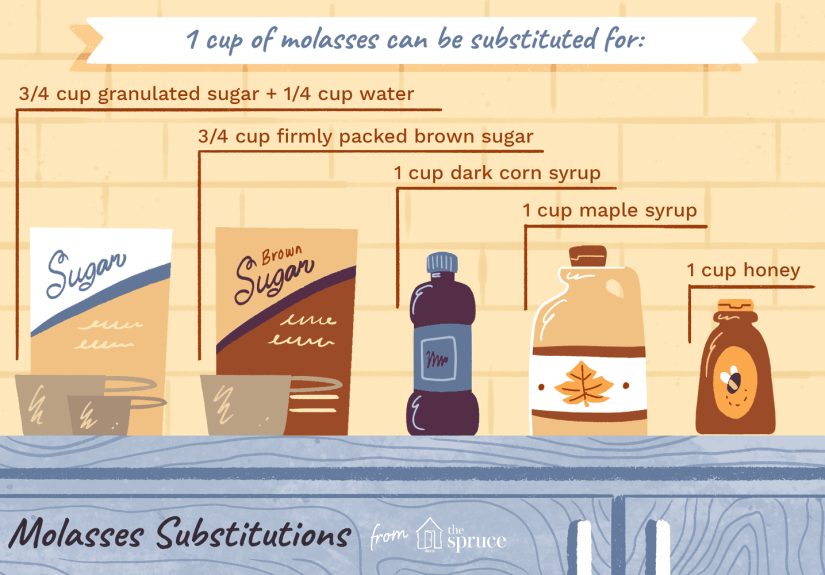
For each 1 cup of molasses, try:
- Cane syrup: 1 cup (1:1)
- Dark corn syrup: 1 cup (1:1)
- Maple syrup: 1 cup (1:1)
- Honey: 1 cup (1:1)
- Brown sugar “mix”: 3/4 cup packed brown sugar + 1/4 cup warm water (stir well)
Now let’s get into the five best optionsplus exactly where each one shines.
5 Molasses Substitutes (With Ratios, Best Uses, and Pro Tips)
1) Cane Syrup (The Closest “Cousin”)
Cane syrup is a classic Southern pantry staple made from sugarcane juice that’s cooked down into a thick, amber syrup. It’s sweet, smooth, and
pleasantly mellowso it replaces molasses best when you want sweetness and moisture without needing that deep molasses “bite.”
Best for: sauces, glazes, baked beans, cornbread, marinades, and recipes where molasses isn’t the star flavor.
Swap ratio: Use 1:1 (same amount as molasses).
Watch-outs: Cane syrup is usually milder, so gingerbread may taste less “holiday punch.” If the recipe is molasses-forward, consider adding a pinch more spice or a tiny splash of vanilla for warmth.
2) Dark Corn Syrup (Sticky, Smooth, and Very Cooperative)
Dark corn syrup is thick and glossy, with a caramel-like flavor (often enhanced with refiners’ syrup). It’s an excellent molasses substitute when
you need the texturethat sticky consistency that helps bind bars, keeps cookies chewy, and makes sauces shiny.
Best for: cookie doughs, bar cookies, pecan-style pies, glazes, and barbecue sauce when you want smooth thickness.
Swap ratio: Use 1:1.
Watch-outs: The flavor is typically sweeter and less complex than molasses. If you miss the depth, add:
- a pinch of salt (yes, really),
- an extra sprinkle of cinnamon/ginger/clove (for baked goods), or
- a teaspoon of apple cider vinegar or mustard (for savory sauces).
3) Maple Syrup (Choose Dark/Robust for the Best Match)
Maple syrup is thinner than molasses but brings rich sweetness and a toasty aromaespecially the darker “robust” style. It’s a strong pick for baking
when flavor matters, and it also plays nicely in glazes and marinades.
Best for: quick breads, muffins, granola, pancakes/waffles toppings, glazes for ham or roasted vegetables, and many cookie recipes.
Swap ratio: Use 1:1.
Adjustments: Because maple syrup is usually thinner than molasses, for large swaps (like 1 cup), consider reducing another liquid in the recipe by 1–2 tablespoons if your batter looks runny. In sauces, simmer a little longer to thicken.
Flavor note: Maple adds “maple-ness.” If that’s welcomegreat. If not, pair it with warmer spices or vanilla to steer it back toward “molasses vibes.”
4) Honey (Sweet, Floral, and a Browning Speed Demon)
Honey is easy to find, easy to measure, and excellent for moisture. In baking, it tends to make goods softer and can deepen browning faster than you
expectkind of like the overachiever in your pantry.
Best for: marinades, sauces, breads, muffins, and cookies where you want soft chew and a mellow sweetness.
Swap ratio: Use 1:1.
Adjustments:
- Reduce sugar slightly if your recipe already has a lot of sweetness (especially for big swaps).
- Lower oven temp by 10–15°F if your baked goods are browning too quickly, or tent with foil near the end.
- Pick a darker honey for more depth (buckwheat honey is bold; clover honey is mild).
Honey won’t taste exactly like molasses, but it can still produce delicious resultsjust in a different direction.
5) Brown Sugar (The “DIY Molasses Energy” Option)
Brown sugar is basically white sugar plus molasses. That means it can bring you closer to molasses flavor than many other substitutesespecially
dark brown sugar, which has more molasses than light brown sugar.
Best for: cookies, gingerbread-style bakes, spice cakes, barbecue sauce, baked beans, and anything that benefits from that caramel-molasses depth.
Swap ratio (best all-around):
To replace 1 cup molasses, mix:
- 3/4 cup packed brown sugar (dark preferred)
- 1/4 cup warm water
Stir until it forms a syrupy slurry. It won’t be as thick as molasses, but it’s close enough for most home baking and cooking.
Shortcut: If your recipe only uses a small amount of molasses (say, 2–3 tablespoons), you can often use packed brown sugar as a swap by sweetness, then add a splash of liquid as needed to keep texture consistent.
When a Blend Beats a Single Substitute
If your recipe needs both sticky thickness and deep flavor (hello, gingerbread), a single substitute can come up short.
A quick blend can get closer to the real thing.
Two easy blend ideas (for 1 cup molasses):
- 1/2 cup dark corn syrup + 1/2 cup maple syrup (sticky + flavorful)
- 3/4 cup dark corn syrup + 1/4 cup packed dark brown sugar (texture + molasses notes)
These blends are especially useful in cookies, spice cakes, gingerbread, and sauces where molasses usually does a lot of heavy lifting.
Recipe-Specific Tips (Because Not All Molasses Moments Are Equal)
Gingerbread, Molasses Cookies, and Spice Cakes
These are the recipes where molasses flavor is the headline act. If you replace molasses with something mild, your dessert may still be tastybut it may
lose that classic “warm, dark, spiced” profile people expect.
Best picks: dark brown sugar mix, dark/robust maple syrup, or a blend (corn syrup + maple, or corn syrup + dark brown sugar).
Helpful tweaks: add a bit more cinnamon/ginger, plus a pinch of salt to bring back depth.
Barbecue Sauce, Glazes, and Marinades
Sauces are forgiving because you can taste and adjust as you go. Molasses often provides sweetness plus that dark color and a touch of bitterness.
Best picks: cane syrup, dark corn syrup, honey, or a brown sugar mix.
Easy fix if it tastes too sweet: add acid (vinegar, lemon) or savoriness (mustard, Worcestershire-style seasoning) and simmer longer.
Baked Beans
In beans, molasses adds sweetness and color, but the dish has other strong flavors (onion, mustard, bacon or smoke, tomato). You don’t need a perfect match.
Best picks: cane syrup, dark corn syrup, or brown sugar mix.
Quick Breads and Muffins
Here, molasses contributes moisture and a gentle richness. Maple syrup and honey can work well, but watch batter thickness.
Best picks: maple syrup, honey, or brown sugar mix.
Troubleshooting: If Your Substitute Changes the Results
A swap can change sweetness, thickness, and browning. Here’s how to fix the most common issues without panic-baking:
If it’s too sweet
- Reduce granulated sugar in the recipe slightly next time (especially when using honey or corn syrup).
- For sauces, balance with vinegar, citrus, or a pinch of salt.
If it’s not dark enough
- Use dark brown sugar instead of light.
- Add a tiny bit of cocoa powder or brewed coffee to deepen color in baked goods (start small1 teaspoon at a time).
If the batter feels too thin
- Maple syrup and honey are thinner than molassesreduce other liquids by 1–2 tablespoons per cup swapped, or add a spoonful of flour if needed.
- For sauces, simmer longer to concentrate.
If cookies spread too much
- Chill the dough 30–60 minutes before baking.
- Check butter temperature (over-soft butter can cause dramatic cookie puddles).
If the flavor feels “flat”
- Add a pinch more salt and a touch more spice.
- Use dark brown sugar or a blend to bring back molasses-like depth.
Shopping and Storage Tips (So This Doesn’t Happen Again)
If you bake with molasses often, consider keeping unsulphured molasses on hand. Many recipes are written with that flavor profile in mind.
Molasses stores well in the pantry, and a tightly sealed jar can last a long time (though it may thicken over time).
Also: if a recipe calls for blackstrap, be careful. Blackstrap can be noticeably more bitter and intense than “regular” molasses.
For baking, many people prefer regular/dark molasses unless the recipe explicitly wants blackstrap’s strong flavor.
Real-World Kitchen Experiences With Molasses Substitutes (500+ Words)
If you’ve ever swapped molasses at the last second, you already know the truth: the recipe might still workbut it may behave like it’s wearing a
different outfit to the same party. Here are the most common “real kitchen” experiences bakers and home cooks run into, plus what usually helps.
1) The “My Gingerbread Doesn’t Taste Like Gingerbread” Moment
This one happens when you use a mild substitute (like light honey or a gentle maple syrup) in a recipe where molasses is the signature flavor.
The cookies can still come out soft and chewy, but the taste shifts toward “spiced sugar cookie” instead of that classic dark, slightly tangy bite.
The fix is usually simple: pick a deeper substitute (dark/robust maple syrup or dark brown sugar mix), and bump the spices just a little. Many bakers
find that adding a pinch of salt helps the flavor read as “deeper,” not just “sweeter.” It’s not about making it saltyit’s about making it taste
like the spices have a backstage crew.
2) Cookies Brown Faster Than You Expect
Honey and maple syrup can encourage browning, so your cookies may look done before they’re fully set in the middleespecially if you’re used to baking
with molasses. If this happens, the best move is to treat color as a clue, not the final verdict. Check for set edges and a slightly soft center,
and consider lowering the oven temperature a bit next time. Chilling dough also helps control spreading and reduces the chance of over-browned edges.
(Bonus: chilled dough often tastes better, like it had time to think about its life choices.)
3) Sauce Swaps Are EasierBut Sweetness Can Sneak Up
In barbecue sauce, teriyaki-style glazes, and marinades, swapping molasses for honey or cane syrup usually works quickly and smoothly. The surprise is
how sweet it can becomebecause molasses has a deeper, slightly bitter backbone that keeps sweetness in check. If your sauce tastes like it’s trying to
win a candy contest, balance is your best friend: add a splash of vinegar or citrus, a spoon of mustard, or a little extra salt. Then simmer longer
so the flavors meld and the sauce thickens. Sauces are the place where “taste and adjust” is not just allowedit’s basically the job description.
4) Brown Sugar Mixes Feel “Closer” Than You’d Think
Many people are surprised by how well the brown sugar + warm water approach performs, especially in baked goods. That’s because brown sugar already
contains molasses, so it brings back some of that caramel-molasses character that honey and maple syrup can’t fully replicate. Dark brown sugar tends
to get you closer than light brown sugar, both in color and flavor. The main difference you may notice is thickness: the mixture isn’t as viscous as
straight molasses, so some batters can feel a bit looser. The solution is usually minorreduce a small amount of other liquid or accept a slightly
softer texture. In cookies and bars, that softer texture is often a win.
5) “It’s Different… But It’s Still Delicious” Is a Valid Outcome
The biggest mindset shift is recognizing that molasses substitutes don’t always create a perfect clone. Maple syrup brings maple notes, honey brings
floral sweetness, and corn syrup brings smooth stickiness without much edge. If you’re baking for a crowd, “different but delicious” can be a great
outcomeespecially if you lean into it. Use maple syrup in a spice loaf and call it “maple spice bread.” Use honey in a glaze and highlight the honey
flavor with garlic and chili flakes. The goal isn’t always disguise; sometimes it’s just making something good with what you have.






 Close
Close