
Table of Contents >> Show >> Hide
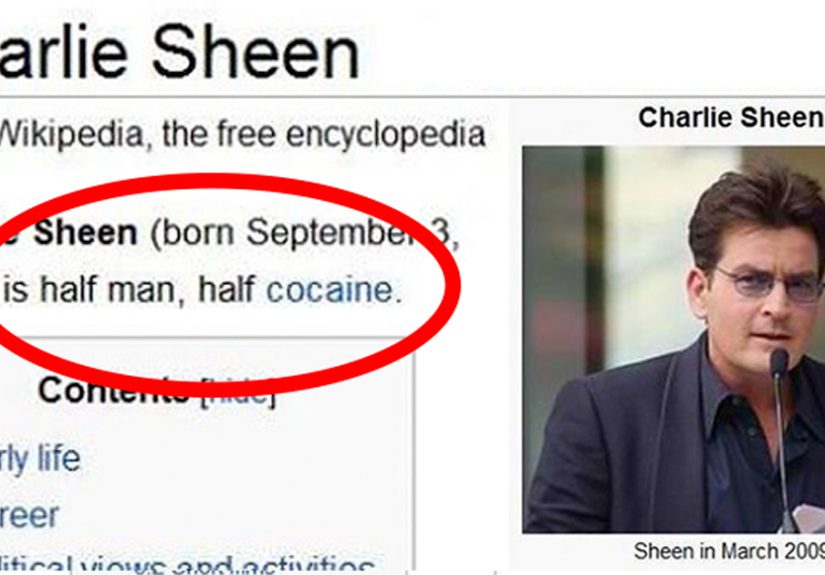
Wikipedia is one of the last great miracles of the internet: a free encyclopedia written by strangers, corrected by even stranger strangers, and somehow still useful enough to settle arguments, rescue homework, and send people into three-hour rabbit holes about medieval tax law. It is also, naturally, a giant glowing target for pranksters. Give the public an “Edit” button and somebody, somewhere, will use it to replace a statesman’s biography with the emotional energy of a middle-school group chat.
That clash is part of what makes funny Wikipedia edits so irresistible. The site takes knowledge seriously. Internet vandals do not. So when those two forces collide, the results can be weirdly poetic: a page briefly transformed by nonsense, sarcasm, overconfidence, or one devastatingly dumb sentence that lives for five minutes and in screenshots for eternity.
Still, the real story is not that Wikipedia gets vandalized. It is that Wikipedia survives being vandalized constantly. Volunteers patrol changes, bots catch obvious nonsense, page protections lock down hot targets, and prank edits often disappear before your coffee cools off. That means the funniest Wikipedia vandalism is usually short-lived, but it also means it has a very specific flavor: fast, ridiculous, low-stakes chaos trying to outrun a system built to swat it like a fly.
This list celebrates that flavor. Rather than republishing malicious or defamatory junk, these are the classic prank-edit styles that have become part of internet folklore: the kinds of funny Wikipedia edits, public screenshots, and instantly reverted gags that keep reminding us the web is both a library and a food court.
Why Funny Wikipedia Edits Keep Going Viral
The humor works because Wikipedia has such a serious face. A vandalized page does not look like a joke setup; it looks like a neutral, authoritative source that suddenly had a minor nervous breakdown. That contrast is comedy gold. One second you are reading about a philosopher, a politician, or a sports team. The next second the page sounds like it was written by a sleep-deprived raccoon with Wi-Fi.
Another reason these edits travel so far is that they are wonderfully compact. A prank on Wikipedia does not need a whole sketch. Sometimes one changed adjective, one fake middle name, or one sentence that spirals off a cliff is enough. It is micro-comedy hidden inside a platform built for macro-knowledge.
And yet the funniest part may be what happens afterward. The prank is usually removed fast, the editor gets blocked, the page gets watched more closely, and the encyclopedia lurches back toward normal like nothing happened. Wikipedia vandalism is internet slapstick with janitorial follow-through.
64 Of The Funniest Wikipedia Edits By Internet Vandals
Identity Crises, Sudden Career Changes, and Other Acts of Digital Mischief
- 1. The classic “is a potato” edit, because apparently no public figure is ever more than one click away from becoming a root vegetable.
- 2. Turning a respected academic into a “part-time wizard,” which is funny precisely because it sounds almost plausible in a tweed jacket.
- 3. Editing a musician’s genre from “indie rock” to “sad trampoline energy.” Honestly, rude. Also weirdly descriptive.
- 4. Rewriting an athlete’s position as “bench philosopher,” the kind of insult that deserves a slow clap and a timeout.
- 5. Changing a politician’s occupation to “professional email sender,” which is less vandalism and more concentrated office sarcasm.
- 6. Adding “known for existing” to someone’s achievements section, a brutally minimalist review of an entire life.
- 7. Replacing a carefully sourced biography lead with “this guy is kind of a lot,” which is not encyclopedic but does feel emotionally accurate.
- 8. Giving a historic monarch a nickname like “Greg,” because nothing destroys grandeur faster than casual familiarity.
- 9. Renaming a philosopher as “the CEO of overthinking,” a sentence that deserves both a revert and a nod of respect.
- 10. Turning a novelist into a “fan-fiction pioneer” just to watch literature professors age in real time.
- 11. Revising an actor’s page so their breakthrough role becomes “looking confused in expensive lighting.” Not false enough to be comfortable.
- 12. Making a billionaire’s title “collector of yachts and public suspicion,” the internet’s favorite tax bracket summary.
- 13. Changing a company founder’s description to “startup goblin,” which should not be funny, and yet.
- 14. Editing a celebrity chef into a “heat merchant,” proving the line between vandalism and poetry is thinner than advertised.
- 15. Giving a royal family member a side hustle as “vibes coordinator,” the most monarchy-meets-HR phrase imaginable.
- 16. Describing a tech executive as “a man who has made several rectangles more expensive,” which is savage, concise, and instantly removable.
The Tiny Sentence That Sends a Whole Page Off the Rails
- 17. Inserting “for unknown reasons” into an otherwise normal sentence, instantly turning history into an unsolved kitchen mystery.
- 18. Adding “despite being bad at it” after a person’s profession, which is the prank equivalent of tossing a banana peel into formal prose.
- 19. Replacing “notable” with “extremely online,” dragging an entry from encyclopedia to comment section in one word.
- 20. Changing “born in 1984” to “born, unfortunately, in 1984,” a tiny edit powered entirely by attitude.
- 21. Slipping “allegedly” into places where it absolutely does not belong, creating courtroom energy in a page about bird migration.
- 22. Writing that a city is “best known for existing near another city,” the most devastating tourism slogan never approved.
- 23. Changing “won several awards” to “collected shiny validation objects,” which feels like a robot trying stand-up.
- 24. Swapping “influential” for “loud,” a one-word downgrade with the force of a falling piano.
- 25. Editing an album description so it becomes “an ambitious collection of noises,” the universal language of music snobs everywhere.
- 26. Describing a university as “a place where coffee becomes identity,” which is either vandalism or campus truth.
- 27. Replacing “widely regarded” with “some guys online believe,” the internet’s most honest citation policy.
- 28. Adding “and then things got weird” to a chronology section, which, to be fair, fits most history pages.
- 29. Revising an invention page so the device was made “to solve a problem nobody had until marketing arrived.”
- 30. Changing a mission statement into “we do business things with confidence,” a near-perfect parody of corporate English.
- 31. Editing a food page to say the dish is “beloved by people who enjoy beige commitment,” which is culinary shade at its finest.
- 32. Inserting “which was a bold choice” after a historical decision, making the page sound like a judgmental aunt at Thanksgiving.
Sports Pages, Pop Culture Pages, and Other High-Risk Comedy Zones
- 33. Changing a team’s record to “trying their best,” which is less a stat and more a support-group update.
- 34. Rewriting a rivalry section to say the teams “dislike each other spiritually,” a phrase sports fans probably understand immediately.
- 35. Turning an injury report into “leg said no,” the shortest medical summary in internet history.
- 36. Editing a championship drought page so it reads like a weather alert: “conditions remain dry and emotionally damaging.”
- 37. Labeling a blockbuster movie as “two hours of explosions and unresolved father issues,” which, frankly, narrows it down to several franchises.
- 38. Changing a superhero’s powers to “being rich and stressed,” a disturbingly solid genre summary.
- 39. Revising a reality star’s entry to say they are “famous for being famous plus accessories,” the internet’s favorite ouroboros.
- 40. Editing a boy band page so one member’s role becomes “the one your cousin cried over in 2013.”
- 41. Recasting a streaming series as “prestige television for people who love dim lighting and inherited trauma.”
- 42. Changing a video game genre to “button-based suffering,” which is basically the speedrunner’s memoir.
- 43. Editing a comic-book villain into “a full-time hater with excellent branding,” one of the internet’s sharpest character studies.
- 44. Rewriting a dating show premise as “a televised HR violation in resort wear,” which is so specific it squeaks.
- 45. Turning a celebrity feud into “two millionaires discovering subposting,” a very modern historical framing.
- 46. Editing a concert tour summary so it becomes “a global campaign against hearing sensitivity and parking availability.”
- 47. Calling a long-running franchise “content archaeology,” which hurts because it is occasionally true.
- 48. Replacing a sports legend’s “style of play” with “angry excellence,” a phrase that probably belongs on multiple pages.
The Weirdly Specific Edit That Feels Like It Was Written at 2:13 a.m.
- 49. Changing a town’s nickname to “where dreams go to parallel park,” a civic rebrand nobody requested.
- 50. Editing a bridge article to claim it connects “traffic to regret,” which is infrastructure criticism at its purest.
- 51. Turning a weather page into “famous for humidity and emotional fatigue,” a forecast for both skin and soul.
- 52. Rewriting a museum entry so it sounds like “a building where ancient bowls are treated like celebrities.”
- 53. Editing a grammar page to include a fake rule invented solely to annoy English teachers and group chats.
- 54. Changing a cheese description to “milk with ambition,” which is funny enough to make dairy sound heroic.
- 55. Turning a train article into “a metal tube for synchronized sighing,” the commuter’s least disputed truth.
- 56. Editing a sandwich page so it becomes “edible architecture,” which is honestly not bad branding.
- 57. Rewriting a mountain description as “a large rock with a PR department,” the kind of insult geography has earned.
- 58. Changing a lake’s notes to “contains water and regional opinions,” a flawless summary of local tourism discourse.
- 59. Editing a cat breed page with suspicious personal bias, as though the vandal had just lost an argument with a pet.
- 60. Turning a coffee entry into “bean soup for ambitious mammals,” which should not work, but absolutely does.
- 61. Changing a moon landing article so one sentence sounds like a bored intern summarized humanity’s greatest flex.
- 62. Editing a holiday page to read like a hostage note from retail employees and exhausted parents.
- 63. Rewriting a social media platform entry as “a machine that converts attention into discourse damage.” Not kind, but not exactly lost.
- 64. And, of course, the immortal last move: replacing a sober closing sentence with pure keyboard-chaos nonsense, the digital equivalent of running through a museum and honking.
Why These Edits Are Funny, But Also Why Wikipedia Still Matters
The best funny Wikipedia edits are not the cruel ones. They are the absurd ones. They land because they interrupt a formal tone with a stupidly human impulse: to make somebody laugh, to troll authority, or to leave a microscopic graffiti tag on the internet’s most famous wall of facts. The joke is rarely sophisticated. It does not have to be. It only needs to be visible for a moment and screen-grabbed before the mop arrives.
That is why Wikipedia’s anti-vandalism culture matters so much. The site’s openness is inseparable from its vulnerability. If every prank stayed up, the whole thing would collapse into glittery nonsense. Instead, Wikipedia works because thousands of people and a growing set of tools treat cleanup as part of the project. The encyclopedia remains readable not because vandals fail to show up, but because caretakers show up faster.
So yes, internet vandals have given the web some truly ridiculous moments. But volunteers, moderators, and bots are the reason those moments remain funny footnotes instead of full-time disasters. In a weird way, the existence of funny Wikipedia vandalism proves the system is alive. The joke gets made, the revert lands, the page heals, and the encyclopedia keeps humming.
Late-Night Wikipedia Energy: The Experience Behind the Joke
Anyone who has spent enough time online knows the exact mood that surrounds funny Wikipedia edits. It usually begins innocently. You look up one thing. Maybe it is a movie actor, a dead king, a snack food, or a football team that just embarrassed itself on national television. Five minutes later you are seven tabs deep, reading about a regional festival, an extinct marsupial, and a bridge in a town you will never visit. Wikipedia has a way of making curiosity feel like falling down a staircase made of hyperlinks.
That is exactly why internet vandalism on the site lands so hard. The reader is already in a mildly hypnotized state. You are scanning clean, neutral paragraphs and trusting the format. Then suddenly a sentence shows up that sounds like it was written by a sarcastic cousin at a family barbecue. It breaks the spell instantly. You laugh, you blink, you wonder whether you imagined it, and then you remember that somewhere on earth a volunteer editor is probably already removing it with the speed and emotional weariness of someone wiping ketchup off a white shirt.
There is also a very specific kind of joy in knowing how temporary these edits usually are. Funny Wikipedia vandalism is almost performance art because it is designed to vanish. It lives in the tiny space between “Save changes” and “reverted by ClueBot.” That short shelf life gives it a weird electricity. It is the digital version of seeing someone draw a mustache on a billboard and then watching a cleanup crew roll in before rush hour ends.
For readers, the experience is half laughter and half admiration. Yes, the joke is funny. But the system behind the joke is more fascinating. Wikipedia is one of the few places left on the internet where chaos meets maintenance in real time. A prank appears. A human or bot notices. A warning gets posted. A page gets protected if needed. Order is restored. The site does not pretend the internet is civilized; it simply builds a mop closet big enough to deal with reality.
That is why stories about funny Wikipedia edits never really get old. They are not just jokes. They are tiny reminders of how the internet actually works: people make messes, other people clean them up, and somehow we keep calling that civilization. On Wikipedia, that cycle is visible in public. You can almost hear the squeak of the mop bucket.
Conclusion
Funny Wikipedia edits by internet vandals are irresistible because they crash headfirst into one of the web’s most serious spaces. The humor comes from the mismatch: formal encyclopedia voice on one side, feral internet impulse on the other. But the deeper lesson is that Wikipedia remains useful not because it is untouched, but because it is constantly repaired. For every prankster who tries to turn a biography into a joke, there is a volunteer, a bot, or a policy page quietly dragging the truth back into place. That strange balance between chaos and cleanup is part of what makes Wikipedia one of the most human things online.




 Close
Close