
Table of Contents >> Show >> Hide
- Why “tacky” usually means “trying too hard”
- 1. Matchy-matchy furniture sets
- 2. Gray-everything and beige-on-beige rooms
- 3. Cold, overly strict minimalism
- 4. Overdone modern farmhouse clichés
- 5. Fast furniture and rooms that look mass-produced
- 6. Copy-paste social media statement pieces
- 7. Matte black everything and harsh contrast for the sake of drama
- So what does good 2026 decor actually look like?
- Real-life decorating experiences: what happens when a room tries too hard
- Conclusion
Every year, the internet picks a new home decor obsession and behaves as though your living room will be escorted off the premises if it doesn’t comply. One minute it’s boucle everything. The next, your house apparently needs to look like a moody boutique hotel run by a very stylish ghost. But by 2026, designers seem united on one point: the homes that age fastest are usually the ones that chase a formula too hard.
That’s really what people mean when they call a decor trend “tacky.” Not ugly, exactly. Not illegal. Just overdone, too literal, too copied, or so trend-driven that it starts to feel more like a set than a home. The good news? Most of the trends falling out of favor have better replacementsones that feel warmer, smarter, more personal, and much easier to live with.
If you’re refreshing a room this year, here are seven decor trends designers are side-eyeing for 2026, plus what to do instead if you want your home to look current without looking like it was assembled in one aggressive weekend with a mood board and a coupon code.
Why “tacky” usually means “trying too hard”
Before we start tossing perfectly innocent throw pillows under the bus, let’s be fair: style is personal. A trend doesn’t become tacky just because it’s popular. It crosses the line when it feels forced, over-repeated, or disconnected from the people actually living in the space. A room can be bold, nostalgic, dramatic, or full of pattern and still feel fantastic. The problem is rarely “too much personality.” It’s more often “not enough thought.”
In other words, designers in 2026 are not asking for boring homes. They’re asking for better-edited ones. Homes with contrast. Homes with texture. Homes with things that look collected over time instead of ordered all at once. That’s a much more fun brief, frankly.
1. Matchy-matchy furniture sets
Why designers are over it
A bedroom set where the bed, dresser, nightstands, mirror, and maybe the emotional support bench all come from the same line used to read as “pulled together.” Now it often reads as “furniture showroom, but make it sleepy.” In living rooms, the same issue shows up with identical side tables, identical lamps, identical end chairs, and a matching coffee table trying to keep the peace in the middle.
The trouble with a perfectly matched room is that it flattens everything. Your eye doesn’t get contrast, surprise, or depth. It feels safe in the least exciting sense of the word. And because those pieces are designed to go together so neatly, they can also make a room feel more catalog-styled than lived in.
What to do instead
Go for coordination, not cloning. Mix shapes, finishes, and eras while repeating one or two elements to keep the room cohesive. For example, pair a wood nightstand on one side of the bed with a skirted or painted table on the other. In a living room, combine a vintage coffee table with newer upholstered seating and lighting that has a different finish from the hardware. The goal is not chaos. The goal is conversation.
If you’re nervous about mixing, choose one anchorsuch as a consistent color family, wood tone, or silhouetteand let the rest vary. Rooms feel richer when they look assembled by a person, not generated by a “buy the whole collection” button.
2. Gray-everything and beige-on-beige rooms
Why designers are over it
For years, the easiest way to make a room look “updated” was to drain it of visible personality. Gray floors, gray walls, gray sofas, greige rugs, oatmeal curtains, beige boucle chairs, and a white vase pretending to be the life of the party. That look had a long run because it photographed well and offended almost no one. It also inspired almost no one.
By 2026, designers are leaning hard into warmth. All-neutral spaces can still work, but flat, cool, low-contrast rooms tend to feel sterile or sleepy rather than soothing. A room shouldn’t resemble a paint strip unless that paint strip has some opinions.
What to do instead
Keep the calm, lose the monotony. Trade icy grays for warmer neutrals like mushroom, camel, clay, putty, olive, cocoa, or cream with depth. Add contrast through wood, metal, stone, and fabric rather than relying on one bland color to do all the heavy lifting. If you love neutrals, greatjust give them texture and tonal range.
This is also where color can do wonderful things. You don’t need a tomato-red ceiling and chartreuse trim to join the 2026 conversation. A room with warm taupe walls, dark walnut furniture, muted blue accents, and natural linen drapery already feels miles more current than a sea of gray trying to pass itself off as timeless.
3. Cold, overly strict minimalism
Why designers are over it
Minimalism is not the villain. It becomes a problem when it turns into deprivation. Rooms with no visual softness, no books, no layered lighting, no personality, and no evidence that a human being has ever eaten crackers there can feel more intimidating than elegant. The old “less is more” philosophy was meant to emphasize intention. Somewhere along the way, it got translated into “remove every joyful object and keep only one beige bowl.”
Designers in 2026 still value restraint, but they’re moving away from sparse rooms that feel emotionally unavailable. People want homes that comfort them, not homes that judge them.
What to do instead
Try warm minimalism or edited layering. Keep the clean lines if you love them, but soften the edges with wood tones, textured fabrics, handmade objects, and lighting at multiple levels. A minimal room can still have art, vintage pieces, books, a great chair, and a rug that doesn’t look like it was chosen by a tax auditor.
Think of it this way: the new minimalist room should whisper “calm,” not “please do not touch anything.” A home feels better when simplicity and comfort work together.
4. Overdone modern farmhouse clichés
Why designers are over it
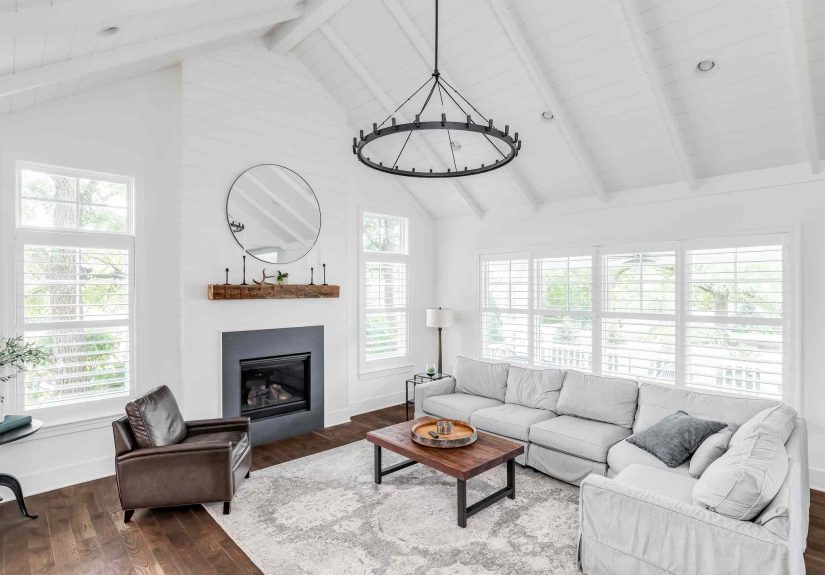
Modern farmhouse is not automatically bad. The issue is the copy-paste version: barn doors where a proper door would function better, endless shiplap, giant script signs announcing that this is a kitchen just in case the stove wasn’t enough of a clue, distressed finishes applied with all the subtlety of a hammer, and black-and-white contrasts that feel more theme than taste.
When any style gets boiled down to a handful of obvious visual cues, it starts to feel tired. That’s what happened here. The trend’s original charmcomfort, simplicity, practicality, natural materialsgot buried under props.
What to do instead
Keep the warmth, lose the costume. If you like farmhouse-adjacent interiors, use real wood, timeworn finishes, vintage storage pieces, linen textiles, shaker-style details, and classic hardware without leaning into every cliché at once. Let the room nod to tradition instead of dressing up as a rustic gift shop.
And please, for the love of good architecture, choose doors based on function first. A pocket door or hinged door often does the job better than a barn door that offers all the acoustic privacy of a strongly worded suggestion.
5. Fast furniture and rooms that look mass-produced
Why designers are over it
One of the biggest red flags in 2026 design is a room where every item feels brand-new, generic, and weirdly anonymous. Fast furniture can be tempting because it’s inexpensive and instantly available, but it often looks thin, wears badly, and makes a space feel temporary. The same goes for decor that exists only to “fill a corner” or match a trend cycle.
Designers increasingly favor rooms with soul: pieces that show age, craftsmanship, patina, or at least some sign that they were chosen on purpose. Mass-produced isn’t always bad, but mass-produced and thoughtless is where things slide into tacky territory fast.
What to do instead
Mix high and low with intention. Buy fewer, better pieces when you can. Add vintage lamps, secondhand wood furniture, framed art, handmade ceramics, or reupholstered chairs. Even one or two storied objects can rescue a room from that “I panic-ordered everything in one night” feeling.
You also don’t need a huge budget to do this well. Thrift stores, estate sales, flea markets, antique malls, and local makers can give a room more character than a dozen identical decorative objects shipped in suspiciously large boxes. Quality doesn’t always mean expensive. It usually means considered.
6. Copy-paste social media statement pieces
Why designers are over it
There is nothing wrong with an arched mirror, a scalloped edge, boucle upholstery, a wavy lamp, or a curvy accent chair. The problem starts when every trendy item lands in the same room at the same time and each one is loudly asking for attention. Suddenly the space feels less like a home and more like a timeline of internet decor obsessions.
In 2026, designers still like sculptural forms and playful details, but they’re using them more selectively. A trendy shape can elevate a room. Five trendy shapes all elbowing each other in the same sightline can make the room feel dated almost immediately.
What to do instead
Pick one star, maybe two. If you love a curved sofa, pair it with simpler tables. If you want an ornate mirror, keep the surrounding decor quieter. If you’re drawn to whimsical accents, let them punctuate the room instead of taking over the entire cast list.
A useful rule: every room needs tension. Something old with something sleek. Something soft with something structured. Something decorative with something plain. Trendy pieces work best when they’re balanced by classics.
7. Matte black everything and harsh contrast for the sake of drama
Why designers are over it
Matte black hardware, black window frames, black faucets, black lighting, black furniture legs, black decor accentsat some point, what was meant to look crisp and modern started feeling heavy and automatic. Like gray before it, black became the default rather than a decision.
That doesn’t mean black is banned. It means it works better when used with intention. In many homes, especially ones leaning warm or traditional, too much black can create a sharpness that feels disconnected from the rest of the room. The same goes for aggressive contrast in general: it can read stylish in a photo and exhausting in everyday life.
What to do instead
Try softer, more nuanced finishes. Antique brass, aged bronze, warm nickel, pewter, unlacquered brass, and dark wood can all add depth without making the room feel outlined in permanent marker. If you love black, use it strategicallyperhaps on a lamp, a frame, or a side tablerather than making it the answer to every design question.
In 2026, the rooms that feel freshest tend to favor warmth, patina, and a little subtlety. Drama is still welcome. It just doesn’t need to scream from every hinge.
So what does good 2026 decor actually look like?
In one sentence: personal, layered, warm, and a little less obedient. The most appealing interiors right now don’t look perfect. They look intentional. They mix vintage and new. They use color with confidence, even if quietly. They prioritize comfort without becoming sloppy and style without becoming gimmicky.
If you’re unsure how to update your home without overcorrecting, focus on these moves:
Build around materials, not gimmicks
Wood, linen, leather, stone, wool, plaster, metal, and handmade ceramics almost always outlast the “hot item of the month.” Better materials make even simple rooms feel richer.
Layer slowly
Great rooms rarely appear fully formed in a cart checkout. Add pieces over time. Edit. Rearrange. Replace. Let the room become itself.
Choose meaningful contrast
Mix old and new. Clean lines and soft texture. Pattern and solid. Light and dark. A room with thoughtful contrast feels alive.
Use trends as seasoning
Not every room needs to be timeless in a museum-curator sense. Trends can be fun. Just use them in places that are easy to change: pillows, lampshades, paint, art, small tables, textiles, and accessories. Save your bigger investments for shapes and materials you know you genuinely love.
Real-life decorating experiences: what happens when a room tries too hard
One of the most common decorating regrets shows up after people buy an entire room in one sweep. At first, it feels efficient. The bedroom looks “done” by Saturday afternoon, and no one had to make a difficult decision between three different nightstands and a bench with trust issues. But a few weeks later, the room can start to feel strangely flat. Nothing stands out because everything was designed to agree with everything else. The room works, technically, but it doesn’t say much. Once homeowners swap in one vintage table, a different lamp, or art with a little age and texture, the whole space usually wakes up.
The same thing happens with all-neutral rooms. On day one, they feel calm, polished, and very adult. On day 90, they can feel like a waiting room for expensive dental work. People often assume the solution is “more color,” but the better fix is usually more variation. Walnut instead of washed oak. Linen instead of slick polyester. A rust pillow, an olive throw, a lamp with a ceramic base, a rug with a faded pattern. Suddenly the room still feels serene, but now it also feels human.
Farmhouse fatigue tends to hit when a room leans too hard into obvious signals. A little shiplap can be charming. Reclaimed wood can be beautiful. But once the signs, the sliding barn door, the distressed accents, and the black metal details all pile in together, the room starts doing a theatrical version of cozy instead of the real thing. What usually improves it is subtraction. Remove the literal pieces. Keep the warmth. Let the architecture and furniture carry the story instead of relying on props.
Fast furniture creates a different kind of disappointment. It photographs well enough when it first arrives, but over time the legs wobble, the finish chips, the drawers stick, and the upholstery ages like unrefrigerated milk. People often think they need a whole new style when the real problem is just too many low-quality pieces competing for space. Replacing a few of them with one solid wood table, a secondhand lamp, or a well-made rug often changes the entire mood of the room. Quality has a calming effect that trend-chasing can’t fake.
Another lesson people learn quickly is that online statement pieces don’t always behave well in real homes. That giant curvy chair might look sculptural in a studio shot, but in a smaller living room it may block traffic, fight with the sofa, and demand compliments like an insecure celebrity. The best statement pieces still have to function. A room is not improved by a dramatic object you have to sidestep like it’s an airport sculpture.
And then there’s black hardware. So many homeowners chose it because it looked crisp, current, and easy to match. Then they finished the room and realized the black pulls, black faucet, black sconces, black mirror, and black table legs had created a kind of visual shouting match. The room didn’t feel grounded; it felt outlined. Swapping even a few of those elements for softer finishes often makes the space feel more layered and less severe almost immediately.
The happiest decorating outcomes usually come from homes that evolve. The owners buy one thing on vacation, inherit a dresser, repaint a room after living in it for a year, re-cover a chair instead of replacing it, or finally hang the art that means something to them instead of buying generic filler. Those rooms rarely look “perfect” in the algorithmic sense. They look better. They feel inhabited, specific, and hard to copywhich is exactly why they last.
Conclusion
The decor trends designers think look tacky for 2026 all have one thing in common: they turn style into a shortcut. Match everything. Neutralize everything. Blacken everything. Farmhouse everything. Buy everything at once. But the homes people actually rememberthe ones that feel inviting, stylish, and current without becoming exhaustingare the ones with restraint, contrast, and a point of view.
So if you’re updating your space this year, don’t worry about banning every trend from your front door. Just stop letting trends make all the decisions. Choose warmth over sameness, texture over emptiness, quality over volume, and personality over formula. That’s the real upgrade for 2026, and thankfully, it looks much better than a scripted wall sign telling everyone to gather.







 Close
Close