
Table of Contents >> Show >> Hide
- How Your Body Makes “Rocks” in the First Place
- 1) Urinary Tract Stones: Kidney, Ureter, Bladder (and Beyond)
- 2) Gallstones: The Gallbladder (and the Bile Duct “Bonus Level”)
- 3) Salivary Gland Stones: “Why Does My Jaw Hurt Every Time I Eat?”
- 4) Tonsil Stones: Tiny, Annoying, and Weirdly Common
- 5) Pancreatic Duct Stones: A Complication of Chronic Pancreatitis
- 6) Appendix Stones: Appendicoliths (a.k.a. “Fecaliths”)
- 7) Rare (But Real) Places Stones Can Form
- When to Get Medical Help (Because Some Stones Don’t Play Nice)
- Keeping Stones from Setting Up Camp
- What It Can Feel Like: 5 Common Stone Experiences (About )
- Conclusion
If you’ve ever joked that you’re “collecting rocks,” your body might be taking that a little too literally.
In medicine, a “stone” usually means a hardened lump (often called a calculus) made from minerals,
cholesterol-like substances, salts, or even compacted debris. These stones can form in multiple placesnot
because your body is auditioning for a geology show, but because certain fluids and ducts are perfect
environments for tiny particles to clump, crystallize and grow.
Let’s map the main places stones can form, what they’re made of, why they happen, and what the experience
can look like in real life. (Spoiler: “pebble” sounds cute until it’s blocking a duct the width of a coffee
stirrer.)
How Your Body Makes “Rocks” in the First Place
Most stones form through the same basic plotline:
a fluid (urine, bile, saliva, or digestive juices) becomes overloaded with certain substances, or the flow slows down.
When the concentration gets high enoughor when the chemistry is just rightcrystals start to form. Over time,
those crystals can stick together, trap mucus and debris, and become a stone.
The usual suspects behind stone formation
- Supersaturation: Too much of a substance (like calcium, oxalate, uric acid, bilirubin, or cholesterol) in a fluid.
- Stasis: Fluid sits around too long (like urine that doesn’t fully empty from the bladder).
- Infection or inflammation: Changes pH and adds “sticky” material that helps crystals clump.
- Duct or anatomy issues: Narrow passages + thick fluid = traffic jam that turns into concrete.
- Dehydration: Less water in the system means more concentrated fluidlike turning soup into gravy.
Now, let’s tour the body’s most common stone “construction zones.”
1) Urinary Tract Stones: Kidney, Ureter, Bladder (and Beyond)
Kidney stones (nephrolithiasis): the headline act
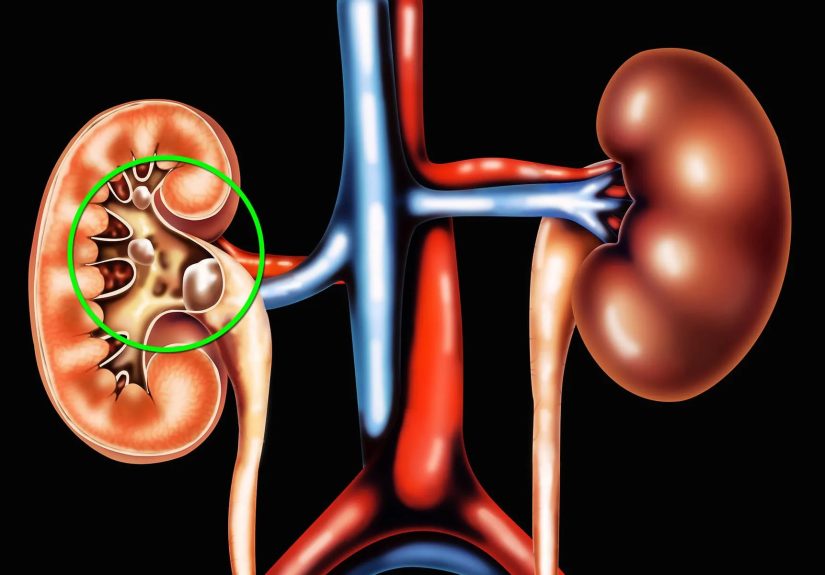
Kidney stones form when minerals and salts in urine crystallize inside one or both kidneys.
They can be tiny like a grain of sandor large enough to make you question every life choice that led to today.
Some stones stay put; others travel into the ureter (the tube that drains the kidney), which is where the drama usually starts.
Common kidney stone types (and why they matter)
-
Calcium stones (often calcium oxalate): The most common type.
Oxalate can come from the body and from foods (some fruits/vegetables, nuts, chocolate). - Uric acid stones: Can form when urine is more acidic; sometimes tied to diet patterns and certain health conditions.
- Struvite stones: Often linked to urinary tract infections and can grow quickly.
- Cystine stones: Rarer; tied to an inherited condition that causes cystine to leak into urine.
What kidney stones can feel like
Not every kidney stone announces itself with a marching band. Some are silent and found on imaging.
But when a stone moves into the ureter, typical symptoms can include intense pain in the back or side,
pain that comes in waves, nausea/vomiting, and blood in the urine. Fever or chills can signal infection,
which is a “call-now” situation, not a “let me just Google this for three hours” situation.
Specific example: A small stone starts in the kidney, slips into the ureter, and gets stuck at a narrow point.
The ureter spasms trying to push it along. That spasm-plus-blockage combo is why people often describe the pain as severe
and hard to ignore.
Ureter stones: same stone, smaller tunnel
Technically, many “kidney stones” become “ureteral stones” once they leave the kidney.
The ureter is narrow and muscular, so a stone there can cause sharp, colicky pain that shifts
as the stone movessometimes from flank to lower abdomen or groin. Pain that migrates can be a clue
the stone is traveling (which is both good news and deeply rude).
Bladder stones: when urine hangs around too long
Bladder stones form when urine remains in the bladder and becomes concentrated, letting minerals clump and harden.
This is more likely when the bladder doesn’t empty fullysuch as with bladder outlet obstruction,
certain nerve problems affecting bladder function, or an enlarged prostate in men.
Symptoms can include lower abdominal pain, frequent urination, pain with urination, trouble starting the urine stream,
stop-and-start flow, and blood in the urine. Some bladder stones cause no symptoms until they irritate the bladder wall
or block urine flow.
Quick prevention notes for urinary stones
Prevention depends on stone type, but general strategies often include adequate hydration and adjusting dietary factors
(like sodium) based on medical guidance. If someone has repeated stones, clinicians may recommend urine and blood tests,
and sometimes analysis of the stone itself, to tailor prevention to the specific stone chemistry.
2) Gallstones: The Gallbladder (and the Bile Duct “Bonus Level”)
Gallstones (cholelithiasis): hardened deposits in the gallbladder
Gallstones form in the gallbladder, a small organ that stores bilea digestive fluid that helps break down fats.
Stones form when substances in bile harden into solid pieces, commonly cholesterol or bilirubin-based pigments.
Some people never know they have them. Others get classic “gallbladder attacks,” often after eating.
Types of gallstones
- Cholesterol gallstones: Often yellowish and the most common type.
- Pigment gallstones: Dark brown/black stones related to excess bilirubin in bile.
How gallstones show up
The hallmark is pain in the right upper abdomen that can radiate to the back or right shoulder, often with nausea or vomiting.
Attacks commonly occur after meals because the gallbladder squeezes to release bilemeaning a stone can get pushed into a spot
where it blocks flow. Think: “rush-hour traffic,” but the cars are bile and the roadblock is a pebble made of cholesterol.
Common bile duct stones (choledocholithiasis): when stones migrate
Sometimes gallstones leave the gallbladder and move into the bile ducts, including the common bile duct.
This can cause more serious problems because bile can’t flow normallyand the blockage can also affect the pancreas.
Bile duct stones are often the result of gallstones migrating from the gallbladder into the biliary tree.
Symptoms may include persistent upper abdominal pain, jaundice (yellowing of skin/eyes), dark urine, pale stools,
fever (especially if infection develops), and in some cases pancreatitis. This is one of those scenarios where
“waiting it out” is not a personality traitit’s a risk.
3) Salivary Gland Stones: “Why Does My Jaw Hurt Every Time I Eat?”
Salivary stones (sialolithiasis): stones in the saliva ducts
Salivary gland stones typically form in the submandibular gland (under the jaw), though they can occur in other salivary glands too.
These stones block saliva flow through a duct, which is why the pain often shows up during mealswhen your glands are trying
to produce more saliva.
Classic symptoms
- Pain or swelling in the jaw/neck/face, often worse when eating
- Dry mouth or reduced saliva flow
- Sometimes infection signs (redness, tenderness, pus from the duct opening, fever)
Specific example: Someone takes the first bite of a sandwich and suddenly feels a sharp ache under the jaw.
The salivary gland is trying to squeeze saliva through a blocked ductlike stepping on a garden hose and then turning the faucet on.
4) Tonsil Stones: Tiny, Annoying, and Weirdly Common
Tonsil stones (tonsilloliths): calcified debris in tonsil “crypts”
Tonsil stones form in the nooks and crannies of the tonsils. They’re made of hardened material like minerals (including calcium),
food debris, and bacteria or fungi. They’re usually not dangerous, but they can cause bad breath and throat irritationand they can
make you feel like you have a permanent “something stuck back there” situation.
What people notice
- Bad breath (a big one)
- Sore throat or cough
- Ear pain (referred pain)
- Visible small white/yellow lumps
Tonsil stones are a great reminder that the body is a marvel of biology… and sometimes also a compost bin with opinions.
5) Pancreatic Duct Stones: A Complication of Chronic Pancreatitis
Pancreatic duct stones: calcified blockages in pancreatic ducts
Pancreatic duct stones are most commonly associated with chronic pancreatitis.
Over time, inflammation and changes in pancreatic secretions can contribute to stone formation within the pancreatic duct system.
These stones can obstruct the flow of pancreatic juices, contributing to pain and digestive issues.
Treatment can involve endoscopic approaches and, in some centers, techniques like extracorporeal shock wave lithotripsy (ESWL)
to break stones into smaller pieces before removal.
6) Appendix Stones: Appendicoliths (a.k.a. “Fecaliths”)
Appendicoliths: hard lumps in the appendix
An appendicolith is a hardened lump that can form inside the appendix when small pieces of stool (poop) and minerals clump together.
Many people don’t know they have one. The issue is that an appendicolith can block the opening of the appendix and contribute to appendicitis.
Specific example: A person has vague stomach discomfort that shifts to the right lower abdomen,
becomes sharper, and is accompanied by nausea or fever. Imaging shows an inflamed appendix and an appendicolith at the entrancelike
a cork in a bottle that was not designed to be corked.
7) Rare (But Real) Places Stones Can Form
Beyond the “big names,” stone-like formations can occur in other spots. They’re less common, but they exist:
Nasal stones (rhinoliths)
A rhinolith is a mineralized mass in the nasal cavity, sometimes forming around a foreign body or long-standing debris.
People may notice one-sided nasal blockage, foul-smelling discharge, or recurrent infections.
Digestive “stones” and hardened masses
The GI tract can also develop stone-like masses in certain circumstancessuch as hardened stool lumps (fecaliths) or
enteroliths in areas where material stagnates. These are situational and typically diagnosed and managed by clinicians
based on symptoms and imaging.
Other calcifications people call “stones”
You might hear terms like “prostate stones,” “tonsil stones,” or “calcifications” in different organs on imaging reports.
Not every calcification behaves like a typical stone, and many are incidental findings. The key is whether it’s causing blockage,
inflammation, infection, or pain.
When to Get Medical Help (Because Some Stones Don’t Play Nice)
Many stones can be managed with professional guidance, but some symptoms deserve urgent attention. Seek prompt medical care if you have:
- Fever and chills with pain (possible infection)
- Severe, persistent abdominal pain (especially right upper abdomen)
- Jaundice (yellow skin/eyes), dark urine, pale stools
- Unable to urinate or intense pain with urination
- Ongoing vomiting or dehydration
- Severe pain plus pregnancy or significant medical conditions
Stones are “small” only in size. The consequences of a blocked duct can be big.
Keeping Stones from Setting Up Camp
Stone prevention is highly individual (because a calcium kidney stone is not the same beast as a cholesterol gallstone),
but a few big-picture habits often support the systems where stones form:
General strategies that often help
- Stay hydrated to keep urine less concentrated.
- Follow targeted nutrition guidance if you’ve had stones before (especially for kidney stones).
- Address infections promptly since infection can contribute to certain stone types.
- Manage underlying conditions (metabolic issues, digestive disorders, chronic inflammation) with your clinician.
- Don’t ignore recurring symptomsrepeat pain after meals, repeated urinary symptoms, or recurring swelling with eating deserves evaluation.
If your body is going to do arts-and-crafts, it’s better when the project is “strong bones,” not “surprise gravel.”
What It Can Feel Like: 5 Common Stone Experiences (About )
Medical descriptions can sound sterile“colicky pain,” “obstructed duct,” “calcified debris.” In real life, people describe stone-related
symptoms in a much more… creative vocabulary. Here are common experiences clinicians hear, written as composite examples (not any one person),
to make the topic feel less abstract and a lot more human.
1) The kidney stone “wave machine”
One minute you’re fine, the next you’re pacing like you’re trying to wear a hole in the floor. Many people say kidney stone pain comes in
wavesintense surges, brief lulls, then another surge. Some describe it as pain that refuses to sit still, moving from the side to the lower
abdomen or groin as the stone travels. Nausea is common, partly from the pain itself. A surprisingly frequent detail: people can’t find a
comfortable position. Sitting hurts. Lying down hurts. Standing hurts. You end up doing the world’s least enjoyable interpretive dance.
2) The gallstone “after-dinner regret”
Gallstone attacks often get noticed after eating, especially a heavier meal. People commonly describe a tight, gripping pain in the upper right
abdomen that can radiate to the back or shoulder. It may last from minutes to hours, and nausea can tag along like an uninvited guest. Because
the pain is in the upper abdomen, some folks initially worry about their heartespecially if it’s intense and comes with sweating. The pattern
of “it hits after meals” is a clue many people recognize only in hindsight, usually while thinking, “So that’s why it happened after tacos.”
3) The salivary stone “first bite sting”
Salivary gland stones have a signature move: pain or swelling that flares when you start eating. It can feel like a sharp ache under the jaw,
sometimes with visible swelling that rises while the meal is happening, then eases afterward. People often say it’s strange because they feel
fine until the moment food appearsthen the discomfort shows up like a dinner critic. If infection develops, the area may feel tender or warm,
and symptoms can shift from annoying to “okay, I should probably call someone.”
4) Tonsil stones and the social paranoia spiral
Tonsil stones rarely cause severe pain, but they can cause outsized embarrassment. Many people first notice stubborn bad breath that doesn’t
match their brushing effort. Others feel like there’s something stuck in the throat or notice small white lumps. Some describe a weird metallic
taste or frequent throat clearing. The emotional experience can be surprisingly intensepeople start keeping gum companies in business and
asking friends, “Be honest… do I smell weird?” The good news is they’re usually not dangerous, but persistent symptoms can be worth discussing
with a clinician or dentist.
5) When “stone” means “don’t wait”bile duct or appendix problems
A stone that blocks the common bile duct can come with jaundice, darker urine, or feversignals that go beyond routine discomfort. Similarly,
an appendicolith can be present quietly until appendicitis develops, when pain typically escalates and may be accompanied by nausea or fever.
The common experience in both cases is escalation: symptoms don’t just linger, they intensify or add new red flags. Many people later say the
turning point wasn’t the pain aloneit was realizing something felt “systemic,” like fever, worsening weakness, or symptoms that didn’t fit their
usual pattern. That’s the moment to get prompt medical evaluation.
Conclusion
Stones can form in more places than most of us realize: the urinary tract (kidneys, ureters, bladder), the gallbladder and bile ducts, salivary
glands, tonsils, the pancreas (in certain chronic conditions), and even the appendix. The unifying theme is chemistry plus plumbing: concentrated
fluids, sluggish flow, and the right conditions for crystals or debris to harden. The best takeaway is practicalknow the common symptoms, respect
the red flags, and remember that “small stone” does not always mean “small problem.”







 Close
Close