
Table of Contents >> Show >> Hide
- Why Holiday Decor Can Turn Expensive Fast
- 1. Burning Real Candles Near Greenery, Curtains, or Furniture
- 2. Letting a Real Christmas Tree Dry Out or Parking It Near Heat
- 3. Overloading Outlets, Power Strips, and Extension Cords
- 4. Using Damaged Lights or Indoor-Only Decor Outside
- 5. Attaching Lights With Nails, Staples, or Screws
- 6. Loading Gutters, Rooflines, or Railings With Heavy Decor
- 7. Pinching Cords Under Rugs, Through Doors, or Across the Yard Without a Plan
- How to Decorate Safely Without Making Your Home Boring
- Real-World Decorating Experiences Homeowners Should Learn From
- Conclusion
The holiday season has a funny way of convincing otherwise sensible adults to do wildly ambitious things. Suddenly, you are balancing on a ladder in fuzzy socks, wrestling a twelve-foot inflatable reindeer, and telling yourself that one more extension cord is probably “totally fine.” That, dear reader, is how festive charm turns into a repair invoice.
Holiday decorating is supposed to make your home feel magical, not send it into a minor identity crisis involving scorched furniture, leaking gutters, fried outlets, and a Christmas tree that looks one spark away from becoming a cautionary tale. Contractors, fire-safety experts, and electrical safety organizations all tend to agree on one point: most holiday decorating damage is preventable. The trouble is that the mistakes are so common, people treat them like seasonal traditions.
This guide breaks down seven holiday decorating choices that can damage your home, indoors and out, and what to do instead. If your decorating style leans “go big or go home,” great. Just make sure your home is still standing when the garland comes down.
Why Holiday Decor Can Turn Expensive Fast
Holiday damage usually starts small. A candle scorches a mantel. A staple nicks a wire. A dry tree sits a little too close to a heat vent. An overloaded outlet gets warmer than it should. One tiny decision does not always look dramatic in the moment, which is exactly why these issues sneak up on homeowners.
And the consequences are not limited to fires. Seasonal decor can damage roofing, gutters, siding, flooring, irrigation lines, furniture finishes, and even your home’s electrical system. Add in the fact that decorating season is also prime time for falls and ladder injuries, and suddenly that cozy December vibe starts looking a little more like a home-maintenance thriller.
1. Burning Real Candles Near Greenery, Curtains, or Furniture
Candles are the divas of holiday decor. They are warm, flattering, and absolutely unwilling to be ignored. Unfortunately, they are also one of the easiest ways to damage a home during the holidays.
Open flames placed near garlands, wreaths, stockings, wrapping paper, curtains, or dried botanicals can ignite those materials fast. Even when an actual fire does not break out, candles can still leave a calling card: soot on walls and ceilings, scorched wood finishes, melted varnish, and wax drips that seem to fossilize the second they land.
Why this choice is risky
Holiday decor tends to concentrate flammable materials in one place. You are not just lighting a candle on a coffee table; you are lighting it beside ribbon, evergreens, paper tags, and a decorative village that definitely did not ask to become kindling.
What to do instead
Use high-quality flameless candles where you can, especially on mantels, shelves, entry tables, and dining displays. If you insist on real candles, keep them in stable, nonflammable holders and place them well away from anything that can burn. Also, never use lit candles on or near a Christmas tree. That is not vintage charm. That is a bad idea dressed in nostalgia.
2. Letting a Real Christmas Tree Dry Out or Parking It Near Heat
A fresh tree is lovely. A dry tree is basically a giant indoor warning label.
One of the most repeated holiday safety messages in America is also one of the most ignored: water your real tree every day. Live trees dry out faster than people expect, especially in heated rooms. Add a fireplace, radiator, heat vent, space heater, or sunny window into the mix, and that tree can go from festive centerpiece to crackling liability in record time.
The problem is not just the tree itself. When a dry tree ignites, the intensity can be shocking. That means damage can spread quickly to walls, floors, window treatments, and furniture. Even before that point, brittle needles shed everywhere, creating a mess and raising the risk around lights and open flames.
Why this choice is risky
A dehydrated tree burns hotter and faster than a well-watered one. A poorly placed tree can also block a doorway or major path out of the room, which is a terrible time to discover you accidentally decorated your exit route.
What to do instead
Choose a fresh tree, keep the stand filled with water daily, and place it at least three feet from fireplaces, radiators, heat vents, candles, and other heat sources. If you buy an artificial tree, look for one labeled fire-resistant. Fire-resistant does not mean fireproof, but it is still the smarter choice.
3. Overloading Outlets, Power Strips, and Extension Cords
There comes a moment in many households when one outlet is expected to power a tree, two garlands, a village display, porch lights, a wreath, and perhaps the emotional needs of the entire season. That outlet did not volunteer for this.
Overloading outlets and extension cords is one of the most common holiday decorating mistakes. Too many light strings, adapters, or decorative devices on one line can generate heat and increase the risk of short circuits, melted insulation, or fire. Coiled extension cords can get even hotter because heat cannot dissipate properly.
Why this choice is risky
Even if nothing bursts into theatrical sparks, excess load can stress your home’s electrical system. At best, you trip a breaker and lose power to your glowing reindeer army. At worst, you create hidden heat buildup inside walls, cords, or outlets.
What to do instead
Spread decorations across multiple outlets. Follow manufacturer instructions for how many strands can be connected together, and do not treat extension cords like permanent wiring. If you need to power several items in one area, use products that are properly rated and avoid plugging everything into one overworked spot just because it is convenient.
4. Using Damaged Lights or Indoor-Only Decor Outside
Holiday lights are not immortal. They are not even especially stoic.
Every season, people pull old strings of lights from storage, notice a frayed section, and decide it has “one more Christmas left in it.” This is the home-decor equivalent of driving on a tire that already wrote its will. Cracked sockets, bare wires, loose bulbs, and damaged insulation are all warning signs that the set should be replaced.
The same goes for using indoor lights outside. Moisture, temperature swings, and wind are much harsher on electrical products than your living room is. Outdoor-rated products are tested for those conditions; indoor-only items are not.
Why this choice is risky
Water and damaged wiring are a famously terrible couple. Faulty or misused lights can short out, shock someone, or start a fire. They can also stain siding, fail midseason, or create nuisance breaker trips that send you outside in the dark wondering why the wreath gave up.
What to do instead
Inspect every light string before use. Toss anything with broken sockets, worn cords, or loose connections. Use products tested by a recognized safety lab, and match the product to the location: outdoor lights outside, indoor lights inside. Revolutionary, I know.
5. Attaching Lights With Nails, Staples, or Screws
This is one of those decorating shortcuts that looks harmless until spring reveals the damage in full, soggy detail.
Driving nails, screws, or staples into roof trim, fascia, gutters, siding, or window frames can puncture surfaces and create openings for water intrusion. Worse, metal fasteners can damage light cords and increase shock or fire risk if they pinch or pierce insulation.
Contractors see the aftermath all the time: leaks around trim, rotting wood, stained soffits, scarred siding, and gutters that now have extra holes they definitely did not need. Holiday decor comes down in January, but the moisture problems can hang around much longer.
Why this choice is risky
Tiny punctures become expensive when water gets involved. A single misplaced fastener can help start a chain reaction that includes rot, paint failure, mold growth, and repairs to finishes you were not planning to replace.
What to do instead
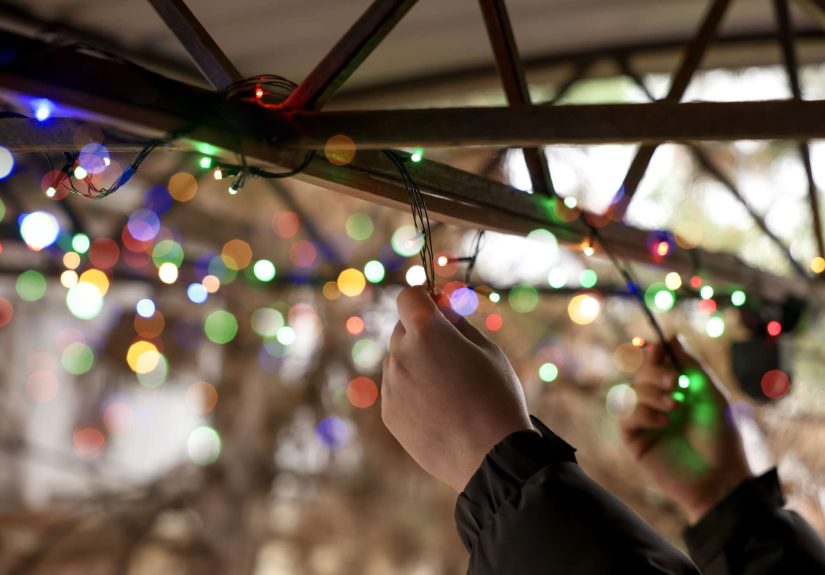
Use plastic clips designed for gutters, shingles, siding, or trim. They are inexpensive, reusable, and much kinder to your house. Light-hanging poles and ground-level tools can also help you secure lights without turning your roofline into Swiss cheese.
6. Loading Gutters, Rooflines, or Railings With Heavy Decor
Big holiday displays can be charming. They can also be a structural nuisance if they are too heavy, poorly balanced, or exposed to wind in all the wrong ways.
Gutters are designed to move water, not bench-press oversized ornaments. Rooflines are not ideal storage for bulky decor that shifts during bad weather. Porch railings and columns are sturdy, but they still are not thrilled when wrapped too tightly, overloaded, or forced to support decorations that trap moisture against finishes.
The damage can show up as bent gutters, loosened fasteners, scratched paint, cracked shingles, damaged trim, or water not draining where it should. And if you are climbing onto the roof to place those items, you are adding personal injury risk to the home-repair fun pack.
Why this choice is risky
Weight plus wind plus winter weather is not a forgiving equation. Decorations that move, sag, or catch water can damage roofing materials and drainage systems over time.
What to do instead
Keep rooftop and gutter decorations lightweight, minimal, and securely mounted with damage-free hardware. Better yet, favor ground-level displays, projection lights, or decor attached with clips from a ladder or pole rather than walking on the roof. Your shingles would like a quiet holiday.
7. Pinching Cords Under Rugs, Through Doors, or Across the Yard Without a Plan
Extension cords have a knack for ending up wherever human optimism places them. Under rugs. Through windows. Across door thresholds. Beneath furniture. Snaked over walkways. Draped into places where moisture, foot traffic, or closing doors can wear them down.
That is a problem for both your home and everyone walking through it. Pinched cords can lose insulation, overheat, or short out. Cords hidden under rugs can trap heat. Cords across paths can trip guests, tug decorations down, and yank plugs loose. Outdoors, random cord routes can also invite water exposure, mower damage, or awkward post-holiday yard headaches.
And while we are outside, another easy-to-overlook mistake is staking giant inflatables or lawn decor into the ground without thinking about what is buried below. That can mean punctured irrigation lines or other underground systems, followed by the kind of soggy surprise that shows up later as a wet patch and a bigger water bill.
Why this choice is risky
Damaged cords create shock and fire hazards. Poor routing creates trip hazards. Careless staking can damage landscaping systems and utilities in ways you may not notice until after the decorations come down.
What to do instead
Route cords where they will not be pinched, covered, or walked on. Keep them clear of doors, windows, rugs, and high-traffic paths. Outdoors, secure cords properly and think before driving stakes into the yard. If a display requires anchoring, know what is underground first instead of trusting holiday confidence and a mallet.
How to Decorate Safely Without Making Your Home Boring
The good news is that safe decorating does not have to look sad. You do not need to trade your holiday personality for a bare porch and one emotionally distant wreath.
Start with a plan. Decide where power sources are before you begin. Use clips instead of hardware that punctures the house. Choose LED lights to reduce heat output and energy use. Keep greenery and textiles away from flames and heat. If you have a real tree, water it like it is your seasonal part-time job. And when in doubt, scale back the risky stuff and add impact with lower-risk options like timers, projection lights, lanterns, battery-powered candles, and well-placed outdoor accents.
The most beautiful holiday homes usually do not look beautiful because the owners took every possible risk. They look beautiful because someone thought through the details. That is less dramatic than stapling lights to a gutter in the dark, but significantly more effective.
Real-World Decorating Experiences Homeowners Should Learn From
What makes this topic stick is not just the safety guidance. It is how ordinary the mistakes feel while they are happening.
Picture a homeowner hanging lights right after Thanksgiving dinner. The weather is cold, daylight is fading, and the goal is to “just get it done.” The first shortcut is using whatever fasteners are in the junk drawer. The second is plugging every strand into the nearest outlet because the front porch does not have enough convenient power. The third is deciding that a slightly worn light string is probably fine because it worked last year. None of those choices feels dramatic alone. Together, they create the exact sort of small, layered problem contractors hate discovering later.
Or imagine the classic mantel setup: stockings, cedar garland, ribbon, candles, and maybe a few paper houses because they look charming in photos. It does look charming. It also turns one of the warmest parts of the room into a crowded stage for open flame. Even when nothing ignites, homeowners are often surprised by the soot marks, wax spills, or finish damage that show up after the holidays are over and the decor is packed away.
Then there is the real-tree romance. A fresh tree goes up in early December, everyone admires it, and for a week or two it is glorious. But holiday schedules get busy. Watering becomes inconsistent. The room stays warm. The tree dries out faster than expected. Needles begin dropping, lights stay on longer than they should, and suddenly the centerpiece of the season is also the item in the room most likely to make a fire expert deeply uncomfortable.
Outdoor decor has its own greatest hits. Homeowners stake giant inflatables into lawns without remembering where sprinkler lines run. They overload gutters with heavy ornaments because the display needs “just a little more drama.” They climb onto roofs that are cold, damp, or slick because they want a clean roofline effect. And every year, plenty of people discover that the damage does not appear immediately. It shows up later as a leak stain, a bent gutter, a broken irrigation line, or a mysterious electrical issue that only became obvious after the decorations came down.
That is why the smartest decorating experience is not the one that looks most heroic in the moment. It is the one where the house still looks great in January, the lights came down without taking paint or shingles with them, the tree never dried into a tinder bundle, and nobody spent New Year’s weekend testing breakers or calling a roofer.
Holiday decorating should leave behind good memories, not repair appointments. The best homes during the holidays are not just festive. They are festive with judgment. That may not fit on a throw pillow, but it is excellent advice.
Conclusion
If you want your home to feel merry without becoming a cautionary tale, the formula is pretty simple: skip the shortcuts. Do not overload circuits, do not staple wires into your house, do not let your tree dry into a fire hazard, and do not treat candles like harmless accessories. Small decorating choices can lead to big damage, especially when heat, electricity, moisture, and winter weather team up.
The goal is not to decorate less. It is to decorate smarter. A well-lit home, a beautiful tree, and a welcoming porch can still happen without scorched wood, punctured gutters, tripped breakers, or a surprise irrigation repair. In other words, keep the twinkle, lose the chaos.





 Close
Close