
Table of Contents >> Show >> Hide
- 1) African Forest Elephant (Critically Endangered)
- 2) Rhinoceroses (Including Black, Javan, and Sumatran Rhinos)
- 3) Tigers (Endangered)
- 4) Pangolins (Multiple Species; Widely Targeted and Protected)
- 5) Hawksbill Sea Turtle (Endangered)
- 6) Vaquita (Critically Endangered)
- 7) Western Lowland Gorilla (Critically Endangered)
- 8) Orangutans (Bornean, Sumatran, and Tapanuli; Critically Endangered)
- What “Still Hunted” Looks Like in 2025
- How You Can Help (Without Needing a Khaki Vest)
- Quick FAQ
- 500-Word Experience Add-On: Moments That Change How You See Wildlife Trade
- Conclusion
If you think “hunting endangered species” is a dusty, black-and-white problem from a century ago, here’s the uncomfortable plot twist:
it’s still happeningright nowthrough poaching, illegal fishing, wildlife trafficking, and black-market demand for animal parts, “status” products,
and faux-miracle cures.
In this article, “still hunted” includes animals that are directly targeted (poached or trapped) and animals that are killed indirectly (for example,
by illegal fishing gear). The point isn’t to shame people who legally hunt common species under strict rules. The point is that criminal and
unregulated killing is pushing already vulnerable wildlife closer to the edge.
Let’s meet eight endangered (and in several cases, critically endangered) species that are still being huntedand talk about why it happens,
what’s driving demand, and what actually helps.
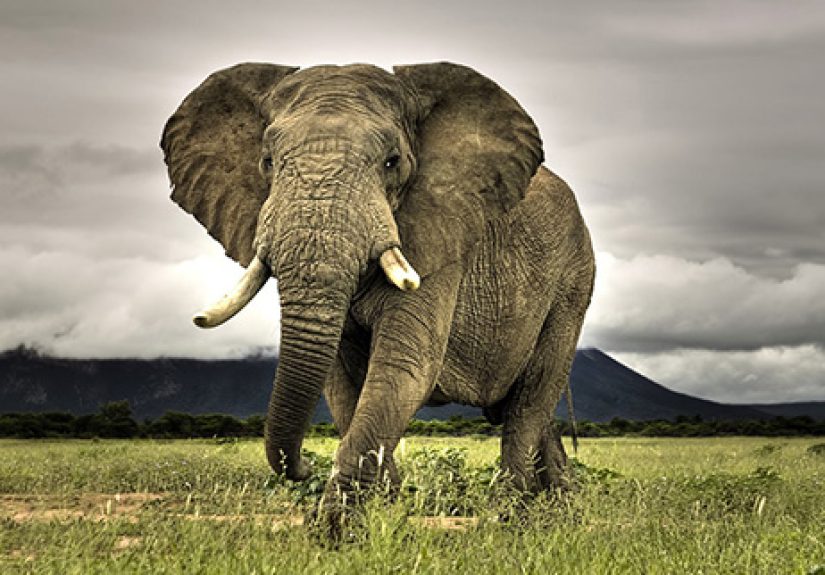
1) African Forest Elephant (Critically Endangered)
Why they’re still hunted
Forest elephants are targeted primarily for ivory, and in some areas also for meat. Even with international restrictions, illegal ivory demand
persists and creates incentives for poachers and trafficking networks.
Why this matters beyond the elephant
Forest elephants are major “ecosystem engineers.” They help shape forests by dispersing seeds and opening pathwaysbasically doing unpaid forestry
work at a scale humans can’t replicate. When they disappear, forest health suffers, which affects carbon storage and biodiversity.
What protection looks like
Conservation isn’t just “more rangers.” It’s also trade restrictions, better investigations that target trafficking networks, and reducing consumer
demand so the black market doesn’t pay out like a crime-lottery jackpot.
2) Rhinoceroses (Including Black, Javan, and Sumatran Rhinos)
Why they’re still hunted
Rhinos are poached for their horns, which are sold into illegal markets where they’re treated like luxury items, carved collectibles, or
falsely marketed as medicine. (Scientifically speaking, horn is keratinthink hair and nails, not magic.)
“But aren’t there laws?”
Yesand that’s exactly why this is a trafficking problem. International restrictions and national protections exist, yet organized criminal
networks exploit loopholes, corruption, and high profit margins. Some rhino species have extremely small populations, so even a handful of losses
can be catastrophic.
What’s working (and what’s not)
Protection strategies vary by region and include intelligence-led enforcement, community programs that reduce incentives to poach, and targeted
interventions that make poaching less profitable. The most durable “fix,” though, is demand reductionbecause you can’t poach a paycheck that
nobody pays for.
3) Tigers (Endangered)
Why they’re still hunted
Tigers are trafficked for skins and for parts used in illegal products and traditional-medicine markets. They also face habitat loss and conflict,
but illegal trade remains one of the most immediate threats because it can wipe out local populations fast.
A modern trafficking snapshot
Seizure data and investigative reporting show that tiger trafficking hasn’t faded awayit has adapted. Networks use cross-border routes, online
marketplaces, and laundering tactics that look disturbingly similar to other forms of organized crime.
What protection looks like
Strong laws matter, but enforcement that targets middlemen and trafficking rings matters more than catching the “lowest-level” person in the chain.
Habitat protection also matters, because a tiger can’t recover in a forest that gets turned into a parking lot.
4) Pangolins (Multiple Species; Widely Targeted and Protected)
Why they’re still hunted
Pangolins are often described as the most trafficked mammals in the world. They’re targeted for scales and meat, and the illegal trade has been
severe enough that governments (including the U.S.) have moved to strengthen protections and penalties tied to trafficking.
Why pangolins are especially vulnerable
They reproduce slowly, they’re easy for poachers to capture compared to faster animals, and demand has stayed stubbornly high. That combination is
basically a “do not press” button that humans keep pressing anyway.
What protection looks like
Better trade controls, stronger enforcement, and demand reduction campaigns are key. So is shrinking the market for products that exploit wildlife
and stopping “cute exotic pet” trends before they become a pipeline to suffering.
5) Hawksbill Sea Turtle (Endangered)
Why they’re still hunted
Hawksbills have been hunted for “tortoiseshell,” a trade that fueled centuries of exploitation. Legal markets have been restricted in many places,
but illegal trade and poaching still occur, including for shell products and eggs in some regions.
Why this turtle is a reef MVP
Hawksbills help maintain healthy coral reef ecosystems by influencing sponge growth and supporting reef diversity. In other words: they’re not just
beautifulthey’re functional.
What protection looks like
Protection includes nesting beach safeguards, enforcement against illegal shell products, and consumer awareness (because if nobody buys
“tortoiseshell,” nobody needs to poach a turtle to sell it).
6) Vaquita (Critically Endangered)
Why they’re still being killed
The vaquitaan extremely rare porpoise found in the Gulf of Californiafaces a threat that’s tragically simple: entanglement in gillnets used in
illegal fishing, especially nets set for totoaba (an endangered fish whose swim bladder is trafficked).
Why “indirect hunting” is still hunting
When illegal fishing gear repeatedly kills a critically endangered species, the effect is the same as targeted killing: the population collapses.
That’s why conservation for vaquita is so focused on removing illegal nets and stopping the totoaba trade.
What protection looks like
Enforcement against illegal gillnets, alternative fishing gear programs, and international cooperation to reduce trafficking demand are essential.
For vaquita, small improvements can mean survivalbecause there’s so little margin left.
7) Western Lowland Gorilla (Critically Endangered)
Why they’re still hunted
Gorillas are threatened by habitat loss and disease, but illegal hunting for bushmeat and the capture of infants for illegal trade remain serious
issues in parts of their range. As roads and logging access expand into forests, it can become easier for poachers to reach wildlife.
Why this is bigger than wildlife
Bushmeat trafficking is tied to poverty, weak enforcement, and cross-border smuggling. So solutions have to include community livelihoods, law
enforcement support, and reducing incentivesnot just posters that say “please stop.”
What protection looks like
Conservation groups work on protected areas, anti-poaching efforts, and community-based programs. The most effective approaches often combine
local leadership with national enforcement and international support.
8) Orangutans (Bornean, Sumatran, and Tapanuli; Critically Endangered)
Why they’re still hunted
Orangutans are threatened by habitat loss (especially deforestation and land conversion), but hunting and capture still occurwhether for meat, in
conflict situations, or as part of the illegal pet trade.
Why the pet trade is so damaging
Removing infants from the wild often breaks social bonds and reduces future population growth. Orangutans also reproduce slowly, so every loss has
an outsized impact. If you’ve ever tried to rebuild a LEGO set after stepping on it, you understand: some things are harder to “fix later.”
What protection looks like
Protecting forests, enforcing wildlife laws, and supporting rescue/rehabilitation programs help. So does reducing demand for products that drive
deforestation and refusing to normalize “exotic pet” content online.
What “Still Hunted” Looks Like in 2025
The modern illegal wildlife trade isn’t just one person sneaking through a forest. It’s often a supply chain: local poaching, transport networks,
document fraud, money laundering, and consumer markets. That’s why anti-poaching patrols matterbut so do investigations, prosecutions, and demand
reduction.
How You Can Help (Without Needing a Khaki Vest)
- Skip wildlife products: Avoid ivory, “tortoiseshell,” and anything that looks like it came from an endangered animal.
- Be a smart traveler: Don’t buy animal-part souvenirs (even if a seller says it’s “old” or “legal”).
- Support credible conservation work: Look for transparent organizations and science-based programs.
- Report trafficking: If you see suspicious wildlife products being sold, report it to appropriate authorities.
- Use your wallet: Choose products that reduce pressure on forests and reefs (think sustainable materials and verified sourcing).
Quick FAQ
Is “poaching” the same as hunting?
Not necessarily. Hunting can be legal and regulated; poaching is illegal. This article focuses on illegal killing and trafficking that threatens
endangered species.
Why do bans sometimes fail?
Because demand doesn’t vanish automatically. When profits are high, black markets adapt. Effective bans need enforcement, public awareness, and
real consequences for trafficking networks.
Does awareness actually help?
It canespecially when it changes behavior: fewer wildlife products purchased, more pressure on governments and companies to enforce laws, and more
funding for conservation programs that work.
500-Word Experience Add-On: Moments That Change How You See Wildlife Trade
Most people don’t wake up thinking, “Today feels like a great day to dismantle a transnational trafficking network.” They wake up thinking, “Coffee.”
And that’s fine. Conservation doesn’t require you to become a full-time superhero. But real-world momentssmall, ordinary onescan snap the issue
into focus and make it feel less like a distant documentary and more like a live situation.
Maybe it happens at an aquarium exhibit, where a sign quietly explains that a species is endangered because of fishing gear and illegal trade.
Vaquita stories hit hard this way: no dramatic villain monologue, just the blunt reality that illegal nets don’t “mean” to kill a rare porpoise
they just do. That kind of danger is weirdly modern: accidental, scalable, and devastating.
Or you visit a zoo that supports field conservation, and you hear a keeper explain how slow reproduction makes recovery painfully fragile for
orangutans. Suddenly “one animal lost” doesn’t sound like a statistic. It sounds like yearsdecadesof future generations that never get a chance
to exist. And the pet trade stops being “a sad internet headline” and starts feeling like a theft of time itself.
Sometimes the moment is unglamorous: you’re browsing a market while traveling, and you see a bracelet or carving that looks suspiciously like it
belongs in a museum exhibit, not a shopping bag. You don’t need to be an expert. If it seems like it could be ivory or “tortoiseshell,” the safest
move is simple: don’t buy it. That one choice feels small, but it’s the exact opposite of what traffickers rely on. They rely on impulse.
Conservation runs on pause buttons.
Another experience is noticing how the story always has a second chapter: the human chapter. Rangers and local communities face real risks. Families
in remote areas may be pulled toward illegal hunting by poverty, coercion, or lack of alternatives. That doesn’t excuse trafficking, but it does
explain why enforcement alone can’t carry the whole load. When you learn that successful programs often include local jobs, education, and community
leadership, you start to see conservation as problem-solvingnot just policing.
And then there’s the “quiet power” moment: you realize that demand is not a law of physics. It’s a human choice. Rhino horn isn’t medicine. Ivory
isn’t a necessity. Tiger parts don’t cure what science can’t. Hawksbill shell isn’t “classic,” it’s exploitative. Once you see that clearly, the
trade starts to look less like fate and more like something humans inventedand therefore something humans can end.
Conclusion
These eight species aren’t “doomed.” But they are under pressure from illegal hunting and wildlife trafficking that moves faster than natural
recovery. Protecting them takes more than sympathy: it takes enforcement that targets networks, conservation that supports communities, and consumer
choices that shrink black markets. If that sounds like a lot, remember: you don’t have to do everything. You just have to do something that helps
more than it hurtsand encourage others to do the same.






 Close
Close