
Table of Contents >> Show >> Hide
- Quick Picks (If You Just Want the Winners)
- How to Choose a Travel Router in 2025
- The Best Travel Routers of 2025 (In-Depth Picks)
- 1) GL.iNet Beryl AX (GL-MT3000): Best Overall Travel Router
- 2) TP-Link TL-WR3002X: Best Performance Value (Wi-Fi 6)
- 3) TP-Link TL-WR3602BE (BE3600): Best “Future-Proof” Travel Router (Wi-Fi 7)
- 4) GL.iNet Slate 7 (GL-BE3600): Best for Power Users Who Want Multi-Gig Flexibility
- 5) ExpressVPN Aircove Go: Best Plug-and-Play VPN Travel Router
- 6) ASUS RT-AX57 Go: Best for Tethering and Multi-Mode Flexibility
- 7) GL.iNet Opal (GL-SFT1200): Best Budget Travel Router That Still Feels “Complete”
- 8) TP-Link TL-WR1502X: Best Budget Wi-Fi 6 Travel Router
- Honorable Mentions (Great “Backup Plan” Routers)
- How to Use a Travel Router (Without Turning Your Trip Into IT Support)
- Common Travel Router Mistakes (So You Don’t Learn the Hard Way)
- FAQ: Travel Routers in 2025
- Travel Router Experiences (The Stuff Specs Don’t Tell You) 500+ Words
- Conclusion
Hotel Wi-Fi has a special talent: it’s either “blazing fast” or “dial-up cosplay”, with no in-between.
And somehow you’re expected to connect a laptop, phone, tablet, streaming stick, watch, and maybe a kid’s homework Chromebook
to one login screen that looks like it was designed in 2007 and never updated out of spite.
That’s exactly why travel routers are having a moment in 2025. A good travel Wi-Fi router creates your own private network in a hotel,
rental, dorm, cruise cabin, or conference room. You sign in to the captive portal once, then your devices connect to your network
(with your password), not the lobby’s “WelcomeGuest123” situation.
Below are the best travel routers of 2025picked for real travel problems: spotty signals, limited ports, VPN needs, family device chaos,
and the eternal question: “Why does the Wi-Fi die the moment I join a video call?”
Quick Picks (If You Just Want the Winners)
| Category | Best Pick | Why It Wins |
|---|---|---|
| Best overall (Wi-Fi 6) | GL.iNet Beryl AX (GL-MT3000) | Fast, compact, strong VPN options, travel-friendly firmware |
| Best performance value | TP-Link TL-WR3002X | Very fast Wi-Fi 6 class, multi-gig WAN, simple modes |
| Best “future-proof” travel router | TP-Link TL-WR3602BE (Wi-Fi 7) | Wi-Fi 7 speeds, travel-first design, strong port selection |
| Best for power users | GL.iNet Slate 7 (GL-BE3600) | Wi-Fi 7 + dual 2.5G ports for wired speed and flexibility |
| Best plug-and-play VPN router | ExpressVPN Aircove Go | Built-in VPN experience designed for travelers |
| Best budget Wi-Fi 6 | TP-Link TL-WR1502X | Solid Wi-Fi 6 travel router without paying “flagship tax” |
| Best budget (still useful) | GL.iNet Opal (GL-SFT1200) | Affordable dual-band, multiple Ethernet ports, easy travel modes |
| Best ultra-cheap backup | TP-Link TL-WR902AC or GL.iNet Mango (GL-MT300N-V2) | Small, inexpensive, perfect “just in case” pocket gear |
How to Choose a Travel Router in 2025
You don’t need a PhD in networking, but you do need to match the router to the trip. Here’s what matters most now:
1) Wi-Fi 6 vs Wi-Fi 7 (and why it matters on the road)
Wi-Fi 6 is the sweet spot for most travelers: fast, efficient, and widely compatible.
Wi-Fi 7 is arriving in travel routers in 2025, bringing higher peak throughput and better handling of crowded airwaves.
If you travel to busy hotels, conferences, or big cities where every neighbor is blasting a hotspot, Wi-Fi 7 can feel like “less buffering, more living.”
2) Captive portal friendliness
If the router can connect to hotel Wi-Fi (or Ethernet) and then share it cleanly to your devices, you win.
Bonus points if the setup makes captive portal logins less painfulbecause nobody wants to re-authenticate every device like it’s a team-building exercise.
3) VPN support (WireGuard/OpenVPN) and “VPN on/off” control
A travel router can run a VPN so your phone, laptop, and streaming stick all get protected without installing VPN apps everywhere.
Look for WireGuard and OpenVPN support, and ideally a quick toggle for turning the VPN on/off when needed (some streaming services get dramatic about VPNs).
4) Ports and power
Ethernet still matters in hotels (yes, some places still have it, and yes, it’s often faster than Wi-Fi).
In 2025, look for at least one Gigabit port; multi-gig ports are a luxury but great for fast hotel fiber or wired work setups.
Also check power: many travel routers run off USB-C or 5V input, which means your power bank can keep your network alive during “mysterious” outages.
5) Practical size (translation: will you actually bring it?)
The best travel router is the one you pack. A slightly slower router that lives in your bag beats the “monster router” that lives in your closet.
The Best Travel Routers of 2025 (In-Depth Picks)
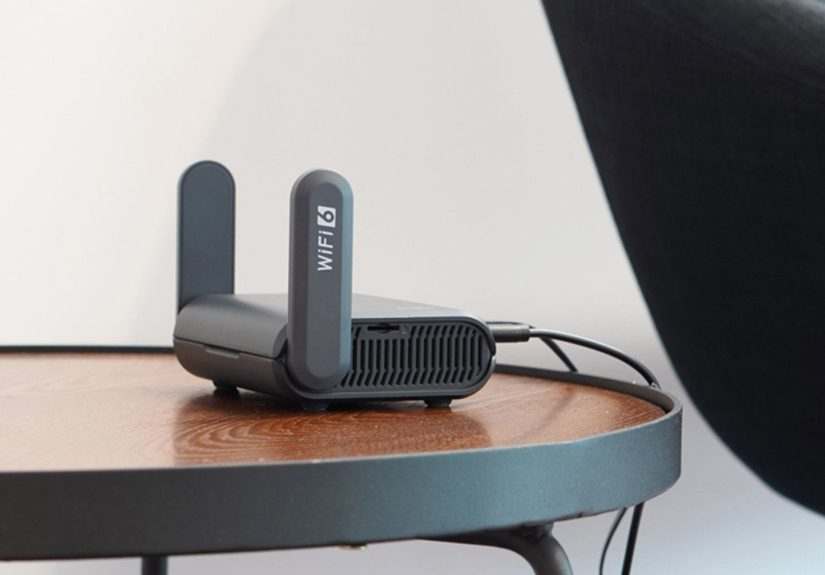
1) GL.iNet Beryl AX (GL-MT3000): Best Overall Travel Router
If you want one travel router that can handle work trips, family vacations, streaming, and security without a lot of fuss,
the Beryl AX is the easy recommendation. It’s a pocket-sized Wi-Fi 6 router built for travel, with strong firmware features,
VPN support, and enough performance to keep multiple devices happy at once.
- Best for: frequent travelers, remote workers, families with lots of devices
- Why it stands out: strong Wi-Fi 6 performance in a compact body; travel-friendly modes; VPN-focused feature set
- Watch-outs: like most travel routers, you’ll still need a few minutes to set it up the first time
Practical tip: set your travel router’s Wi-Fi name and password to something consistent (e.g., “MyTripWiFi” + a strong password).
Then every time you travel, your devices auto-connect and you look like a wizard.
2) TP-Link TL-WR3002X: Best Performance Value (Wi-Fi 6)
Want fast Wi-Fi 6 class performance and a modern port setup in a travel-friendly package? The TL-WR3002X checks a lot of boxes.
It’s designed for multiple travel modes (router, hotspot/WISP, range extension) and includes a faster WAN option that can matter
if your hotel actually has decent wired internet.
- Best for: travelers who want a fast connection for video calls, uploads, or streaming
- Why it stands out: strong throughput for the size; modern “travel router” feature set
- Watch-outs: bigger than the ultra-mini models, but still very packable
Real-world example: if you’re a creator dumping footage to the cloud at night, a travel router that can take advantage
of a fast wired connection can cut upload pain dramatically.
3) TP-Link TL-WR3602BE (BE3600): Best “Future-Proof” Travel Router (Wi-Fi 7)
Wi-Fi 7 travel routers are a fresh category in 2025, and this one is built for the use case: lots of devices, crowded airwaves,
and travelers who want a smoother experience in hotels and airports. You’re buying headroommore capacity, higher potential speeds,
and improved handling of busy wireless environments.
- Best for: frequent travelers, families, conference-goers, anyone who stays in busy hotels
- Why it stands out: Wi-Fi 7 in a travel form factor; strong port selection; travel-centric design details
- Watch-outs: you only benefit fully if your devices support Wi-Fi 7, but it still helps in crowded environments
Also: no built-in battery is normal for this class. The good news is many travel routers can be powered by USB-C power banks,
which is great for “hotel power outlets placed by someone who hates humanity.”
4) GL.iNet Slate 7 (GL-BE3600): Best for Power Users Who Want Multi-Gig Flexibility
The Slate 7 takes the “travel router” idea and gives it a suit jacket: still portable, but aimed at people who care about speed,
wired flexibility, and staying stable under heavy use. Dual 2.5G ports are a big deal if you want fast wired connections
(or you’re building a little travel workstation with a mini PC and NAS-like storage).
- Best for: power users, IT folks, frequent work travelers with higher bandwidth needs
- Why it stands out: Wi-Fi 7 + dual 2.5G ports; robust travel-router firmware ecosystem
- Watch-outs: likely pricier than Wi-Fi 6 models, and maybe more than casual travelers need
5) ExpressVPN Aircove Go: Best Plug-and-Play VPN Travel Router
Some people love tweaking settings. Other people love when things just work. The Aircove Go is aimed at the second group:
travelers who want a router that’s purpose-built around a VPN experience, protecting multiple devices at once.
- Best for: VPN-first travelers, privacy-minded families, anyone who hates configuring VPNs repeatedly
- Why it stands out: built around a unified VPN interface and “travel” setup mindset
- Watch-outs: it’s tied to a subscription modelmake sure that fits your budget and needs
If you routinely connect devices that don’t support VPN apps well (smart TVs, streaming sticks, some work hardware),
a VPN router like this can be the cleanest solution.
6) ASUS RT-AX57 Go: Best for Tethering and Multi-Mode Flexibility
Not every trip has reliable hotel Wi-Fi. Sometimes your best “internet” is your phone’s hotspot. A travel-friendly router that supports
tethering modes can turn that hotspot into a more stable home baseespecially if you need multiple devices online and want better control.
- Best for: road trips, backup connectivity, travelers who rely on phone tethering
- Why it stands out: multi-mode connectivity options; strong mainstream router ecosystem
- Watch-outs: make sure it matches how you actually travel (hotel Wi-Fi, wired, tethering, or a mix)
7) GL.iNet Opal (GL-SFT1200): Best Budget Travel Router That Still Feels “Complete”
The Opal is the underrated sweet spot if you want a travel router that can do the jobwithout paying for flagship bragging rights.
It’s dual-band and compact, supports multiple modes, and gives you enough ports to connect a laptop, a streaming box, or a game console
when Wi-Fi is being uncooperative.
- Best for: budget-conscious travelers, occasional trips, family vacations
- Why it stands out: great “value per ounce,” solid ports, travel-friendly power input
- Watch-outs: not Wi-Fi 6/7, but still plenty for typical hotel streaming and work
8) TP-Link TL-WR1502X: Best Budget Wi-Fi 6 Travel Router
If you want Wi-Fi 6 benefits (better efficiency, better handling of multiple devices) but you’re not chasing top-tier specs,
this is a strong choice. It’s compact, modern, and designed specifically as a travel router.
- Best for: travelers who want Wi-Fi 6 without premium pricing
- Why it stands out: Wi-Fi 6 class in a travel form factor; simple modes
- Watch-outs: check ports and power needs for your travel setup
Honorable Mentions (Great “Backup Plan” Routers)
- TP-Link TL-WR902AC: a tiny, affordable classic. Not the fastest, but great as a lightweight “save my trip” tool.
- GL.iNet Mango (GL-MT300N-V2): ultra-compact and low-powerideal for basic use, backups, and minimalists who travel light.
- UniFi Travel Router: a newer entrant that focuses on low power use and the broader UniFi ecosysteminteresting if you’re already in that world.
How to Use a Travel Router (Without Turning Your Trip Into IT Support)
Step 1: Pick your connection type
- Hotel Ethernet: plug in, configure once, enjoy the most stable option.
- Hotel Wi-Fi (WISP/Hotspot mode): the router joins hotel Wi-Fi, then shares it to your devices.
- Phone tethering: useful when hotel Wi-Fi is weak or limitedyour router becomes the “hub” for all your devices.
Step 2: Handle the captive portal once
The magic trick is logging into the hotel portal with the router, not each device. Once the router is authorized,
your devices connect to your private Wi-Fi and stop begging you to accept terms and conditions like it’s their full-time job.
Step 3: Lock it down
- Use a strong Wi-Fi password (WPA2/WPA3 depending on the model).
- Change default admin credentials immediately.
- Turn on the VPN when using public networksespecially for work, banking, or anything sensitive.
Step 4: Optimize for streaming and calls
If your router supports it, enable QoS (Quality of Service) or prioritize your laptop during calls.
Otherwise, someone’s 4K cartoon marathon will “accidentally” become your audio jitter.
Common Travel Router Mistakes (So You Don’t Learn the Hard Way)
- Buying too much router: Wi-Fi 7 is awesome, but if you travel twice a year and stream in 1080p, Wi-Fi 6 is plenty.
- Assuming it has a battery: most don’t. Plan on powering it with USB-C, a wall adapter, or a power bank.
- Ignoring firmware updates: routers are computers. Update them like you update your phonebefore the trip, not during a crisis.
- Forgetting regional power needs: pack a universal adapter if you travel internationally, especially for routers with DC adapters.
FAQ: Travel Routers in 2025
Do I really need a travel router if my phone can hotspot?
Phone hotspots are great, but travel routers add stability, device capacity, and consistency.
Also, a travel router can use hotel Ethernet or hotel Wi-Fisaving your mobile data for when you actually need it.
Will a travel router make hotel Wi-Fi faster?
It can make your experience feel faster and more reliableespecially if it has better antennas than your phone and can choose cleaner channels.
But it can’t create bandwidth that doesn’t exist. If the hotel has a clogged connection, the router can’t magically summon fiber.
Is a VPN travel router always worth it?
If you travel for work, handle sensitive logins, or use public Wi-Fi often, yesit’s a strong security upgrade.
If you only travel occasionally and mostly browse memes, it’s still nice, but not mandatory.
Travel Router Experiences (The Stuff Specs Don’t Tell You) 500+ Words
A travel router sounds like a “tech person” purchase until you’re actually traveling and everything turns into a wireless obstacle course.
One of the most common moments is the hotel captive portal maze: you connect your phone, accept terms, then connect your laptop,
accept terms again, then your tablet, accept terms again, then your streaming stick… and suddenly you’re spending your vacation doing unpaid IT work.
A travel router flips that experience. You authenticate once (with the router), and every device connects to your network like you’re at home.
Then there’s the “one device per room” limit. Some hotels (and many cruise lines) charge per device or enforce strict connection caps.
While policies vary and you should always follow the venue’s terms, people often like travel routers because they keep a consistent network “identity”
from the hotel’s perspective. Even when a venue allows multiple devices, the router can still simplify the whole process so you’re not re-logging in
after every nap, outing, or “why did the Wi-Fi disconnect when I opened the minibar” mystery.
Another real-world win: streaming without drama. Travel routers are a lifesaver for streaming sticks and smart TVs in rentals.
These devices are notoriously awkward on public Wi-Fi networks, especially if the network uses extra login steps or isolates devices from each other.
With your own travel router, your phone can still act as the “remote” and your streaming device can stay connected reliably. It’s also helpful when
you travel with kids: tablets, handheld consoles, and a laptop can all connect to the same network without you playing “password librarian.”
The work trip scenario is where the “best travel router” choice starts to matter. Video calls reveal weaknesses instantly:
a router that handles multiple devices well and supports modern Wi-Fi standards can reduce stutters, dropouts, and random latency spikes.
In practice, the biggest difference comes from using Ethernet when available. Hotels sometimes hide an Ethernet port behind a desk,
a TV cabinet, or a suspicious panel that looks like it belongs in a museum. If your travel router has a decent WAN port, you can plug in and get a
noticeably more stable connection for calls and uploads. Pair it with a short Ethernet cable and you’re suddenly the only person in the building whose
Zoom doesn’t freeze mid-sentence.
There’s also a comfort factor: familiar Wi-Fi everywhere. When your router uses the same network name and password on every trip,
you stop reconfiguring everything. Your laptop auto-connects. Your phone auto-connects. Your tablet auto-connects. Your brain finally rests.
For people who travel often, that small convenience adds up quicklyand it reduces those “I forgot the password I made in a rush at midnight” moments.
Finally, travel routers teach a surprisingly useful lesson: power is part of the plan. Many models don’t have a built-in battery,
so a small USB-C power bank becomes a travel essential. When the power outlet is inconvenient, when the room has only one usable socket, or when a brief
outage happens, that power bank keeps your connection running. And when you’re working from a hotel room, “internet continuity” is not a luxuryit’s the
difference between calm productivity and emailing your boss, “Sorry, the Wi-Fi ate my deadlines.”
Conclusion
The best travel routers of 2025 all do the same core job: they turn unreliable public internet into something that feels private, predictable,
and easier to manage. If you want the best all-around experience, choose a strong Wi-Fi 6 travel router with solid VPN support.
If you travel constantly (or often in crowded places), stepping up to a Wi-Fi 7 travel router can add extra headroom and stability.
Either way, your future self will thank youprobably while streaming in a hotel room without re-entering a password twelve times.





 Close
Close