
Table of Contents >> Show >> Hide
- Why the Right Curtain Rod Matters
- 1. Decorative Single Curtain Rods
- 2. Tension Rods
- 3. Double Curtain Rods
- 4. Traverse Curtain Rods
- 5. Motorized Curtain Rods
- 6. Concealed or Wraparound Curtain Rods
- 7. Café Curtain Rods
- 8. Magnetic Curtain Rods
- 9. Curved or Arched Curtain Rods
- How to Choose the Right Curtain Rod
- Common Curtain Rod Mistakes to Avoid
- Quick Examples by Room
- Real-World Experiences: What People Usually Learn the Hard Way
- Final Thoughts
Choosing curtains is fun. Choosing the rod? That is where many perfectly nice decorating plans trip over their own hems. A beautiful panel can look underdressed, awkward, or downright grumpy if it is hanging from the wrong hardware. The good news is that curtain rods are not mysterious little metal wizards. Once you know what each type does, picking the right one becomes much easier.
The best curtain rod should do three jobs at once: support the weight of your curtains, help them open and close the way you want, and look like it belongs in the room. Some rods are mostly decorative. Some are all business. Some are ideal for renters. Some are made for blackout curtains, layered window treatments, or tricky windows that refuse to be a normal rectangle.
In this guide, you will learn the nine main types of curtain rods, where each one works best, and how to choose the right kind without ending up with droopy drapes, too-short hardware, or a bay window that mocks you from across the room.
Why the Right Curtain Rod Matters
People often shop for curtains first and rods second, as if the rod were just the sidekick. In reality, the rod affects the whole performance. It influences how much light sneaks in, how easy the curtains are to move, how wide the window looks, and whether the entire setup feels polished or patchy.
For example, a slim tension rod can be perfect for a lightweight café curtain in a kitchen. Put that same rod under heavy velvet panels in a bedroom, and you are basically asking for a slow-motion decorating disaster. Likewise, a double rod can turn one window into a hard-working privacy-and-light-control machine, while a curved or wraparound rod can help blackout curtains do their job without acting like tiny spotlights are sneaking in from the sides.
1. Decorative Single Curtain Rods
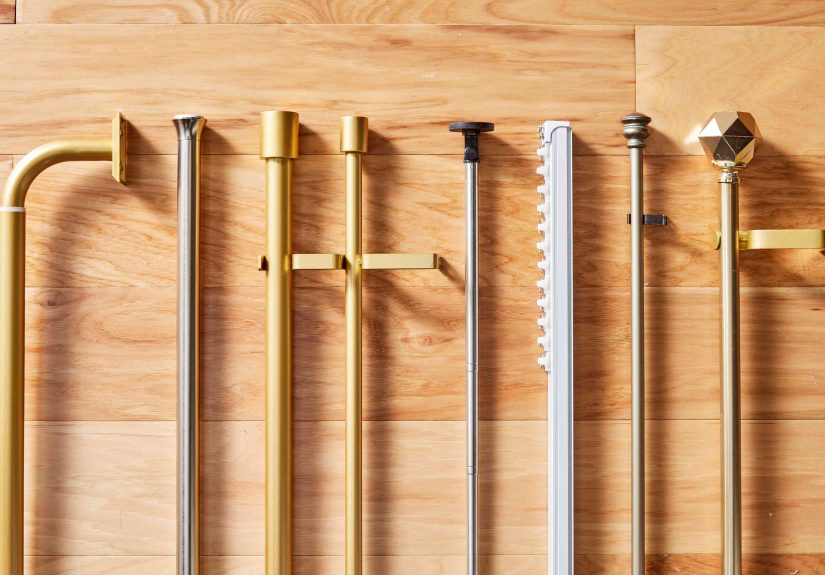
Decorative single rods are the classic, familiar choice. They usually have visible finials on each end and come in finishes such as black, brass, bronze, chrome, brushed nickel, and wood tones. This is the rod most people picture when they think, “I need a curtain rod.”
Best for
Living rooms, dining rooms, bedrooms, and any space where the rod is part of the design.
Why choose it
This type works well when you want the hardware to complement the room. A matte black rod can sharpen up a modern space. A warm brass rod can add softness to a traditional room. Decorative rods are also versatile because they work with rings, grommet panels, tab-top curtains, and more.
Watch out for
Do not choose purely by looks. The rod still needs to handle the weight of the fabric. Heavy lined drapes need sturdier rods and stronger brackets than airy sheers.
2. Tension Rods
Tension rods use spring pressure to stay in place between two sides of a window frame or wall opening. No drilling, no anchors, no debate with your landlord. They are the quick-change artists of curtain hardware.
Best for
Small windows, bathrooms, rentals, dorms, laundry rooms, and lightweight curtains.
Why choose it
If you want simple installation and minimal wall damage, tension rods are a lifesaver. They are especially handy for casual spaces where you do not need dramatic floor-length drapes.
Watch out for
Tension rods are not the heroes of heavy fabric. They are better for lightweight panels, valances, or window treatments that stay put most of the time.
3. Double Curtain Rods
Double rods are built for layering. One rod sits in front, and a second rod sits behind it. That means you can pair a sheer panel with a heavier curtain and switch between soft daylight and stronger privacy control throughout the day.
Best for
Bedrooms, living rooms, nurseries, and any room that needs both filtered light and privacy.
Why choose it
This is the smart choice for people who like options. During the day, the sheer layer softens glare while keeping the room bright. At night, the front curtain can block more light and add insulation. Double rods also give windows more visual depth, which can make the whole room feel more finished.
Watch out for
Layering takes up more space, so make sure the brackets project far enough from the wall. Also, bulky fabrics on both rods can look crowded if the window is small.
4. Traverse Curtain Rods
Traverse rods have a built-in mechanism that lets curtains glide across the rod. Instead of shoving fabric by hand and hoping for the best, you use a wand, cord, or the carrier system inside the rod to move the panels smoothly.
Best for
Large windows, sliding glass doors, formal drapery, and spaces where curtains are opened and closed frequently.
Why choose it
Traverse rods are practical, tidy, and surprisingly elegant. They are especially helpful with heavier curtains because the opening system does the work for you. If you want a cleaner look with less visible fuss, this rod type is a solid choice.
Watch out for
You need compatible curtain headers or hooks, so it is not always a grab-any-panel situation. Think of it as slightly more specialized hardware for a smoother daily routine.
5. Motorized Curtain Rods
Motorized rods are the modern overachievers of the curtain world. With a remote, wall switch, or smart-home app, they open and close without you touching the fabric. Fancy? Yes. Useful? Also yes.
Best for
Hard-to-reach windows, tall ceilings, large drapery panels, media rooms, and smart homes.
Why choose it
If you have a two-story window wall or simply enjoy pressing one button and feeling like you run a very stylish spaceship, motorized rods are worth considering. They can also help reduce wear on delicate fabrics by limiting tugging.
Watch out for
They cost more than standard rods and may have size or weight limitations depending on the model. This is not the budget option, but it can be the sanity-saving option.
6. Concealed or Wraparound Curtain Rods
Concealed rods are designed to make the hardware disappear visually. Some sit in recessed pockets near the ceiling. Others use wraparound or return-style ends that pull the curtain closer to the wall, minimizing the side gap.
Best for
Modern interiors, hotel-style bedrooms, blackout curtains, and rooms where a streamlined look matters.
Why choose it
If you want the fabric to be the star, concealed rods are a great solution. Wraparound styles are also excellent for blocking more light because they reduce the bright slivers that usually leak in at the edges.
Watch out for
Some concealed setups require more planning during installation, especially if the home has a recessed pocket. They look effortless when finished, but the installation may not be the most casual Saturday project.
7. Café Curtain Rods
Café rods are smaller rods used to hang curtains on just the lower half of a window. If you have ever admired a cheerful kitchen window that looked both private and sunny, there was a good chance a café rod was involved.
Best for
Kitchens, breakfast nooks, bathrooms, mudrooms, and cottage-style spaces.
Why choose it
This type offers privacy where you need it while still letting in daylight from the top half of the window. It is charming, practical, and perfect for rooms that do not need full-length drama.
Watch out for
Café rods are not meant for heavy curtains or full blackout coverage. They are more about style, modesty, and sunlight getting along peacefully.
8. Magnetic Curtain Rods
Magnetic rods attach to metal window frames or metal doors without drilling. They are simple to install and easy to remove, which makes them especially appealing in temporary spaces.
Best for
Metal doors, metal-framed windows, rentals, and lightweight curtains.
Why choose it
If the surface is metal and the curtain is light, magnetic rods are wonderfully low-commitment. They are often used on glass doors where a full drilled rod would be unnecessary or annoying.
Watch out for
No metal surface, no magic. They also are not designed for heavy fabrics, so save the thick blackout velvet for another rod type.
9. Curved or Arched Curtain Rods
Curved, angled, or arched rods are designed for windows that refuse to fit into the standard straight-line world. Bay windows, arched windows, rounded corners, and certain shower or room-divider setups often need this type.
Best for
Bay windows, arched windows, corner windows, rounded spaces, and custom layouts.
Why choose it
These rods follow the architecture rather than fighting it. On bay windows, they help curtains move around the angles more gracefully. In unusual spaces, they make the treatment feel intentional instead of improvised.
Watch out for
Curved rods can involve more measuring, more hardware, and sometimes more patience. They are a great solution, but they reward careful planning.
How to Choose the Right Curtain Rod
Match the rod to the curtain weight
Light sheers can work on slimmer rods. Linen blends need moderate support. Heavy velvet, blackout curtains, and lined drapes need sturdier rods with solid brackets. If the fabric weighs as much as your emotional support throw blanket collection, do not buy the flimsiest rod in the aisle.
Think about function first
Ask what you want the curtains to do. Do you want privacy? Better sleep? A decorative finishing touch? Easy opening and closing every day? Your answer will narrow the rod choices fast. Blackout needs often point toward wraparound, concealed, or double rods. Everyday convenience might push you toward traverse or motorized systems.
Choose the right width
A rod that is wider than the window usually looks better and works better. It allows curtains to stack off the glass when open, which helps the window look larger and lets in more light. In many rooms, that simple trick makes the entire wall feel more generous.
Hang it high enough
Mounting the rod a few inches above the window frame helps create the illusion of taller ceilings. This is one of those decorating moves that sounds tiny but delivers surprisingly big visual payoff.
Use enough brackets
Longer rods often need center support. Skipping the extra bracket can leave you with a rod that bows in the middle like it is reconsidering its life choices.
Do not ignore the finish
The rod finish should relate to the room. It does not have to match everything exactly, but it should make sense with nearby lighting, cabinet hardware, frames, and furniture details. A rod can quietly tie the room together, or loudly confuse it.
Common Curtain Rod Mistakes to Avoid
- Choosing a rod that is too thin for the curtain weight.
- Buying a rod that is barely wider than the window.
- Mounting the rod too low, which can make the room feel shorter.
- Using decorative rods where smooth daily movement matters more.
- Forgetting to plan for layers when using sheers and blackout panels together.
- Ignoring special window shapes and trying to force a straight rod into a not-straight problem.
Quick Examples by Room
Bedroom: A double rod or wraparound rod works well if you want both sheers and blackout panels.
Kitchen: Café rods or tension rods are often ideal for charm and simplicity.
Living room: Decorative rods shine when the hardware is visible and part of the style story.
Sliding door: Traverse rods make daily opening much easier.
Rental apartment: Tension or magnetic rods can save your walls and your security deposit.
Bay window: Curved or angled rods are the sensible answer.
Real-World Experiences: What People Usually Learn the Hard Way
One of the most common experiences people have with curtain rods is realizing that the cheapest option is not always the cheapest option in the long run. Someone buys a lightweight rod for a set of heavy curtains because it looks fine in the package. A few days later, the center starts sagging, the brackets pull away slightly, and now the “bargain” requires a second trip to the store. It is a classic home-decor lesson: support matters.
Another frequent experience happens with window size. Many homeowners are surprised by how much better curtains look when the rod extends beyond the width of the window. At first, the longer rod can feel excessive. Then the curtains go up, the panels stack neatly to the sides, and suddenly the window looks larger and more elegant. It is one of those rare decorating upgrades that feels almost suspiciously effective.
Renters often discover that tension rods and magnetic rods are wonderful, but only when expectations are realistic. For a light café curtain or a simple door panel, they are easy and convenient. For thick blackout curtains in a sunny bedroom, not so much. The experience teaches a useful rule: temporary hardware works best with lightweight treatments and low-stress daily use.
Layering also tends to convert people fast. Someone installs a double rod in a bedroom for the first time, pairing a sheer inner panel with a heavier outer drape. The result feels more flexible than expected. Mornings are soft and bright with privacy still intact. Evenings become darker and cozier. Once people live with layered curtains, many never want to go back to the all-or-nothing single panel setup.
Then there is the experience of hanging rods too low. Nearly everyone who has decorated more than one room has had that moment of stepping back and thinking, “Why does this look a little sad?” The answer is often the rod placement. Raising it just a few inches can completely change the proportions of the wall. The room feels taller, the curtains look custom, and the whole setup stops resembling an afterthought.
Bay windows create their own education. People often begin with a straight rod plan because it seems easier. After wrestling with corners, uneven draping, and panels that do not slide correctly, they discover why curved or angled rods exist in the first place. Special windows usually need special hardware, and accepting that truth early saves time and mild household drama.
Finally, many people learn that curtain rods affect mood more than expected. A sleek concealed rod can make a bedroom feel calm and tailored. A decorative brass rod can warm up a plain room. A black rod with simple finials can add just enough structure to make the space feel intentional. In other words, the curtain rod is not just there to hold fabric. It quietly helps shape the personality of the room.
Final Thoughts
The right curtain rod depends on your window, your curtains, and the job you need the hardware to do. Decorative rods are great for style. Tension and magnetic rods are perfect for low-commitment setups. Double rods offer flexibility. Traverse and motorized rods make daily use easier. Concealed and wraparound rods create a cleaner look and better light control. Café rods bring casual charm, while curved rods solve tricky architectural puzzles.
If you choose based on weight, function, window shape, and overall room style, you will end up with hardware that feels intentional instead of improvised. And that is the real goal. Curtains should not look like they were hung in a panic five minutes before guests arrived. They should look like they belong there.






 Close
Close