
Table of Contents >> Show >> Hide
- What Hard Water Stains Really Are (And Why They’re So Stubborn)
- Before You Start: A 60-Second Checklist That Saves Surfaces
- Way #1: White Vinegar Soak (The Classic Mineral Dissolver)
- Way #2: Warm Vinegar + Dish Soap Spray (When Soap Scum Joins the Party)
- Way #3: Citric Acid (Or Lemon) + Gentle Abrasion (Fresh-Smelling, Surprisingly Powerful)
- Way #4: Commercial Descalers (When the Stains Laugh at DIY)
- Way #5: Controlled Abrasion (For Mineral Crust That Needs a “Physical Reminder”)
- Prevention: How to Keep Hard Water Stains From Coming Back
- Troubleshooting: If the Stain Still Won’t Budge
- Safety Notes You Shouldn’t Skip (Seriously)
- FAQ
- Real-World Experiences & Lessons (The “I Tried Everything” Chapter)
- Conclusion
Hard water stains are like that one guest who shows up uninvited, eats all the snacks, and then moves in. They creep onto shower doors, faucets, sinks, and toilets as cloudy film, chalky crust, or weird white rings that make your bathroom look like it’s been dusted with drywall.
The good news: you don’t need to declare war on your plumbing. You just need the right strategy. Below are five proven ways to remove stubborn hard water stains (a.k.a. mineral deposits or limescale), plus tips to keep them from coming back for an encore.
What Hard Water Stains Really Are (And Why They’re So Stubborn)
“Hard water” means your water contains higher levels of dissolved mineralsmainly calcium and magnesium. When water evaporates on glass, tile, chrome, or porcelain, it leaves those minerals behind as deposits. Over time, layers build up, harden, and bond to surfaces like a clingy ex that still has your Netflix password.
The trick is matching the stain to the solution:
- Mineral deposits (limescale) respond best to mild acids (vinegar, citric acid, descalers).
- Soap scum (fatty, gray film) needs surfactants (dish soap) and gentle agitation.
- Thick crust often needs time (dwell) and sometimes controlled abrasion (pumice or scraper).
Before You Start: A 60-Second Checklist That Saves Surfaces
1) Identify the surface
Most hard water removal methods are safe for glass, ceramic/porcelain, and many metal fixtures. But some surfaces are drama queens:
- Natural stone (marble, limestone, travertine): avoid vinegar/lemon/citric acidacids can etch and dull.
- Some finishes (uncoated brass, certain “special” coatings): always spot-test first.
2) Ventilate and protect
- Open a window or run the fan (especially if using commercial descalers).
- Wear gloves if you have sensitive skin or you’re using stronger cleaners.
- Spot-test in a hidden area before committing to the full “spa day for your shower.”
3) Don’t mix random cleaners
This is not a cooking show. Never mix bleach with vinegar, ammonia, or acidic cleanersdangerous gases can form. Also, don’t combine vinegar and hydrogen peroxide in the same container. When in doubt: use one product, rinse well, then use the next.
Way #1: White Vinegar Soak (The Classic Mineral Dissolver)
If hard water stains are mostly mineral buildup, distilled white vinegar is the workhorse. It’s mildly acidic, widely available, and surprisingly effective when you give it one thing people forget: time.
Best for
- Glass shower doors and mirrors
- Chrome and stainless fixtures (spot-test)
- Ceramic/porcelain sinks
- Showerheads (removable or baggie-soak method)
How to do it (glass, mirrors, and flat surfaces)
- Mix: 1:1 vinegar and warm water in a spray bottle.
- Apply: Spray the stain until fully wet.
- Hold it in place: For vertical glass, press paper towels or a microfiber cloth onto the wet area, then re-spray until saturated.
- Dwell: Let sit 15–30 minutes (re-wet if it starts drying).
- Wipe: Use a non-scratch sponge or microfiber.
- Rinse and dry: Rinse with clean water, then dry with a towel to prevent new spots.
How to do it (faucets and tight spots: the “vinegar wrap”)
- Soak a cloth or paper towel in vinegar.
- Wrap it around the stained area (base of faucet, aerator, handles).
- Wait 20–30 minutes.
- Remove, gently scrub with a soft brush (an old toothbrush works), rinse, and dry.
Pro tip
Warm vinegar works faster than cold vinegar. You don’t need it boiling-hotjust pleasantly warm. (Think “bathwater,” not “science experiment.”)
Way #2: Warm Vinegar + Dish Soap Spray (When Soap Scum Joins the Party)
If your “hard water stain” also feels greasy or looks streaky, you likely have soap scum mixed in. Vinegar tackles minerals; dish soap tackles the oily residue. Together, they’re the buddy-cop movie your shower needed.
Best for
- Glass shower doors with film
- Tub surrounds and shower walls (non-stone)
- Tile and grout that looks dull from buildup
How to do it
- Mix: Combine equal parts warm vinegar and dish soap in a spray bottle.
- Spray: Coat the surface thoroughly.
- Wait: Let it sit 10–15 minutes.
- Scrub gently: Use a non-scratch sponge or soft brush.
- Rinse well: Hot water helps remove residue.
- Dry: Buff with a microfiber towel for a clearer finish.
Common mistake
Spraying and immediately scrubbing is like putting sunscreen on after you’re already sunburned. Let the solution work first.
Way #3: Citric Acid (Or Lemon) + Gentle Abrasion (Fresh-Smelling, Surprisingly Powerful)
Citric acid is the not-so-secret weapon behind many descalersand you can buy it as a powder. It’s effective against mineral deposits and often smells better than straight vinegar.
Option A: Citric acid spray
- Mix: Dissolve 1–2 tablespoons of citric acid powder in 2 cups warm water (shake well).
- Spray: Apply to stains on glass, tile, or fixtures (avoid natural stone).
- Dwell: 5–10 minutes for light buildup; up to 20 minutes for heavier deposits (don’t let it dry).
- Wipe and rinse: Use microfiber or a non-scratch sponge, then rinse thoroughly.
- Dry: Buff dry to prevent fresh spotting.
Option B: The “lemon + baking soda scrub”
For quick spot work (especially on shower glass), this old-school combo gives you mild acid plus mild grit.
- Cut a lemon in half.
- Dip the cut side into baking soda.
- Scrub the stain with light pressure.
- Rinse and dry.
Important note
Baking soda and acids (vinegar/lemon) neutralize each other over time. That doesn’t make them “useless,” but it does mean: mix fresh, use promptly, and rely on dwell time (acid) or scrub (abrasion)not magical fizz.
Way #4: Commercial Descalers (When the Stains Laugh at DIY)
If stains are thick, chalky, and have been hanging around since your last haircut in 2019, it may be time for a purpose-made descaler (often labeled for calcium, lime, and rust). Many are more concentrated acids or blends designed to dissolve mineral buildup faster than kitchen staples.
Best for
- Heavy limescale on shower doors and tile
- Mineral crust around faucets and handles
- Stubborn rings and deposits that return quickly
How to use (without regretting it)
- Read the label. Yes, it’s boring. So is replacing a damaged finish.
- Ventilate. Open a window or run the fan.
- Apply as directed and start with the shortest recommended dwell time.
- Scrub gently with a non-scratch sponge.
- Rinse thoroughly and dry.
Extra-smart move
For shower glass, treat the entire panenot just the obvious spotsso you don’t end up with a “clean patch quilt.”
Way #5: Controlled Abrasion (For Mineral Crust That Needs a “Physical Reminder”)
Some deposits get so thick that chemistry alone won’t cut it. That’s when you bring in gentle, controlled abrasion: enough to lift the buildup, not enough to scratch your stuff into sadness.
Option A: Pumice stone for porcelain toilets (the ring of doom)
That stubborn toilet line is usually mineral buildup at the waterline. A wet pumice stone can remove it without harsh chemicalswhen used correctly.
- Soak the pumice in water first. (Dry pumice is scratch-city.)
- Wet the porcelain by flushing or swishing water over the stain.
- Gently rub in small circles with light pressure.
- Wipe and flush to clear residue.
Option B: Plastic scraper or razor blade on glass (advanced level)
On glass only, a fresh razor blade held at a shallow angle can lift mineral crust. Use plenty of lubrication (soapy water or a cleaner), keep the blade flat, and never use this on acrylic/plastic surfaces.
- Use a plastic scraper first if you’re nervous.
- Skip abrasive pads on glassthey can scratch or haze.
Option C: Baking soda paste for mild abrasion
Mix baking soda with a little water into a paste. Apply, wait 5 minutes, then rub gently with microfiber. Great for sinks and fixtures that need a little gritwithout going full sandpaper.
Prevention: How to Keep Hard Water Stains From Coming Back
Removing hard water stains is satisfying. Removing them every week forever is… less satisfying. Here’s how to reduce repeat offenses:
Daily (takes under 60 seconds)
- Squeegee the shower glass after each use.
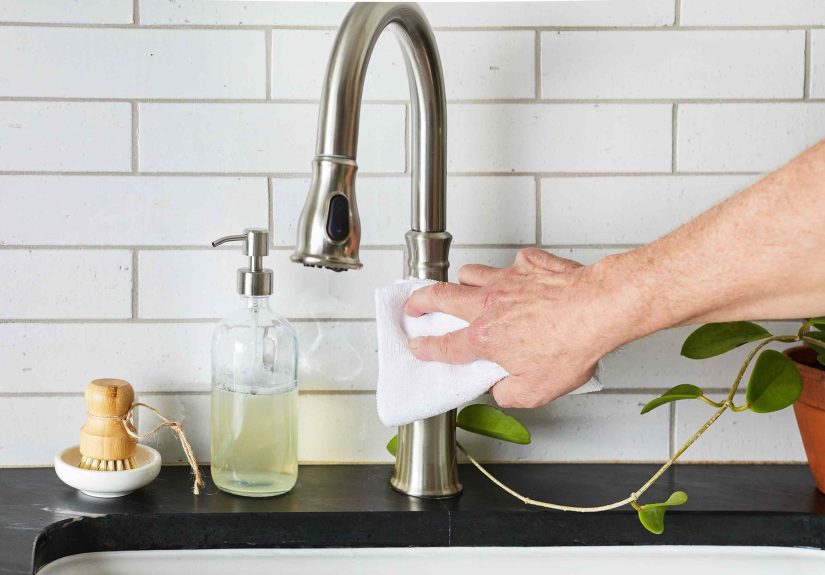
- Wipe faucets dry to stop mineral deposits before they harden.
Weekly
- Do a quick spray-down with vinegar-and-water (if safe for your surfaces), then rinse and dry.
- Clean showerhead nozzles with a soft brush to prevent mineral clogs.
Long-term
- Consider water softening or a filtration solution if your area has very hard water.
- Heat and evaporation speed up depositskeeping surfaces dry is surprisingly powerful.
Troubleshooting: If the Stain Still Won’t Budge
1) You might be dealing with etching, not deposits
If glass looks cloudy even after cleaning, the surface may be etched (tiny permanent damage) from prolonged mineral buildup or harsh abrasion. Deposits sit on the surface; etching is in the surface. A glass polishing compound may help, but it’s a different project than stain removal.
2) Your cleaner dried too fast
Acid cleaners need contact time. Use the paper towel “compress” trick on vertical surfaces to keep the area wet longer.
3) You need multiple rounds
Thick limescale builds in layers. One pass removes the top coat; the next pass reaches what’s underneath. Repeat calmly. This is cleaning, not a boxing match.
Safety Notes You Shouldn’t Skip (Seriously)
- Never mix bleach with vinegar, ammonia, or acidic cleaners.
- Don’t combine vinegar + hydrogen peroxide in the same bottle or bowl.
- Ventilate when using commercial descalers.
- Spot-test on coated/painted/unknown finishes.
- Avoid acids on natural stone (marble, limestone, travertine). Use stone-safe cleaners only.
FAQ
What’s the fastest way to remove hard water stains?
For light-to-moderate buildup, warm vinegar (or a citric acid spray) with 10–30 minutes of dwell time is usually the quickest. For heavy buildup, a commercial descaler often works fasterfollow the label and rinse thoroughly.
Will vinegar damage chrome or stainless steel?
Often it’s fine for short contact times, but finishes vary. Spot-test, avoid long soaks, and always rinse and dry. If you notice dulling, switch to a gentler method or a cleaner designed for that finish.
Can I use vinegar or lemon on granite or marble?
Don’t. Natural stone can etch from acids. Use a pH-neutral, stone-safe cleaner and a soft cloth.
Why do my stains come back so quickly?
If your water is very hard, minerals redeposit fastespecially on glass and fixtures that air-dry. Drying surfaces after use and doing quick weekly maintenance makes a huge difference.
Real-World Experiences & Lessons (The “I Tried Everything” Chapter)
If you’ve ever stared at a cloudy shower door thinking, “I cleaned this… didn’t I?” you’re not alone. In real homes, hard water stains tend to follow a few predictable storylineseach with its own little lesson (and occasionally, a small amount of swearing).
The Shower Door That Looked Clean Until the Sun Hit It
One of the most common scenarios is the “it’s fine” shower dooruntil daylight reveals a foggy film. That usually means you’re dealing with a mix of mineral deposits and soap scum. People often try vinegar, wipe once, and declare defeat. The difference-maker is almost always dwell time. Saturating paper towels and sticking them to the glass for 20–30 minutes keeps the acid working instead of evaporating in five minutes like a dramatic exit.
Another big unlock: switching from plain vinegar-water to vinegar + dish soap. The soap helps lift the greasy layer so the acid can reach the mineral deposits underneath. Translation: you’re not “scrubbing harder,” you’re “cleaning smarter,” which sounds like a poster but is also true.
The Faucet Ring That Would Not Accept Peace Talks
Faucets love to grow mineral collars around the base, especially where water sits and slowly evaporates. A quick spray is rarely enough because gravity is rude and keeps pulling liquid away. The cloth wrap method (or even a vinegar-soaked paper towel tucked around the base) solves the “contact problem.” People who finally get results usually did two things:
- They kept the area wet long enough to soften the deposit.
- They used a soft brush (like a toothbrush) to get into seams and edges.
The main “oops” here is leaving acids on a finish for hours because “more time = more power.” Sometimes that’s true; sometimes it’s how you end up with a dulled spot. Shorter soaks, repeated if needed, are safer than one marathon soak.
The Toilet Line That Mocked Every Cleaner
The hard water ring at the waterline can be legendary. Many people pour in a cleaner and hope for miracles, but thick mineral buildup often needs either extended soaking (keeping the deposit wet) or mechanical help. That’s why pumice stones get recommended so often: used wet and gently, they can remove the mineral crust without wrecking porcelain. The biggest lesson is to keep both the pumice and the surface wet and to scrub lightlyif you’re using enough pressure to “train for arm day,” you’re doing too much.
The “I’ll Just Mix Everything” Moment (Please Don’t)
When frustration spikes, some folks start combining products like it’s a chemistry boss fight. That’s when problems happen. The safe pattern is: pick one method, use it, rinse completely, then switch methods if needed. You’ll get better resultsand you’ll avoid accidentally creating fumes that turn your bathroom into a low-budget disaster movie.
The Surprise Victory: Prevention Actually Works
The most satisfying “experience” people report isn’t the deep cleanit’s realizing they can stop the cycle. A quick squeegee on shower glass, drying the faucet after use, and doing a light weekly maintenance wipe can reduce stains dramatically. It’s not glamorous, but neither is scraping mineral crust off a shower door every Saturday like it’s your second job.
Conclusion
Stubborn hard water stains don’t mean your home is dirtythey mean your water is doing what hard water does: leaving minerals behind. The winning approach is simple: dissolve the minerals (vinegar or citric acid), cut through soap scum (dish soap), escalate to descalers when needed, and use controlled abrasion only when you have to.
Once you’ve gotten things back to sparkling, the real flex is keeping them that way: a quick dry-down, a weekly maintenance clean, and (if your water is very hard) a longer-term water solution can keep your fixtures looking less “chalky relic” and more “hotel bathroom vibes.”






 Close
Close