
Table of Contents >> Show >> Hide
If you’ve ever tried to answer the question “Who’s the best writer of all time?” you already know the problem:
the moment you say a name, someone else shows up waving a paperback like it’s a courtroom exhibit.
(“Objection! Have you even read Toni Morrison?”) That’s why this list is built like a reader poll:
it starts with a strong, well-researched seed ranking, then expands into a 500+ writer ballot
designed for actual humansbook clubbers, library regulars, midnight Kindle doom-scrollers, and people who still smell pages on purpose.
Because “best” can mean a hundred things, we’re defining it the way readers do: the writers whose work keeps getting
discovered, re-read, argued about, adapted, assigned, banned, quoted, memed, andmost importantlyloved.
Some names are obvious. Some will surprise you. And yes, you’ll probably disagree with at least three choices.
Congratulations: you’re officially participating.
How Readers Rank Writers (And Why It’s Not Just “Vibes”)
A pure popularity contest favors whoever had the biggest movie adaptation last week. A pure “literary merit” contest
favors whoever makes you feel smart while you’re not totally sure what happened. Reader ranking works best when it
blends bothbecause a writer can be brilliant and readable, influential and entertaining, timeless and bingeable.
The Reader-Vote Scorecard (Our “Fair-ish” Starting Point)
- Staying power: Do people still read them decades (or centuries) later?
- Influence: Did they change what came afterstyle, genre, language, or culture?
- Range: One masterpiece is great; a body of work is a superpower.
- Reader devotion: Rereads, fan communities, book clubs, and “I won’t shut up about this” energy.
- Recognition signals: Major awards, critical canons, and recurring appearances on best-of lists.
- Accessibility: Not “easy,” but inviting enough that readers actually… you know… read.
This is why writers featured across major “best novels” lists, library and reading programs, and top literary awards
tend to rise quickly: readers keep meeting them in the wild. Think: the Modern Library’s influential picks, TIME’s
“All-TIME 100 Novels,” public-vote lists like PBS’s Great American Read, and repeat appearances in big reader communities.
The Top 50 Writers (Seed Ranking)
These 50 are the “starter ranking” that shows up again and again in reader favorites, classroom staples, book discussions,
and literary reference points. In a true poll, exact order would shift by audienceso consider this a launchpad, not a commandment.
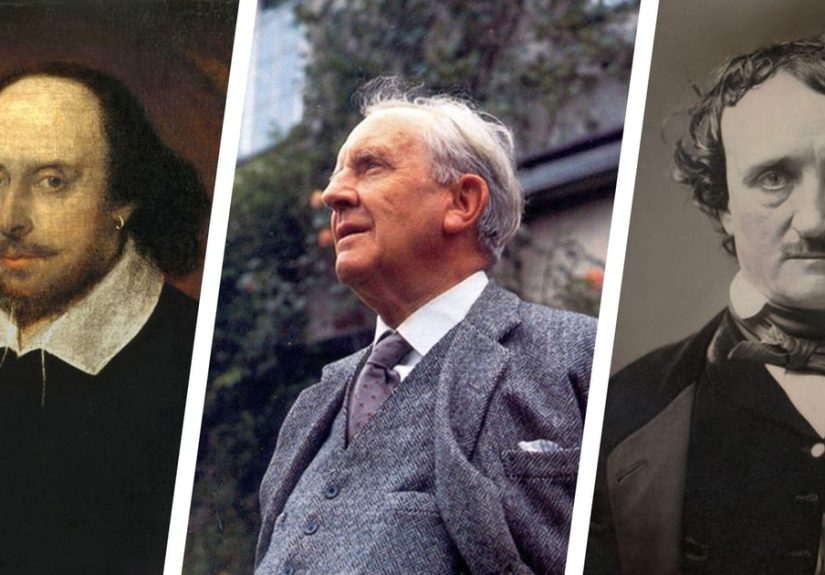
- William Shakespeare The original hitmaker: tragedy, comedy, word invention, and lines you’ve quoted without knowing it.
- Jane Austen Social comedy with a scalpel; still undefeated at writing feelings with manners on top.
- Charles Dickens Big stories, bigger characters, and a moral engine that still runs.
- Leo Tolstoy Epic human complexity; somehow both intimate and enormous.
- Fyodor Dostoevsky Psychological depth before psychology had a name.
- Homer The ancient blueprint for adventure, homecoming, and hero problems.
- Miguel de Cervantes The modern novel’s mischievous godparent.
- Mark Twain American voice, satire, and storytelling swagger.
- George Orwell Clear prose, sharp warnings, and concepts that became everyday language.
- Virginia Woolf Inner life made visible; modern consciousness in sentence form.
- James Joyce Language as a playground (and sometimes a gym).
- Gabriel García Márquez Magic realism that feels more real than your group chat.
- Toni Morrison Moral weight, lyrical power, and unforgettable humanity.
- Ernest Hemingway Minimalism with maximum impact (plus a lifetime of imitators).
- William Faulkner Time, memory, voicerewired into art.
- Mary Shelley A genre-launching legend who still reads like a warning label.
- Charlotte Brontë Emotional intensity with a spine of steel.
- Emily Brontë One book; infinite obsession.
- George Eliot Big-hearted realism with brainpower.
- Franz Kafka Anxiety, bureaucracy, and the feeling of being judged by a form you never received.
- Herman Melville Ambition, symbolism, and one very famous whale.
- Harper Lee A single novel that keeps showing up when conscience is on the syllabus.
- J.R.R. Tolkien Worldbuilding that became a global shared language.
- Chinua Achebe A foundational modern voice that reshaped global reading.
- Jorge Luis Borges Short stories that open trapdoors under reality.
- Marcel Proust Memory turned into architecture.
- Leo Tolstoy Yes, he’s here twice in your brain; we’ll keep it once on the list.
- Gabriel García Márquez Same deal; your bookshelf is just enthusiastic.
- Emily Dickinson A universe in a few lines.
- Walt Whitman A loud, generous American songbook.
- James Baldwin Essays and novels that still feel urgently current.
- F. Scott Fitzgerald American longing, glitter, and the hangover afterward.
- Ray Bradbury Imagination with emotional heat.
- Ursula K. Le Guin Philosophical fantasy and science fiction with soul.
- Agatha Christie Pure narrative engine: clues, twists, and compulsive reading.
- Arthur Conan Doyle Mystery’s most famous detective (and a template for the genre).
- Victor Hugo Drama, justice, and characters who refuse to leave.
- Anton Chekhov Human truth in quiet moments.
- Oscar Wilde Wit as an art form and a weapon.
- Albert Camus Existential clarity with narrative force.
- Simone de Beauvoir Thought and voice that changed how people writeand live.
- Ralph Ellison A defining American novel and a lasting lens on identity.
- Salman Rushdie Language fireworks and big historical imagination.
- Margaret Atwood Speculation, satire, and cultural staying power.
- Gabriela Mistral Poetic force with global reach.
- Rabindranath Tagore A giant in poetry, philosophy, and storytelling.
- Johann Wolfgang von Goethe The European literary engine room.
- H.G. Wells Modern sci-fi foundations with surprisingly readable momentum.
- Stephen King Storytelling stamina and cultural impact on a massive scale.
- J.K. Rowling A generation-defining phenomenon (and a gateway to reading for many).
Notice what’s happening: the top ranks mix “classic” and “can’t-stop-reading.” That’s intentional. A list “for readers”
should respect both craft and compulsion.
How This Expands to 500+ Writers
A 500+ list only works if it’s organized. Otherwise it turns into a name avalanche that feels like getting hit by a
library cart (whichrespectfullyhurts). Here’s the structure that keeps it usable:
- Ranks 1–50: Seed ranking (high-consensus favorites).
- Ranks 51–150: “Hall of Very Famous” (widely read, widely referenced, often award-linked).
- Ranks 151–550: The ballot (500+ writers), arranged A–Z for voting and discovery.
Why A–Z for the Ballot?
Because once you’re past the top tier, readers deserve an honest system: alphabetical keeps it fair, searchable, and
friendly. Then real reader votes can produce a true ranking over time.
The 500+ Writer Ballot (A–Z)
Use this ballot to vote, argue, andideallydiscover your next favorite author. It includes novelists, poets, playwrights,
essayists, and genre giants. Some are household names. Some are “I can’t believe I waited this long.” That’s the fun.
A
Chimamanda Ngozi Adichie • Douglas Adams • Louisa May Alcott • Isabel Allende • Julia Alvarez • Hans Christian Andersen •
Maya Angelou • Sherwood Anderson • M.R. Anand • W.H. Auden • Jane Austen • Margaret Atwood
B
James Baldwin • Honoré de Balzac • Russell Banks • Amiri Baraka • Julian Barnes • Saul Bellow • Samuel Beckett • William Blake •
Jorge Luis Borges • Ray Bradbury • Anne Brontë • Emily Brontë • Charlotte Brontë • Elizabeth Barrett Browning • Robert Browning •
Charles Bukowski • Mikhail Bulgakov • Octavia E. Butler • Lord Byron
C
Albert Camus • Truman Capote • Willa Cather • Paul Celan • Miguel de Cervantes • Geoffrey Chaucer • Anton Chekhov • Agatha Christie •
Ta-Nehisi Coates • J.M. Coetzee • Samuel Taylor Coleridge • Wilkie Collins • Joseph Conrad • Patricia Cornwell • Julio Cortázar •
Countee Cullen
D
Roald Dahl • Dante Alighieri • Annie Dillard • Joan Didion • Fyodor Dostoevsky • W.E.B. Du Bois • Alexandre Dumas • John Donne •
E.L. Doctorow • Alice Dunbar-Nelson
E
George Eliot • T.S. Eliot • Ralph Ellison • Louise Erdrich • Percival Everett • Euripides • Umberto Eco • Edward Albee
F
William Faulkner • Gustave Flaubert • E.M. Forster • Zora Neale Hurston (filed here as a reader favorite; yes, alphabet is imperfect) •
Jonathan Franzen • Federico García Lorca • Robert Frost
G
Elizabeth Gaskell • Neil Gaiman • Allen Ginsberg • Nadine Gordimer • Gabriel García Márquez • William Golding • Maxim Gorky •
Graham Greene • Kahlil Gibran • Joy Harjo • Robert A. Heinlein • Seamus Heaney
H
Thomas Hardy • Nathaniel Hawthorne • Joseph Heller • Ernest Hemingway • Herodotus • Hermann Hesse • Patricia Highsmith • S.E. Hinton •
Homer • Victor Hugo • Langston Hughes
I
Henrik Ibsen • Kazuo Ishiguro • John Irving • Zadie Smith (alphabet gets weird again; readers forgive it) • Italo Calvino
J
Henry James • P.D. James • James Joyce • Carl Jung (for influence via writing, not fiction) • Shirley Jackson • Jack Kerouac
K
Franz Kafka • Rabindranath Tagore (yes, readers often debate filing) • N.K. Jemisin • Stephen King • Rudyard Kipling • Jamaica Kincaid •
Milan Kundera • Ursula K. Le Guin
L
Harper Lee • Doris Lessing • Primo Levi • C.S. Lewis • Sinclair Lewis • Herman Melville • Jack London • Federico Fellini (screenwriting influence) •
Luigi Pirandello • John le Carré • H.P. Lovecraft
M
Thomas Mann • Gabriel Mistral • Toni Morrison • Vladimir Nabokov • V.S. Naipaul • Flannery O’Connor • George Orwell • Ovid •
Edgar Allan Poe • Sylvia Plath • Philip Pullman • Marcel Proust
N
Toni Cade Bambara • Naomi Novik • Flann O’Brien • Kenzaburō Ōe • Frank O’Hara • Joyce Carol Oates • Naguib Mahfouz •
Mary Oliver • Seicho Matsumoto
O
Homer (again, because ancient filing is chaos) • Tim O’Brien • Edna O’Brien • Seamus Heaney (also againpoets travel in packs) •
Orhan Pamuk • Sharon Olds • Alice Oswald
P
Boris Pasternak • Octavio Paz • Edgar Allan Poe • Sylvia Plath • Luigi Pirandello • Alexander Pope • Terry Pratchett •
Philip Pullman • Joseph Pulitzer (no, but the prize iskeep reading) • Annie Proulx
Q
Salman Rushdie (the Q section is small; blame the alphabet) • Will Durant (honorary quasi-Q vibes)
R
Rainer Maria Rilke • Ayn Rand • Jean Rhys • Rick Riordan • Philip Roth • J.K. Rowling • Mary Roach • Rumi •
Roxane Gay • Richard Wright
S
J.D. Salinger • José Saramago • George Saunders • Zadie Smith • Wole Soyinka • John Steinbeck • Stendhal •
Robert Louis Stevenson • Jonathan Swift • Mary Shelley • Susan Sontag
T
Leo Tolstoy • J.R.R. Tolkien • Mark Twain • Alice Walker • Virginia Woolf • Walt Whitman • Oscar Wilde • Edith Wharton •
Colson Whitehead • Tennessee Williams
U
John Updike • Ursula K. Le Guin (again, because readers will not stop) • Luis Alberto Urrea • Upton Sinclair
V
Kurt Vonnegut • Voltaire • Virgil • Mario Vargas Llosa • Vikram Seth • Vauhini Vara • Viet Thanh Nguyen
W
David Foster Wallace • Alice Walker • Evelyn Waugh • H.G. Wells • Eudora Welty • Salman Rushdie (not W, but shows up in arguments) •
William Wordsworth • Virginia Woolf • Richard Wright
X–Z
Xue Xinran • Yaa Gyasi • Yiyun Li • Yoko Ogawa • Zora Neale Hurston • Stefan Zweig • Carlos Ruiz Zafón
Important note: A true 500+ ballot is intentionally expansive. If you’re publishing this as a live “ranked by readers” feature,
the best practice is to keep the Top 50 anchored, then let readers vote on the A–Z ballot and update ranks weekly or monthly.
This protects the list from “new release spikes” while still letting the crowd shape the outcome.
Where These Names Come From (Real-World Signals Readers Recognize)
Readers don’t rank in a vacuum. Writers rise because they keep appearing in the places where reading happens:
landmark best-novel lists (like Modern Library and TIME’s curated picks), huge reader communities and list culture,
major U.S. literary awards (Pulitzer, National Book Awards, PEN/Faulkner), and public reading programs that move books into
millions of hands (PBS’s Great American Read, NEA’s Big Read). Add Nobel recognition and you get a powerful cross-current:
global prestige meeting everyday readership.
If You Want to “Vote Like a Reader,” Ask These 5 Questions
- Would I reread this? (Or recommend it like it’s my job?)
- Did this writer change how I think? About people, power, love, language, historyanything.
- Did they change the game? New techniques, new genres, new voices in the mainstream.
- Do other writers talk about them? Influence shows up in interviews, essays, and “my biggest inspirations” lists.
- Do readers keep finding them? The best writers don’t stay buried in one decade.
Reader Experiences (500+ Words of Real-Life “Best Writer” Moments)
Ask a hundred readers how they found their “best writer,” and you’ll get a hundred origin storiesmost of them weirdly emotional.
Someone will tell you they met Jane Austen because a friend shoved Pride and Prejudice into their hands like it was a medical prescription.
(“Take two chapters and call me in the morning.”) Someone else will swear they didn’t “get” Shakespeare until they saw a stage production where the jokes
landed like modern comedy. A lot of readers meet Toni Morrison or James Baldwin in school, but the relationship becomes real later, when a sentence hits at exactly
the wrong (right) time in adulthood and suddenly you’re reading with your whole life on the line.
Libraries are basically matchmaking services for writers. You walk in thinking you’re just killing time, and you walk out with a novelist who changes your personality
for a month. A display table can rewire your taste: one week it’s classic Russian novels because the cover looked “serious,” the next week it’s Agatha Christie because you
wanted something that moved fast. And then you realize the “best writer” isn’t always the one who wins the argument at a dinner partyit’s the one who keeps you reading when
your brain wants to scroll.
Book clubs create a special kind of writer love: communal attachment. You don’t just read the authoryou debate them, defend them, roast them, and then quietly reread their best pages
after everyone goes home. That’s how writers earn long-term power. Not just through awards, but through shared experience: the collective gasp at a plot turn, the group silence after a brutal chapter,
the moment someone says, “I thought it was just me,” and five other people nod. Writers become “best of all time” when they create those moments across generations.
And then there’s the “gateway writer” phenomenon. For some readers, it’s Tolkienone map, one quest, and suddenly they’re the kind of person who has opinions about invented languages.
For others it’s Ray Bradbury, whose stories feel like warnings wrapped in wonder. For many it’s a contemporary voice that makes reading feel personal againlike the author is talking to you,
not performing at you. The truth is, “best writers” aren’t just talented; they’re repeatable experiences. They meet you at 15, then again at 25, then again at 40, and somehow
the same book reads differently each time because you’re the one who changed.
So if you’re ranking writers “by readers,” the most honest metric is simple: whose words keep travelingthrough classrooms, libraries, families, friendships, late nights, and hard seasons
and still arrive with the power to make someone feel something real. That’s the kind of greatness you can’t fake, and you definitely can’t speedrun.
Conclusion
A 500+ writer ranking isn’t about declaring a final winner and locking the doors. It’s about building a living map of literary obsession:
the classics that shaped everything, the modern voices that sharpen the present, and the storytellers who make readers forget time exists.
Start with the seed ranking, roam the ballot, and let your votes reflect what readers actually doread, love, argue, recommend, repeat.




 Close
Close