
Table of Contents >> Show >> Hide
- Before You Start
- Step-by-Step Guide to Changing Bass Strings
- Step 1: Decide Whether to Change One String at a Time
- Step 2: Loosen the Old String Slowly
- Step 3: Clean and Inspect While the String Is Off
- Step 4: Feed the New String Through the Bridge
- Step 5: Measure Slack Before Cutting
- Step 6: Insert and Wind the String Correctly
- Step 7: Bring the String to Pitch
- Step 8: Stretch the String and Retune
- Step 9: Set the Witness Point
- Step 10: Repeat for the Remaining Strings
- After Restringing: Quick Setup Checks
- Common Mistakes to Avoid
- How Often Should You Change Bass Strings?
- Practical String Choice Examples
- Conclusion
- Experience Notes: What Players Usually Learn After a Few String Changes (Extended 500+ Words)
If your bass sounds dull, feels sticky, won’t stay in tune, or makes your fingers look like you just changed a bike chain, it’s probably time for new strings. The good news: changing bass strings is not advanced wizardry. It’s a practical skill every bassist should know, and once you do it a few times, the whole job becomes fast, easy, and kind of satisfying.
This guide walks you through the full process step by step, from choosing the right set to winding clean wraps and checking your setup after restringing. We’ll keep it beginner-friendly, but detailed enough to help intermediate players fix the common mistakes that cause tuning issues, broken strings, and weird intonation.
Before You Start
What You’ll Need
- A new set of bass strings (matched to your bass and playing style)
- Wire cutters or string clippers
- A string winder (optional, but your wrist will thank you)
- A tuner (clip-on, pedal, or app)
- A clean microfiber cloth
- Optional: fretboard cleaner/conditioner (only if your fingerboard needs it)
You can change strings with just cutters and a tuner, but a string winder makes the process much faster. Think of it as the “I value my time” upgrade.
Choose the Right Bass Strings First
This is where tone and feel start. Don’t just grab the first pack with a cool font.
- Gauge (thickness): Lighter gauges usually feel easier and faster; heavier gauges can feel tighter and support heavier styles and lower tunings better.
- Material: Nickel tends to sound balanced, stainless tends to sound brighter and sharper, and other alloys can push more output or warmth.
- Winding type: Roundwound is the most common and bright/sparkly. Flatwound is smoother and warmer. Half-round and tapewound sit somewhere in between.
- Scale length: This is critical. “Long scale” on the package is not always enough info, especially for string-through-body basses or short-scale instruments.
Pro tip: The most expensive mistake beginners make is buying the wrong length, not the wrong tone. Measure from the ball-end anchor point to the top of the nut and make sure the string’s taper/silk starts in the right place (just past the nut, not on the nut or saddle).
Step-by-Step Guide to Changing Bass Strings
Step 1: Decide Whether to Change One String at a Time
You have two good options:
- One at a time: Keeps neck tension more stable and is the easiest method for beginners.
- All strings off at once: Best when you want to fully clean the fretboard and hardware.
If this is your first restring, go one string at a time. It reduces the odds of turning your headstock into a spaghetti incident.
Step 2: Loosen the Old String Slowly
Use the tuning key to reduce tension before removing anything. Don’t cut a fully tensioned string. Bass strings store a lot of tension, and the sharp ends are not shy.
Once the string is loose, unwind it from the tuning post and pull it out of the bridge or through-body slot.
Step 3: Clean and Inspect While the String Is Off
This is your free maintenance window. Wipe the fretboard, frets, bridge area, and headstock with a microfiber cloth. If the fretboard is unfinished wood and looks dry, use an appropriate fretboard conditioner sparingly. If it’s a finished fretboard, use a cleaner meant for finished surfaces.
Also inspect for:
- Loose hardware
- Sharp saddle edges or burrs
- Dirty nut slots
- Rusty screws or tuner wobble
Small issues caught here can save you from tuning headaches later.
Step 4: Feed the New String Through the Bridge
Install the new string through the bridge (top-load) or through the body, depending on your bass design. Make sure the ball end is fully seated. If it is not seated correctly, the string can slip later and cause tuning instability.
As you guide the string over the saddle and through the nut slot, keep it straight. This is also the moment to double-check taper/silk placement:
- No silk over the nut
- No silk over the saddle
- No exposed core sitting on the saddle (unless the string is designed that way)
Step 5: Measure Slack Before Cutting
Clean wraps start with the right amount of extra length. Too little and the string can slip. Too much and the post becomes a tangled tower of wraps.
A reliable rule is the “two pegs past” method:
- Pull the string past its target tuner to about two tuner posts farther
- Mark that point
- Make a firm 90-degree bend (crimp)
- Cut just after the bend
This usually gives you clean, stable wraps without overcrowding the tuning post.
Important for certain strings: If you’re using round-core strings, follow the brand’s cutting instructions carefully. Some round-core designs require a crimp before cutting so the wrap doesn’t loosen and kill tone or intonation.
Step 6: Insert and Wind the String Correctly
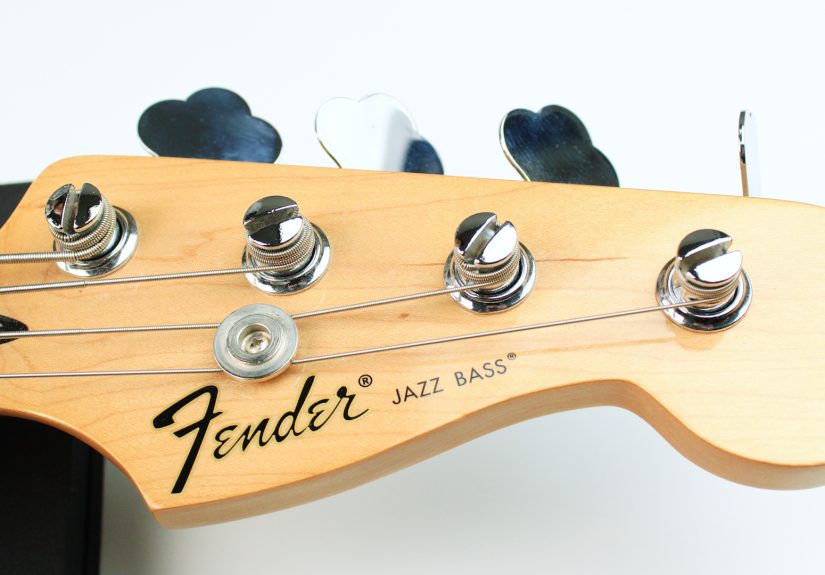
Insert the bent end into the tuner hole (or split post, if your bass has vintage-style tuners). Then start winding while guiding the string downward on the post.
The wrap pattern matters more than people think:
- Keep the first wrap neat and secure
- Guide each new wrap below the previous wrap
- Avoid overlaps or crossed winds
- Keep light tension on the string while winding
For split-post tuners, make the bend before cutting so the end seats cleanly into the post. This is especially helpful on thicker bass strings.
Another useful trick is a locking-style wrap method (the string passes under and then over itself) to reduce slack. It’s not mandatory on every bass, but clean winding and no overlaps are mandatory if you want stable tuning.
Step 7: Bring the String to Pitch
Tune up gradually with a tuner. Standard 4-string bass tuning is E-A-D-G (low to high). For 5-string basses, add a low B. For 6-string basses, common tuning is B-E-A-D-G-C.
If you overshoot the pitch, don’t just back down and stop. Loosen a little below pitch, then tune back up to pitch. Tuning up to the note helps maintain better string tension and tuner stability.
Step 8: Stretch the String and Retune
New strings slip and settle. That’s normal. What’s not normal is retuning every eight seconds for the next three days.
To speed up stabilization:
- Tune the string to pitch
- Gently pull upward along the string’s playing length (don’t yank)
- Retune
- Repeat several times
A few stretch-and-retune cycles make a huge difference. Use a firm but controlled pull. You’re helping the string seat at the tuner, nut, and bridgenot trying to win a tug-of-war.
Step 9: Set the Witness Point
This is a small move that makes a big difference in intonation and tuning consistency.
With the string just under or at pitch, press gently where the string crosses the saddle to create a clean break angle. You can also lightly define the break point at the nut. This helps prevent a soft curve that can cause false intonation readings and tuning weirdness.
Think “define the bend,” not “crush the string.” Gentle and precise wins here.
Step 10: Repeat for the Remaining Strings
Repeat the same process for each string. If you’re changing all strings at once, work from the lowest string to highest or vice versajust be consistent and keep the strings organized so you don’t accidentally put the wrong gauge on the wrong tuner (it happens, and yes, everyone pretends it never happened).
After Restringing: Quick Setup Checks
1) Check Action
New strings can change the feel of the bass slightly, especially if you switched gauge or type. Heavier strings may pull differently; lighter strings may buzz more.
Plug in your bass and test real playing conditions before panicking about a little acoustic fret buzz. Some buzz won’t come through the amp.
2) Check Intonation
If you changed gauge, material, or brand, check intonation. Bass bridges usually allow saddle adjustment with a screwdriver. A quick intonation pass can make your bass feel “in tune everywhere” instead of “mysteriously cursed above the 7th fret.”
3) Recheck Tuning Tomorrow
Even with a careful stretch routine, brand-new strings continue settling after the first playing session. Tune again the next day and you should notice much better stability.
Common Mistakes to Avoid
- Buying the wrong length: “Long scale” is not universal. Measure your bass.
- Too many wraps: More wraps do not equal better tuning. Clean wraps do.
- Crossed wraps: These create slack and tuning jumps.
- Cutting before crimping (on round-core strings): Can damage string performance.
- Ignoring taper/silk placement: Silk on the nut or saddle can cause breakage or poor tone.
- No stretching: Expect constant retuning if you skip this.
- No post-restring setup check: Especially important when changing gauge.
How Often Should You Change Bass Strings?
There’s no single perfect schedule because sweat chemistry, climate, playing time, and string type all matter. A gigging bassist may need new strings every few weeks. A casual player might go much longer, especially with coated strings or flatwounds.
Good signs it’s time:
- Loss of brightness or punch
- Poor sustain
- Rough feel or visible grime
- Tuning instability
- Intonation feels off even after adjustment
Want more life from your strings? Wipe them down after playing and keep the fretboard clean. Dirt and sweat are the ultimate tone thieves.
Practical String Choice Examples
For Funk / Slap
Try nickel or stainless roundwounds in a light-to-regular gauge. You’ll usually get a brighter attack, snap, and top-end detail.
For Rock / General Purpose
Nickel roundwounds in a regular gauge are the all-around safe pick. Balanced tone, familiar feel, and easy availability.
For Motown / Vintage / Fingerstyle Warmth
Flatwounds are often the move. Smoother feel, less finger noise, and a warm fundamental-heavy sound.
For Drop Tunings or Heavier Styles
Consider a heavier gauge or a tension-balanced set. Lower tunings need enough tension to stay focused and avoid floppiness.
Conclusion
Changing bass strings is one of the easiest ways to improve your sound instantly. A careful restring gives you better tone, better tuning stability, and a better playing experiencewithout buying a new bass or touching a pedal.
If you remember just five things, make it these: measure for the right string length, keep wraps neat and downward, avoid silk on the nut/saddle, stretch and retune properly, and check setup after the restring. Do that, and your bass will feel tighter, sound clearer, and behave like it actually respects you.
Experience Notes: What Players Usually Learn After a Few String Changes (Extended 500+ Words)
Here’s the part nobody tells you when you first learn how to change bass strings: the actual string swap is only half the skill. The other half is learning to notice what the bass is telling you. After a few restring jobs, most players start to realize that the instrument gives obvious cluesif you know what to watch for.
One common experience is tuning instability right after installing new strings, even when everything was done “correctly.” Beginners often assume they wound the string wrong, but in many cases the strings just haven’t seated fully yet. The ball end settles into the bridge, the wraps compress on the tuning post, and the string finds its final resting shape across the nut and saddle. That’s why the stretch-and-retune cycle is such a game changer. The first time you do it properly, you go from “Why is this bass drifting every minute?” to “Oh, this is actually stable now.” It feels like a cheat code.
Another big lesson comes from string length and taper placement. A lot of players buy “long scale” strings and assume that means they’ll fit any 34-inch bass. Then the silk ends up on the nut, or the taper lands in the wrong spot, and suddenly the E string feels weird or breaks early. After one mistake like that, most bassists become measuring fanaticsin a good way. They start checking ball-end to nut distance before buying strings and pay attention to whether the bass is top-load or string-through-body. It sounds nerdy, but it saves money and frustration.
Players also discover that restringing is the best time to do mini maintenance. You don’t need to turn every string change into a full luthier session, but even a 3-minute wipe-down makes a difference. Many basses feel “old” mostly because the strings and fretboard are dirty. Clean the fingerboard, wipe the hardware, install fresh strings, and the bass suddenly feels faster and more alive. It’s one of the highest-value habits in all of bass maintenance.
Then there’s the tone surprise. New players often think all strings sound basically the same until they try different types. The first time someone switches from old dead roundwounds to fresh nickel rounds, they usually say something like, “Whoa, I didn’t know my bass could sound like that.” The first time they try flats, it’s the opposite reaction: “Everything is smoother… and somehow more serious.” That’s when string changes stop feeling like maintenance and start feeling like tone design. You’re not just replacing partsyou’re choosing the voice of the instrument.
A final experience that comes with time is learning not to overreact to tiny buzzes. After a restring, the bass may feel slightly different, especially if the gauge changed. Many players panic and assume something is broken. Experienced players test the bass through an amp first, play across the neck, and only then decide whether a setup tweak is needed. Sometimes it’s just a normal change in feel. Sometimes a quick saddle adjustment fixes it. Either way, the confidence comes from repetition.
So if your first restring feels slow, awkward, or mildly chaotic, that’s normal. Everyone starts there. By the third or fourth time, your hands know the routine. By the sixth, you’ll be doing clean wraps, fast tuning, and smart post-checks like you’ve been doing it for years. And yes, you will absolutely start judging other people’s messy string wraps. That’s part of becoming a bassist.






 Close
Close