
Table of Contents >> Show >> Hide
The Russian Soyuz spacecraft is one of the most iconic and reliable crewed vehicles used for transporting astronauts to and from the International Space Station (ISS). However, despite its many years of service, it has also experienced some emergency situations, one of the most significant being ballistic reentries. These emergency landings, although rare, highlight the importance of planning for worst-case scenarios in space missions. In this article, we’ll explain what ballistic reentry means in the context of the Russian Soyuz spacecraft, the procedures involved, and how these emergencies are handled with precision and care.
What is Ballistic Reentry?
Ballistic reentry refers to a specific type of reentry profile used during a spacecraft’s return to Earth. Unlike a controlled reentry, where the spacecraft’s descent is precisely managed using its onboard thrusters and other mechanisms, ballistic reentry occurs when a spacecraft enters Earth’s atmosphere at a steep angle, often due to an emergency situation or system failure. The reentry is typically unplanned, with minimal or no adjustments made during the descent.
For the Russian Soyuz spacecraft, ballistic reentry can occur under various circumstances, such as a failure of the spacecraft’s attitude control system or a malfunction during the descent phase. In these cases, the spacecraft will still make it back to Earth, but at a much steeper angle than usual. This results in a much faster and rougher descent, which can lead to higher g-forces on the crew and more intense heat buildup on the spacecraft’s heat shield.
How Does Ballistic Reentry Affect the Soyuz Spacecraft?
The Russian Soyuz spacecraft is designed to handle the extreme conditions of space travel, including the intense heat and g-forces associated with reentry. However, a ballistic reentry presents additional challenges due to the steep descent angle and the lack of precise control over the spacecraft’s trajectory. When the Soyuz spacecraft enters Earth’s atmosphere at a ballistic trajectory, the heat shield must endure much more intense heat than during a standard reentry.
One of the primary concerns during a ballistic reentry is the g-forces experienced by the crew. During normal reentry, the Soyuz spacecraft is designed to decelerate gradually, allowing the astronauts to experience forces of about 4-5 g. However, in a ballistic reentry scenario, the crew can be subjected to forces as high as 8-9 g. This can make it difficult for the astronauts to maintain consciousness and perform necessary tasks during the descent.
To mitigate the effects of a ballistic reentry, the Soyuz spacecraft is equipped with various safety systems. The crew capsule, for example, is designed to absorb much of the shock and heat from the descent. Additionally, the parachute system is deployed at the right moment to slow the spacecraft’s descent and ensure a safe landing. The use of a ballistic trajectory in an emergency landing scenario, while unsettling, has been proven to be effective in getting the crew safely back to Earth.
Famous Examples of Soyuz Emergency Landings
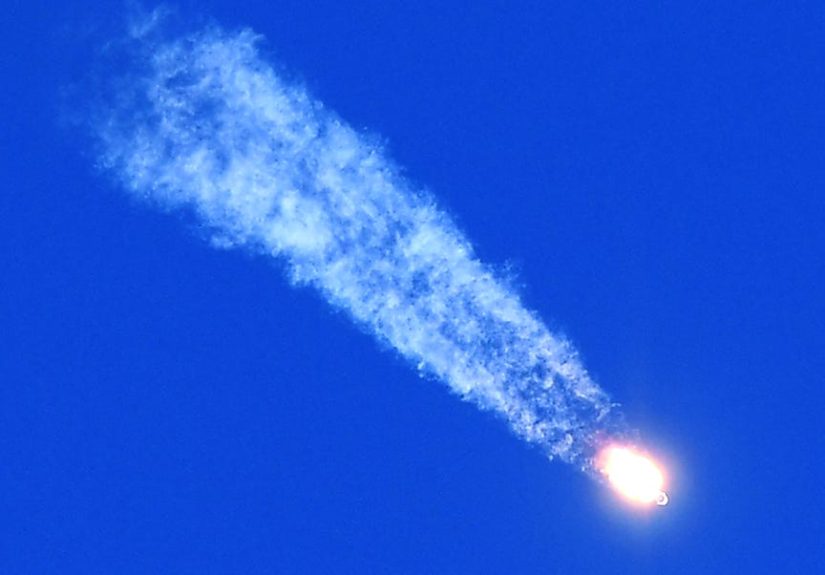
While the Soyuz spacecraft has an excellent safety record, it has experienced a few high-profile emergency landings over the years, some of which involved ballistic reentries. One of the most notable incidents occurred in October 2018, when a Soyuz MS-10 mission, carrying astronauts Alexey Ovchinin and Nick Hague, experienced a failure in the launch abort system after a malfunction during liftoff. This forced the crew to make an emergency return to Earth, and the capsule performed a ballistic reentry. The crew endured high g-forces during the descent, but both astronauts were unharmed and landed safely.
This incident prompted a full investigation by Russian space officials, who discovered that a faulty sensor on the rocket had led to the failure. After the investigation, the Russian space agency made adjustments to improve the reliability of the Soyuz spacecraft and prevent similar occurrences in the future. The emergency landing, although dramatic, showcased the resilience of the Soyuz system and its ability to adapt to unforeseen circumstances.
The Technology Behind Soyuz Emergency Landings
When a Soyuz spacecraft is forced into a ballistic reentry, several systems work in tandem to ensure that the crew remains safe during the descent. The spacecraft’s heat shield, which is made from specially engineered materials, is designed to withstand the intense heat generated by reentry. As the spacecraft plunges into the atmosphere, the heat shield absorbs the frictional heat, preventing the interior of the capsule from overheating.
In addition to the heat shield, the Soyuz spacecraft is equipped with a parachute system that deploys in stages. First, a small drogue chute is deployed to stabilize the descent. Then, the main parachutes are deployed to slow the spacecraft’s fall to a safe landing speed. This two-stage parachute system has been critical in ensuring the safety of the crew during emergency reentries.
Moreover, the spacecraft’s descent is carefully monitored by ground control. The Russian space agency, Roscosmos, works closely with flight controllers to adjust landing procedures if necessary, ensuring that the crew’s safety is the highest priority. Even when the Soyuz spacecraft follows a ballistic trajectory, these systems are carefully orchestrated to ensure the best possible outcome for the crew.
The Future of Soyuz and Emergency Landings
The Soyuz spacecraft has been a workhorse for space missions for decades, providing reliable transportation for astronauts and cosmonauts to the ISS. However, with the advent of newer spacecraft such as SpaceX’s Crew Dragon, many have wondered about the future of Soyuz. Despite competition, the Soyuz system remains an essential part of the space exploration ecosystem, particularly for its proven safety record in emergency situations.
Roscosmos has continued to refine the Soyuz spacecraft, making improvements to its systems and ensuring that it remains a viable option for crewed missions. The recent success of Soyuz MS-10 in executing an emergency landing has provided further confidence in the spacecraft’s ability to protect its crew, even under extreme conditions.
Conclusion
Ballistic reentry is a critical part of the Russian Soyuz spacecraft’s emergency protocols. While not the preferred method of descent, the Soyuz system has been engineered to handle such scenarios and protect its crew. From the heat shield to the parachute system, every element of the spacecraft is designed with safety in mind. The Soyuz spacecraft’s ability to perform ballistic reentries and ensure a safe landing highlights the importance of contingency planning in space missions. Although rare, these emergency landings are a testament to the skill and dedication of the engineers and astronauts who make space exploration possible.
Personal Experience with Soyuz Emergency Landings
As a space enthusiast, it’s impossible not to be in awe of the engineering feats that make Soyuz spacecraft one of the safest methods of getting astronauts back to Earth. The experiences surrounding emergency landings have always fascinated me. When I first heard about the Soyuz MS-10 emergency landing, I was both relieved and impressed. Knowing that astronauts can endure such high g-forces and still land safely shows the level of training and preparation involved in space travel. Moreover, learning about the technology behind the spacecraft’s heat shields and parachutes has deepened my appreciation for how space agencies prioritize astronaut safety. It’s a reminder that, no matter how advanced our technology becomes, we must always be prepared for the unexpected. The space race may be over, but the quest for ensuring the safety of those who venture into space continues.





 Close
Close