
Table of Contents >> Show >> Hide
- The City Behind the Headline
- How Archaeologists Found a City Hiding in Plain Sight
- What the Excavation Revealed
- Why This Discovery Changes the Story of the Steppe
- Trade, Power, and the Bronze Age Economy
- What Researchers Still Do Not Know
- Why the Discovery Resonates So Strongly
- Extended Reflection: What a Discovery Like This Feels Like
- Conclusion
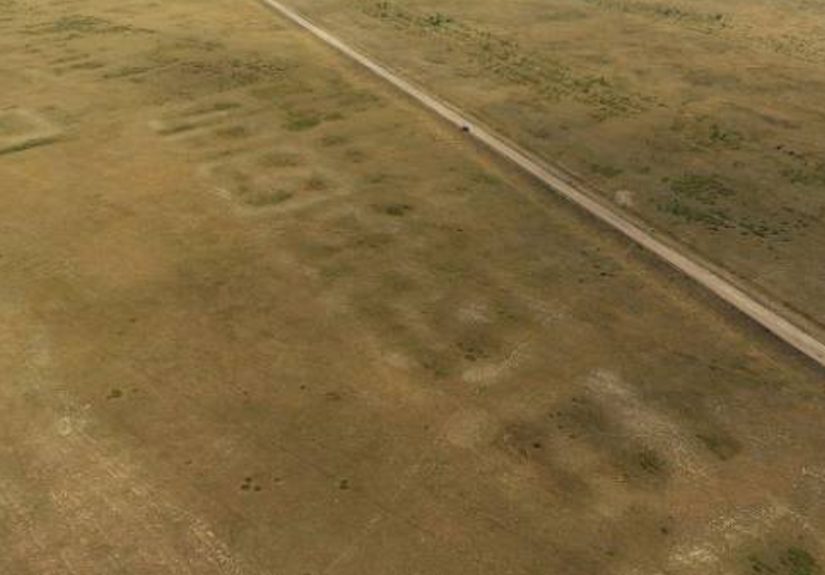
Every so often, archaeology delivers a discovery that makes historians sit up straight, spill their coffee, and quietly mutter, “Well, that changes things.” Semiyarka, a vast Bronze Age settlement in modern-day Kazakhstan, is exactly that kind of find. At first glance, the site does not scream “ancient city.” Today it looks like a wind-brushed expanse of grassland with low mounds and faint earthworks. But under those humble shapes lies the outline of something much bigger: a planned, organized, industrial settlement that appears to have played a major role in the Bronze Age world.
That is why the headline about archaeologists digging up an expansive 3,000-year-old city has caught so much attention. The phrase is dramatic, sure, but the real story is even better. Semiyarka is not just old. It is evidence that communities in the Eurasian steppe were building permanent, complex places with architecture, industry, and regional influence far earlier than many people assumed. In other words, this discovery does not merely add another dot to the archaeology map. It redraws the map.
The City Behind the Headline
The discovery at the center of the buzz is Semiyarka, sometimes called the “City of Seven Ravines.” It sits on a promontory above the Irtysh River in Kazakhstan, in a position that looks strategic even to a modern eye. From that high ground, the settlement would have controlled movement through the valley below. That alone makes it interesting. Add nearby access to copper and tin resources in the Altai region, and the site starts to look less like a random Bronze Age neighborhood and more like prime ancient real estate.
Researchers date the settlement to around 1600 BCE, which means it is actually closer to 3,500 or 3,600 years old than a neat “3,000.” Headlines love round numbers the way cats love knocking things off tables, but the more precise date matters. Semiyarka belongs to a period when scholars once believed much of the local population lived mainly in mobile camps or small villages. What archaeologists found here suggests that some steppe communities were capable of something far more ambitious.
The site covers about 140 hectares, or roughly 346 acres. That is enormous for the context. Earlier estimates placed the settlement closer to 100 acres, but the new survey tripled that understanding. Semiyarka now stands out as the largest known ancient site of its kind in the region, and that scale is one reason it has become such a big deal in current archaeology.
How Archaeologists Found a City Hiding in Plain Sight
Semiyarka was first identified in the early 2000s, but it took time, funding, and a modern toolkit to reveal what the site really was. This was not a case of one shovel hitting one spectacular golden door. Archaeology is usually less “movie climax” and more “years of patient science while your knees hurt.” In this case, researchers combined satellite imagery, older aerial and spy photographs, drone mapping, systematic surface collection, and geophysical survey methods such as magnetometry.
That combination mattered. From above, the site’s earthworks became easier to recognize as a deliberate layout instead of random scars in the land. Magnetometry helped detect buried features and confirm the presence of structured compounds. Surface collection added the cultural clues: pottery, metallurgical debris, and other material traces that anchored the settlement in the Late Bronze Age.
One of the most exciting things about this process is that Semiyarka was not “invisible” because it was tiny. It was invisible because archaeologists were not expecting this level of urban planning in this particular place and time. The city was not just undiscovered. In some ways, it was unimagined.
What the Excavation Revealed
Planned Residential Compounds
What survives today are low rectangular earthen mounds, about a meter high in places, arranged in two long rows. These are thought to be the foundations of enclosed, multi-room houses. That detail matters a lot. Multi-room domestic structures suggest planning, investment, and permanence. This was not a quick seasonal stopover with a few temporary shelters. The layout points to a community that designed its living space with intention.
Even more intriguing is the larger structure near the center of the settlement. It appears to be roughly twice the size of the surrounding buildings and is oriented in a deliberate way. Archaeologists are still debating its exact function, but the leading possibilities include a ritual building, communal gathering space, administrative structure, or the home of an elite family. Whatever its purpose, it hints at social organization beyond simple household life.
An Industrial Zone for Tin-Bronze
If the architecture makes Semiyarka impressive, the metallurgy makes it unforgettable. On the southeastern edge of the settlement, researchers found evidence of a dedicated industrial zone focused on tin-bronze production. That includes crucibles, slag, ores, metallurgical debris, and finished artifacts. This is not the archaeological equivalent of finding one lonely hammer and calling it a factory. It is evidence of organized production.
That matters because tin bronze was one of the defining materials of the Bronze Age, yet archaeologists still know surprisingly little about how some steppe communities actually produced it. Museum collections hold vast numbers of bronze artifacts from across Eurasia, but direct evidence for production sites remains rare. Semiyarka helps close that gap. It suggests that Bronze Age metalworking here was not just occasional craft activity tucked behind a family hut. It may have been a controlled, large-scale industry.
Why This Discovery Changes the Story of the Steppe
For years, a common picture of Bronze Age life in the Eurasian steppe emphasized mobility: herding, seasonal movement, smaller camps, and villages that did not look much like cities. That picture was never completely wrong, but Semiyarka shows it was incomplete. The steppe was not some cultural blank space where complexity took a long nap. At least in some cases, mobile and semi-mobile communities also built substantial, organized, long-term settlements.
That point is crucial because archaeology has often treated “urban” and “nomadic” as if they are natural opposites. Semiyarka suggests the real world was messier, smarter, and more interesting. People could be connected to mobile traditions while still creating permanent centers of production, exchange, and power. History, as usual, refuses to stay in the tidy boxes we make for it.
The site also forces a broader rethink about how ancient societies on the steppe fit into continental networks. If Semiyarka was producing tin bronze at scale, then it was not a remote outpost sitting politely on the sidelines of Bronze Age civilization. It was likely plugged into larger systems of resource extraction, craftsmanship, trade, and regional influence.
Trade, Power, and the Bronze Age Economy
Semiyarka’s location helps explain why it may have become important. It overlooks the Irtysh River corridor and lies within reach of mineral-rich zones connected to copper and tin. In the Bronze Age, that kind of geography was pure opportunity. Rivers moved people and goods. Metals created wealth, tools, weapons, status objects, and political leverage. Put those factors together and you have the ingredients for a serious regional hub.
Artifacts from the site strengthen that interpretation. Much of the pottery is associated with the Alekseevka-Sargary culture, while other finds connect to the Cherkaskul tradition, pointing to interaction with neighboring groups and communities farther afield. That blend suggests Semiyarka was not culturally isolated. It was part of a network, a place where ideas, materials, and probably people moved through.
It is tempting to imagine the city as a Bronze Age version of an industrial river town: smoke from metalworking, movement through the valley, stores of raw materials, household compounds buzzing with activity, and a larger central building where communal or political life played out. Archaeologists are rightly cautious, but even the cautious version of Semiyarka is exciting.
What Researchers Still Do Not Know
As dramatic as this discovery is, plenty of questions remain. Archaeologists still need more excavation, dating work, and material analysis to pin down exactly how long the settlement was occupied, how many people lived there at any one time, how labor was organized, and whether bronze production was tightly controlled by elites or managed more broadly by the community.
Researchers also want to understand the relationship between Semiyarka and nearby sites in the region, including burial grounds and smaller occupations. Was this a political center surrounded by dependent communities? A seasonal aggregation site that became semi-permanent? A specialized industrial settlement with unusual status? The current evidence points toward a major regional center, but archaeology loves a sequel, and Semiyarka definitely deserves one.
There is also the question of terminology. Is Semiyarka truly a “city” in the same sense as better-known urban centers in Mesopotamia or Egypt? Probably not in a one-size-fits-all way, and that is fine. Ancient urbanism did not come with a single blueprint. What makes Semiyarka so important is not whether it matches someone else’s definition perfectly. It is that it demonstrates a city-like level of planning, permanence, specialization, and social organization in a place where many people did not expect to find it.
Why the Discovery Resonates So Strongly
Part of the reason this story has traveled so fast is that it taps into one of archaeology’s favorite themes: the past is always more complicated than we think. Semiyarka reminds us that sophisticated societies do not only appear in the places schoolbooks spotlight most often. Sometimes they rise in grasslands, along river corridors, in landscapes outsiders misread as empty.
And let’s be honest, there is something irresistible about a lost city story. We like the idea that the earth still keeps secrets. We like learning that beneath plain-looking terrain there may be the outline of houses, workshops, and lives once lived in full color. In a world where maps seem complete, archaeology keeps finding blank spaces inside our assumptions.
Extended Reflection: What a Discovery Like This Feels Like
There is a special kind of experience attached to discoveries like Semiyarka, even for people who will never set foot on the Kazakh steppe. It starts with surprise. You hear “ancient city,” and your brain prepares for towering walls, giant temples, or glittering treasure. Then you see the site and realize the remains are subtle: low ridges, faint lines, quiet ground. At first it can seem underwhelming. Then the meaning hits you. Those modest shapes are the ghost of a real place where people built homes, worked metal, traded goods, raised families, argued, planned, and imagined a future.
That shift in perception is one of archaeology’s greatest gifts. It teaches people to look again. A flat stretch of land stops being empty. A mound stops being a bump. A broken piece of pottery stops being debris and becomes evidence of a human decision made thousands of years ago. The experience is humbling because it shrinks modern arrogance down to size. We are not the first people to organize industry, manage resources, or build communities in challenging landscapes. We are just the latest ones.
There is also an emotional charge to imagining the sensory world of a place like Semiyarka. Picture wind moving across the plateau, the sound of activity around multi-room compounds, the heat and smell of metalworking, and the rhythm of a settlement that was neither fully “city” in the textbook sense nor merely a temporary camp. It must have felt alive, practical, strategic, and busy. Not romantic in the fairy-tale sense, but dynamic in the way all functioning communities are dynamic. Real people lived there, and that reality is more moving than any myth.
For readers, the experience of learning about Semiyarka can also produce a weirdly modern reaction: recognition. We understand the logic of location, infrastructure, industry, and exchange. We understand why people would build near routes, resources, and defensible terrain. The details are ancient, but the instincts feel familiar. That is why such discoveries collapse time so effectively. Bronze Age communities stop seeming distant and start seeming legible.
There is wonder in that, but also a kind of intellectual relief. Finds like Semiyarka push back against simplistic narratives about who made history and where complexity belonged. They show that innovation was not limited to a few famous centers. Human ingenuity was more widespread, more adaptable, and more surprising than old models allowed. That is an exciting experience for anyone who cares about the past, because it means the story is still open.
And maybe that is the deepest pleasure of all. A discovery like this lets people feel the past as unfinished business. Not unfinished for the people who lived it, of course. Their lives were complete, urgent, and real. But unfinished for us, because we are still learning how to read the traces they left behind. Each new survey line, each shard, each crucible fragment, each buried wall gives us another sentence in a story we once thought was much shorter. Suddenly it becomes longer, richer, and harder to ignore. That is the real experience of Semiyarka: not just awe at an ancient city, but awe at how much human history still waits under our feet, quietly refusing to stay small.
Conclusion
Semiyarka deserves attention not because it gives us a neat headline, but because it gives us a bigger Bronze Age. Archaeologists uncovered a settlement with scale, planning, metallurgy, and regional importance in a place long underestimated by older historical models. The site suggests that steppe societies could create permanent, organized, economically powerful hubs that blur the line between mobile traditions and urban life.
That is the real headline. The discovery of this expansive ancient city does not just tell us where people lived 3,500 years ago. It tells us how wrong modern assumptions can be when they treat ancient landscapes as empty or simple. Semiyarka was neither. It was active, strategic, productive, and probably influential. And if one city of the steppe can rewrite the script this much, there is a good chance the ground still has a few more plot twists in store.







 Close
Close