
Table of Contents >> Show >> Hide
- Are Tattoos Really Dying, Or Just Changing?
- Why People Think The Tattoo Era Is Over
- What The Data Actually Says About Tattoo Popularity
- From Rebellion To Everyday Accessory
- Current Tattoo Trends: What’s Actually Hot In 2025
- Expert Tips Before You Get Inked In A “Post-Peak” Tattoo World
- So… Are Tattoos On The Verge Of Extinction?
- Of Real-World Tattoo Experience In 2025
If you’ve ever stared at your old Pinterest “Tattoo Inspiration” board and thought, “Wow, that was a phase,” you’re not alone. Between a shaky economy, rising tattoo removal ads, and Gen Z allegedly being “over it,” some people are whispering a dramatic question: are tattoos on the verge of extinction?
Short answer: no. Longer answer: also no, but with a plot twist.
Let’s walk through what’s really happening with tattoo culture in 2025 from industry stats and shifting trends to expert tips that can help you avoid becoming a walking monument to your worst impulse decision.
Are Tattoos Really Dying, Or Just Changing?
First, let’s look at the receipts. Industry reports estimate that roughly one in three American adults has at least one tattoo, and the U.S. tattoo and tattoo-removal sector is worth several billion dollars and still growing. That is… not exactly “extinction-level” behavior.
What is happening, however, is a shift:
- Tattoo studios are busy, but clients are more cautious and intentional.
- The era of giant, YOLO sleeves before your 21st birthday is fading.
- Smaller, fine-line, and easily hidden tattoos are stealing the spotlight.
- The tattoo removal market is booming, thanks to regrets, rebrands, and career changes.
So no, tattoos aren’t on life support they’re just evolving, like every other fashion statement humans have ever committed to their bodies (looking at you, 90s eyebrow thinness).
Why People Think The Tattoo Era Is Over
1. Money, Money, Money (It’s Not So Funny)
One huge factor in the “tattoos are over” discourse? The economy.
High-quality tattoos are expensive. Good artists charge what they’re worth, and they should you’re paying for custom art that lives on your body forever. But for younger generations juggling student loans, rent, and a grocery bill that looks like a luxury purchase, dropping hundreds of dollars on a tattoo can feel like a guilty splurge.
This has led some artists to talk about a “tattoo recession” not because interest in tattoos has vanished, but because clients are spacing out appointments, choosing smaller pieces, or postponing big projects until their wallet stops crying.
2. Commitment Issues: Not Just For Relationships
We’re also in the age of the “soft commit.” People are used to trying things on and changing their minds: you can test-drive a job, delete an account, rebrand your entire personality with a new handle and profile picture. A permanent tattoo doesn’t fit neatly into that swipe-and-undo lifestyle.
That doesn’t mean people won’t get tattoos. It means they:
- Wait longer before getting their first one.
- Pick designs that feel more timeless and personal.
- Choose placements that can be covered for work, family events, or future vibes they haven’t met yet.
In other words, tattoos are moving from impulsive trend pieces to carefully curated “lifelong accessories.”
3. The Rise Of Reversible Aesthetics
Once upon a time, tattoos were one of the few ways to radically transform your look. Now? You’ve got:
- Hyper-realistic temporary tattoos.
- Makeup looks that mimic faux ink.
- Filters that give you an entire sleeve in 0.2 seconds.
Some people get the thrill of the look without committing to the lifetime maintenance. It doesn’t kill the tattoo industry, but it does siphon off the crowd that mainly wanted tattoos because they “look cool” in photos. Those folks can now just open an app.
4. The Tattoo Removal Boom
If you’ve noticed more laser-removal ads than ever, you’re not imagining it. The tattoo removal market is growing fast, thanks to better technology and a lot of people rethinking the barbed wire, tribal bands, and ex names they once thought were genius ideas.
But here’s the twist: the rise of removal doesn’t mean fewer tattoos overall. It just means people are more willing to fix or erase past choices rather than live with something they hate. Think of it as the “backspace key” of body art once people know it exists, they’re less afraid of getting ink in the first place (and more likely to upgrade it later).
What The Data Actually Says About Tattoo Popularity
Generational data paints a more nuanced picture than “tattoos are over.” Surveys in the U.S. show that:
- Older generations (like Baby Boomers) have the fewest tattoos, but the numbers are still growing.
- Gen X and Millennials are heavily tattooed they’re the ones who mainstreamed visible ink at work and in media.
- Gen Z is more split: some are fully in, others are holding off or choosing subtle, minimal designs.
Basically, Millennials walked so Gen Z could… think about it for a while first.
Industry reports also show that tattoo studios and artists are still doing solid business, especially in urban areas and creative hubs. New styles, better hygiene standards, and social media exposure have made it easier for talented artists to build a loyal client base.
If tattoos were truly going extinct, you’d expect to see shuttered shops and collapsing revenue across the board. What we’re actually seeing is a maturing industry with more educated clients and more diversified services, from delicate fine-line pieces to professional cover-ups and collaborations with dermatologists.
From Rebellion To Everyday Accessory
Another big reason tattoos aren’t disappearing: they’ve changed roles.
Historically, tattoos were tied to subcultures sailors, punks, bikers, prisoners, soldiers. Now, tattoos show up on teachers, software engineers, nurses, CEOs, and your neighbor who bakes sourdough and has a tiny strawberry on their ankle.
For many people, tattoos are:
- A visual diary of milestones (kids’ birth dates, recovery anniversaries, life-changing trips).
- A way to honor culture, identity, or heritage.
- Pure aesthetics like jewelry, but with more aftercare and less jangling.
Researchers who study tattoo culture point out that tattoos are now part of the mainstream language of self-expression. The meanings keep shifting, but the urge to mark our bodies is older than hashtags and will probably outlive all of them.
Current Tattoo Trends: What’s Actually Hot In 2025
1. Fine-Line And Micro Tattoos
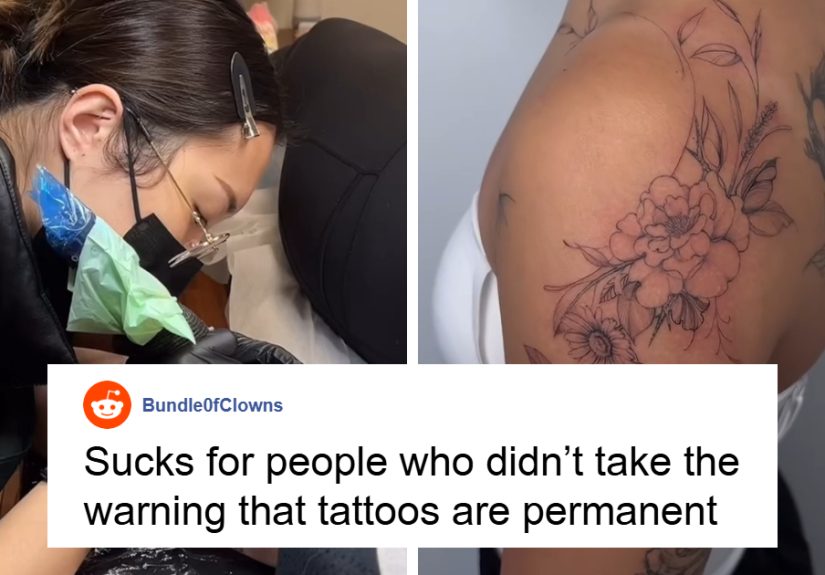
One of the biggest trends in recent years is the rise of ultra-delicate, fine-line tattoos. Think:
- Tiny quotes in elegant script.
- Micro florals that fit on the side of a finger.
- Minimalist line drawings of faces, hands, or animals.
These pieces appeal to first-timers who want “something small” and to seasoned collectors who are running out of real estate but not out of ideas. They’re also easier to hide, which matters if you’re navigating conservative workplaces or family settings.
2. Nostalgia Ink: Y2K And “Tramp Stamp” Revivals
Because the universe has a sense of humor, the lower-back tattoo once mocked as the “tramp stamp” is making a comeback with Gen Z and younger millennials.
But this time, the vibe is different. Instead of harsh 2000s tribal designs, people are choosing:
- Soft, ornamental motifs.
- Cute cottagecore-inspired florals.
- Symmetrical designs that echo modern jewelry and lingerie aesthetics.
For a lot of younger clients, reclaiming this placement is a way to flip the script on old sexist jokes. It’s not about shame it’s about empowerment, nostalgia, and a little bit of playful chaos.
3. Charm Tattoos And Sticker-Book Bodies
Another huge trend is the “charm bracelet, but make it skin” approach: lots of small, seemingly random tattoos scattered like stickers.
Think:
- A tiny frog here, a sparkly star there.
- Mini icons representing hobbies, pets, inside jokes, or hyper-specific interests.
- Quirky pieces inspired by memes, comfort foods, or even oddly specific internet trends.
Instead of one large cohesive design, the body becomes a living collage of little stories. It’s chaotic in the best way and very compatible with a world where identity is built from many overlapping layers.
4. Hyper-Personal And Under-The-Radar Placements
More people are choosing placements that are personal, private, or easy to show only when they want to. Popular spots include:
- Behind the ear.
- Side of the ribs.
- Inner biceps or upper thighs.
- Along the spine or nape of the neck.
These tattoos are less about broadcasting to the world and more about carrying something meaningful with you like a secret you can decide to share.
Expert Tips Before You Get Inked In A “Post-Peak” Tattoo World
If you’re considering a tattoo right now, congratulations: you’re entering at a time when there’s more information, more diverse styles, and better safety standards than ever. Here’s what artists and experts wish every client knew.
1. Plan For Future You, Not Just Current You
It’s tempting to chase the trend of the moment, but ask yourself: will this design still make sense when your music taste, hairstyle, or friend group changes?
Helpful questions:
- If I saw this on a stranger in 15 years, would I think it’s cool, neutral, or cringe?
- Does this design tie into something bigger in my life (values, passions, milestones)?
- Would I be okay explaining it to someone important to me, like a future kid or partner?
2. Be Strategic About Placement
Placement is where style meets practicality. Consider:
- Work & career: Some industries still prefer visible tattoos to be minimal (or nonexistent). If you’re not sure where you’ll end up, opt for an easily covered area.
- Skin changes: Spots like elbows, fingers, and feet can blur faster or fade with friction and sun exposure.
- Pain level: Ribs, spine, and feet can be spicy. If you’re nervous, start somewhere more forgiving like the outer arm or thigh.
3. Research Your Artist Like You’re Stalking A Crush
In 2025, there’s no excuse for going in blind. Tattoo artists usually share portfolios on Instagram, websites, or studio pages. Look for:
- Consistent linework and shading.
- Clean, healed photos not just fresh, slightly bloody shots.
- Experience in the style you want (fine-line, realism, traditional, etc.).
- Clear hygiene practices and a professional studio environment.
If their portfolio screams “bold color traditional” and you want hyper-delicate micro-realism, they might be a great artist… just not for that specific tattoo.
4. Don’t Bargain-Hunt With Your Skin
Sales are great for sneakers, not for needles. A suspiciously cheap tattoo can cost you far more later in cover-ups or removal sessions.
Remember, you’re paying for:
- Artistic skill.
- Sterile equipment and safe ink.
- Time, customization, and experience.
If your budget is tight, start with something small and meaningful from a reputable artist. You can always build on it later.
5. Think Ahead About Removal And Cover-Ups
Even if you’re 99% sure you’ll never regret your tattoo, it helps to know how removal or cover-ups work:
- Black and darker inks are often easier to remove than some bright colors.
- Cover-ups usually need to be larger and darker than the original tattoo.
- Laser removal takes multiple sessions, can be uncomfortable, and isn’t cheap.
Knowing this doesn’t mean you shouldn’t get tattooed it just nudges you toward smarter, more sustainable choices now.
So… Are Tattoos On The Verge Of Extinction?
Not even close. What we’re seeing is less a mass exodus from ink and more a recalibration:
- Fewer impulsive trends, more intentional designs.
- Less pressure to go big immediately, more love for small and symbolic.
- A growing willingness to revise, remove, or rework old tattoos.
If anything, tattoos are becoming more mature. They’re still fun, expressive, and sometimes chaotic but they’re also informed by better data, better technology, and better conversations about consent, culture, and personal identity.
We may have passed “peak tattoo craze,” but that’s not extinction. That’s evolution and honestly, your future self (and your future dermatologist) will probably be grateful.
Of Real-World Tattoo Experience In 2025
To really understand where tattoo culture is heading, it helps to step inside the studio not the glossy, filtered version, but the everyday reality artists and clients are living right now.
Imagine a typical Saturday at a busy shop.
In one chair, there’s a woman in her late 40s getting her very first tattoo: a small, graceful line drawing of a mountain range on her forearm. She tells the artist she waited decades because she was worried what people would think. Now her kids are grown, her job is secure, and she’s finally ready to wear something that reminds her she survived some rough terrain, literal and emotional.
She’s nervous, but she’s also done her homework. She’s looked up aftercare instructions ahead of time, checked reviews, and emailed the studio her questions. This is not a spontaneous walk-in moment it’s a planned, meaningful milestone.
In the next room, a college student is getting a tiny symbol behind her ear. She loves tattoos, but she’s consciously choosing a placement that her future employer, or her very traditional grandparents, won’t see unless she wants them to. She shows the artist a Pinterest board, then listens carefully as they explain what will actually hold up well on her skin over time.
Later that afternoon, a heavily tattooed client comes in someone who started getting large pieces in their early 20s and now, ten years later, wants to adjust the story. They’re not rejecting tattoos; they’re editing. One old piece is getting lasered light enough to be covered. Another is being reworked into something more detailed and more “them” now.
The artist isn’t offended. This is normal. They talk about how their clients are more open than ever about mental health, identity shifts, and life changes. Tattoos have become visual checkpoints: “who I was when I got this,” “who I was when I changed it,” and “who I am now, standing in the middle of all of it.”
Around closing time, a group of friends walk in with an appointment for matching micro tattoos. Not the dramatic friendship tattoos of the past no giant script across their ribs but tiny, almost secret charms on their ankles. One chooses a little coffee cup, one picks a sun, another chooses a book. They joke about how “barely visible tattoos” are their compromise between wanting ink and knowing that, someday, they might want to rearrange their life without explaining a giant design to every new person they meet.
Throughout the day, the artist notices a pattern: people still want tattoos, but they also want flexibility. They like the idea that one day, if they change their mind, there are options cover-ups, partial removal, complete removal. Knowing that doesn’t reduce the magic of getting tattooed; it takes away some of the fear.
In the waiting area, a young person scrolls through social media and shows their friend a video: a creator explaining why they’re delaying their first tattoo until their late 20s. In the comments, you see every perspective: “I got mine at 18 and regret it,” “I started at 35 and love every one,” “I’m 22 and I’m saving for a big back piece when I’m ready.”
This is the real tattoo landscape in 2025 not a mass abandonment of ink, but an ongoing conversation about permanence, identity, and choice. People are more thoughtful, more informed, and sometimes more cautious. But the core impulse is the same as it’s always been: to mark a moment, a feeling, or a truth on skin, and carry it forward.
If tattoos were truly going extinct, studios would be empty, machines silent, and the only ink we’d see would be in old photos. Instead, machines are buzzing, artists’ books are booked out, and clients of every age are walking out the door with bandaged skin and soft smiles slightly sore, slightly exhilarated, and very much proof that the tattoo story is still being written.






 Close
Close