
Table of Contents >> Show >> Hide
- What Is Badami Murgh Korma?
- Why You’ll Love This Indian Chicken Korma Recipe
- Ingredients for Badami Murgh Korma
- Best Chicken to Use for Korma
- How to Make Almond Paste for Korma
- Step-by-Step Badami Murgh Korma Recipe
- Recipe Card: Badami Murgh Korma
- Tips for the Best Chicken Korma
- Common Mistakes to Avoid
- What to Serve with Badami Chicken Korma
- Storage and Reheating
- Variations and Substitutions
- Nutrition Notes
- Frequently Asked Questions
- Personal Kitchen Experience: What Makes This Korma Memorable
- Conclusion
Badami Murgh Korma, also known as Indian Chicken Korma with almonds, is the kind of dish that walks into the room wearing silk slippers and smelling faintly of cardamom. It is rich without being loud, creamy without being heavy, and warmly spiced without setting off the smoke alarm in your taste buds. In a world full of “quick chicken dinners,” this one says, “Yes, but what if dinner had manners?”
The word badami refers to almonds, while murgh means chicken. Put them together with korma, a gently braised curry-style preparation, and you get tender chicken simmered in a luxurious sauce made with onions, yogurt, ginger, garlic, whole spices, ground spices, and a smooth almond paste. The result is a mild, fragrant Indian chicken korma recipe that feels special enough for guests but manageable enough for a weekend dinner.
This guide covers everything: ingredients, cooking method, flavor-building tips, substitutions, serving ideas, storage advice, common mistakes, and a generous experience section at the end for anyone who likes recipes with a little kitchen storytelling. Spoiler alert: almonds are doing more work here than the garnish department at a fancy restaurant.
What Is Badami Murgh Korma?
Badami Murgh Korma is a creamy Indian chicken curry made with almonds, yogurt, onions, and aromatic spices. Unlike tomato-heavy curries, this dish gets its body from browned onions, nuts, and dairy. The flavor is mellow, slightly sweet from the onions, gently tangy from yogurt, and beautifully perfumed by spices such as cardamom, cinnamon, cloves, cumin, coriander, and garam masala.
Traditional korma-style dishes are often associated with North Indian and Mughlai cooking, where richness, fragrance, and slow cooking are part of the charm. The goal is not to blast the palate with heat. Instead, korma layers flavor patiently, like a polite dinner guest who somehow becomes the most interesting person at the table.
Why You’ll Love This Indian Chicken Korma Recipe
This Badami Murgh Korma recipe is ideal for home cooks who want a restaurant-style dish without needing a culinary degree, a copper pot, or a mysterious spice drawer labeled “Do Not Touch.” It uses accessible ingredients and a practical method while still respecting the classic character of chicken korma.
It Is Creamy Without Being Too Heavy
The almond paste thickens the sauce naturally, while yogurt adds creaminess and tang. A small splash of cream is optional, not mandatory. That means the finished curry tastes luxurious but does not feel like you swallowed a velvet curtain.
It Is Mild Yet Deeply Flavorful
Badami chicken korma is not meant to be aggressively spicy. It is warm, aromatic, and balanced. You can adjust the chili powder depending on your preference, but the real magic comes from toasted spices, golden onions, and slow simmering.
It Works for Family Dinners and Special Occasions
Serve it with basmati rice on a Tuesday, and suddenly Tuesday has ambition. Serve it with naan, raita, and a cucumber salad for guests, and it becomes a full Indian-inspired feast.
Ingredients for Badami Murgh Korma
The ingredients below make about 4 to 6 servings.
For the Chicken Marinade
- 2 pounds boneless, skinless chicken thighs, cut into medium pieces
- 1 cup plain full-fat yogurt
- 1 teaspoon ginger paste
- 1 teaspoon garlic paste
- 1/2 teaspoon turmeric powder
- 1 teaspoon ground coriander
- 1/2 teaspoon ground cumin
- 1 teaspoon kosher salt
- 1 tablespoon lemon juice
For the Almond Korma Sauce
- 1/2 cup blanched almonds
- 1/4 cup warm water, plus more as needed
- 3 tablespoons ghee or neutral oil
- 2 large yellow onions, thinly sliced
- 1 tablespoon ginger paste
- 1 tablespoon garlic paste
- 1 cinnamon stick
- 4 green cardamom pods, lightly crushed
- 4 cloves
- 1 bay leaf
- 1 teaspoon ground coriander
- 1/2 teaspoon ground cumin
- 1/2 teaspoon mild red chili powder, or to taste
- 1/2 teaspoon garam masala
- 1/2 cup water or chicken stock
- 2 tablespoons heavy cream, optional
- Salt, to taste
- Fresh cilantro, for garnish
- Toasted sliced almonds, for garnish
Best Chicken to Use for Korma
Chicken thighs are the best choice for Badami Murgh Korma because they stay juicy during simmering. Boneless thighs cook faster and are easier to serve, while bone-in chicken adds extra depth to the sauce. Chicken breast can work, but it needs gentler cooking because it dries out more easily. If chicken breast had a motto, it would be: “Please don’t forget me on the stove.”
For food safety, cook chicken until it reaches an internal temperature of 165°F. A kitchen thermometer is the easiest way to confirm doneness without guessing, poking, or holding a dramatic debate with your cutting board.
How to Make Almond Paste for Korma
Almond paste gives Badami Murgh Korma its signature body and nutty smoothness. To make it, soak blanched almonds in hot water for 15 to 20 minutes, then blend them with warm water until smooth. If you only have whole almonds with skins, soak them first, slip off the skins, and blend. The sauce will look lighter and smoother with blanched almonds.
You may also use natural almond butter in a pinch. Choose unsweetened almond butter without added flavors. Maple almond butter may be lovely on toast, but in chicken korma it behaves like someone brought pancakes to a wedding.
Step-by-Step Badami Murgh Korma Recipe
Step 1: Marinate the Chicken
In a large bowl, combine yogurt, ginger paste, garlic paste, turmeric, coriander, cumin, salt, and lemon juice. Add the chicken pieces and mix well until every piece is coated. Cover and refrigerate for at least 30 minutes. For deeper flavor, marinate for 2 to 4 hours.
The yogurt helps tenderize the chicken while carrying spices into the meat. Do not use sweetened yogurt. Vanilla chicken korma is not a fusion dish the world requested.
Step 2: Prepare the Almond Paste
Soak the almonds in hot water for 15 to 20 minutes. Drain, then blend with 1/4 cup warm water until smooth. Add another tablespoon of water if needed. The texture should be thick but pourable, similar to a creamy sauce.
Step 3: Brown the Onions
Heat ghee or oil in a heavy-bottomed pan over medium heat. Add the sliced onions and cook slowly until golden brown, stirring often. This can take 12 to 18 minutes. Do not rush this step. Golden onions add sweetness, color, and depth to the korma sauce.
If the onions start browning too quickly, reduce the heat. You want caramelized, not scorched. Burnt onions can turn the sauce bitter, and no amount of cilantro garnish can undo that little tragedy.
Step 4: Add Whole Spices
Add the cinnamon stick, cardamom pods, cloves, and bay leaf to the pan. Stir for 30 to 45 seconds until fragrant. Whole spices bloom in hot fat, releasing aroma into the base of the sauce.
Step 5: Add Ginger, Garlic, and Ground Spices
Stir in the ginger paste and garlic paste. Cook for about 1 minute, just until the raw smell disappears. Add ground coriander, cumin, chili powder, and a pinch of salt. Stir well so the spices coat the onion mixture.
Step 6: Cook the Marinated Chicken
Add the marinated chicken to the pan, along with all the yogurt marinade. Stir continuously for the first few minutes to help prevent the yogurt from splitting. Cook until the chicken begins to firm up and the sauce thickens slightly.
Keep the heat at medium or medium-low. High heat can make yogurt separate. Korma likes patience. Think of it as a curry that prefers jazz to heavy metal.
Step 7: Simmer with Almond Paste
Add the almond paste and 1/2 cup water or chicken stock. Stir until the sauce is smooth. Cover and simmer gently for 20 to 25 minutes, stirring occasionally, until the chicken is cooked through and tender.
If the sauce becomes too thick, add a splash of water. If it seems too thin, simmer uncovered for a few extra minutes. The finished sauce should coat the chicken generously without becoming gluey.
Step 8: Finish the Korma
Stir in garam masala and, if using, a small splash of heavy cream. Taste and adjust salt. Remove the cinnamon stick, bay leaf, and any large whole spices if desired. Garnish with fresh cilantro and toasted sliced almonds.
Recipe Card: Badami Murgh Korma
Prep Time
20 minutes, plus 30 minutes marinating time
Cook Time
40 minutes
Total Time
About 1 hour 30 minutes
Servings
4 to 6 servings
Flavor Profile
Creamy, nutty, mild, aromatic, gently spiced, and lightly tangy.
Tips for the Best Chicken Korma
Use Full-Fat Yogurt
Full-fat plain yogurt gives the sauce better texture and reduces the chance of curdling. Greek yogurt can work, but thin it with a little water before adding it to the marinade.
Cook the Onions Slowly
Onions are the backbone of korma sauce. Golden onions create natural sweetness and richness. Pale onions produce a flat sauce, while burnt onions make the dish taste harsh.
Do Not Boil the Yogurt Sauce
Once yogurt enters the pan, control the heat. A gentle simmer is your friend. A rolling boil is the villain in this creamy curry story.
Toast the Almond Garnish
Toasted sliced almonds add crunch and a deeper nutty aroma. Sprinkle them over the finished korma right before serving so they stay crisp.
Common Mistakes to Avoid
Using Too Much Water
Korma should be saucy, not soupy. Add liquid gradually. You can always thin the sauce later, but rescuing watery korma requires extra simmering and a little emotional recovery.
Skipping the Marinade
A short marinade still makes a difference. It seasons the chicken and helps the texture stay tender. Even 30 minutes is better than nothing.
Adding Cream Too Early
If you choose to use cream, add it at the end. Cream is there to polish the sauce, not to survive a long battlefield simmer.
Overloading the Spices
Badami Murgh Korma is about elegance. Too much garam masala or chili powder can overpower the almond-yogurt base. Let the spices support the dish rather than shout over it.
What to Serve with Badami Chicken Korma
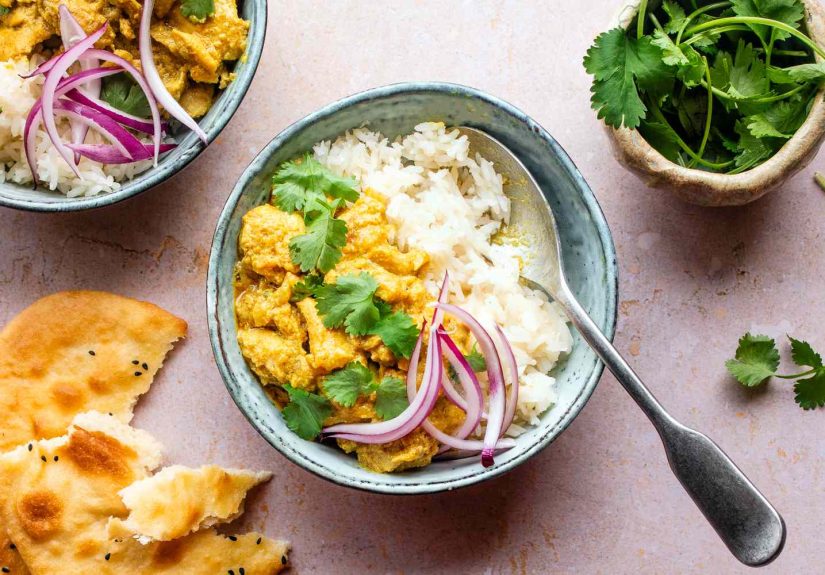
Badami Murgh Korma pairs beautifully with basmati rice, jeera rice, naan, roti, paratha, or saffron rice. For freshness, add cucumber raita, sliced red onions, lemon wedges, or a simple salad with tomatoes and herbs.
If you want a fuller Indian-inspired dinner, serve it with dal, roasted vegetables, papad, and mango chutney. The mild richness of chicken korma also works well beside something bright and acidic, such as pickled onions or a squeeze of lime.
Storage and Reheating
Store leftover chicken korma in an airtight container in the refrigerator for up to 3 days. Reheat gently on the stovetop over low heat, adding a splash of water if the sauce has thickened. Avoid boiling the sauce during reheating because the yogurt and almond base can separate.
You can freeze chicken korma, although the sauce may look slightly grainy after thawing. Stir it well while reheating, and add a small spoonful of yogurt or cream at the end if needed to refresh the texture.
Variations and Substitutions
Dairy-Free Badami Murgh Korma
Use dairy-free plain yogurt and replace cream with coconut milk or cashew cream. Choose an unsweetened product so the sauce stays savory.
Cashew Chicken Korma
Replace almonds with cashews for a softer, sweeter sauce. Cashews blend very smoothly and create an especially creamy texture.
Spicier Chicken Korma
Add extra chili powder, green chiles, or a pinch of cayenne. Keep the heat balanced so the almond flavor still comes through.
Restaurant-Style Finish
Add a few strands of saffron soaked in warm milk, a splash of cream, and extra toasted almonds before serving. This gives the dish a richer aroma and a more festive appearance.
Nutrition Notes
Badami Murgh Korma is rich in protein from chicken and contains healthy fats from almonds. It is naturally gluten-free when served with rice instead of bread. The calorie level depends on how much ghee, cream, and nuts are used. For a lighter version, reduce the ghee slightly, skip the cream, and use a moderate amount of almond paste.
That said, this is not meant to be a sad “diet curry.” It is a comfort dish. Enjoy it with reasonable portions, plenty of herbs, and a side of vegetables if you want balance without sacrificing flavor.
Frequently Asked Questions
Is Badami Murgh Korma spicy?
No, it is usually mild to medium. The dish focuses more on aroma, creaminess, and warmth than intense heat. You can increase the chili powder if you prefer a spicier curry.
Can I make chicken korma ahead of time?
Yes. In fact, the flavor often improves after a few hours as the spices settle into the sauce. Reheat gently and add a splash of water if needed.
Can I use almond flour instead of whole almonds?
You can use almond flour, but whole blanched almonds usually give a fresher flavor and better texture. If using almond flour, mix it with warm water to form a paste before adding it to the sauce.
Why did my yogurt split?
Yogurt can split when exposed to high heat. Use full-fat yogurt, stir continuously when adding it, and keep the sauce at a gentle simmer.
Can I use leftover cooked chicken?
Yes, but add it later in the cooking process so it does not become dry. Simmer the sauce first, then add cooked chicken and warm it through.
Personal Kitchen Experience: What Makes This Korma Memorable
The first thing you notice when making Badami Murgh Korma is that the kitchen starts to smell like you have made excellent life choices. Cinnamon warms the air, cardamom adds its floral little wink, and onions slowly turning golden make everything feel intentional. This is not one of those recipes where you toss everything into a pan and hope dinner forgives you. Korma rewards attention, but it does not demand perfection.
The most important lesson from cooking this dish is patience with the onions. Many home cooks rush this part because the chicken is waiting, the rice is steaming, and someone nearby may already be asking, “Is it ready?” The answer is no. The onions need time. When they turn golden, soft, and sweet, they become the quiet foundation of the sauce. If you stop too early, the korma tastes thin. If you go too far, bitterness creeps in. The sweet spot is deep golden brown, not mahogany, not charcoal, not “I was checking my phone.”
The second lesson is that yogurt needs kindness. Add it to aggressive heat and it may separate, leaving the sauce looking less royal and more confused. Stirring the marinated chicken steadily when it first hits the pan helps the yogurt settle into the sauce. Lower heat is not laziness here; it is technique. This is the culinary equivalent of speaking softly to a nervous cat.
Another experience worth mentioning is how almonds change the personality of the dish. Without almonds, chicken korma can still be good. With almonds, it gains body, softness, and a subtle sweetness that lingers after each bite. The almond paste also helps the sauce cling to the chicken instead of sliding sadly around the plate. Toasted almond slices on top add contrast, proving once again that texture is not decoration; it is part of the flavor.
Badami Murgh Korma is also forgiving in practical ways. If the sauce is too thick, add a splash of water or stock. If it tastes flat, add salt gradually and finish with a tiny squeeze of lemon. If it feels too sharp from yogurt, simmer it gently for a few more minutes and let the almonds round it out. If it is too mild, add a pinch of chili powder or freshly cracked black pepper. The recipe gives you room to adjust, which is exactly what a great home-cooking dish should do.
Serving this korma is half the joy. With basmati rice, it becomes cozy and complete. With naan, it becomes interactive because everyone suddenly becomes very serious about scooping up every bit of sauce. Add cucumber raita and the meal feels balanced. Add saffron rice and toasted almonds, and suddenly your dining table starts behaving like it has a reservation list.
The best thing about this Indian chicken korma recipe is that it feels generous. It is rich but not flashy, special but not fussy, and impressive without requiring restaurant equipment. It teaches you how layered cooking works: marinate, brown, bloom, simmer, finish. Each step contributes something. Skip one and the dish still functions, but follow them and the korma becomes memorable.
For home cooks trying Badami Murgh Korma for the first time, the advice is simple: do not rush the onions, do not boil the yogurt, and do not forget the almonds. Taste as you go. Trust your nose. Keep the heat gentle. And when the sauce turns creamy, fragrant, and golden, take a small spoonful before serving. Call it quality control. The chef deserves benefits.
Conclusion
Badami Murgh Korma is a beautiful example of how simple ingredients can become something deeply flavorful when treated with care. Chicken, yogurt, almonds, onions, and spices come together in a creamy Indian chicken korma that is mild, aromatic, and satisfying. It is perfect for family meals, weekend cooking, festive dinners, or any evening when plain chicken sounds like it needs a promotion.
This recipe balances tradition and practicality. It keeps the essential character of almond chicken korma while making the steps clear for a modern home kitchen. Serve it with rice or naan, garnish it generously, and enjoy a dish that proves comfort food can absolutely have a royal side.







 Close
Close