
Table of Contents >> Show >> Hide
- What Makes a “Greatest Sooner of All Time”?
- Heisman Heroes and Offensive Icons
- Billy Vessels: The Original Sooner Superstar
- Steve Owens: Workhorse in Crimson
- Billy Sims: Electric Tailback and Highlight Machine
- Jason White: The Comeback King
- Sam Bradford: Surgical Precision
- Baker Mayfield: Walk-On to OU Icon
- Kyler Murray: One Year, Endless Impact
- Adrian Peterson: The Freshman Freight Train
- Keith Jackson: The Prototype Tight End
- Defensive Destroyers and Trenches Legends
- How These Legends Shaped Oklahoma Football
- Living Legacy: New Names on the Horizon
- Experiences: What It Feels Like to Watch the Greatest Sooners
- Conclusion: Greatness in Crimson and Cream
Trying to rank the best Oklahoma players of all time is a little like trying to pick the best topping on pizza.
You can pretend there’s one right answer, but really, you’re about to start an argument at the table.
Still, with seven Heisman winners, multiple national titles, and a parade of All-Americans in crimson and cream,
some Sooners clearly stand above the rest.
This guide breaks down the greatest Oklahoma Sooners of all time, focusing mainly on college careers, with a nod
to what they did in the NFL. We’ll look at Heisman heroes, defensive monsters in the trenches, and beloved program
icons who changed the culture in Normanand we’ll wrap up with some real-world fan experiences that show what these
legends truly mean.
What Makes a “Greatest Sooner of All Time”?
Before we start tossing around names like confetti in the student section, it helps to set some basic criteria.
“Greatest” isn’t just about who ran the fastest 40-yard dash or who had the coolest hair (though Brian Bosworth
might win that category forever).
- College production: Stats, awards, and how much they actually dominated Saturdays in Norman.
- Team success: National titles, conference championships, and big-game performances.
- Hardware: Heisman Trophies, major national awards, All-American and All-Big 8/Big 12 honors.
- Historical impact: How they shaped the identity of Oklahoma football and influenced future teams.
- Longevity and consistency: One legendary season is great; multiple years of dominance hits different.
- Legacy with fans: The “goosebumps factor”are they still talked about decades later?
With that in mind, let’s walk through the Sooner legends who keep showing up on “all-time greats” lists and barstool debates.
Heisman Heroes and Offensive Icons
Oklahoma is one of college football’s true Heisman factories, with seven official winners at quarterback and running back.
These are the offensive stars who turned Norman into a highlight reel and trophy showroom.
Billy Vessels: The Original Sooner Superstar
In 1952, halfback Billy Vessels became Oklahoma’s first Heisman winner and set the tone for everything that followed.
Playing in Bud Wilkinson’s powerhouse era, Vessels was a do-it-all backrunning, catching, and returningon a team
that turned winning into routine. He helped cement OU as a national brand long before social media and recruiting hype videos.
Steve Owens: Workhorse in Crimson
Steve Owens, the 1969 Heisman winner, wasn’t flashy; he was relentless. A classic power back, Owens carried the ball
like it was his full-time joband frankly, it was. He stacked up yardage and touchdowns behind a physical offensive line
and became the face of toughness for Oklahoma football. When fans talk about “old-school” Sooners, Owens is exactly what
they mean.
Billy Sims: Electric Tailback and Highlight Machine
Billy Sims, who won the Heisman in 1978, brought speed, balance, and ridiculous agility to Barry Switzer’s wishbone offense.
Sims was the kind of back who could make a defender miss in a phone booth and turn a simple option pitch into a 60-yard sprint
down the sideline. His combination of production and style made him one of the most beloved Sooners everand he’s still a
game-day presence in Norman.
Jason White: The Comeback King
Jason White’s story is part Heisman, part medical miracle. After battling through multiple knee injuries, he came back to win
the 2003 Heisman Trophy while leading Oklahoma’s high-flying passing attack. White wasn’t the most mobile quarterback,
but his accuracy, decision-making, and resilience made him a Sooner legend and a symbol of perseverance.
Sam Bradford: Surgical Precision
Sam Bradford took over and turned the OU offense into something that looked suspiciously like a video game set on “easy.”
In 2008, he won the Heisman by shredding defenses with ridiculous efficiency and piling up passing yards and touchdowns.
Bradford ran a tempo-based, high-powered attack that helped define modern Oklahoma football and showed recruits that Norman
was a place where quarterbacks could thrive.
Baker Mayfield: Walk-On to OU Icon
Baker Mayfield’s journey from walk-on to Heisman winner in 2017 is the kind of storyline Hollywood screenwriters would reject
as unrealistic. Mayfield brought swagger, fire, and elite efficiency to Lincoln Riley’s offense. He didn’t just put up huge
numbers; he changed the culture with his competitive edge, leadership, and undeniable charisma. Love him or hate him,
he’s one of the most influential Sooners ever.
Kyler Murray: One Year, Endless Impact
Kyler Murray followed Mayfield and somehow managed to up the “wow” factor. In 2018, Murray won the Heisman with a combination
of pinpoint passing and explosive running that made defenses look like they were chasing a blur. His single season as the starter
was enough to solidify him among the greatest Oklahoma players everand pushed OU into an elite tier of Heisman-producing programs.
Adrian Peterson: The Freshman Freight Train
Adrian Peterson technically never won the Heisman, but he was a runner-up and might be the most physically dominant running back
to ever wear crimson and cream. As a true freshman in 2004, Peterson set the NCAA freshman rushing record with nearly 2,000 yards,
posting nine straight 100-yard games to start his career and carrying Oklahoma to the national title game. He ran with a blend of
power, balance, and speed that made him look like a cheat code. Even without a Heisman, he’s on almost every “top Sooner” list.
Keith Jackson: The Prototype Tight End
Long before modern spread offenses turned tight ends into mismatches, Keith Jackson was already terrorizing defenses in the 1980s.
Lining up in Barry Switzer’s wishbone attack, he combined size, speed, and soft hands, stretching the field and opening up the run game.
Jackson’s presence forced defenses to pick their poisonand he helped expand what Oklahoma’s offense could be.
Defensive Destroyers and Trenches Legends
For all the fireworks on offense, Oklahoma’s dominance has always depended on nasty, physical, intelligent defense.
Some of the greatest Sooners never touched the ball; they just made sure the other team regretted it.
Lee Roy Selmon: The Gold Standard
If you ask many old-school fans who the greatest Sooner ever is, you’ll hear one name over and over: Lee Roy Selmon.
A dominant defensive lineman in the mid-1970s, Selmon anchored defenses that helped Oklahoma win back-to-back national
championships. He won both the Lombardi and Outland Trophies as the nation’s top lineman and is widely regarded as one of
the best defensive players in college football history. Soft-spoken off the field and terrifying on it, Selmon is the blueprint
for what a Sooner legend looks like.
Brian Bosworth: The Boz and the Butkus
Brian Bosworth was equal parts elite linebacker and pop-culture phenomenon. Behind the wild haircut and outspoken personality
was a generational talent: the only two-time winner of the Butkus Award as the nation’s top linebacker. He led suffocating
Oklahoma defenses in the 1980s and helped the Sooners capture a national championship. Whatever you think about “The Boz,”
his impact on Oklahoma football and college football as a whole is impossible to ignore.
Roy Williams: The Superman Leap
Even if you don’t remember his stats, you remember the play. In 2001, safety Roy Williams launched himself over a Texas blocker,
drilled quarterback Chris Simms, and forced the game-clinching interception in the Red River Rivalrya moment that lives forever
as “The Superman Play.” Beyond that single iconic moment, Williams was a devastating all-around safety: a punishing hitter,
a ball hawk, and a tone-setter for early-2000s OU defenses.
Tommy Harris and Gerald McCoy: Interior Wrecking Balls
Dominant defensive tackles are a big part of why Oklahoma has been so consistently tough in the trenches. Tommy Harris was an
unblockable force in the early 2000s, winning the Lombardi Award and helping Oklahoma field some of the best defenses in the
country. A few years later, Gerald McCoy took up the mantle as a disruptive interior lineman who could collapse pockets,
swallow running backs, and command double teams on every snap. Together, they represent the Sooner standard for defensive line play.
Rocky Calmus and the Linebacker Legacy
Oklahoma has produced a long line of standout linebackers, and Rocky Calmus is right in the middle of that tradition.
A tackling machine and emotional leader of the 2000 national championship team, Calmus embodied the gritty,
sideline-to-sideline style that defined Bob Stoops’ early defenses. He may not be as flashy as Bosworth, but in terms
of impact and leadership, he’s firmly in the conversation.
How These Legends Shaped Oklahoma Football
So what happens when you stack all these namesVessels, Sims, Selmon, Bosworth, Mayfield, Murray, Petersonon one program’s history?
First, you get sustained dominance. Oklahoma’s national titles and conference championships are no accident;
they’re the result of decade after decade of elite talent. Every era has its icons: the Wilkinson years, the Switzer wishbone
dynasty, the Stoops resurgence, and the quarterback-friendly systems of the 2000s and 2010s.
Second, you get a clear identity. OU is known for explosive offense, powerful running backs, sharp quarterbacks,
and aggressive, athletic defenses. The great players didn’t just fit the systemthey helped define it.
Third, you have a recruiting magnet. When high school stars see the Heisman tradition and the track record of
NFL success, they understand that Norman is a launchpad. The success of players like Adrian Peterson, Kyler Murray,
and Baker Mayfield continues to pull in the next wave of talent.
Living Legacy: New Names on the Horizon
One of the best things about a program like Oklahoma is that the story never really stops. Every season, a new quarterback,
running back, receiver, or defensive standout starts getting whispers of, “Hey, this guy reminds me of…” followed by one of
the legends above.
The move into new conference landscapes and modern offensive systems means Sooners football will keep evolving,
but the measuring stick stays the same: can you dominate, can you win, and will fans still talk about you 20 years from now?
That’s the bar set by the all-time greats.
Experiences: What It Feels Like to Watch the Greatest Sooners
Stats and awards are nice, but being a fan is about moments. If you’ve ever been in Norman on a fall Saturday,
you know that the greatest Sooners live in specific memories that replay in your head like your own personal highlight reel.
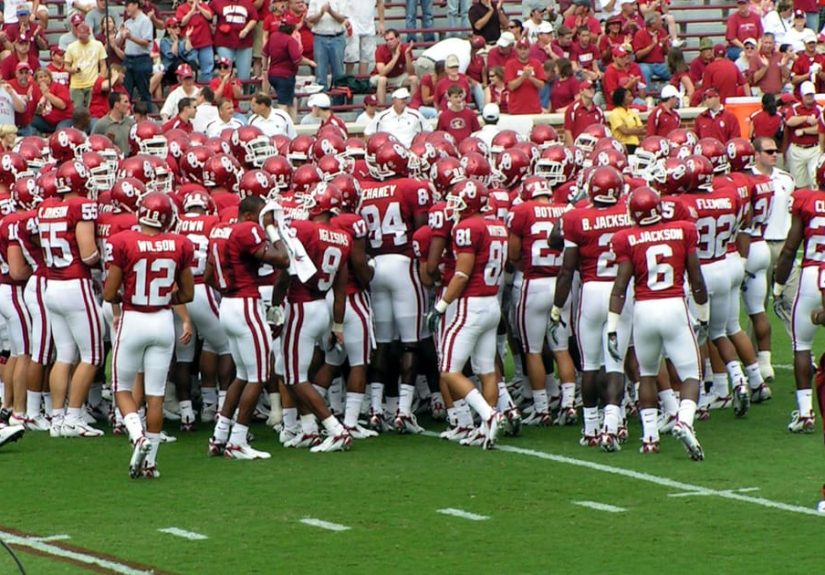
Picture this: it’s a crisp October afternoon, the stands are a sea of crimson, and “Boomer Sooner” has already been played
so many times you’ve stopped counting. You’re packed shoulder to shoulder in Gaylord Family–Oklahoma Memorial Stadium,
watching the tunnel as the team charges onto the field. Somewhere out there, a future legend is about to make a play
you’ll be talking about for the next decade.
Older fans tell stories about Lee Roy Selmon wrecking entire offensive lines, about Billy Sims exploding through the hole,
or about Adrian Peterson lowering his shoulders and turning would-be tacklers into background scenery. If you listen closely,
it almost sounds like folkloreexcept there’s film, trophies, and stat sheets to back it up.
In the early 2000s, you might remember the particular tension of a big defensive series. The offense had just scored,
the crowd was roaring, and then here came Roy Williams and the rest of the defense, ready to put the game away with one
violent hit or one perfectly timed blitz. When “The Superman Play” happened in 2001, it wasn’t just a great moment for OU;
it became a kind of shared memory for an entire generation of fans. Ask any Sooner supporter where they were when it happened,
and you’ll probably get a detailed answerand maybe goosebumps.
More recently, fans have their own mental highlight reels of Baker Mayfield’s swagger, planting flags (literally and figuratively),
and Kyler Murray turning broken plays into long touchdowns. Watching those offenses at full speed felt less like traditional
college football and more like someone had merged a video game with a track meet.
The experience goes beyond what happens between the lines. It’s stopping at the same tailgate you’ve visited for years,
sharing predictions about whether the new quarterback could be “the next Bradford” or whether a freshman running back might
be “the next AD.” It’s grandparents telling grandkids about Billy Vessels and Steve Owens while the kids are arguing about
which modern star belongs higher on the all-time list.
Even on TV, the Sooners’ greats create moments that feel bigger than the screen. Maybe you remember being at home,
volume cranked, watching a key Bedlam game or Red River showdown. One big play lateran Adrian Peterson run,
a Roy Williams hit, a Baker Mayfield bomband suddenly you’re pacing the living room, yelling at nobody in particular,
and texting every OU fan you know.
That’s the real power of the greatest Oklahoma players: they don’t just fill record books; they fill personal timelines.
Birthdays, reunions, college years, family gatheringsthey’re all tied to certain runs, catches, hits, and trophies.
When you argue about who the “GOAT Sooner” is, you’re really arguing about which memories mean the most to you.
And somewhere in the next recruiting class is a kid who has no idea that, someday, people will be telling stories about him
the way fans now talk about Selmon, Sims, Bosworth, Mayfield, or Peterson. That’s the beauty of a program with a tradition
this rich: the list of “greatest Sooners of all time” is always legendaryand never completely finished.
Conclusion: Greatness in Crimson and Cream
From Billy Vessels’ pioneering days to Lee Roy Selmon’s dominance in the trenches, from Adrian Peterson’s unstoppable
freshman campaign to the Heisman quarterbacks of the modern era, the Oklahoma Sooners have built one of the deepest
and most impressive legacies in college football. The greatest Sooners of all time don’t just represent individual talent;
they embody a standard of excellence that stretches across generations.
You can quibble about the exact order of the listand frankly, that’s half the funbut there’s no denying that Oklahoma’s
history is packed with legends. When you put on that crimson jersey, you’re stepping into a long line of greatness.
And if you’re a fan, you’re part of a story that keeps getting new chapters every fall.
meta_title: Best Oklahoma Players: Greatest Sooners Ever
meta_description: Discover the greatest Oklahoma Sooners players of all time, from Heisman winners to defensive legends, plus fan experiences and memories.
sapo: From Billy Vessels and Lee Roy Selmon to Adrian Peterson, Baker Mayfield, and Kyler Murray, Oklahoma football has produced some of the most dominant and beloved players in college football history. This in-depth guide breaks down the greatest Sooners of all time by position, awards, impact, and legacythen dives into what it actually feels like to watch these legends in person, on TV, and across generations of Sooner fandom.
keywords: best Oklahoma players, greatest Sooners of all time, Oklahoma Sooners legends, OU football history, Heisman winners Oklahoma, Lee Roy Selmon, Adrian Peterson Oklahoma





 Close
Close