
Table of Contents >> Show >> Hide
- What “spreading” actually means (and why the wording matters)
- Where thyroid cancer most often spreads (location-by-location signs)
- How spread risk varies by thyroid cancer type
- Signs that can look like spread but are actually local effects
- When to seek urgent care
- How doctors confirm whether thyroid cancer has spread
- FAQ: quick, clear answers
- Do most thyroid cancers spread?
- If cancer is in lymph nodes, does that automatically mean it’s “everywhere”?
- Can you feel metastasis?
- What’s the difference between recurrence and spread?
- What tests are most common after thyroid cancer treatment?
- What questions should I ask my clinician if I’m worried about spread?
- Real-world experiences: what people often notice (and what surprises them)
- Conclusion
Thyroid cancer has a reputation for being “the chill cancer,” and in many cases, that’s earned: a large share of thyroid cancers never spread beyond the thyroid or nearby lymph nodes.
Still, “usually fine” is not the same as “always fine,” and the tricky part is that spread (metastasis) can be quiet at first. Your body doesn’t always send a push notification.
This guide breaks down the most common places thyroid cancer spreads, the symptoms people may notice based on location, and how spread risk differs by thyroid cancer type.
You’ll also get a practical FAQ and a longer, real-world “what it feels like” section at the end. (Quick note: symptoms alone can’t confirm spreadonly medical testing can.)
What “spreading” actually means (and why the wording matters)
When people say “thyroid cancer is spreading,” they usually mean one of three things:
- Local growth: the tumor grows within the thyroid and may press on nearby structures (voice box, windpipe, esophagus).
- Lymph node spread: cancer cells travel to lymph nodes in the neck (very common in some types).
- Distant metastasis: cancer cells travel to organs like the lungs or bones.
These aren’t the same. For example, lymph node spread can sound terrifying (hello, “nodes”), yet many people do very well with treatmentespecially with differentiated thyroid cancers.
On the other hand, rapid local growth that affects breathing or swallowing can be urgent even if distant spread isn’t confirmed.
Where thyroid cancer most often spreads (location-by-location signs)
When thyroid cancer spreads, it most commonly involves the neck lymph nodes andless oftendistant sites like the lungs and bones. The key idea:
symptoms depend on the destination, and sometimes there are no symptoms at all until imaging or bloodwork raises suspicion.
1) Neck lymph nodes (most common “first stop”)
What you might notice:
- A new firm lump on the side of the neck or above the collarbone
- Neck fullness or swelling that doesn’t behave like a normal “sore throat” situation
- Sometimes tenderness, but often no pain
What else could cause it (common imposters):
- Reactive lymph nodes from a cold, dental issue, or skin infection
- Benign cysts
How doctors check it:
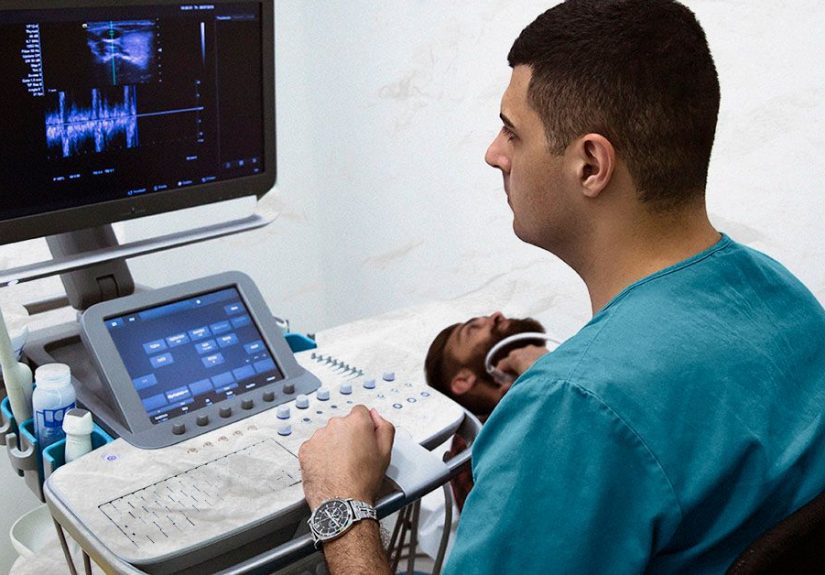
- High-resolution neck ultrasound to map suspicious nodes
- Fine-needle aspiration (FNA) biopsy of a node if needed
2) Lungs
Lung spread can be sneaky. Some people feel nothing; others notice symptoms that look like “a cough that won’t quit.”
Possible signs:
- Persistent cough not explained by allergies or infection
- Shortness of breath, especially new or worsening with activity
- Wheezing or chest tightness (less common)
- Rarely, coughing up blood (urgent evaluation)
How doctors check it:
- Chest imaging (often CT if there’s concern)
- In differentiated thyroid cancer, a radioiodine whole-body scan may detect iodine-avid lung spread after treatment
3) Bones
Bone metastases are less common overall, but when they happen, they can cause very specific, very annoying symptomsyour skeleton is not subtle when it’s unhappy.
Possible signs:
- Deep bone pain (often persistent, may worsen at night)
- Fractures from minor injuries (“I tripped and my bone filed a complaint.”)
- Numbness, weakness, or bowel/bladder changes if there’s spinal involvement (urgent)
How doctors check it:
- Targeted imaging such as MRI (especially spine), CT, or nuclear medicine studies
- Sometimes PET imaging depending on the cancer type and iodine uptake
4) Liver (less common, but on the list)
Possible signs:
- Right-sided abdominal discomfort or fullness
- Unexplained nausea, poor appetite, or weight loss
- Yellowing of skin/eyes (jaundice) or abdominal swelling (urgent evaluation)
How doctors check it:
- Blood tests and imaging such as ultrasound/CT/MRI depending on context
5) Brain or skin (rare, but possible)
These are not common sites, but they matter because symptoms can be urgent.
Possible signs:
- New, persistent headaches; seizures; weakness; vision changes; confusion
- New or changing skin nodules that don’t heal (especially with a known cancer history)
How doctors check it:
- Neurologic evaluation and imaging (often MRI) for brain symptoms
- Skin exam and biopsy if a lesion looks suspicious
How spread risk varies by thyroid cancer type
“Thyroid cancer” is a category, not a personality. Different types spread in different ways.
Here’s the practical breakdown you can use to interpret symptoms and follow-up plans.
Papillary thyroid carcinoma (PTC)
- Most common type.
- Typical spread pattern: often to neck lymph nodes; distant spread is less common.
- What this means for symptoms: a neck lump or enlarged nodes may be more likely than early lung/bone symptoms.
Follicular thyroid carcinoma (FTC)
- Less common than papillary, but still a major differentiated type.
- Typical spread pattern: more likely than papillary to spread through the bloodstream to lungs and bones.
- What this means for symptoms: new bone pain or respiratory symptoms may carry more weight, especially in people with known FTC history.
Hürthle cell (oncocytic) carcinoma
- Often discussed alongside follicular variants.
- Can be more prone to spread than classic papillary, and follow-up may be more imaging-heavy in some cases.
Medullary thyroid carcinoma (MTC)
- Arises from C cells (different biology than papillary/follicular).
- Spread pattern: can involve neck nodes and may spread to organs such as liver and lungs.
- Signature clue: some people develop hormone-related symptoms like diarrhea or flushing (not universal, but notable).
Anaplastic thyroid carcinoma (ATC)
- Rare but very aggressive.
- Red-flag behavior: rapidly enlarging neck mass, quickly developing swallowing/breathing problems, and systemic symptoms.
- Because urgency is high, new “fast” symptoms should trigger fast medical evaluation.
Bottom line: the same symptom can mean different things depending on the cancer type and timing (new diagnosis vs post-treatment surveillance).
That’s why your care team’s follow-up plan is tailoredbecause “one-size-fits-all” is cute for scarves, not oncology.
Signs that can look like spread but are actually local effects
Some symptoms are caused by a tumor pressing on nearby structuresnot necessarily distant metastasis:
- Hoarseness or voice changes (irritation or involvement of the recurrent laryngeal nerve)
- Trouble swallowing or “food sticking” sensation
- Trouble breathing, noisy breathing, or feeling like your collar is suddenly too confident
- Neck pain or pressure
These symptoms deserve evaluation because they can indicate locally advanced disease, inflammation, or unrelated conditions.
The key is persistence and progression: symptoms that worsen, don’t resolve, or come with a growing neck mass should be checked.
When to seek urgent care
- Breathing difficulty, stridor (high-pitched noisy breathing), or rapidly enlarging neck swelling
- New neurologic symptoms: weakness on one side, seizures, severe headache, confusion
- Possible spinal cord compression: severe back pain with weakness/numbness or bowel/bladder changes
- Coughing blood or chest pain with significant shortness of breath
These symptoms can have many causes, but they’re not “wait-and-see for three months” situations.
How doctors confirm whether thyroid cancer has spread
Symptoms raise suspicion; tests provide answers. The exact lineup depends on type, stage, and prior treatment, but common tools include:
Imaging
- Neck ultrasound: the go-to for thyroid bed and lymph nodes
- CT or MRI: helpful for deeper structures, chest, bones, and surgical planning
- Radioiodine whole-body scan (in many differentiated cancers): looks for iodine-avid thyroid cancer cells after treatment
- PET scan (selected cases): often used when cancer isn’t behaving like “classic” iodine-avid disease
Biopsy
- Fine-needle aspiration of suspicious lymph nodes or masses
- Occasionally, core biopsy for certain lesions when more tissue is needed
Blood tests (especially in follow-up)
- Thyroglobulin (Tg): a key marker for many people with differentiated thyroid cancer after thyroid removal (trend matters)
- Anti-thyroglobulin antibodies: can interfere with Tg interpretation, so they’re often checked alongside Tg
- Calcitonin and CEA: used in medullary thyroid cancer surveillance
A practical tip: doctors care a lot about trends (rising markers, changing imaging, new symptoms), not just one-off numbers.
Your chart is a story; a single lab value is just one sentence.
FAQ: quick, clear answers
Do most thyroid cancers spread?
Many do not. Even when thyroid cancer spreads, it often first involves neck lymph nodes, and outcomes can still be excellentespecially for differentiated thyroid cancers.
Distant spread (outside the neck) is less common than lymph node involvement.
If cancer is in lymph nodes, does that automatically mean it’s “everywhere”?
No. Lymph node spread can be localized and treatable. It may change the surgical plan or follow-up intensity,
but it does not automatically mean distant metastasis.
Can you feel metastasis?
Sometimes. Bone metastases may cause persistent, focal pain; lung metastases may cause cough or shortness of breath; liver involvement can cause abdominal symptoms.
But it’s also possible to have no symptoms and find spread on imaging or lab trends.
What’s the difference between recurrence and spread?
“Recurrence” means cancer returns after treatment. It can recur locally (thyroid bed), regionally (neck nodes), or distantly (organs).
“Spread” describes where cancer cells have traveledeither at diagnosis or later.
What tests are most common after thyroid cancer treatment?
Many people get periodic neck ultrasound and bloodwork (often including thyroglobulin for differentiated cancers).
Imaging like CT, radioiodine scans, or PET scans are used based on risk level, symptoms, and lab trends.
What questions should I ask my clinician if I’m worried about spread?
- Based on my type and pathology, what are the most likely spread patterns?
- What symptoms should trigger a call sooner rather than later?
- Which follow-up tests are for surveillance vs confirming a concern?
- If something suspicious appears, what’s the step-by-step plan (imaging, biopsy, treatment options)?
- How will we track response (markers, scans, symptoms)?
Real-world experiences: what people often notice (and what surprises them)
Let’s talk about the human sidebecause “metastasis” is a word that can instantly turn your brain into a late-night search engine with no safe-mode.
People’s experiences vary widely, but certain themes show up again and again in support groups and clinics.
1) The “I felt totally fine” plot twist.
A lot of people who learn their thyroid cancer has spreadespecially to lymph nodessay the same thing: “But I didn’t feel sick.”
That’s not denial; it’s biology. Small lymph node metastases can be silent. Lung spots can be tiny and not affect breathing.
Even bone lesions may not hurt early. This is why follow-up isn’t just busywork; it’s how clinicians find changes before they become loud problems.
2) The neck lump that doesn’t match the vibe of a normal swollen gland.
People often describe a lump that feels firmer or more “stuck” than the squishy, tender node you get with a cold.
Sometimes it’s noticed in the mirror, during shaving, or when putting on makeupthose everyday moments when you’re accidentally running quality-control on your own neck.
The common lesson is not “panic,” but “don’t ghost the symptom.” If a lump persists beyond a few weeks or grows, it deserves a proper exam.
3) The symptom that masquerades as something ordinary.
A chronic cough gets blamed on allergies. Shortness of breath gets blamed on being out of shape.
Back pain gets blamed on “sleeping wrong” (which, to be fair, is a real sport).
The pattern people describe is not one dramatic symptomit’s a trend: the cough doesn’t resolve, the breathlessness creeps up, the pain becomes more focal and persistent.
When symptoms have a clear explanation and improve, great. When they persist or progress, that’s your cue to escalate to medical evaluation.
4) The emotional whiplash of good prognosis + scary vocabulary.
Many thyroid cancer patients hear reassuring statistics and then get hit with the word “metastasis,” which feels like the opposite of reassuring.
It’s common to feel guilty for being scared (“But they said it’s treatable… why am I freaking out?”). The truth: you can have a treatable cancer and still be terrified.
A practical coping trick people mention is swapping vague fear for specific questions: “Where is it? How do we know? What’s the next test? What’s the plan if X happens?”
Clarity doesn’t erase worry, but it often shrinks it to a manageable size.
5) Life after treatment: learning the language of surveillance.
People who’ve had thyroid surgery often talk about getting used to new routines: blood tests, ultrasounds, sometimes scans.
Many describe “scanxiety,” the spike of anxiety before results. Over time, some find that understanding their markers (like thyroglobulin trends) helps them feel less helpless.
Others prefer not to watch every number and instead focus on the clinician’s interpretation. Both approaches are validpick the one that keeps you functional.
If you take only one thing from these experiences, let it be this:
you don’t need perfect certainty to take a smart next step. Persistent symptoms + a quick medical check beats months of spiraling with internet theories.
Conclusion
Thyroid cancer spread can show up as neck lymph node lumps, persistent cough or breathlessness, focal bone pain, orrarelyneurologic or liver-related symptoms.
The “most likely” pattern depends heavily on the cancer type, and many cases of spread are found through surveillance testing rather than obvious symptoms.
If you’re worried, focus on what you can control: document changes, report persistent or worsening symptoms, and ask your clinician for a clear plan for evaluation.







 Close
Close