
Table of Contents >> Show >> Hide
- Why Online Couples Therapy Is So Big in 2025
- Does Online Couples Therapy Actually Work?
- Key Features to Look For in Online Couples Counseling
- Best Online Couples Therapy and Marriage Counseling Options in 2025
- How to Choose the Best Online Couples Therapy for You in 2025
- Practical Tips for Making Online Couples Therapy Work
- Red Flags When Choosing an Online Couples Therapy Service
- Conclusion: Investing in Your Relationship from Anywhere
- Real-World Experiences with Online Couples Therapy in 2025
If you and your partner are arguing about who left the dishes in the sink again, you’re not aloneand you’re also not stuck. In 2025, online couples therapy has become one of the most convenient ways to get real, evidence-based help for relationship struggles without needing to sit together on a stranger’s couch. You can log in from your living room, separate apartments, or opposite sides of the planet and still work on communication, conflict, intimacy, and trust.
This guide walks you through how online couples counseling works in 2025, what the research actually says about its effectiveness, how to choose the right platform, and a curated overview of some of the best online couples therapy options available today. We’ll also share practical, real-world experiences to help you understand what it’s really like to work on your relationship online.
Why Online Couples Therapy Is So Big in 2025
Online therapy is no longer an experiment or a pandemic-era compromiseit’s a mainstream, well-studied way to receive quality mental health care. Relationship and marriage counseling have followed the same path. Many major platforms now offer couples therapy through secure video, live chat, and asynchronous messaging, often backed by licensed marriage and family therapists (LMFTs), psychologists, and clinical social workers.
Several big trends are pushing couples online in 2025:
- Busy schedules: Two-career households, parenting, and long commutes make in-person sessions tough. Virtual therapy lets you book early-morning, late-evening, or lunch-break sessions.
- Geographic flexibility: Couples in small towns or rural areas can now access specialists that simply don’t exist locally, including therapists trained in specific modalities like the Gottman Method or Emotionally Focused Therapy (EFT).
- Comfort and privacy: Many couples feel safer having hard conversations at home instead of a clinical office, as long as they can find a private room.
- Cost transparency: Subscription models and clear pricing pages make it easier to budgetand some platforms now work directly with health insurance, which wasn’t common a few years ago.
Does Online Couples Therapy Actually Work?
The short answer: yes, for most couples, online therapy can be just as effective as in-person counselingif both partners are engaged and the therapist is well-trained.
Multiple studies in the last few years have compared teletherapy with traditional office-based couples counseling. A 2022 study looking at behavioral couples therapy delivered via videoconferencing found outcomes comparable to in-person therapy for relationship satisfaction. A 2024 study of the online version of the Gottman “Seven Principles” program showed that couples experienced relationship improvements similar to those who took the course in person.
Broader research on telehealth backs this up: large reviews of online counseling show that virtual care can match in-person outcomes for overall mental health, with high rates of symptom relief and client satisfaction. More recent practice data in the U.S. suggests no meaningful differences in relationship satisfaction or sexual satisfaction between teletherapy and face-to-face couples care.
In other words, online couples therapy in 2025 isn’t a “lesser” version of the real thingit is the real thing, delivered through a different medium.
Key Features to Look For in Online Couples Counseling
Not every online platform is built the same way. When you’re choosing online couples therapy or marriage counseling in 2025, pay attention to these essentials:
1. Therapist Qualifications and Approach
Look for licensed professionalsLMFTs, LPCs, psychologists, or clinical social workerswho specialize in relationships, not just general mental health. Many of the best platforms highlight training in approaches such as:
- Gottman Method: Highly structured, research-based, focused on communication patterns, conflict management, and building friendship and admiration in the relationship.
- Emotionally Focused Therapy (EFT): Emphasizes attachment, emotional safety, and breaking out of negative interaction cycles.
If a platform lists “couples therapy” but most therapists focus on individuals, ask directly whether they have experience working with couples and long-term partnerships.
2. HIPAA-Compliant Technology and Privacy
For U.S.-based services, you want a platform that uses HIPAA-compliant video and messaging tools with encryption. Reputable online therapy providers clearly outline their privacy practices and data-sharing policies, and many allow you to opt out of certain data uses.
Also consider your own environment. Even the best encryption won’t help if everyone in your house can hear your argument about the in-laws through the door. Use headphones and find the most private space possible.
3. Flexible Formats: Video, Messaging, and Hybrid Options
In 2025, couples therapy platforms typically offer one or more of the following:
- Live video sessions: Most similar to in-person therapy; ideal for working on tough conversations in real time.
- Secure messaging: Lets you send updates or questions between sessions and gives the therapist context before your next meeting.
- Workbooks, worksheets, and digital tools: Some services include structured exercises, journals, and homework that support progress between sessions.
4. Cost, Subscriptions, and Insurance
Pricing models vary widely. Some couples therapy platforms use a monthly subscription with weekly live sessions and unlimited messaging. Others charge per session, more like a traditional private practice.
Recent comparisons of online therapy in 2025 highlight that some platforms, including MDLive and certain insurance-partnered services, can apply your health insurance, reducing costs significantly; others are strictly out-of-pocket. Always check:
- Whether couples therapy is covered under your specific plan.
- Co-pay amounts and annual visit limits.
- Cancellation policies and extra fees.
Best Online Couples Therapy and Marriage Counseling Options in 2025
Below is an overviewnot a rankingof some of the best-known online couples therapy options available in 2025. Availability may vary by state, insurance, and provider network, so always verify details directly with the platform.
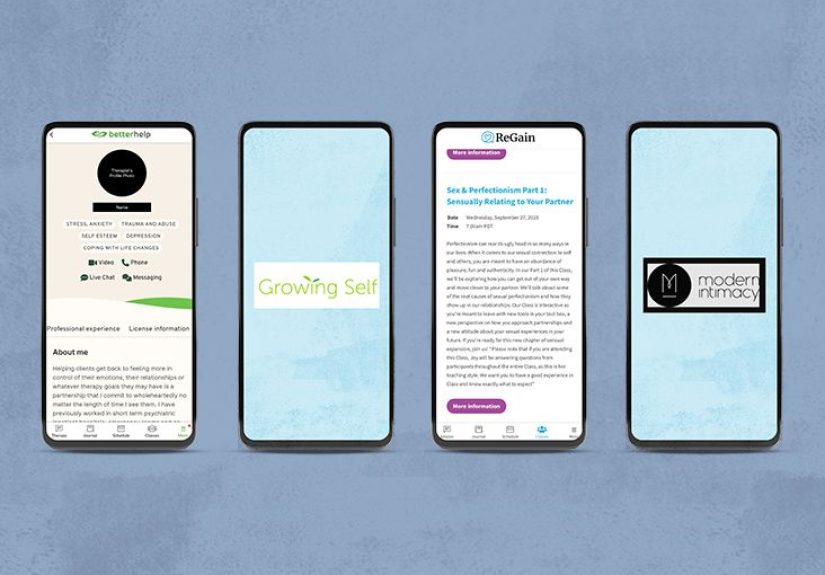
1. BetterHelp (Including ReGain for Couples)
Best for: Flexible messaging + video for busy couples
BetterHelp is one of the largest online therapy platforms in the world, connecting users with tens of thousands of licensed therapists. ReGain, which is part of the same network, focuses specifically on relationships and couples.
Couples typically complete an intake questionnaire and are then matched with a therapist. Sessions can include live video plus unlimited messaging, which is especially useful if you and your partner process at different speeds. Many couples use messaging to “cool down” after a tough week and give the therapist context before the next live session.
2. Talkspace
Best for: Couples who want insurance options and app-based care
Talkspace offers individual, couples, and psychiatric services via secure messaging and video. It’s in-network with several major U.S. insurance plans, which can dramatically reduce the out-of-pocket cost for couples therapy.
Couples answer a brief questionnaire, get matched to a therapist, and can then attend sessions together via video or exchange written messages throughout the week. This model works well for couples who like app-based communication and want a mix of real-time and asynchronous support.
3. MDLive
Best for: Marriage counseling that integrates with health insurance
MDLive is a well-established telehealth service that also offers online marriage counseling. Recent 2025 reviews highlight its strong scheduling system, emphasis on professional standards, and broad insurance compatibilityan area where many online-only therapy platforms still lag behind.
Couples who prefer a more traditional medical-style telehealth experiencelog in, see a licensed clinician, pay a co-payoften find MDLive comfortable and familiar.
4. One Therapy Group and Similar Multi-Specialty Platforms
Best for: Couples who want a mix of individual and relationship work
Some modern online practices, such as One Therapy Group, offer individual and couples therapy under one digital roof. They typically provide secure video sessions and evidence-based approaches like CBT and psychodynamic therapy, with the ability to tailor plans to both relationship and individual mental health needs.
This can be ideal if one or both partners are also managing anxiety, depression, trauma, or life transitions that impact the relationship.
5. Online-Therapy.com
Best for: Structured, CBT-based tools and self-guided exercises
While not exclusively a couples platform, Online-Therapy.com offers a robust “toolbox” of CBT-based contentworksheets, journals, live sessions, and messagingthat some couples use to tackle communication patterns, anxiety, or conflict triggers together.
It’s a good choice for partners who like homework, want to track progress, and appreciate a more structured approach between live sessions.
6. Gottman-Based Online Workshops and Courses
Best for: Highly motivated couples who love a class-style format
The Gottman Institute offers online versions of its well-known programs (like “The Art and Science of Love”) and digital tools for couples who want research-backed education plus practical exercises.
These aren’t always one-on-one therapy in the traditional sense, but they can be a powerful supplement or starting pointespecially if you want a deep dive into communication, conflict management, and friendship-building skills.
How to Choose the Best Online Couples Therapy for You in 2025
There isn’t one “best” platform for every relationshipthere’s the best fit for your personalities, schedules, budget, and goals. Here’s a simple decision roadmap:
- Clarify your goals. Do you want to stop constant arguments, rebuild trust after a betrayal, improve intimacy, or decide whether to stay together? Different therapists specialize in different issues.
- Set your budget and check insurance. Decide what you can realistically spend per month and then see whether insurance-compatible platforms like Talkspace or MDLive can help.
- Choose your preferred format. If you hate typing, prioritize platforms with frequent video sessions. If one of you travels constantly, asynchronous messaging plus periodic video might be ideal.
- Look for relationship-specific expertise. Scan therapist bios for “couples,” “marriage counseling,” “premarital counseling,” “infidelity,” “Gottman,” or “EFT.”
- Commit to trying at least 4–6 sessions. It’s normal to feel awkward at first. Give the process time unless the fit is clearly wrong.
Practical Tips for Making Online Couples Therapy Work
- Treat it like a real appointment. Turn off notifications, close other tabs, and show up on time with both partners present (unless you’ve arranged individual check-ins).
- Use messaging strategically. Instead of fighting via text, use platform messaging to share your perspective with your therapist before your next session.
- Do the homework. When your therapist suggests exercises, actually do them. Research shows that structured relationship programs work best when couples practice new skills between sessions.
- Be honest about what’s working. If the pace feels off or a topic isn’t being addressed, say so. A good therapist will adjust.
Red Flags When Choosing an Online Couples Therapy Service
As online counseling has grown, so have lower-quality imitators. Be cautious if you see:
- No clear information about therapist licenses or qualifications.
- No mention of HIPAA, encryption, or privacy policies for U.S.-based services.
- Guaranteed outcomes (“We will fix your marriage in 3 sessions”)relationships are too complex for that.
- High-pressure sales tactics or unclear billing.
If something feels off, move on. There are plenty of reputable alternatives in 2025.
Conclusion: Investing in Your Relationship from Anywhere
The “best online couples therapy and marriage counselling in 2025” isn’t a single app or websiteit’s the combination of a qualified therapist, a format that fits your life, and two partners who are genuinely willing to show up and do the work.
The good news? You don’t have to wait months for a local opening or rearrange your life around office hours. With the right online platform, you can start addressing conflict, rebuilding trust, and strengthening your connection from your couch, your kitchen table, orlet’s be honestfrom your parked car in the driveway where the kids can’t hear you.
Whether you choose a large platform like BetterHelp or Talkspace, a telehealth provider like MDLive, a multi-specialty practice, or a Gottman-style workshop, the most important step is simple: take the first one together.
Real-World Experiences with Online Couples Therapy in 2025
To bring all of this down from theory into real life, it helps to look at how couples are actually using online therapy in 2025and what they’re learning along the way.
Experience #1: The Over-Scheduled Parents
Imagine a couple in their mid-30s with two kids, full-time jobs, and a calendar that looks like a Tetris board. In-person counseling was on their “someday” list for years, but between daycare pickups, overtime, and soccer practice, they never followed through.
In early 2025, they finally sign up for an online platform offering couples therapy with weekly evening video sessions plus secure messaging. They start by using messaging to send their therapist short summaries of recurring argumentsbedtime routines, division of chores, feeling “invisible” or “unappreciated.” The therapist uses this information to structure sessions around specific patterns instead of vague complaints.
Over a few months, they learn to replace blame (“You never help!”) with clearer requests (“I need help with bedtime three nights a week so I can have 30 minutes to myself”). Online sessions make it possible for them to attend consistently without finding a sitter. The biggest takeaway they report is not that conflict disappears, but that arguments no longer spiral into days of silence. The format fits their life instead of demanding a life overhaul.
Experience #2: Long-Distance Partners Making Big Decisions
Another couple in their late 20s lives in different cities for workone on the East Coast, one in the Midwest. They’re debating whether to move in together, get engaged, or end things altogether. They choose an online therapist who specializes in premarital and long-distance couples.
Because the platform supports multi-location video, each partner connects from their own apartment. The therapist helps them explore values (family, money, lifestyle), expectations (who moves where, career sacrifices), and communication styles. They practice structured conversations, like taking turns speaking for two minutes without interruption and reflecting back what they heard.
They also use messaging between sessions to debrief big conversations or share wins (“We tried the two-minute rule during a tough talk about moving, and it actually kept us calm!”). After several months, they decide to move to the same city, feeling less like they’re “gambling” and more like they’re making an informed, joint decision.
Experience #3: Rebuilding After Betrayal
Some couples come to online therapy after a major relational injury, such as emotional or physical infidelity. One couple in their 40s chooses a therapist trained in both trauma-informed care and the Gottman Method, available through a telehealth-style platform that offers longer (90-minute) video sessions.
Early sessions focus on stabilizing the crisis: creating agreements about transparency (phone use, social media), setting boundaries with third parties, and establishing basic emotional safety. The hurt partner uses the privacy of their own bedroom to express grief and anger without worrying about crying in a waiting room afterward.
As trust slowly rebuilds, the therapist introduces more skill-based workrepair attempts, conflict de-escalation, and rebuilding shared meaning. Progress is not linear, but the couple reports that being able to log in from home lowers the barrier to showing up for hard sessions. They also find it easier to schedule an extra check-in during particularly rough weeks, something that would have been much harder with traditional office-based therapy.
Experience #4: When Online Therapy Isn’t the Right Fit
It’s important to acknowledge that online couples counseling isn’t ideal in every situation. For example, if there is active domestic violence, severe substance use without treatment, or a partner who has no interest in participating, online sessions may not be enoughor may not be safe. In these cases, therapists often recommend individual support, in-person services, or specialized resources.
Some couples also discover that they feel more distracted online or struggle with technology. A few find that sitting together in a therapy office helps them stay grounded and present in a way they can’t quite replicate on screen. In those situations, online therapy can still be a bridgehelping them start the conversation, learn basic skills, and eventually transition to in-person care if needed.
What These Experiences Have in Common
Across all these stories, several patterns show up:
- Consistency matters more than perfection. Couples who show up regularly, even when they’re tired or frustrated, tend to make the most progress.
- Homework and practice drive change. Completing exercises, trying new communication tools, and revisiting them when they fail is where real growth happens.
- Honesty with your therapist is crucial. When couples share what’s really going onrather than what they think they “should” saysessions become much more effective.
- The format is a tool, not the solution. Video, messaging, and apps can make access easier, but the real work is still emotional vulnerability, effort, and a willingness to listen and change.
In the end, the best online couples therapy and marriage counseling in 2025 is less about fancy tech and more about giving you and your partner a safe, structured space to show up, tell the truth, and build something healthier togetherno matter where you’re logging in from.




 Close
Close