
Table of Contents >> Show >> Hide
- Quick Picks: Match the Solar Generator to Your Life
- What “Best” Means for Solar Generators in 2026
- Solar Generator Math That Won’t Make You Cry
- Best Solar Generators by Category
- Don’t Skip This: Safety and Certifications That Actually Matter
- Solar Panels: The Make-or-Break Accessory
- Common Scenarios: What Can a Solar Generator Run?
- How to Choose the Best Solar Generator for You
- Real-World Experiences with Solar Generators (What People Learn the Hard Way)
- Conclusion
“Solar generator” is one of those phrases that sounds like it belongs in a sci-fi movie. In real life, it’s much simpler:
a portable power station (a big rechargeable battery with an inverter and outlets) plus
solar panels to refill it when the grid (or the campsite) has no plugs to offer.
No gas. No fumes. No yanking a starter cord like you’re trying to summon electricity with interpretive dance.
The best solar generator for you depends less on brand hype and more on three boring-but-beautiful numbers:
watt-hours (Wh) for capacity, watts (W) for output, and
solar input (W) for how quickly sunshine can pay you back. Let’s make those numbers easy, then match you
with the right type of stationwhether you’re prepping for outages, camping, working remotely, or just trying to keep a
mini fridge alive during a backyard party.
Quick Picks: Match the Solar Generator to Your Life
Instead of crowning one “best” for everyone (because your needs are not the same as your neighbor who owns three
coolers and a karaoke machine), here are the most useful categories and what to look for.
| Use Case | Target Size | What Matters Most |
|---|---|---|
| Phone/laptop, lights, router | 250–600Wh | USB-C power delivery, quiet operation, fast wall recharge |
| Weekend camping + small appliances | 600–1200Wh | Multiple AC outlets, pure sine wave, solar input 200W+ |
| Power outage essentials (fridge, Wi-Fi, fans) | 1200–2500Wh | Higher inverter watts, surge capacity, reliable battery chemistry |
| RV/van life + heavier loads | 2000–4000Wh | Fast solar charging, 12V/DC options, expandability, wheels/handles |
| Partial home backup (select circuits) | 3000Wh+ | 240V capability, expandable batteries, UPS/EPS features, safety certifications |
What “Best” Means for Solar Generators in 2026
Solar generators are improving fast: better battery chemistries, quicker charging, more usable ports, and smarter
apps. But “best” usually comes down to five practical questions:
1) How much energy do you need?
Capacity is measured in watt-hours (Wh). Think of Wh as the size of your “electricity pantry.”
A 1000Wh power station can (roughly) deliver 1000 watts for one hour, or 100 watts for ten hoursminus losses.
Real-world usable energy is often closer to 80–90% of the labeled capacity due to inverter and conversion
overhead. (Translation: electricity is like guacamolesome of it disappears before it reaches the table.)
2) How much power do your devices pull at once?
Output is measured in watts (W). This is your “how much can I run right now?” number.
Many household and camping devices have a running wattage and a higher start-up surge (fridges, power tools,
anything with a motor). The best solar generators clearly state both continuous watts and
surge watts.
3) How fast can you recharge?
Recharging speed comes from two places: AC wall charging and solar charging.
If you’re buying for emergencies, fast AC recharge matters because storms don’t RSVP.
If you’re buying for off-grid, strong solar input (plus MPPT charge control) matters because shade is a thief.
4) What battery chemistry is inside?
Most modern stations use lithium-based batteries. Many newer models advertise LiFePO4 (LFP)
chemistry because it’s known for long cycle life and stability. Other models use NMC-style lithium chemistries that
can be lighter for the same capacity. Both can be goodwhat you want is a reputable manufacturer, a solid battery
management system (BMS), and clear safety testing.
5) Is it built for real life, not just a spec sheet?
A “best” solar generator is the one you’ll actually use. That means:
readable display, intuitive buttons, ports you need (USB-C, 12V, AC), handles/wheels if it’s heavy, and a warranty
you can understand without hiring a translator for corporate fine print.
Solar Generator Math That Won’t Make You Cry
Here are two quick formulas that will instantly make you smarter than most product listings.
Runtime estimate
Runtime (hours) ≈ (Capacity in Wh × 0.85) ÷ Device watts
Example: A 1024Wh station running a 60W device:
(1024 × 0.85) ÷ 60 ≈ 14.5 hours
Note: For fridges, the compressor cycles on and off, so average draw can be lower than the “running watts” label.
For heaters, kettles, and hair dryers, the draw can be punishingly consistent (and your battery will feel judged).
Solar recharge estimate
Solar charge time (hours) ≈ Capacity in Wh ÷ (Panel watts × 0.7)
Example: Recharging a 1000Wh station with 200W of solar:
1000 ÷ (200 × 0.7) ≈ 7.1 hours of strong sun
That 0.7 accounts for real-world losses: heat, angle, cloud cover, panel/controller efficiency. If your panels are
flat on the ground at noon in July, you’ll do better. If they’re half shaded by a pine tree at 4:30 p.m., you will not.
Best Solar Generators by Category
Across major U.S. reviews and lab-style testing, a few brands and models show up repeatedly because they balance
performance, features, and reliability. Consider the picks below as a “shortlist by lifestyle,” not a one-size-fits-all crown.
Best budget-friendly solar generators (under ~600Wh)
If your goal is phone charging, lights, a fan, a modem/router, and maybe a small cooler, small stations are the sweet spot.
They’re easier to store, easier to carry, and less likely to become an expensive doorstop if you only need backup twice a year.
- Jackery-style compact stations (great for simple portability and straightforward controls)
- EcoFlow RIVER-class stations (often praised for fast charging and strong feature sets in small sizes)
- Duracell and similar “small-but-useful” models (handy for device charging and travel)
What to prioritize here: USB-C output (especially for laptops), a good display, and a solar input that’s at
least 100W if you genuinely plan to recharge off-grid.
Best all-around solar generators (around ~1kWh)
A ~1kWh station is the “do a lot without being ridiculous” class. It can cover a typical outage kit:
phones, lights, Wi-Fi, and some fridge runtime, plus it’s actually realistic to refill with portable solar panels.
- Anker SOLIX C1000-class models (often highlighted for balance of power, fast recharge, and portability)
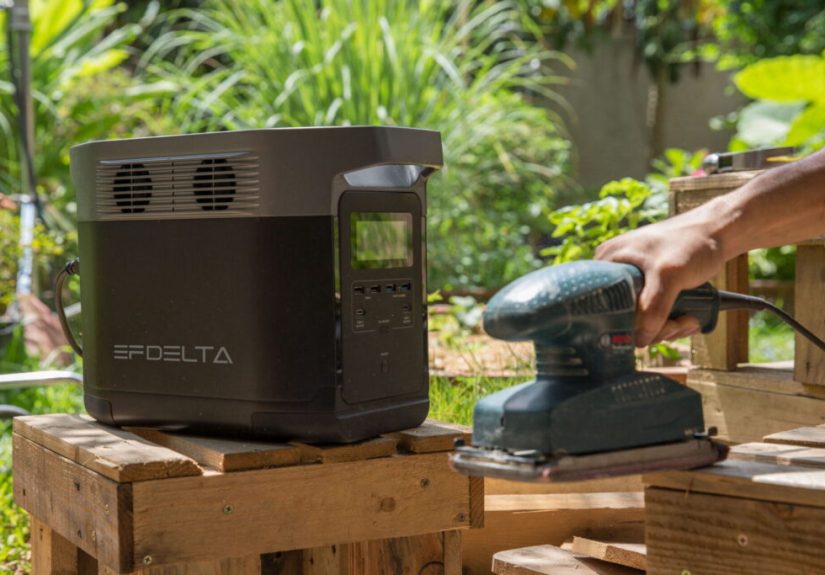
- EcoFlow DELTA-class compact models (known for quick charging and strong inverter performance)
- Jackery Explorer 1000-class models (a popular “grab-and-go” size with wide accessory support)
What to prioritize here: 1000–2000W inverter range, multiple AC outlets, and a battery chemistry built for
frequent cycling if you’ll use it weekly (work sites, van life, daily solar charging).
Best mid-to-large solar generators (2–4kWh) for outages and RVs
This is the “serious adulting” category: fridge + freezer support, medical devices, longer outages, and heavier loads.
These units can get heavy, so wheels and handles stop being “nice to have” and become “please, yes, my back is 30 going on 90.”
- Bluetti Elite/AC-series mid-large stations (frequently recommended for high capacity and feature depth)
- Generac portable power stations (a familiar U.S. generator brand with battery-based options)
- Goal Zero Yeti-class stations (known for ecosystem accessories and outdoor-friendly designs)
What to prioritize here: surge capability (for compressors and tools), solar input
of 400W+ if you’ll recharge off-grid, and an interface that doesn’t require a seminar.
Best expandable solar generators for partial home backup
If you want something closer to “home backup” without installing a permanent battery system, look for modular,
expandable platforms. Some support 240V output and can integrate with home transfer equipment when properly set up.
For anything involving home electrical panels, plan to involve a qualified electrician.
- EcoFlow DELTA Pro-class systems (often cited for expandable capacity and home-backup features)
- Anker SOLIX F3800-class systems (frequently discussed for high output and expandability)
- High-capacity Bluetti platforms (popular in off-grid and backup circles for modular setups)
What to prioritize here: expandable batteries, 240V capability if needed,
UPS/EPS support for fast switchover, and strong safety testing/certifications.
Don’t Skip This: Safety and Certifications That Actually Matter
Solar generators are generally safe for indoor use because they don’t burn fuel and don’t produce carbon monoxide.
That’s a huge advantage over gas generatorsespecially during storms when people are tempted to do risky things to stay warm.
Still, these are powerful lithium battery systems. Buy smart and use them like you respect electricity (because it does not respect anyone).
Look for recognized safety testing
Many reputable portable power stations are tested to standards such as UL 2743 (portable power packs),
and you may also see related battery standards. When brands clearly document testing, manuals, and certifications, that’s a green flag.
Use common-sense lithium battery rules
- Don’t store the unit in extreme heat (hot cars, unventilated sheds in summer).
- Don’t cover vents or block airflow while charging or running high loads.
- Use the correct charger and cablescheap adapters are a classic “save $12, regret $1,200” move.
- If you won’t use it for months, store it partially charged (many manufacturers recommend periodic top-ups).
Power outage basics still apply
Even if your solar generator is safe indoors, outages often come with other hazards. Emergency guidance commonly recommends
battery-backed lighting, CO alarms, and safe generator practices for anyone also using fuel-powered backup devices.
Solar Panels: The Make-or-Break Accessory
Here’s the truth: most people buy the power station first and the solar panels “later,” and then “later” becomes
“never,” and then the unit becomes a very expensive flashlight during a long outage. If you truly want a
solar generator, match your panel wattage to your station size.
Panel sizing tips
- Small station (300–600Wh): 60–200W solar is usually enough.
- 1kWh station: 200–400W solar is a practical range for meaningful daily refills.
- 2–4kWh station: 400–800W solar (or more) if you want faster recovery off-grid.
MPPT matters
Many modern power stations use MPPT (Maximum Power Point Tracking) controllers to squeeze better performance out of panels
when conditions aren’t perfect. It won’t turn clouds into sunshine, but it can improve real-world charging efficiency.
Common Scenarios: What Can a Solar Generator Run?
Can it run a refrigerator?
Often, yesif the inverter and surge rating are sufficient. A typical modern fridge may average relatively low watts over time
but can spike at startup. A 1–2kWh station can cover meaningful fridge runtime, especially if you’re disciplined:
keep the door closed, pre-chill items, and don’t stand there staring like the fridge contains life advice.
Can it run a space heater?
Technically maybe, practically not for long. Space heaters are power-hungry (often 1,500W). Even a large power station
will drain quickly, and you’ll be recharging for hours. For outage heating, safer planning usually involves non-electric options
and proper home winterization. Use your battery for essentials: lights, communications, medical needs.
Can it run a CPAP?
Many users choose solar generators specifically for medical devices. The exact runtime depends on your device’s wattage,
whether humidification is used, and whether you can run on DC to reduce losses. If this is a critical use case, plan with a
generous buffer and test your setup before you need it.
How to Choose the Best Solar Generator for You
- List your must-run devices (router, phones, lights, fridge, medical device) and estimate watts.
- Pick capacity based on how many hours you want those essentials running.
- Confirm inverter + surge for anything with a motor or heating element.
- Plan your recharge path: wall + car + solar. If solar matters, budget for panels now.
- Check ports and ergonomics: USB-C, 12V, number of AC outlets, handles/wheels, display clarity.
- Prioritize reputable safety testing and a warranty you can live with.
Real-World Experiences with Solar Generators (What People Learn the Hard Way)
The first “experience” most people have with a solar generator is not a dramatic survival story. It’s a small moment:
the power flickers, the Wi-Fi dies, and suddenly everyone in the house discovers they have a deep emotional dependency
on the internet. A portable power station becomes the heronot because it runs your entire home like a mini power plant,
but because it keeps the essentials alive long enough for you to stay informed and comfortable.
In outage-prone areas, a common routine emerges. People keep the solar generator topped up before storm season, then
do a quick “battery sanity check” when severe weather is in the forecast: charge to full, lay out extension cords,
confirm the flashlight works, and pre-chill the fridge and freezer. The lesson is simple: the best time to test your
emergency setup is not when the wind is trying to redecorate your neighborhood.
Campers and van lifers often discover the “panel reality gap.” On paper, a 200W solar panel sounds like it should refill
a 1kWh station quickly. In practice, they learn to chase sun angles, avoid partial shade, wipe dust off panels, and
accept that clouds will happily ruin your spreadsheet. The experience pushes people toward two smart upgrades:
(1) more panel wattage than they thought they needed, and (2) better energy habitscharging laptops during peak sun,
using DC outputs when possible, and turning off the AC inverter when it isn’t needed.
Remote workers have their own solar generator folklore. The classic story: a quiet coffee shop closes early, a coworking
space is full, and a park bench becomes your office. A compact power station that supports USB-C laptop charging suddenly
feels like a superpower. People learn to build a “mobile desk kit”: power station, short high-quality cables, a compact
power strip, and a small folding panel for long days. And they learn that a power station with a clear display reduces
anxietybecause guessing your remaining battery percentage is basically adult “the floor is lava.”
Families also find that solar generators change behavior during longer outages. Instead of everyone running around
charging everything at once, people get surprisingly organized. Phones charge first. Then lights. Then the router.
Then the “nice-to-have” items like speakers or a small TV. It becomes a tiny lesson in energy budgetingone that makes
you appreciate how much power certain appliances consume. Many people report that after one or two real outages, they
start labeling their devices with approximate watts or keeping a simple list in their notes app. Not because it’s fun,
but because it prevents the heartbreaking moment when someone plugs in a high-watt gadget and the station politely
shuts off like, “Absolutely not.”
Probably the most universal experience: the relief of quiet. Compared with gas generators, battery-based solar generators
don’t roar, don’t smell, and don’t demand constant attention. People can sleep, neighbors aren’t aggravated, and the unit can
sit safely indoors powering lights and communications. That calm is why so many buyers end up saying the same thing:
the best solar generator isn’t the biggest model on the shelfit’s the one that fits your real needs, recharges in your
real conditions, and makes an outage feel less like a crisis and more like a mildly inconvenient camping trip with better snacks.
Conclusion
The best solar generator is the one that matches your essentials and your recharge plan. Start by sizing capacity (Wh) and
output (W) to what you truly need: communications, lighting, refrigeration, medical devices, and a few comfort items.
Then decide how you’ll refill itespecially if you want solar panels to do real work during longer outages or off-grid travel.
Prioritize reputable safety testing, sensible ergonomics, and the ports you actually use (hello, USB-C).
Do that, and you’ll end up with a power solution that’s quiet, practical, and ready for everything from storm season to
weekend adventures.






 Close
Close