
Table of Contents >> Show >> Hide
- What Is the Life Line in Palmistry?
- Broken Life Line Meaning: The Best Interpretations
- How to Read a Broken Life Line More Accurately
- Common Myths About a Broken Life Line
- How to Examine Your Own Life Line
- Why the Broken Life Line Fascinates People
- Experiences People Commonly Associate With a Broken Life Line
- Final Thoughts
A broken life line can make people panic faster than a phone battery dropping to 2% with no charger in sight. One glance at a gap in that curved line around the base of the thumb, and suddenly the imagination goes full drama mode. But in palmistry, that is not usually how the symbol is read. A broken life line is traditionally interpreted as a sign of interruption, transition, recovery, reinvention, or a major shift in how a person lives, not as a simple prediction of doom.
That distinction matters. In modern palm reading, the life line is less about “How long will I live?” and more about “How do I move through life?” Palmists often connect it with vitality, stamina, grounding, lifestyle, resilience, and the way someone responds to change. So when the line appears broken, split, faint, or interrupted, readers usually look for context: Is there an overlap? A sister line? A square? A second supporting line? Which hand is affected? In other words, the break is the headline, but the fine print is where the story lives.
This guide breaks down the best interpretations of a broken life line in a practical, easy-to-read way. No spooky fog machine required. Just clear explanations, useful examples, and enough nuance to keep your reading from turning into accidental melodrama.
What Is the Life Line in Palmistry?
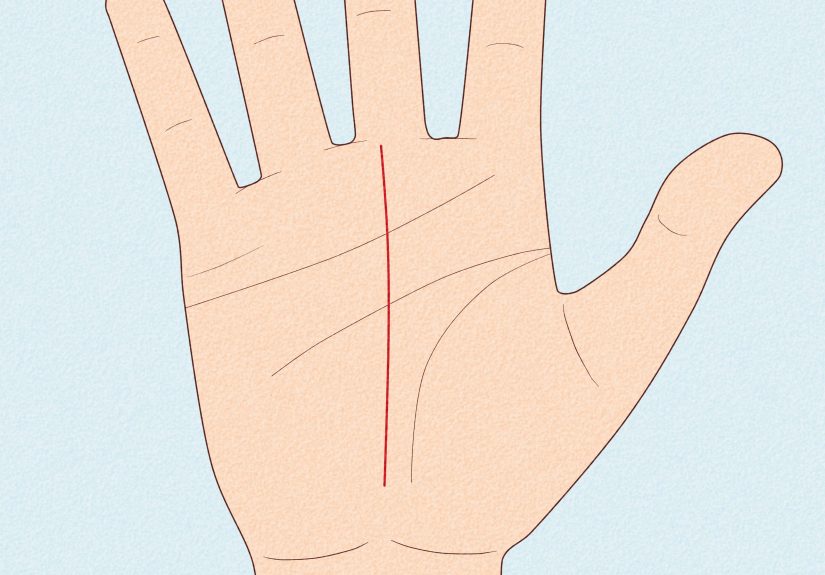
In palmistry, the life line begins between the thumb and index finger and curves downward around the mount of Venus, the padded area at the base of the thumb. It is one of the major lines readers examine first because it is bold, visible, and tied to themes people care about deeply: energy, physical drive, major life changes, and the overall rhythm of a person’s journey.
A common misconception is that a long life line means a long life, while a short or broken one means the opposite. Traditional and modern palmistry interpretations are usually more subtle than that. A deep, clear life line is often read as strong stamina or a solid sense of grounding. A faint line may suggest sensitivity, fluctuating energy, or a person who runs on emotional fumes once in a while. A broken line, meanwhile, is generally interpreted as an interruption in the usual flow of life.
That interruption can symbolize many things. It might point to a major relocation, a health scare, a career reset, a breakup that changes identity, a spiritual awakening, or a period when life feels divided into “before” and “after.” Palmistry loves symbolism, and the broken life line is one of its most dramatic symbols.
Broken Life Line Meaning: The Best Interpretations
1. A Major Turning Point
The most widely accepted palmistry meaning of a broken life line is a turning point. Life does not continue in the same smooth, familiar pattern. Something significant shifts. This can be external, such as moving to a new country or changing careers, or deeply personal, such as recovering from burnout or leaving an old identity behind.
Think of it as a plot twist, not a full stop. In many readings, the break marks the moment when a person stops living on autopilot and starts making different choices. That is why some readers see a broken life line as intense but meaningful. It can symbolize upheaval, yes, but also redirection.
2. An Interruption in Energy or Lifestyle
Because the life line is often linked with vitality, a break may be interpreted as a period when energy, routine, or physical confidence is disrupted. That does not automatically mean illness. It can also suggest exhaustion, stress, overwork, emotional depletion, or a temporary disconnection from one’s usual drive.
For example, someone who used to be extremely active may go through a stretch of inactivity after a hard season in life. In palmistry, a broken life line might symbolize that interruption in momentum. The focus is less “something terrible happens” and more “your usual engine stalls, then restarts differently.”
3. A Radical Change in Environment
Another classic interpretation is relocation or environmental change. A break in the life line can be read as separation from one’s roots, family system, hometown, or old support structure. This interpretation becomes stronger if the rest of the palm also suggests independence, travel, risk-taking, or a strong fate line.
In plain English, this can mean a big move, a new country, a new social class, or even a total lifestyle makeover. Same person, different habitat. Palmistry often treats environment as destiny’s roommate, so a broken life line may reflect a moment when the setting changes and the person must adapt fast.
4. Emotional or Psychological Reinvention
Some palmists read a broken life line as an internal rebirth. A person may survive something emotionally difficult and come out with a different set of values, boundaries, or priorities. The body may still be standing in the same shoes, but the inner life has moved houses.
This interpretation is especially common when the break is paired with changes in the head line, influence lines, or markings around the mount of Venus. In that context, the broken life line can symbolize a person who no longer wants the same things, trusts the same people, or lives by the same script.
5. Independence, Autonomy, and Self-Direction
Not every break is gloomy. Some readers interpret a short or broken life line as a sign of autonomy. The person may be unusually self-directed, less tied to family patterns, and more likely to carve their own path. In this reading, the “break” is not damage. It is separation from inherited expectations.
This interpretation is especially appealing for people who have left a restrictive background, built a life from scratch, or repeatedly reinvented themselves. Palmistry, at its best, is symbolic storytelling. And one of the strongest stories a broken life line can tell is: “You changed course on purpose.”
How to Read a Broken Life Line More Accurately
A break alone does not tell the whole story. Palm readers almost always examine the surrounding signs before offering an interpretation. This is where a reading becomes less fortune-cookie and more detective board with red string.
Broken Life Line With an Overlap
If the broken segments overlap, many palmists interpret this as transition rather than collapse. The old phase and new phase coexist for a while. A person may be leaving one life while already stepping into another. This can show resilience, adaptation, and a bridge between identities.
Broken Life Line With a Parallel Line
A parallel support line, sometimes called a sister line or Mars line, is often seen as protective. In palmistry, this can suggest backup strength, recovery, support from loved ones, or the ability to withstand pressure better than expected. If there is a break but a second line runs nearby, many readers soften the interpretation and see the challenge as survivable and transformative.
Broken Life Line With a Square
A square around or near the break is commonly interpreted as protection. Palmists often see it as a symbol that a person is shielded during a difficult period or able to recover after disruption. If the break looks dramatic but is enclosed by a square, the reading often shifts from “danger” to “containment and recovery.”
Multiple Breaks
Several breaks may suggest repeated life changes, instability, or many seasons of adjustment. This does not always mean chaos. It can simply describe someone whose life evolves in chapters rather than one long straight road. Entrepreneurs, migrants, creatives, and people with unconventional paths are often described in palmistry language like this.
Faint and Broken Sections
If the life line becomes faint before or after the break, readers may interpret the period as one of uncertainty, low confidence, or reduced vitality. If the line strengthens again later, that often suggests recovery, maturity, or a more grounded second chapter.
Dominant Hand vs. Non-Dominant Hand
Many modern palm readers compare both hands. The non-dominant hand is often read as inherited tendencies or inner wiring, while the dominant hand reflects lived choices and current development. A broken life line on the non-dominant hand may be interpreted as a deep inner pattern or early-life influence. A break on the dominant hand may suggest a change that manifests more clearly in real-world experience.
Common Myths About a Broken Life Line
Myth 1: It Predicts Death
This is the biggest myth and the one most palm readers push back against. A broken life line is far more commonly read as disruption, transformation, or a break in continuity than as a literal end-of-life signal. In modern interpretations, context matters much more than fear.
Myth 2: One Mark Tells the Whole Story
No experienced reader stops at one symbol. The quality of the line, nearby markings, hand shape, other major lines, and even texture of the palm all influence interpretation. Reading a broken life line without context is like judging a movie from one frame. You might get the vibe, but you miss the plot.
Myth 3: Palm Lines Never Change
Many palmistry traditions hold that lines can shift in appearance over time. Whether you view that spiritually or symbolically, the practical takeaway is simple: a palm reading is meant to be read as a snapshot, not a prison sentence. It reflects patterns and possibilities, not a locked script.
How to Examine Your Own Life Line
If you want to read your own palm, start with good lighting and relaxed hands. Compare both palms instead of making a dramatic announcement after looking at only one. Notice where the life line starts, how deeply it is etched, whether it is clear or chained, and whether the break is wide, small, overlapping, or supported by another line.
Then ask grounded questions. What major change happened around that phase of life? Did you move, recover, separate, begin again, or become more independent? Palmistry works best as reflective symbolism. It becomes more meaningful when you connect the sign to your lived experience instead of treating it like a scary pop quiz from the universe.
Why the Broken Life Line Fascinates People
The broken life line is powerful because most people already understand the feeling it represents. Almost everyone has a “before and after” chapter. Before the move. After the breakup. Before the illness. After the career change. Before becoming a parent. After learning how to be alone. A broken line captures that human truth in one dramatic visual cue.
That is also why this mark stays popular in palmistry content. It gives language to disruption without requiring a person to tell their entire story first. Sometimes people look at a broken life line and feel seen, not because the line magically knows their future, but because it mirrors the fact that life rarely unfolds in one neat, uninterrupted curve.
Experiences People Commonly Associate With a Broken Life Line
People who identify with a broken life line often describe life in chapters instead of one long continuous sentence. One common experience is a major relocation that changes everything at once. A person leaves a familiar place, social circle, or family structure and has to rebuild routines from scratch. In palmistry language, that kind of rupture fits the symbolism of a break very well: the old current stops, a new one begins, and the person becomes stronger because adaptation is no longer optional.
Another frequently mentioned experience is a period of burnout followed by reinvention. Someone spends years pushing hard, doing the “responsible” thing, keeping the calendar full and the soul mildly annoyed, then eventually hits a wall. After that comes a reset: different work, different boundaries, better habits, or a new way of measuring success. Many readers would say the broken life line reflects that kind of interruption in vitality and the rebuilding that follows.
Relationship upheaval is another theme people connect with this sign. Not just heartbreak in the dramatic movie sense, but a relationship that changes identity, routine, and self-worth. After a divorce, a family separation, or even the end of a long friendship, some people feel as though their life split into two versions. Palmistry interpretations often describe a broken life line in exactly that way: one chapter closes, and another begins with a different emotional map.
Health-related experiences also come up, though thoughtful readers usually avoid making extreme claims. Instead of saying a break guarantees illness, they may connect it with periods when the body demanded attention, rest, or a new lifestyle. Someone may recall a time when they had to slow down, recover, or radically improve how they treated themselves. In reflective readings, the line becomes less a prediction and more a symbol of respect for the body’s limits.
Some people associate a broken life line with a spiritual awakening or identity shift. This is the phase where old ambitions suddenly feel borrowed, and the person starts asking bigger questions: What do I actually want? Why am I living like this? Why does my planner look productive but my spirit look exhausted? A break can symbolize the moment when outer life and inner truth stop matching, forcing change.
Then there are people who read the mark in a surprisingly empowering way. They see it as evidence of survival. They have been through instability, loss, migration, career failure, family pressure, or emotional chaos, and yet the line continues. That continuation matters. In symbolic terms, the break says life changed. The rest of the line says life also went on. For many, that is the most meaningful interpretation of all.
Final Thoughts
If you are searching for the best broken life line in palmistry meaning, the most balanced interpretation is this: it usually symbolizes interruption, transformation, and reorientation rather than literal catastrophe. A broken life line may point to a season of upheaval, but it can just as easily suggest resilience, reinvention, recovery, and independence.
The smartest way to read it is with context and common sense. Look at the whole hand. Compare both palms. Notice support lines, overlaps, squares, and the quality of the line before and after the break. Most importantly, connect the symbol to lived experience. Palmistry is most useful when it helps you reflect on your path, not fear it.
So if your life line has a gap, do not assume the universe is sending you a horror trailer. In palmistry, that broken line may simply be the mark of a life that changed shape and kept going.






 Close
Close