
Table of Contents >> Show >> Hide
- What “Iranian-style kamikaze drone” actually means
- So… is Russia “forcing” teens?
- Where this is happening: Alabuga and the school-to-factory pipeline
- Why Iran is in the headline
- What teen labor changesand what it doesn’t
- How to evaluate this claim without becoming a misinformation drone
- What it means beyond Russia and Ukraine
- FAQ
- Reported experiences related to the topic (reader-style, human perspective)
- Conclusion
If you’ve seen headlines claiming Russia is “forcing teens” to build Iranian-style “kamikaze drones,” your reaction might be:
Wait… like, actual high school kids? Then: Is this real, or is this the internet doing its thing again?
The short version (without turning your brain into a clickbait smoothie): multiple investigations, satellite-and-sanctions paper trails,
and even Russian state-media footage point to a real pipeline where vocational studentsincluding teenagershave been involved in producing
Iranian-designed attack drones made in Russia. The “forcing” part is where the story gets more complicated: some accounts describe coercion
and penalties, while other evidence shows recruitment dressed up as “education,” “career growth,” and “patriotic youth programs.”
Let’s unpack what’s known, what’s alleged, and what “Iranian-style” really meanswithout handing anyone a DIY guide to turning a hobby into a war crime.
What “Iranian-style kamikaze drone” actually means
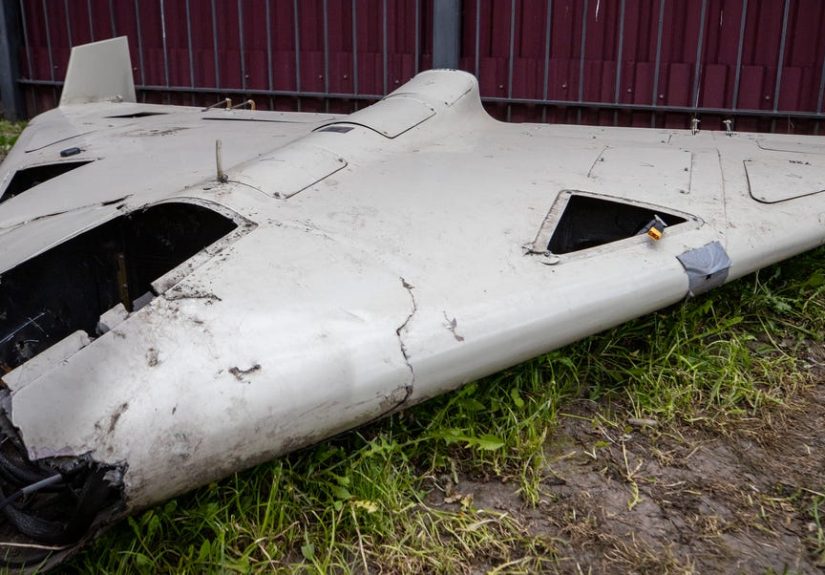
The drones at the center of these reports are commonly linked to Iran’s Shahed familyespecially the Shahed-136often described as a
“one-way attack drone” (a more accurate term than “kamikaze,” which is dramatic but fuzzy). Russia has widely been reported to use a domestic designation
for Shahed-style drones (for example, “Geran-2” is frequently cited for Shahed-136-type systems).
The key idea behind this kind of drone is brutal in its simplicity: it’s relatively low-cost compared with missiles, can be produced in large numbers,
and can be launched in waves to strain air defenses. That combination helps explain why production volume matters so muchand why labor supply
becomes a strategic issue, not just a human one.
So… is Russia “forcing” teens?
Here’s the most honest answer: credible reporting supports that teenagers and young vocational students have been used in or around drone production,
especially at the Alabuga industrial hub in Tatarstan. Whether that involvement is “forced” depends on what standard you applyand which accounts you trust.
What seems strongly supported
-
Teen and student labor has been tied to drone production at Alabuga. Investigations and reporting have described vocational students
working alongside other labor groups in facilities connected to Shahed-style drone manufacturing. -
Recruitment programs exist. They are often packaged as work-study opportunities, career pipelines, or youth “skills” initiatives
linked to a broader war-economy push. -
The site has drawn international attention. Sanctions, think-tank reports, and open-source analysis have repeatedly highlighted
Alabuga’s role in drone manufacturing and the workforce challenges that come with it.
Where the “forcing” claim comes from
The “forced” label usually rests on allegations such as:
contracts that penalize students for quitting, threats of expulsion tied to financial consequences, pressure to keep parents uninformed,
or work conditions and hours that don’t match “internship” on any planet with labor laws.
That kind of coercion can live in a gray zoneespecially in closed systemswhere officials can say, “No one is forced,” while people inside the machine feel
like they have exactly two choices: comply, or pay a steep price.
Where this is happening: Alabuga and the school-to-factory pipeline
Most reporting clusters around the Alabuga Special Economic Zone (SEZ) near Yelabuga in Russia’s Tatarstan region. It’s an industrial site that has
been repeatedly connected to Shahed-style drone production. Investigations have described a workforce that includes vocational students and young recruits,
including teenagers.
Why ninth grade keeps popping up
In Russia, many students can leave general schooling after ninth grade and enter vocational programs. That makes “ninth graders” and “vocational students”
a meaningful workforce category: they’re young enough to be teenagers, but old enoughon paperto be routed into “practical training.”
How “education” becomes an assembly-line job
In healthy systems, internships teach skills without sacrificing safety, schooling, or basic dignity. In wartime economies, “training” can become a euphemism:
you learn, suremostly by doing the same repetitive task at industrial speed, while someone counts output like it’s a high score.
Several investigations describe students being attached to production targets, shift work, and strict oversight. In other words: less “robotics club,”
more “welcome to the war economy, please don’t ask questions.”
Why Iran is in the headline
Iran’s role matters because it helps explain how Russia moved from importing drones to producing Shahed-style systems domestically.
Reporting and research have described technology transfer, localization plans, and intermediary companies supporting the relationship.
From imports to domestic assembly
Early in the war, many reports described Iran supplying drones directly. Over time, evidence increasingly pointed to Russia building capacity to assemble
and then manufacture Shahed-style drones at scale inside Russiareducing reliance on shipments and improving volume.
Why “Iranian-style” is a strategic shortcut
Designing advanced weapons from scratch takes time, money, and a lot of engineers who would rather not be sanctioned into the sun.
Adopting a proven design and industrializing itespecially in large facilitieslets a country ramp up faster. That’s why you see so much attention on
production targets, new buildings, workforce pipelines, and supply chains.
What teen labor changesand what it doesn’t
It’s tempting to assume “teenagers on a factory line” means the drones must be low quality or unreliable. Sometimes that’s true; sometimes modern
manufacturing reduces tasks to basic steps that almost anyone can do after training. The bigger takeaway isn’t just capabilityit’s what it signals about
labor shortages, militarization, and the ethical slide of wartime production.
Why a war economy starts looking for younger workers
- Labor shortages: war mobilization, emigration, and industrial expansion squeeze the workforce.
- Scalable training: vocational systems can be converted into pipelines for specific industrial needs.
- Control and compliance: younger workers may have less bargaining power and fewer ways to opt out safely.
The ethical and legal problem
When minors are involved in hazardous industrial workespecially tied to weapons productioninternational labor norms and child-protection principles
become relevant fast. Even where local laws are bent to permit “training,” the combination of coercion allegations, restricted freedom to leave,
secrecy requirements, and dangerous conditions can raise questions that go well beyond “Is this an internship?”
There’s also a grim security angle: military production sites can become legitimate wartime targets. Routing teenagers into such sites doesn’t just raise
moral alarmsit potentially increases the risk to young people placed near high-value military infrastructure.
How to evaluate this claim without becoming a misinformation drone
If you’re trying to figure out what’s real (and what’s rage-bait), use a simple checklist:
1) Separate “involvement” from “forced involvement”
“Teens were present in production footage” is different from “teens were coerced under threat of punishment.”
Both can be serious, but they’re not the same claim.
2) Look for multi-source overlap
The strongest stories are the ones that show up in multiple independent investigations, across different methods:
interviews, leaked documents, satellite imagery, sanctions designations, and official or state-media admissions.
3) Watch the incentives
Programs may offer scholarships, stipends, travel, housing, or career promises. That doesn’t disprove coercionsometimes it’s the wrapper that makes a
questionable pipeline socially acceptable.
4) Beware the “one clip explains everything” trap
A single video can show youth on an assembly line without proving their ages, consent, or working conditions. Conversely, a single denial from officials
doesn’t erase documented patterns. This story lives in corroboration.
What it means beyond Russia and Ukraine
This isn’t only a Russia story. It’s a modern war-economy story:
a mix of sanctions evasion, globalized components, industrial scale-up, and labor pipelines that can pull in vulnerable groupswhether that’s teens,
migrants, or foreign recruits who thought they signed up for something else.
And it’s also an “information” story: governments and investigators increasingly track war production through open-source intelligencesatellite imagery,
procurement data, social media recruiting trails, and financial networksbecause the most important factories don’t always come with helpful press releases.
FAQ
Are teens really building Shahed-style drones in Russia?
Credible reporting and investigations have connected vocational studentsincluding teenagersto facilities linked with Shahed-style drone production,
particularly around Alabuga in Tatarstan.
Is Russia literally forcing them?
Some accounts allege coercion through penalties, expulsion threats, and strict controls; other evidence points to recruitment via “education” and “work-study”
framing. The most defensible takeaway is that youth involvement is documented, and coercion is credibly alleged in multiple reports.
Why call them “Iranian-style” if they’re built in Russia?
Because the design lineage is tied to Iranian Shahed systems, and reporting has described technology transfer and cooperation enabling Russian domestic production.
Reported experiences related to the topic (reader-style, human perspective)
Facts and satellite imagery tell you what is happening. Experiences help you understand what it feels likeand why the word “forced” shows up
even when a program is marketed as “opportunity.”
“My kid thought it was a normal vocational track.”
In multiple reported accounts, parents describe sending teenagers to technical or vocational programs because the pitch sounded familiar:
modern equipment, a respected campus, a path to a stable job. The marketing language tends to hit the same buttons everywhere“skills,” “career growth,”
“real-world experience”only the “real world” in this case includes defense production and secrecy.
For families, the shock isn’t just the war connection; it’s the feeling that the decision was made in a fog. When details are limited, the difference between
“industrial internship” and “weapons assembly line” can be hidden behind euphemisms and paperwork. Parents then describe a new kind of fear:
not only, “Is my child being exploited?” but also, “Is my child now in a place that could be targeted?”
The student perspective: pressure, quotas, and silence
The stories that read as the most “coercive” often share a pattern: work that takes priority over study, strict monitoring, and consequences for refusing.
Teens and young students in vocational settings typically have less leverage than adult workers; they’re dependent on the institution for housing,
credentials, and the next step in life. That dependence can turn “choice” into something that looks like a hallway with one exitand a guard standing in it.
Another recurring detail in reported accounts is the emphasis on keeping quietwhether through formal nondisclosure language, informal threats, or social pressure
framed as “patriotism.” Even without explicit violence, that environment can feel intimidating: you’re young, you’re far from home, and everyone around you acts
like asking questions is the actual forbidden activity.
Foreign recruits and the “this is not the job I applied for” moment
While the headline here is “teens,” related reporting has also described the recruitment of young foreign workers for Alabuga-linked production lines.
The experience described by some recruits is the classic bait-and-switch: big promises, vague job descriptions, then a reality that involves industrial work,
strict supervision, and conditions they say weren’t made clear upfront.
This matters to the teen question because it shows a consistent theme: when a factory is racing to scale, it may pull labor from wherever it canyouth programs,
migrant pipelines, and foreign recruitmentsometimes blurring ethical lines while staying just inside whatever rules can be bent.
Why propaganda footage feels “off” to viewers
Some of the most discussed visuals come from media content that looks like a victory lap: bright lighting, neat lines, impressive machinery, and young faces that
signal “the future.” But to many viewers, it lands differently: youth on an assembly line making systems used in war is hard to rebrand as wholesome.
The contrast creates cognitive whiplashlike watching a graduation video that accidentally wandered into a weapons plant.
The experience many readers report is a mix of disbelief and dread: disbelief that modern states would industrialize war production with teenagers in the frame,
and dread because it suggests a deeper militarization of everyday life. When a society normalizes teens building weapons as “career readiness,” the line between
civilian and military culture starts to dissolve.
Conclusion
Is Russia forcing teens to build Iranian-style kamikaze drones? The evidence supports that teenagers and vocational students have been involved in
Shahed-style drone production networks linked to Alabugaand that multiple reports credibly allege coercive practices, not just voluntary internships.
The bigger point isn’t just the factory. It’s the model: scale up a proven design, build out industrial capacity, then feed it with labor pipelines that are
easy to controlespecially when the state can reframe weapons production as “education,” “patriotism,” or “opportunity.”
Whether you call that “forced” or “coerced” or “a work-study program with a very dark plot twist,” the underlying ethical problem remains.





 Close
Close