
Table of Contents >> Show >> Hide
- What “bucket watering” is (and why it works)
- When bucket watering makes the most sense
- How to build the bucket watering setup
- Placement matters: where the water should go
- How much water do trees actually need?
- Bucket watering schedules that actually work
- Common bucket watering mistakes (and how to avoid them)
- Bucket watering vs. other deep-watering methods
- A simple bucket watering routine you can actually stick to
- Experiences With Bucket Watering (The Real-World Version)
- SEO Tags
If you’ve ever watered a tree with a hose on “full send” for 30 seconds and then proudly walked away like you just solved drought,
I have gentle news: you mostly watered the air, the surface, and your own confidence.
Trees don’t want a splashy spa daythey want a slow, deep drink that actually reaches the roots that do the work.
Enter the bucket watering hack: a simple way to turn an ordinary bucket into a slow-drip system that delivers water
where it counts, reduces runoff, and makes your tree’s root zone feel like it finally got the memo.
It’s low-cost, low-drama, and surprisingly effectiveespecially for newly planted trees, fruit trees, and thirsty landscape trees in hot, dry stretches.
What “bucket watering” is (and why it works)
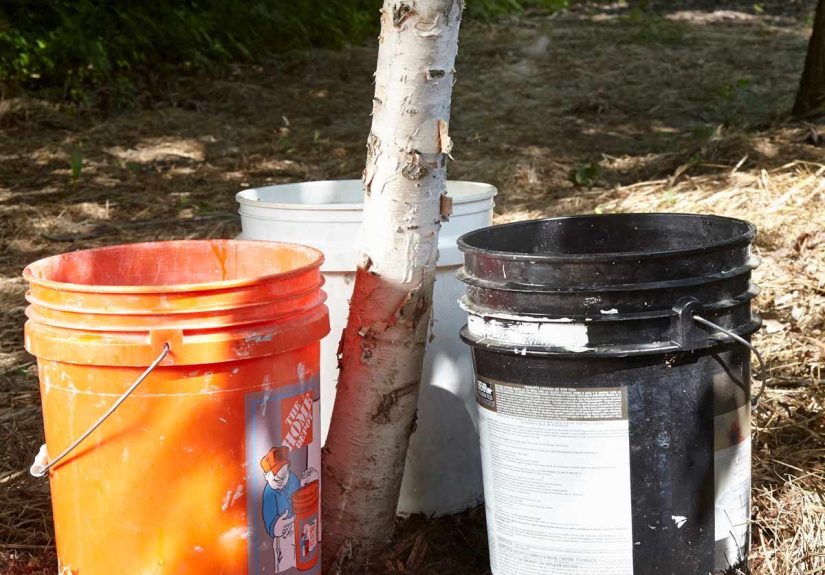
Bucket watering is exactly what it sounds like: you place a bucket near the tree’s root zone and let water release
slowly into the soileither through tiny holes you drill, a small spigot/valve, or a controlled siphon.
Instead of water racing across compacted ground (or downhill into your driveway), it infiltrates steadily.
Slow beats splash
A slow application rate gives soil time to absorb water. That matters because “watering” isn’t the goalsoil moisture in the root zone is.
When water goes on too fast, it can run off, pond, or only wet the top inch or two. A bucket drip encourages deeper soaking.
Deep watering supports stronger, more resilient roots
Trees tend to grow absorbing roots where the moisture consistently shows up. Frequent, shallow watering can encourage roots to hang out near the surface,
where heat and wind turn the ground into a crunchy desert. Slow, deep watering helps moisture reach deeper layers, nudging roots to follow.
The result is often better drought tolerance and a sturdier tree over time.
When bucket watering makes the most sense
Bucket watering is useful in a bunch of real-life scenarios, including:
- Newly planted trees (the first 1–3 years, when establishment watering is most critical).
- Hot spells, drought, or windy weeks when evaporation is high and trees need more support.
- Sloped yards or compacted soil where hose watering tends to run off instead of soaking in.
- Fruit trees and ornamentals that perform best with consistent moisture during growth and fruiting.
- Vacation watering for a few days at a time (not forever, but helpful in a pinch).
If your tree is fully established, mulched properly, and your soil holds moisture well, you may not need a bucket every week.
But it’s a fantastic tool to keep in your “tree-care drawer,” right next to the gloves you swear you’ll wear next time.
How to build the bucket watering setup
There are multiple ways to do this. The simplest is the tiny-holes gravity drip.
Start conservativeyou can always add a hole, but you can’t un-drill a hole without getting weird with duct tape.
Supplies
- A 5-gallon bucket (food-grade is nice, but not required for watering trees)
- A drill (or a nail + hammer for a truly old-school vibe)
- A very small drill bit (think “tiny,” not “birdhouse”)start around 1/32″
- Optional: bucket lid, a brick/stone for stability, and a little mulch
Step-by-step: the tiny-hole method
-
Decide where the bucket will sit.
Place it over the root zonenot pressed against the trunk.
For young trees, that’s generally around and just beyond the root ball.
For bigger trees, you’ll often water closer to the drip line (the outer edge of the canopy). -
Drill 1–2 tiny holes in the bottom (near the center).
Tiny is the goalyou want a slow leak, not a bucket that empties before you finish admiring your work. -
Test the flow.
Fill the bucket and watch how quickly it drains.
The water should infiltrate into the soil without immediately puddling or racing away. -
Stabilize the bucket.
If you live in a windy area or have curious pets, set a brick on the lid or place a stone next to the base.
(Yes, some dogs absolutely will body-check a bucket like it owes them money.) - Refill as needed based on your weekly watering goal (more on that below).
Make it smarter: small upgrades that help
- Add a lid to reduce evaporation and help discourage mosquitoes (especially if the bucket drains slowly).
- Use two buckets for larger trees, placed on opposite sides of the root zone for more even soaking.
- Move the bucket every week or two so you don’t always water the exact same spot.
Placement matters: where the water should go
A common mistake is watering right at the trunk like you’re trying to hydrate the bark directly.
Most absorbing roots aren’t at the trunk; they’re spread through the root zone, often extending well beyond the canopy in mature trees.
A practical rule: water the soil under the canopy and toward the drip line, not the trunk base.
Mulch helps your bucket watering work better
If you only do two things for your tree, make them slow watering and proper mulching.
A 2–4 inch mulch layer helps soil retain moisture and moderates temperature swings.
The key detail: keep mulch pulled back from the trunk so you don’t trap moisture against bark and invite pests or rot.
Think mulch donut, not mulch volcano.
How much water do trees actually need?
Here’s the honest answer: it depends on your tree’s size, age, species, soil type, weather, and how smug the sun feels that week.
But you can still use simple, evidence-based guidelines to land in the right range.
A useful starting point: trunk diameter (caliper) guidelines
Many tree-watering recommendations use trunk diameter (“caliper”) to estimate water needs during establishment.
A common range for newly planted trees during the growing season is roughly 5–7.5 gallons per caliper inch per week,
delivered in deep soakings rather than frequent sips.
Some guidance also describes 1–1.5 gallons per caliper inch per watering during early establishment waterings,
with frequency adjusted based on soil moisture and weather.
Rather than obsess over a single perfect number, use a weekly target and let soil moisture be the final judge.
Bucket watering makes it easy to measure gallons without guessing.
Quick example calculations
- 1-inch caliper tree: about 5–7.5 gallons/week (roughly one full 5-gallon bucket, plus a little extra when it’s hot)
- 2-inch caliper tree: about 10–15 gallons/week (two to three bucket fills, spaced out)
- 3-inch caliper tree: about 15–22.5 gallons/week (multiple buckets or a combo of bucket + soaker hose)
Use the “6-inch check” before you water
Your best tool isn’t a fancy meterit’s a quick soil check.
Dig or probe down about 6 inches in the root zone. If it feels dry at that depth, water.
If it’s cool and slightly moist, hold off.
This is especially important because overwatering can stress trees tooroots need oxygen as well as moisture.
Bucket watering schedules that actually work
Trees need different watering frequency depending on how recently they were planted.
The goal is to keep the root ball moist (not saturated) while encouraging roots to expand into surrounding soil.
Week 1 after planting: frequent checks, gentle deep watering
The first several days are the “don’t let it dry out” window. Check moisture often.
Water slowly so the root ball and surrounding backfill soil stay evenly moist.
If the top several inches dry quickly due to heat or wind, you may water more frequently.
Weeks 2–6: taper frequency, keep depth
After the initial period, you can generally reduce watering frequency while keeping the watering deep.
For many new trees, a thorough watering about every 7–14 days (when the soil is dry) can be sufficient after the early establishment phase,
but hot weather, sandy soil, and wind can shorten the interval.
Year 1–2: weekly moisture checks, deep watering as needed
Continue checking soil moisture at least weekly during the growing season, especially during heat.
Small trees often need regular watering for one or two growing seasons; larger trees can take longer to establish and may benefit from support for several years.
Established trees during drought: less often, more volume
Mature trees usually don’t want daily watering. In drought, the pattern is typically deep and occasionalthink every 1–3 weeks,
depending on soil and conditions. The key is to moisten the root zone deeply (often 8–12 inches) rather than keeping the surface damp.
Bucket watering can be one piece of that plan, especially if you position buckets nearer the drip line where absorbing roots are active.
Common bucket watering mistakes (and how to avoid them)
Mistake 1: Holes too big (aka “the 30-second bucket”)
If your bucket empties fast, you’re basically back to hose-wateringjust with extra steps and a sense of betrayal.
Fix: start with 1–2 tiny holes and test. You want slow infiltration, not instant drainage.
Mistake 2: Parking the bucket against the trunk
Watering right at the trunk can keep the trunk base too wet and doesn’t target the most effective absorbing roots.
Fix: place the bucket over the root zone away from the barkoften near the edge of the root ball for young trees, and nearer the drip line for bigger trees.
Mistake 3: “Set it and forget it” for weeks
A bucket system is a helper, not a permanent life-support machine.
Long-term, you want roots spreading outward and downward, supported by proper mulch, smart watering intervals, and soil that can breathe.
Fix: move buckets occasionally, check soil moisture, and taper watering as the tree establishes.
Mistake 4: Ignoring soil type
Sandy soil drains fast; clay can infiltrate slowly and may puddle.
Fix: in clay, go slower (fewer holes, fewer gallons per session, longer soak time).
In sand, you may need more frequent bucket fills during hot spells because water moves through quickly.
Mistake 5: Mulch volcanoes
Piling mulch against the trunk can trap moisture against bark and interfere with healthy trunk flare conditions.
Fix: keep mulch 2–4 inches deep, spread wide, and pulled back from the trunk like a donut.
Bucket watering vs. other deep-watering methods
Bucket watering
- Pros: Cheap, measurable gallons, very targeted, great for new trees and spot watering.
- Cons: Manual refilling, not ideal for dozens of trees unless you enjoy becoming a full-time water manager.
Soaker hose (slow trickle loop)
- Pros: Good for larger root zones, easy to run for a long soak, useful for multiple trees.
- Cons: Harder to measure gallons precisely; can waste water if placed poorly.
Drip irrigation (emitters)
- Pros: Very efficient delivery to root zone, scalable, can be automated.
- Cons: Setup cost and complexity; requires occasional maintenance to prevent clogs.
Tree watering bags
- Pros: Convenient slow-release around young tree trunks, great for street trees and new plantings.
- Cons: Not always ideal long-term placement; still requires refilling; not the best match for every site or tree size.
A simple bucket watering routine you can actually stick to
If you want a practical approach that doesn’t require a spreadsheet named “Hydration_v7_FINAL_FINAL,” do this:
- Check moisture weekly (probe ~6 inches deep in the root zone).
- If dry, deep water using 1–3 bucket fills depending on trunk size and weather.
- Keep mulch correct: 2–4 inches deep, wide ring, pulled back from trunk.
- Adjust for weather: heat and wind usually mean more frequent checks (not automatically more water every day).
- Taper with time: as the tree establishes, water less often but deeply during dry periods.
Bucket watering is a hack, but it’s not a gimmick. It’s basically DIY deep irrigation: slow delivery, measurable volume, better infiltration,
and less water wasted. Your tree gets a real drink, your soil gets the time it needs to absorb it, and you get the satisfaction of a system that’s
both simple and oddly satisfying to watch.
Experiences With Bucket Watering (The Real-World Version)
Garden advice can sound perfect on paper, but yards are where theories go to get humbledby slopes, clay, heat, sprinklers that “mysteriously” stop working,
and that one sunny patch that feels like it’s powered by a private star. Bucket watering shines because it’s adaptable, and the people who stick with it
tend to learn a few repeatable lessons.
Experience #1: The “new tree panic” turns into a routine.
A lot of homeowners start bucket watering after planting a new shade treemaple, oak, elm, you name itbecause they’re nervous about losing it.
The first week looks like a helicopter parenting phase: checking it constantly, overcorrecting, watering “just in case.”
Then bucket watering creates structure. One 5-gallon fill on a set day, a second fill if the weather is brutal, and a quick soil check midweek.
That rhythm matters because the root ball stays consistently moist, and the gardener stops guessing. The biggest change people report is confidence:
they aren’t watering by vibes anymorethey’re watering by gallons and soil feel.
Experience #2: Clay soil teaches patience (and smaller holes).
In heavier soils, bucket watering often starts out wrong for the best possible reason: the holes are too big.
The bucket drains quickly, the water puddles, and the gardener concludes, “My soil hates me.”
The fix is almost always the same: fewer holes, tinier holes, and repositioning the bucket so the drip lands on a lightly loosened surface (not hard-packed ground).
Once the drip rate slows down, the puddling fades, infiltration improves, and people notice the soil stays moist longer between waterings.
Many also discover that mulching correctlyespecially widening the mulch ringmakes the bucket feel “stronger,” because it reduces evaporation and keeps the surface from crusting.
Experience #3: Fruit trees respond fast when watered deeply.
Backyard growers using bucket watering on citrus, peaches, apples, or figs often notice that leaf wilt and stress symptoms calm down after a couple of deep sessions.
It’s not magic; it’s physics. Slow water actually reaches the feeding roots. A common pattern is to run two buckets on opposite sides of the tree,
then move them the next week. People tend to like this approach during fruit development because it avoids the stop-and-go extremes that can happen with inconsistent watering.
They also learn the “too much” lesson quickly: if the soil stays soggy or smells off, the schedule gets backed off. Bucket watering makes it easy to adjust because you can
reduce a fill from 10 gallons to 5 gallons without touching a sprinkler system or rewiring anything.
Experience #4: The bucket becomes a drought emergency tool.
Even gardeners who don’t bucket-water year-round keep the setup ready for drought weeks. When turf goes dormant and the air feels like a hair dryer,
bucket watering becomes targeted triage: new trees first, then anything planted in the last couple of years, then the high-value plants you really don’t want to lose.
The “hack” part isn’t just the bucketit’s the decision to focus water where it produces the most long-term benefit: establishing roots.
Many people also report that once they start doing deep watering, they stop wasting water on daily sprinkling that doesn’t help trees much anyway.
The overall takeaway from real-world bucket watering stories is surprisingly consistent: it works best when paired with soil checks, proper mulch,
and a willingness to tweak the drip rate. The method is simple, but it rewards attention in the right placesslow water, right location, measured volume,
and the patience to let roots do what roots do.







 Close
Close