
Table of Contents >> Show >> Hide
- What Happened at the Fresno Store?
- The Anti-Theft Hack Wasn’t Magic. It Was Strategy.
- Why the Story Hit Such a Nerve
- From Victim to Problem-Solver
- Why This Hack Actually Makes Sense in Security Terms
- What This Says About Retail Theft in California
- Lessons Small Retailers Can Take from the Story
- The Bigger Human Story Behind the Headline
- Experiences That Make This Story Feel So Familiar
- Conclusion
Some security systems beep. Some flash. Some come with enough wires to make a spaceship look underdressed. And then there is the Roman Gonzales method: leave thieves with absolutely nothing worth stealing.
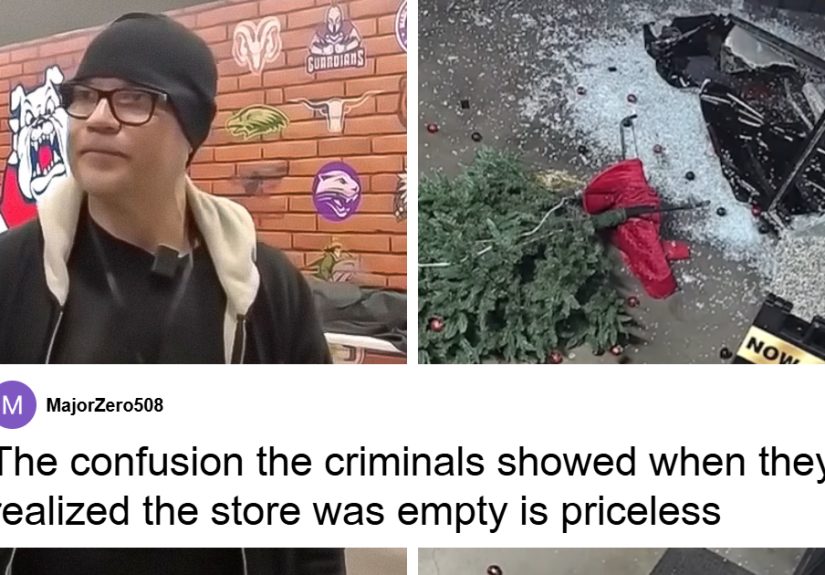
That is the simple, sharp, almost annoyingly effective idea behind the now-viral story out of Fresno, California, where the owner of sneaker and apparel shop DripOnDrip outsmarted would-be robbers with a closing routine so practical it feels like common sense wearing a cape. After thieves rammed into his store before dawn, they rushed inside expecting a quick score. What they found instead was the retail equivalent of an empty fridge after payday: no cash, no real inventory, and no easy resale opportunity.
The story has resonated because it is not just about one break-in. It is about how small business owners adapt when crime turns routine, when storefront glass becomes a recurring expense, and when survival depends less on dramatic heroics and more on quietly refusing to be an easy target. In a California retail climate where theft remains a stubborn concern, Gonzales did not invent a sci-fi security solution. He simply made the crime feel pointless.
And that may be the most clever anti-theft hack of all.
What Happened at the Fresno Store?
According to local reporting, thieves smashed through the front of DripOnDrip in River Park just before dawn on December 30, 2024. Surveillance video showed multiple suspects rushing in, tugging at displays, and moving quickly through the store. The whole thing was over in about half a minute, which is both terrifying and, in this case, deeply inconvenient for the criminals. They came ready for a haul and got a speed-run in disappointment instead.
The damage to the storefront still cost money and stress, of course. Gonzales reportedly estimated a few thousand dollars in property damage, even though only a relatively small amount of merchandise was taken. That detail matters. The “hack” did not create a crime-proof bubble. It did, however, prevent a bad situation from becoming catastrophic.
That distinction is important because too many conversations about retail theft swing between two extremes: either “nothing can be done” or “one trick solves everything.” Real life is messier. Gonzales still had to deal with broken glass, disruption, and the exhausting feeling of seeing a business attacked. But compared with his earlier loss, the outcome was dramatically better.
The Anti-Theft Hack Wasn’t Magic. It Was Strategy.
What exactly did Gonzales do? He changed the overnight math.
Instead of leaving his most valuable inventory exposed, he reportedly clears the sales floor each night. The cash register is left open and visible from the window so there is no mystery about whether cash is sitting inside. And one of the most memorable details is almost comically brilliant: he leaves out only right-foot shoes on display.
That last move deserves applause. A single right shoe is stylish in the same way a single sock is romantic: not very. It has almost no resale value on its own, and it is useless to most thieves who are looking for fast, liquid inventory. In other words, Gonzales did not merely hide valuables. He replaced them with bait that looks like merchandise but behaves like clutter.
This approach works because it attacks the motive, not just the method. Many retail crimes are built on speed, visibility, and resale potential. If criminals think they can be in and out quickly with desirable goods, the store becomes attractive. If they see an empty register, no accessible clothing, and display items that cannot be easily sold, the store becomes far less rewarding.
That is not theatrical security. That is removing the payoff.
Why the Story Hit Such a Nerve
People responded to this story because it contains a rare thing in modern retail crime coverage: a small-business owner who outmaneuvered the problem without pretending it did not exist. The internet loves cleverness, especially when it humiliates bad behavior. But beneath the satisfying headline is a harder truth. Business owners are making these adjustments because many feel they have to.
National retail research has shown a sharp rise in shoplifting pressure in recent years. Retailers surveyed by the National Retail Federation reported major increases in both the average number of shoplifting incidents and the dollar loss associated with them. Broader reporting has also noted that while many major crime categories fell in early 2024, shoplifting moved in the opposite direction. That contrast helps explain why anti-theft measures have become more visible and more creative.
California adds another layer to that tension. State analysis has pointed out that retail theft is not a single, neat category. It can involve burglary, shoplifting, vandalism, robbery, or organized rings targeting goods for resale. The California Department of Justice describes organized retail crime as coordinated activity tied to criminal networks and online resale markets. So when people read a headline about robbers being “stumped,” they are not just enjoying a gotcha moment. They are reacting to a larger sense that retailers have been forced to become tacticians.
From Victim to Problem-Solver
What makes Gonzales’ story especially compelling is that it appears to have grown out of hard experience. Earlier reporting on his business described a previous break-in in late 2023 that caused serious loss during the holiday season. That earlier incident was not merely a headline from the past; it seems to have been the event that reshaped how he closed the store every night.
There is something painfully familiar about that progression for small business owners. First comes the shock. Then the cleanup. Then the phone calls, the insurance headaches, the recalculations, the “How do we keep this from happening again?” meeting that no entrepreneur ever wants to have. The businesses that survive often do so because they turn trauma into process.
Gonzales’ method reflects exactly that kind of evolution. He did not just react emotionally. He redesigned the environment. He treated the store after hours as a different operating mode with different rules. By morning, the shop could go back to being a place for community, style, and commerce. Overnight, it became something else entirely: a bad opportunity.
Why This Hack Actually Makes Sense in Security Terms
If you strip away the viral sheen, Gonzales’ approach lines up with classic crime-prevention logic. Security experts and crime-prevention guides have long emphasized reducing opportunity, increasing effort, lowering reward, and designing environments that discourage impulsive or opportunistic crime. That sounds academic, but in plain English it means this: make stealing harder, riskier, and less profitable.
1. Visible emptiness is a deterrent
An open, empty register sends a message from the sidewalk. It says, “No cash jackpot here.” That eliminates one of the easiest assumptions a smash-and-grab crew might make.
2. Inventory control beats blind hope
Removing saleable merchandise from the floor at night is not glamorous, but it directly limits exposure. A store cannot lose what is not sitting in easy reach.
3. Low-value decoys change the risk-reward equation
Right-foot display shoes are a wonderfully petty masterstroke. They look like product but function like frustration. For thieves seeking quick profit, that is a dead end.
4. Routine matters more than one-time reactions
The real lesson is consistency. A single security upgrade can be bypassed. A disciplined nightly process becomes part of the store’s survival infrastructure.
What This Says About Retail Theft in California
The Fresno story lands in the middle of a broader California debate over retail theft, public safety, prosecution, and prevention. Policy analysts in the state have stressed that “retail theft” covers several different kinds of crime, and that measuring it precisely is not always simple. Even so, California researchers have found shoplifting pressure remains elevated, and state officials have continued to focus on organized retail crime through new laws and stronger coordination.
That broader backdrop helps explain why one small shop owner’s clever routine became such a headline-grabber. It symbolizes a bigger shift in American retail: owners are no longer just selling products. Increasingly, they are redesigning their spaces around threat management. Some stores lock up daily essentials. Some add cameras, bollards, or controlled entry. Some increase staffing at key hours. Gonzales chose a lower-tech path, but it belongs to the same family of solutions: visible deterrence mixed with practical inconvenience.
The genius of his system is that it is tailored. He did not copy a corporate playbook built for a giant chain. He looked at what thieves wanted from his store, then removed precisely those things from their reach. That is the sort of adaptation large retailers spend serious money trying to achieve.
Lessons Small Retailers Can Take from the Story
No, every business cannot simply leave out lonely right shoes and call it a day. A jewelry shop, pharmacy, electronics store, or liquor retailer faces a different risk profile. But the larger principles travel well.
Design for after-hours reality
A store that feels welcoming during the day may need a completely different layout when it is closed. Owners should think about what can be seen from outside, what can be grabbed quickly, and what signals “easy score” to someone casing the business.
Make valuable inventory harder to convert
Thieves are not looking for random stuff. They want items that are easy to carry, easy to sell, and easy to explain away. Anything that disrupts that resale logic can reduce attraction.
Protect the business, not just the products
Even when theft is limited, the collateral damage can be brutal: broken doors, interrupted operations, shaken employees, and lost customer confidence. Prevention should focus on continuity, not just shrink.
Use layered deterrence
Urban Institute guidance and modern loss-prevention advice both point toward combining tactics rather than relying on one silver bullet. Cameras, alarms, layout choices, neighborhood coordination, and end-of-day procedures work better together than alone.
The Bigger Human Story Behind the Headline
It is tempting to read this as a feel-good internet story: bad guys baffled, smart owner wins, cue the applause. But the emotional truth is less tidy. Store owners do not develop clever anti-theft routines for fun. They build them because getting hit once can change how they sleep, how they hire, how they budget, and how they imagine the future of their business.
That is why this Fresno story matters. Gonzales did something Americans tend to admire: he got hit, learned fast, and answered the problem with ingenuity instead of surrender. He did not stop every form of harm. But he reclaimed a little control. In a retail environment where many owners feel like they are constantly reacting, that kind of control is not small. It is oxygen.
And maybe that is why the story traveled so far. It delivered a rare modern fantasy: criminals arrive overconfident, reality checks in, and a regular working business owner gets the last laugh.
Experiences That Make This Story Feel So Familiar
One reason the Fresno break-in spread so quickly is that it mirrors experiences countless small retailers quietly carry around every day. Not always in the exact same form, of course. Most owners do not wake up to a car through the front window. But many know the stomach-drop feeling of walking into a store and instantly scanning for what is missing, what is broken, and how expensive the morning is about to become.
For some, the experience starts with little warning signs. A customer lingers too long near the door. Someone studies the register more carefully than the merchandise. A group enters together, then mysteriously separates. Employees learn to recognize what regular shoppers look like and what “I am here for your inventory, not your seasonal candles” looks like. That kind of vigilance is exhausting because it sits in the background of ordinary retail work. You are trying to sell shoes, fold shirts, answer sizing questions, and also play part-time detective.
Then there is the after-hours ritual, which many owners know better than they ever wanted to. Count the drawer. Move the high-value items. Check the cameras. Lock the back door. Double-check the front. Stand outside for a second. Look back in through the glass. Ask yourself whether the store looks protected or tempting. That final glance can become strangely emotional. A business is not just a room full of product. It is rent, risk, hope, and way too much coffee.
When theft does happen, the frustration goes far beyond the missing goods. Owners talk about the time lost dealing with police reports, alarms, repairs, insurance, supplier delays, and social media rumors. Staff can feel rattled. Customers notice boarded windows and ask questions. A place that is supposed to feel lively and welcoming suddenly feels like it had a bad dream in public.
That is why stories like Gonzales’ resonate with such force. They show something every business owner wants to believe: that clever planning can still beat chaos, at least sometimes. It is not just about saving merchandise. It is about preserving morale. About refusing to hand criminals the emotional win along with the inventory. About being able to reopen the next day and say, “Nice try, but we are still here.”
In that sense, the right-foot shoe trick is bigger than a trick. It represents a mindset. Small retailers across California and the country are constantly adapting, improvising, and learning how to stay open in conditions that are not always kind to them. Some add lights. Some move displays. Some change staffing. Some build community relationships so nearby businesses watch out for one another. And some, like Gonzales, discover a weirdly elegant answer that turns a robbery attempt into an expensive lesson for the wrong people.
That kind of ingenuity may not make every owner go viral. But it does keep many of them going.
Conclusion
The Fresno store owner at the center of this story did not eliminate crime, rewrite California law, or invent the final answer to retail theft. What he did was arguably more useful: he made his own shop a less rewarding target. By clearing the floor, exposing an empty register, and leaving behind display items with little real value, Roman Gonzales turned a smash-and-grab into a whole lot of smashing and not much grabbing.
That is why the story sticks. It is clever, yes, but it is also deeply practical. It shows how small businesses can think like strategists without losing their identity. In a retail world full of rising pressure, tighter margins, and increasingly visible anti-theft measures, sometimes the smartest move is not building a fortress. Sometimes it is making the score so bad that the robbers practically defeat themselves.





 Close
Close