
Table of Contents >> Show >> Hide
- What “failure” means in the Air Force hypersonic story
- The early ARRW setbacks that changed the conversation
- The March 2023 failure that became the turning point
- Why the Air Force shifted toward HACM
- But HACM did not arrive on a white horse either
- Why the ARRW program still refused to disappear
- What these failures reveal about the real hypersonic race
- So, was the Air Force hypersonic missile effort a failure?
- Experiences and lessons related to the Air Force hypersonic missile failure
For a few years, hypersonic weapons were treated like the defense world’s version of a blockbuster trailer: dramatic music, huge promises, and plenty of “coming soon.” The U.S. Air Force’s hypersonic effort, especially the Air-Launched Rapid Response Weapon, or ARRW, looked like it might deliver a fast answer to growing pressure from China and Russia. Then reality barged into the room wearing steel-toed boots. Test failures piled up, data came back incomplete, budgets shifted, and the Air Force started asking a less glamorous question: not “How fast can this go?” but “Can this actually work, scale, and survive the budget process?”
That is what makes the story of the Air Force hypersonic missile failure so interesting. It is not just about one missile stumbling in flight. It is about how modern weapons are built, how hard it is to move from flashy prototype to real inventory, and how the Pentagon learns the same timeless lesson over and over: physics does not care about optimism, congressional testimony, or PowerPoint arrows.
What “failure” means in the Air Force hypersonic story
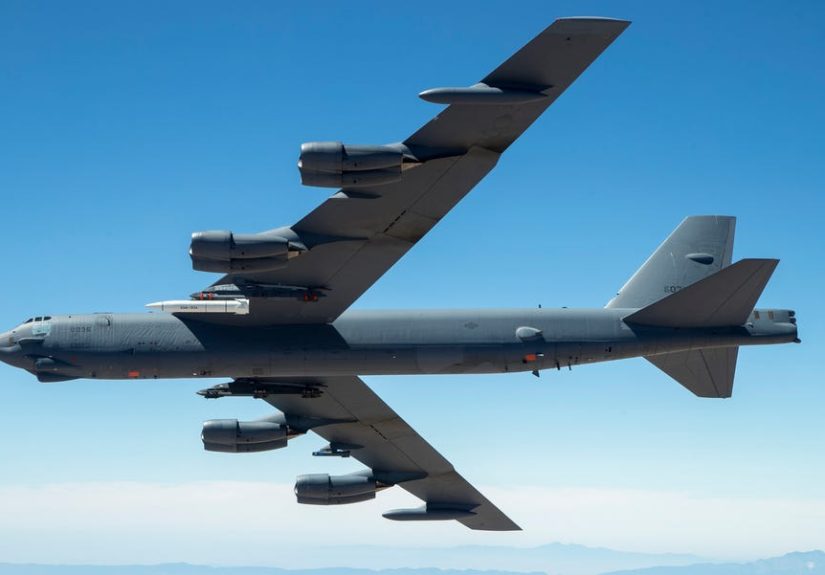
When people search for “Air Force hypersonic missile failure,” they are usually talking about the ARRW program. ARRW was designed as a boost-glide hypersonic weapon, meaning a rocket would accelerate it to extreme speed and then the weapon would glide toward its target at more than Mach 5. On paper, that sounds like a nightmare for enemy defenses. In practice, it also creates a nightmare for engineers, testers, maintainers, and budget analysts.
The Air Force originally saw ARRW as a fast-moving answer to a strategic problem. Early official messaging reflected that confidence. The service talked about reaching production quickly and fielding a weapon that could strike high-value, time-sensitive targets in contested environments. That confidence was not random hype. It came from a real push to move faster than the usual acquisition system. But moving fast in military development is a bit like trying to speed-run rocket science. Sometimes the timer is not your friend.
The early ARRW setbacks that changed the conversation
The program’s reputation took a beating in 2021. One test ended with the launch sequence failing to complete. Another saw the rocket motor fail to ignite after separation. Then a December booster test failed again, marking a third unsuccessful effort in the same general phase of development. None of that was great for confidence, and none of it helped the Air Force’s argument that ARRW was on the edge of becoming an operational capability.
Those failures mattered for more than headlines. In a normal internet debate, people love to pretend that one bad test means a program is dead and one good test means it is perfect. Real weapons development is messier. Repeated failures can delay production plans, erode trust in schedules, and make lawmakers wonder whether a “rapid” prototyping effort is only rapid at finding new ways to miss deadlines.
Still, ARRW was not a total disaster. In 2022, the program recovered some momentum with successful booster tests. That gave the Air Force and Lockheed Martin something important: evidence that the program could learn and adjust. A later all-up-round test in late 2022 was described as a major step forward. So the story was not simply “failure, end of movie.” It was “failure, partial recovery, then more uncertainty.” That distinction matters because defense programs often die from inconsistency more than from catastrophe.
The March 2023 failure that became the turning point
If 2021 bruised ARRW, March 2023 really changed its political and strategic trajectory. The Air Force conducted a test of a fully operational prototype, but later admitted the test was not successful and did not provide the data it needed. That phrase, “did not get the data we needed,” may sound polite, but in acquisition language it is brutal. Test programs live on data. If the data are missing, incomplete, or compromised, you are not proving reliability. You are buying more questions.
Government reviews later described the problem in even plainer terms: faults with the missile shroud and heat shielding contributed to the failed flight. And there it was, the classic hypersonic headache. Flying at extreme speed is not just a propulsion problem. It is a materials problem, a thermal problem, a guidance problem, a test-range problem, and a systems-integration problem all at once. Hypersonic development is basically a group project where every difficult science course shows up uninvited.
After that failed 2023 test, senior Air Force leaders publicly signaled that their enthusiasm for ARRW had cooled. The service said it was more committed to the Hypersonic Attack Cruise Missile, or HACM, than to ARRW. That comment was not a minor preference. It was the kind of bureaucratic sentence that usually arrives shortly before budget knives start appearing.
Why the Air Force shifted toward HACM
HACM appealed to the Air Force for a simple reason: it looked more usable. Unlike ARRW, which is large and primarily associated with bomber carriage, HACM is an air-breathing hypersonic cruise missile designed to fit on more aircraft, including the F-15E. That matters because flexibility wins arguments inside the Pentagon. A weapon that can be mounted on more platforms usually has a stronger operational case than one that demands a narrower launch ecosystem.
There was also a broader strategic logic. Air Force leaders saw HACM as a weapon that could offer different flight profiles and greater operational flexibility. In short, ARRW was the big, dramatic, boost-glide option. HACM looked more like the practical tool that commanders might actually want in a wider range of scenarios.
So, in 2024, the budget told the story clearly. The Air Force requested no procurement or research and development funding for ARRW in its fiscal 2025 budget request, while keeping HACM alive with substantial development money. That move made it look as though ARRW had gone from prized contender to cautionary tale.
But HACM did not arrive on a white horse either
If the ARRW failure taught the Air Force to be cautious, HACM reminded everyone that caution does not magically remove technical risk. The Government Accountability Office reported that HACM was structured with more flight-test opportunities than prior efforts because officials assumed some tests might fail. That alone tells you how hard hypersonic development remains. Even the backup plan was built around the expectation that the sky would occasionally say, “Not today.”
For a while, HACM looked like the cleaner path forward. The Air Force expected multiple test events and aimed for a 2027 transition if the program performed well. But by 2025, reports showed the program had slipped. Delays in finalizing the design reduced the number of flight tests available before rapid fielding efforts, cutting the planned margin for confidence. That is a problem because fewer tests mean fewer chances to validate performance, refine manufacturing, and build trust with operators.
In other words, the Air Force did not move from a “bad” program to an “easy” one. It moved from one difficult hypersonic path to another difficult hypersonic path that happened to offer better platform compatibility and, in theory, stronger operational flexibility.
Why the ARRW program still refused to disappear
Here is where the story gets especially interesting. Even after ARRW seemed headed for the defense scrap heap, it did not fully vanish. Additional tests in 2023 and 2024 helped the Air Force gather more information. Then, as HACM faced schedule pressure, the logic of keeping ARRW alive started to look less ridiculous.
By 2025, Air Force leaders were again talking about moving both ARRW and HACM toward procurement. Budget reporting later showed the service seeking procurement money for ARRW in fiscal 2026. By 2026, reporting indicated ARRW had been revived with restored funding and a planned first production contract.
That does not erase the Air Force hypersonic missile failure story. It actually proves the opposite. The failures were significant enough to derail the program’s first momentum, reshape budget priorities, and hand the lead to HACM. But they were not so absolute that the Air Force decided the knowledge gained was worthless. In defense acquisition, a troubled program can die, hibernate, or come back wearing a different budget justification. ARRW seems to have sampled all three moods.
What these failures reveal about the real hypersonic race
1. Speed alone is not the product
The public often hears “Mach 5” and assumes the rest of the problem is already solved. It is not. The real product is a complete weapon system that can be manufactured, integrated, tested, sustained, and used reliably. A missile that is theoretically amazing but operationally awkward can still lose budget battles.
2. Testing is the whole game
Hypersonic weapons expose weaknesses brutally. If a shroud fails, if heat management breaks down, if data collection misses key moments, the program pays for it immediately. ARRW’s setbacks were not abstract disappointments. They were proof that end-to-end success is much harder than promotional language suggests.
3. Platform compatibility shapes winners
HACM gained favor partly because it promised compatibility with more aircraft. That is not a side note. In the Air Force, a weapon that works with a broader slice of the fleet often looks more valuable than a larger, more specialized one, even if both are technically impressive.
4. Budget decisions are strategic judgments
When the Air Force zeroed out ARRW in the fiscal 2025 request, it was not just adjusting numbers. It was making a statement about confidence, utility, and what kind of hypersonic capability it believed was worth chasing next.
5. The industrial base still matters
Even as the Air Force talks about getting hypersonic weapons into production, leaders have also stressed affordability and scale. A boutique missile that can be bought only in tiny numbers may impress on a chart but disappoint in a real deterrence strategy.
So, was the Air Force hypersonic missile effort a failure?
If the question is whether the Air Force experienced real hypersonic missile failures, the answer is yes. ARRW suffered multiple setbacks, including high-profile test failures that undercut confidence and forced a strategic pivot. If the question is whether the entire enterprise failed, that answer is more complicated.
The Air Force learned from ARRW, redirected emphasis to HACM, then reconsidered ARRW as conditions changed. That is not clean success, but it is not pure collapse either. It is what defense development often looks like when the technology is cutting-edge, the timelines are aggressive, and the strategic pressure is intense. Progress does not arrive in a straight line. Sometimes it limps in, wearing a revised budget request and asking for another test window.
The strongest conclusion is this: the Air Force hypersonic missile failure story is less about one missile embarrassing itself and more about the painful transition from concept to credible capability. The United States is still in that transition. The headlines may focus on failure, but the deeper story is about adaptation, pressure, and the brutally high bar required to turn hypersonic ambition into something operationally real.
Experiences and lessons related to the Air Force hypersonic missile failure
The experience surrounding the Air Force hypersonic missile failure offers a useful case study for engineers, military planners, lawmakers, contractors, and even ordinary readers trying to understand how advanced defense programs actually behave. First, it shows that public excitement almost always runs ahead of technical maturity. A weapon can look revolutionary in concept art and still spend years fighting ordinary problems like heat, materials, integration, and reliable test performance. That gap between promise and proof is one of the defining experiences of modern military technology.
Second, the ARRW experience shows how failure in testing can be productive even when it is politically painful. A failed flight is bad news, but it also gives program teams information they cannot get from simulations alone. Engineers learn where the design is weak. Program managers learn which schedules were fantasy. Operators learn what kind of capability might actually fit their aircraft and mission sets. In that sense, the program’s most frustrating moments may also have been its most educational.
Third, there is an important human experience inside stories like this that rarely makes the headline. Maintainers still prepare aircraft. Test crews still execute complicated missions. Analysts still process telemetry. Contractors still revise hardware after each setback. The public sees a short phrase like “test failed,” but behind that sentence is a massive amount of labor, expertise, and institutional pressure. Failure in these programs is not cinematic. It is exhausting, repetitive, and expensive.
Fourth, the experience reveals how quickly strategic preferences can shift. ARRW looked like a front-runner, then a problem child, then a maybe-not-dead-after-all option. HACM looked like the cleaner successor, then ran into schedule issues of its own. That teaches a simple lesson: in emerging technologies, the “winner” can change fast. Defense planning works better when leaders keep alternatives alive rather than betting everything on one shiny idea too early.
Fifth, the Air Force hypersonic missile story is a reminder that affordability is part of capability. A missile does not become strategically useful just because it works once. It has to be built in meaningful numbers, integrated with real forces, and supported over time. That is why recent Air Force commentary about production scale matters so much. The goal is not to own a few impressive science projects. The goal is to field something usable.
Finally, this experience may help the public think about defense innovation more realistically. Breakthroughs are rarely smooth. Setbacks do not always mean incompetence, and optimistic announcements do not equal readiness. The Air Force hypersonic missile failure story is messy because real innovation is messy. Sometimes the most valuable outcome of a troubled program is not the original plan at all. Sometimes it is the data, the redesigned priorities, and the hard-earned institutional humility left behind after the smoke clears.





 Close
Close