
Table of Contents >> Show >> Hide
- So… can blue light cause headaches?
- What “blue light” actually is (and why your screen gets accused)
- How screen time can lead to headaches (the real mechanisms)
- How to tell what kind of headache you’re dealing with
- Prevention: how to reduce screen-related headaches (without quitting modern life)
- When a screen headache hits: quick relief ideas
- When to talk to a healthcare professional
- Bottom line
- Real-world experiences: what people notice (and what tends to help) 500+ words
If you’ve ever closed your laptop after a long day and thought, “My eyeballs feel like they ran a marathon,”
you’re not alone. Headaches after screen time are incredibly commonand blue light often gets blamed like it’s
the villain twirling a mustache behind your monitor.
Here’s the real deal: for most people, blue light from screens isn’t the direct cause of headaches.
But screens can cause headaches for several reasons, and blue light may contribute indirectlyespecially
if you’re prone to migraine, light sensitivity (photophobia), or sleep disruption. Let’s unpack what’s actually happening,
and what you can do about it without moving to a cave.
So… can blue light cause headaches?
Sometimesbut usually not in the simple, direct way people imagine. Eye experts have noted that the
typical discomfort people feel after long screen sessions is more closely tied to digital eye strain
(also called computer vision syndrome) than to blue light itself. In other words, screens can absolutely set you up
for headaches, but the biggest culprits are often things like prolonged focusing, reduced blinking, glare, poor posture,
and long stretches without breaksnot “blue light poisoning.”
That said, blue light can still matter in two big situations:
-
Migraine + photophobia: Many people with migraine are sensitive to light, and certain wavelengths
(including blue) can feel especially uncomfortable or can worsen a headache. -
Sleep disruption: Evening or nighttime exposure to bright screens can interfere with melatonin and
circadian rhythms in some people, and poor sleep is a well-known headache trigger.
What “blue light” actually is (and why your screen gets accused)
Blue light is part of the visible light spectrum, and the sun is the biggest source.
Your phone, tablet, and laptop also emit blue lightbut at far lower levels than daylight. Still, screens are in your face,
often for hours, and often late into the evening. That combo makes screens feel suspicious when your head starts throbbing.
Here’s a helpful way to think about it: blue light is one ingredient in the “screen exposure” recipe.
Sometimes it’s relevant, sometimes it’s not, and the rest of the recipe (brightness, focus demand, posture, sleep timing)
often matters more.
How screen time can lead to headaches (the real mechanisms)
1) Digital eye strain: your eyes are working overtime
When you look at a screen up close for long periods, your visual system has to maintain focus and alignment without much rest.
Digital eye strain can show up as headaches, blurry vision, dry eyes, burning/irritation, and fatigue.
It’s not a “damage” problem; it’s a “your eyes are tired and irritated” problem.
Common eye-strain triggers that can translate into headaches:
- Reduced blinking: People blink less while staring at screens, which can dry out the eye surface and cause irritation.
- Continuous near focus: Your focusing system stays “on” for too long, like holding a light weight over your head for hours.
- Small text + intense detail work: Spreadsheets, coding, scrolling tiny fontsyour eyes are basically doing squats.
- Glare and reflections: Overhead lights or windows bouncing off your screen raise strain fast.
- Uncorrected vision issues: Even a small prescription change can turn “fine” into “why does my forehead hurt?”
Example: You work on a laptop from 9 a.m. to 4 p.m., then hop onto video calls. By mid-afternoon you’re squinting,
your eyes feel gritty, and a dull ache builds around your temples. That pattern screams “digital eye strain,” not a mysterious toxin.
2) Migraine and photophobia: light can amplify the pain
Migraine is more than “a bad headache.” Many people with migraine experience photophobia (light sensitivity),
and light exposure can worsen symptoms during an attack. Some people report that blue-ish light from screens or fluorescent lighting
feels especially harsh.
Researchers have been studying how visual pathways and pain pathways interact in migraine, and why certain kinds of light can intensify
headache pain. The takeaway for regular humans: if you’re migraine-prone, your brain may treat light as “too much information,”
and a bright screen can pour gasoline on an already cranky nervous system.
Example: You feel a migraine starting (yawning, mood shift, neck stiffness, or that familiar “uh-oh” sensation), then you keep
scrolling. Ten minutes later, the light feels piercing and the headache escalates. In that case, the screen is likely a trigger or amplifier,
and blue-tinted wavelengths may be part of what your brain dislikes.
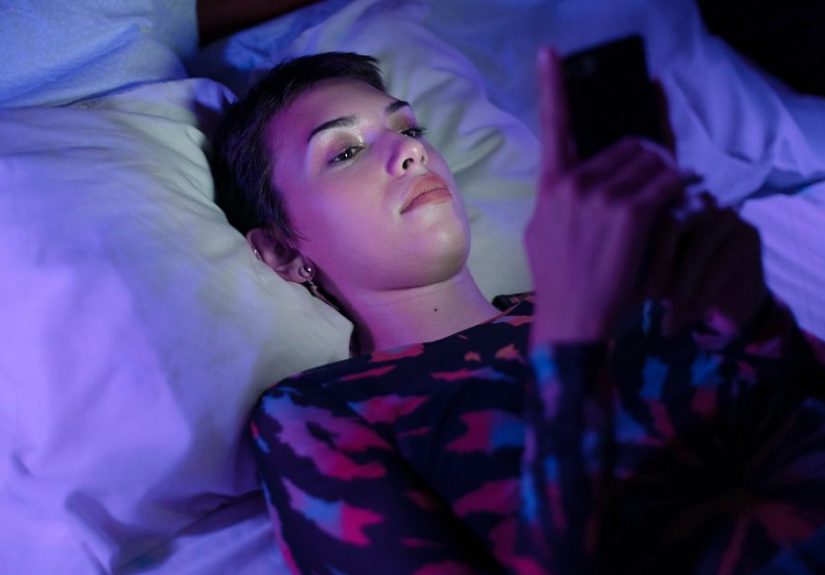
3) Sleep disruption: blue light can mess with bedtime (and poor sleep can trigger headaches)
Light exposure in the evening can affect the body’s sleep-wake timing. Blue-weighted light is known for influencing alertness and melatonin
signalinghelpful in the morning, less helpful at 11:47 p.m. when you’re “just finishing one more episode” (or “just reading one more thread”).
If screen use delays sleep or reduces sleep quality, it can increase your odds of waking up with a headacheespecially if you’re already
prone to tension-type headaches or migraine. This is one of the clearest “indirect” routes where blue light may matter: not because it
pokes your brain and causes pain instantly, but because it can contribute to a sleep pattern that makes headaches more likely.
4) The sneaky non-blue-light factors that still cause “blue light headaches”
Sometimes the headache is blamed on blue light, but the true cause is a tag-team of everyday stuff:
- Poor ergonomics: Forward head posture and tense shoulders can trigger tension headaches.
- Dehydration: Easy to forget when you’re locked in on a screen.
- Skipped meals or caffeine swings: Hello, headache. (And possibly “hanger.”)
- Stress + nonstop stimulation: Your brain needs rest, not 47 tabs and a group chat.
- Screen brightness mismatch: Too bright in a dark room or too dim in a bright room forces extra effort.
How to tell what kind of headache you’re dealing with
Signs it’s likely digital eye strain
- Headache builds gradually during or after long screen sessions.
- Eyes feel dry, gritty, watery, or tired.
- Blurry vision comes and goes, especially when shifting focus from screen to distance.
- Relief happens when you take breaks, blink more, or step outside.
Signs it might be migraine (screen/light may be a trigger)
- Moderate to severe head pain, often throbbing or one-sided (though not always).
- Nausea, sound sensitivity, or strong light sensitivity.
- Symptoms worsen with activity, bright environments, or screen exposure.
- It follows a familiar pattern for you (prodrome, aura for some people, then headache).
If you’re unsure or headaches are frequent, it’s worth discussing with a healthcare professional. Sometimes
what feels like “screen headaches” can overlap with vision issues, migraine, sinus problems, or medication/caffeine effects.
Prevention: how to reduce screen-related headaches (without quitting modern life)
1) Use the 20-20-20 rule (your eyes’ tiny vacation policy)
A simple strategy recommended by eye care organizations is the 20-20-20 rule:
every 20 minutes, look at something about 20 feet away for 20 seconds. This relaxes the focusing system and gives
your eyes a break from close work.
2) Fix the lighting and reduce glare
- Match screen brightness to the room: Avoid a “mini-sun screen” in a dark room.
- Reposition lights/windows: Put screens perpendicular to windows when possible.
- Try matte screen protectors: Helpful if reflections are unavoidable.
- Increase text size: Bigger font = less squinting = fewer forehead crimes.
3) Adjust your setup: distance, height, and posture matter
- Screen distance: Generally, an arm’s length away is a good starting point for monitors.
- Screen height: Top of the screen near eye level can reduce neck strain.
- Chair support: Keep shoulders relaxed and back supported.
- External monitor/keyboard: If you laptop all day, this can dramatically improve posture.
4) Blink like you mean it (and consider artificial tears)
If dry eye is part of your headache pattern, try “blink breaks” (a few slow blinks every so often) and consider
lubricating eye drops if recommended for you. Dry, irritated eyes can contribute to strain and discomfort that
radiates into headache territory.
5) Sleep-proof your screen habits
If headaches show up after short sleepor you suspect bedtime scrolling is hurting youtry these:
- Set a screen curfew: Aim to reduce bright screens in the hour or two before bed.
- Use night mode / warmer color temperature: Helpful for many people in the evening.
- Dim the screen: Especially in a dark bedroom.
- Keep the room dark and cool: Sleep environment matters as much as screen settings.
6) What about blue light glasses?
Blue light blocking glasses are heavily marketed, but the benefit depends on what problem you’re trying to solve.
If your main issue is digital eye strain, eye organizations have noted that discomfort from screens is not
primarily caused by blue lightso glasses may not be a magic fix.
However, for some people with migraine and photophobia, tinted lenses that filter certain wavelengths may
reduce discomfort. The key is to treat them as one toolnot the entire toolbox. If you’re considering them because you have
frequent headaches or migraine, it may help to talk with an eye care professional or headache specialist about which tint,
if any, fits your symptoms.
When a screen headache hits: quick relief ideas
- Stop the visual marathon: Look away, stand up, and give your eyes distance focus for a minute.
- Hydrate and eat something small: If you’ve been forgetting both, your body will file a complaint.
- Warm or cool compress: Some people prefer warm (tension) while others prefer cool (migraine).
- Dim lights and reduce noise: Especially if you suspect migraine.
- Check your prescription: If headaches track with screen use, outdated glasses/contacts can be a factor.
Over-the-counter pain relievers can help some people, but frequent use can backfire and contribute to rebound headaches.
If you need medication often, it’s worth getting personalized medical advice.
When to talk to a healthcare professional
Get medical advice promptly if you have any of the following:
- A sudden, severe headache (“worst headache of your life”).
- New neurological symptoms (weakness, confusion, fainting, new vision loss, trouble speaking).
- Headaches that are new, worsening, or happening more frequently.
- Headache with fever, stiff neck, or after a head injury.
- Persistent eye pain, significant light sensitivity, or major changes in vision.
Bottom line
Blue light gets the headlines, but most “blue light headaches” are actually caused by screen habits:
long uninterrupted focusing, dry eyes from reduced blinking, glare and brightness, poor posture, and sleep disruption.
Blue light can play a roleespecially for people with migraine or when screens delay sleepbut it’s rarely the lone culprit.
The good news is that the most effective fixes are usually simple: take breaks, reduce glare, optimize your setup, and protect your sleep.
Real-world experiences: what people notice (and what tends to help) 500+ words
When people ask, “Can blue light cause headaches?” they’re often describing a very specific lived pattern: headaches that show up
during screen time or shortly afterward, especially on busy days. In real life, the experience usually isn’t one dramatic moment
where the screen “zaps” someone. It’s more like a slow accumulationtiny stressors stacking until your head taps out.
The Zoom marathon headache: A common story is the remote-work special: meetings all morning, spreadsheet work all afternoon,
then a “quick” email cleanup that turns into another hour. People describe a dull band-like ache across the forehead or temples, sometimes
with tired, dry eyes and blurred vision when they finally look up. What tends to help? Stepping away for short breaks, increasing font size,
and moving the monitor farther back. Many also notice that simply fixing lightingclosing blinds to reduce glare or turning down overhead lights
can cut the headache intensity dramatically. It’s not glamorous, but neither is a 4 p.m. headache.
The gamer’s late-night combo: Another frequent experience involves evening gaming or scrolling in a dark room. People might feel
“fine” while playing, but then notice a headache either right after stopping or the next morning. In these cases, the issue often looks like a
mix of intense visual focus plus bedtime delay. People report improvement when they dim the screen, add a small light in the room (so the screen
isn’t a lone lighthouse), and set a hard stop time so sleep doesn’t get pushed later and later. Night mode and lower brightness can feel easier on
the eyes, but the real MVP is often earlier sleep.
The migraine trigger pattern: For people with migraine, the experience can be different. They may notice that bright screens,
certain high-contrast visuals, or fluorescent-lit environments amplify symptoms quickly. Some describe the light as “sharp” or “piercing,” and they
may develop nausea or sound sensitivity along with head pain. These folks often benefit from reducing brightness, using consistent ambient lighting,
and taking breaks at the first sign of an attack. Some also experiment with tinted lenses specifically for light sensitivity. The key pattern here is
speed and severity: if screens trigger a bigger symptom set than “tired eyes,” migraine might be part of the story.
The student cram-session headache: Students and heavy readers commonly describe headaches after hours of close work: reading on a
laptop, then switching to a phone, then back to a tabletoften without looking across the room for long stretches. People report that the 20-20-20
rule sounds silly until they try it and realize how rarely they let their eyes relax. Small changeslike printing a few pages, listening to audio for
part of the material, or studying with a larger screencan reduce strain more than expected.
Across these experiences, one theme repeats: people improve most when they change behaviors, not just products. Blue light filters
can be a nice extra, but breaks, glare control, posture fixes, hydration, and sleep timing usually deliver the biggest payoff. If you keep a simple
note for a weekwhen headaches happen, how long you were on screens, your sleep, and your stressyou’ll often spot a pattern fast. And once you can
name the pattern, you can actually beat it.





 Close
Close