
Table of Contents >> Show >> Hide
- What Makes an Enchilada an Enchilada?
- The Big Choices: Tortillas, Sauce, and Chicken
- Ingredients for Classic Chicken Enchiladas (Red Sauce)
- Step-by-Step: How to Make Chicken Enchiladas That Don’t Fall Apart
- Quick Homemade Red Enchilada Sauce (Weeknight-Friendly)
- Variations: Make Chicken Enchiladas Your Way
- Common Enchilada Problems (and How to Fix Them)
- Make-Ahead, Freezing, and Leftovers
- What to Serve with Chicken Enchiladas
- Chicken Enchiladas FAQ
- Kitchen Stories: The Chicken Enchilada Experience (500-ish Words of Real-Life Vibes)
- Conclusion
Chicken enchiladas are the kind of dinner that make people wander into the kitchen “just to check something” and somehow leave with a forkful of bubbling cheese. They’re cozy, flexible, and suspiciously good at turning leftovers into a meal that feels like you tried (even if your “prep” was tearing apart a rotisserie chicken like a raccoon with a Costco card).
But enchiladas also have a reputation: soggy tortillas, dry chicken, bland sauce, and that one pan you’ll consider throwing directly into the sun. The good news? Most enchilada problems are predictableand fixable. In this guide, we’ll break down the building blocks, give you a reliable method, and show you how to customize chicken enchiladas without turning them into a casserole identity crisis.
What Makes an Enchilada an Enchilada?
The word enchilar basically means “to season with chile.” So at their core, enchiladas are tortillas that get chile sauce involvedeither dipped, coated, or smotheredthen filled and baked or warmed until everything becomes one delicious, saucy situation.
In the U.S., “chicken enchiladas” usually means one of three styles:
- Red (Enchiladas Rojas): a tomato-and-chile flavored red sauce (homemade or store-bought).
- Green (Enchiladas Verdes): salsa verde/tomatillo-based sauce with a tangy, bright flavor.
- Creamy (Tex-Mex-ish): a richer sauce often using dairy (sour cream, crema, or a “cream sauce” shortcut) for comfort-food vibes.
The Big Choices: Tortillas, Sauce, and Chicken
Corn vs. Flour Tortillas
Corn tortillas are the traditional enchilada move: earthy flavor, better structure under sauce, and that classic corn aroma. Flour tortillas can work (especially for Tex-Mex-style “enchilada bakes”), but they tend to get gummy when heavily sauced.
If you want the best odds of “holds together, tastes great,” go cornand prep them properly (we’ll get to that).
Red Sauce, Green Sauce, or “I Bought a Can and I’m Not Ashamed”
Homemade enchilada sauce can be incredible, but you don’t need to roast 14 types of peppers to earn dinner. Your best option depends on time:
- Fast weeknight: use a good store-bought sauce and boost it with a quick simmer (garlic, cumin, broth, a little tomato paste, a squeeze of lime).
- Best flavor per minute: make a quick roux-thickened red sauce with chili powder and broth (tastes “homey” and bold).
- Weekend project: make sauce from dried chiles for deeper, more complex flavor.
Chicken That Stays Juicy
Dry chicken is the #1 enchilada heartbreak. The fix is simple: don’t overcook it, and don’t rely on sauce to resurrect it. Great options:
- Rotisserie chicken: fast, flavorful, and basically a cheat code.
- Poached or gently simmered breasts/thighs: easy shredding, mild flavor that soaks up sauce.
- Leftover roast chicken: the “I planned this all along” choice.
Food safety note: Cook chicken to a safe internal temperature of 165°F (74°C). If you’re reheating leftovers, reheat to 165°F as well.
Ingredients for Classic Chicken Enchiladas (Red Sauce)
This version hits the sweet spot: traditional enough to feel legit, easy enough to make on a Tuesday.
For the filling
- 3 cups cooked, shredded chicken (rotisserie works great)
- 1 small onion, finely chopped
- 2 cloves garlic, minced
- 1 (4 oz) can diced green chiles (optional but recommended)
- 1 tsp ground cumin
- 1/2 tsp dried oregano
- Salt and pepper to taste
- 1 1/2 cups shredded cheese (Monterey Jack, cheddar, or a mix)
- Optional add-ins: black beans, corn, sautéed peppers, chopped cilantro
For assembly
- 10–12 corn tortillas
- About 3 cups enchilada sauce (homemade or store-bought)
- Another 1 cup shredded cheese for the top
- Toppings: chopped cilantro, diced onion, lime wedges, avocado, sour cream/crema
Step-by-Step: How to Make Chicken Enchiladas That Don’t Fall Apart
Step 1: Make a flavorful filling (not a dry chicken pile)
In a skillet, sauté onion in a little oil until soft, then add garlic for 30 seconds. Stir in shredded chicken, green chiles, cumin, oregano, salt, and pepper. Turn off the heat and mix in 1 1/2 cups cheese. You’re aiming for a filling that tastes good before it’s wrapped upbecause tortillas don’t do miracles, they do teamwork.
Step 2: Prep tortillas so they bend instead of shatter
Corn tortillas crack when they’re cold and dry. You have three solid options:
- Quick skillet warm: Warm each tortilla 10–15 seconds per side in a hot, dry skillet. Stack in a towel to keep them pliable.
- Microwave steam: Stack tortillas, wrap in a damp paper towel, microwave 30–45 seconds until flexible.
- Light fry (best structure): Briefly fry each tortilla in a thin layer of oil for a few seconds per side. This creates a barrier so they don’t turn to mush under sauce.
If you’re Team “No Oil Ever,” the dry-skillet or microwave method worksjust handle tortillas gently and avoid drowning them in sauce.
Step 3: Sauce strategy (avoid the swamp)
Spread a thin layer of sauce on the bottom of a 9×13-inch baking dish. This prevents sticking and helps the bottom tortillas stay tender instead of crunchy-in-a-sad-way.
Step 4: Fill, roll, and place seam-side down
Working one tortilla at a time, add a modest amount of fillingabout 2–3 tablespoons. Roll tightly and place seam-side down in the dish. Overstuffing is the fast lane to ripped tortillas and filling escaping like it’s late for a meeting.
Step 5: Top, cover, bake, then rest
Pour sauce over the rolled enchiladas (enough to coat, not enough to create a soup). Sprinkle with the remaining cheese. Cover with foil and bake at 375°F for about 20 minutes, then uncover 5–10 minutes to get bubbly and lightly browned.
Let the pan rest 5–10 minutes before serving. This helps the enchiladas set up, so you get tidy slices instead of “enchilada landslide.”
Quick Homemade Red Enchilada Sauce (Weeknight-Friendly)
If you have 10 minutes and a saucepan, you can level up fast. This style is a common American home-cook approach: chili powder, cumin, broth, and a light thickener for that clingy “enchilada sauce” texture.
- Warm a little oil in a saucepan and whisk in a spoonful of flour (or a gluten-free blend) for about a minute.
- Whisk in chili powder, cumin, garlic powder, and a pinch of oregano; cook 30 seconds to bloom the spices.
- Slowly whisk in broth plus a bit of tomato paste (or tomato sauce) until smooth.
- Simmer 5–10 minutes until slightly thickened; season with salt and a squeeze of lime.
Want deeper flavor? Add a pinch of smoked paprika or a tiny bit of cocoa powder for warmth (tinythis isn’t dessert, it’s just complexity).
Variations: Make Chicken Enchiladas Your Way
Chicken Enchiladas Verdes (Green Sauce)
Swap red sauce for salsa verde (store-bought or homemade). For a brighter finish, add lime and fresh cilantro to the filling. Green sauce pairs especially well with Monterey Jack or a milder melting cheese, plus toppings like avocado and pickled onions.
Creamy Chicken Enchiladas
For the comfort-food crowd: mix salsa verde with sour cream or crema for a tangy, creamy sauce. This style is rich and mellow, so balance it with something sharp on toppickled jalapeños, diced onion, or a squeeze of lime.
Enchilada Casserole (When Rolling Feels Like Too Much)
Layer tortillas, sauce, filling, and cheese like a lasagna. It’s faster, less delicate, and still extremely lovable. If you’re feeding a crowd or making a freezer pan, casserole-style is your low-stress friend.
Common Enchilada Problems (and How to Fix Them)
“My tortillas turned into wet paper.”
- Use corn tortillas and prep them (warm or lightly fry).
- Don’t over-sauce. Coat, don’t flood.
- Bake covered first, then uncover to finish.
“My chicken is dry.”
- Use thighs or rotisserie chicken for naturally juicier meat.
- Mix a little sauce into the filling, or add sautéed onions/green chiles for moisture.
- Don’t overbakeonce it’s hot and bubbly, you’re done.
“It tastes flat.”
- Add acid: lime juice, pickled jalapeños, or a quick pickled onion.
- Add aromatic spice: cumin, oregano, garlic, and a pinch of smoked paprika.
- Salt matters. Taste your sauce and filling before assembly.
Make-Ahead, Freezing, and Leftovers
Chicken enchiladas are meal-prep royalty. Here’s how to make them work for Future You:
- Make ahead (1 day): Assemble, cover tightly, refrigerate, and bake when ready. Add a few extra minutes if cold from the fridge.
- Freeze (best method): Assemble in a freezer-safe dish, wrap well, freeze. Thaw overnight in the fridge, then bake.
- Leftovers: Refrigerate within 2 hours. Reheat until steaming hot (ideally 165°F).
Pro tip: Store toppings separately. Cold avocado + hot enchiladas = happiness. Cold avocado baked into enchiladas = sadness.
What to Serve with Chicken Enchiladas
Enchiladas love a supporting cast. Easy pairings:
- Cilantro-lime rice or Mexican-style rice
- Black beans or refried beans
- Simple salad with lime vinaigrette
- Roasted corn or sautéed zucchini with cumin
- Chips + salsa, guacamole, or pico de gallo
Chicken Enchiladas FAQ
How much filling per tortilla?
Usually 2–3 tablespoons. More sounds better until you’re patching tortilla tears like you’re doing edible drywall.
Should I dip tortillas in sauce?
You can. Dipping adds flavor and helps tortillas roll, but it can get messy and heavy. A good compromise: keep tortillas warm and spread sauce on top after rolling.
Can I use store-bought sauce?
Absolutely. Simmer it briefly with garlic, cumin, or a spoonful of tomato paste to give it a homemade “I totally did this from scratch” glow-up.
Is it okay to use flour tortillas?
Yes, especially for casserole-style enchiladas. For rolled-and-smothered enchiladas, corn usually holds up better.
Kitchen Stories: The Chicken Enchilada Experience (500-ish Words of Real-Life Vibes)
Chicken enchiladas aren’t just a recipe; they’re an event that tends to attract a very specific kind of kitchen behavior. Someone will inevitably hover near the cheese. Someone will volunteer to “taste the sauce” and then keep tasting the sauce. Someone will ask if there’s “a little extra” filling leftpurely for quality control, obviously.
For many home cooks, the first enchilada lesson is tortilla management. You start with optimism: “I’ll just roll these quickly!” Then the first cold corn tortilla snaps in half like a dry leaf, and you realize enchiladas require a tiny bit of strategy. After that, you learn the rhythm: warm tortilla, fill, roll, tuck it in the pan, repeat. It becomes oddly soothinglike edible assembly-line therapy. By tortilla number eight, you’re moving with the calm confidence of someone who could absolutely run a tiny enchilada food truck… until you remember you still have to clean the skillet.
Then there’s the sauce debate. Some families swear by red saucedeep, chile-forward, slightly smoky. Others are all about green, because salsa verde has that tangy brightness that makes the whole dish feel lighter (even if it’s still wearing a blanket of cheese). And in many American kitchens, the creamy version shows up when comfort is the goal: potluck season, game day, snowy evenings, or any moment when you want dinner to feel like a warm hoodie.
Chicken enchiladas are also famous for being the “let’s use what we have” meal that somehow tastes planned. Leftover roasted chicken? Great. Half a bag of shredded cheese? Perfect. A can of green chiles that’s been in the pantry since a previous lifetime? Congratulations, it’s your moment. The dish forgives substitutions as long as you keep the balance: flavorful filling, tortillas that can bend, and enough sauce to bring it all together without turning it into tortilla soup.
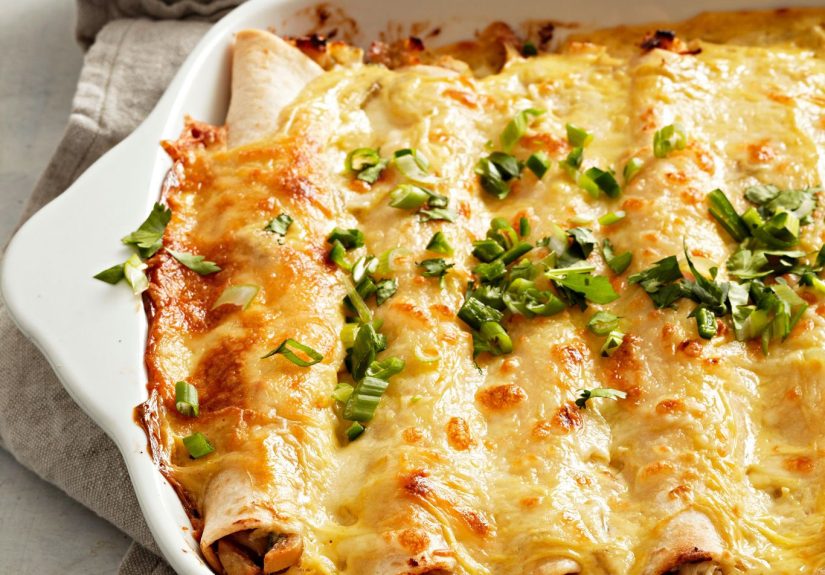
And if you’ve ever brought enchiladas to a gathering, you know their secret superpower: they travel well and reheat beautifully. The pan comes out of the oven bubbling, the edges slightly crisp, the middle soft and saucy. People cut “small pieces” that turn into “bigger pieces” and then into “I’ll just take one more.” The compliments sound like: “Who made these?” and “What’s in this sauce?” and “Please tell me there are leftovers.”
The best part is what happens the next day. Enchiladas might be one of the rare foods that often tastes even better after resting overnight. The sauce settles in, the spices mellow, and the tortillas and filling become more cohesive. It’s the kind of leftover that makes lunch feel like a prize, not a backup plan. If you’re lucky, you’ll have enough to reheat a square, add a fried egg on top, and call it brunch. If you’re not lucky… well, that just means you made the right amount for everyone to be happy.
Conclusion
Chicken enchiladas are adaptable, forgiving, and wildly satisfying when you nail the basics: tasty filling, tortillas that can roll without breaking, and sauce that coats rather than floods. Whether you go classic red, bright green, or creamy comfort-style, the goal is the samebubbly, saucy, cheesy goodness with real flavor in every layer. Master the method once, and you’ll have a go-to dinner that works for weeknights, crowds, leftovers, and those “I need something cozy immediately” moments.







 Close
Close