
Table of Contents >> Show >> Hide
- What Makes It “Classic French” Chocolate Mousse?
- Main Keyword (Used Naturally, Promise)
- Ingredients
- Equipment You’ll Want Nearby
- Step-by-Step: How to Make Classic French Chocolate Mousse
- The Mousse “Why”: A Quick, Useful Science Breakdown
- Food Safety Notes (Because Eggs Are Wonderful and Also Real Life Exists)
- Flavor Upgrades That Still Feel French
- Serving Ideas (Make It Look Like a Restaurant Dessert)
- Troubleshooting: Fixes for Common Chocolate Mousse Problems
- Make-Ahead and Storage Tips
- Kitchen Notes & “Been There” Experiences (Extra )
- SEO Tags
Chocolate mousse is the kind of dessert that shows up wearing a tiny French beret and instantly makes your dinner feel more expensive.
It’s rich but somehow airy, dramatic but not fussy, andwhen you nail the techniquesilky enough to make a spoon do a little happy dance.
This guide walks you through a classic French-style chocolate mousse using traditional building blocks (good chocolate + eggs + sugar),
plus the practical “don’t panic” tips that keep it fluffy instead of flat.
What Makes It “Classic French” Chocolate Mousse?
Traditional French mousse au chocolat leans on eggs for both structure and luxurious texture: egg yolks add richness, and whipped egg whites
create that signature cloud-like lift. Many modern American versions add whipped cream (also delicious), but the “classic French” vibe is
about letting the eggs do most of the aerating. The result tastes bold, not sugary, and feels light even though it’s unmistakably decadent.
Main Keyword (Used Naturally, Promise)
If you’re here for a classic French chocolate mousse recipe that reads like a friendly cooking coach (not a robot),
you’re in the right kitchen.
Ingredients
This recipe serves 4 to 6 (depending on whether your household believes “serves 6” means “serves me, six times”).
For the Mousse
- 6 ounces bittersweet or semisweet chocolate (ideally 60–70% cacao), chopped
- 6 tablespoons unsalted butter, cut into pieces
- 6 large eggs, separated (yolks in one bowl, whites in another)
- 1/4 cup granulated sugar
- 1/4 teaspoon fine salt (or a generous pinch)
- Optional but excellent: 1/2 teaspoon vanilla extract, or 1/4 teaspoon espresso powder
For Serving (Optional but Highly Recommended)
- Lightly sweetened whipped cream
- Chocolate shavings or curls
- Raspberries, strawberries, or a few orange segments
- A pinch of flaky sea salt (for the “wow, what is that?” moment)
Equipment You’ll Want Nearby
- Heatproof bowl (for melting chocolate)
- Saucepan (for a gentle simmer / double-boiler setup)
- 2 clean mixing bowls (one must be grease-free for egg whites)
- Whisk and flexible spatula
- Hand mixer or stand mixer (you can whisk by hand, but… your forearms may file a complaint)
- Serving cups, ramekins, or small glasses
Step-by-Step: How to Make Classic French Chocolate Mousse
1) Melt the chocolate and butter gently
-
Set a saucepan with about an inch of water over low heat and bring it to a gentle simmer (not a rolling boil).
Place a heatproof bowl on top so it sits above the water (the bowl shouldn’t touch the water). -
Add the chopped chocolate and butter to the bowl. Stir occasionally until smooth and glossy.
Remove from heat and let it cool until it’s warmnot hot. (Think: “comfortable bathwater,” not “volcano.”)
2) Whisk in the egg yolks
- In a separate bowl, whisk the egg yolks with the salt (and vanilla/espresso, if using).
-
When the chocolate mixture is warm (not hot), whisk in the yolks one at a time until smooth.
If the chocolate is too hot, you risk scrambling yolksyour mousse will become “chocolate breakfast.”
3) Whip the egg whites into a glossy meringue
- Make sure the bowl and beaters for the whites are clean and grease-free. Even a tiny smear of fat can keep whites from whipping properly.
-
Beat egg whites on medium speed until foamy. Gradually add the sugar and keep beating until you reach glossy peaks.
Aim for medium-stiff peaks: the whites should hold shape, but still look smooth and elastic.
4) Fold like you’re tucking in a baby cloud
-
Add about 1/3 of the whipped whites to the chocolate base and fold to lighten it.
Don’t worry about deflating this first addition; it’s the “sacrifice portion.” -
Add the remaining whites in two additions, folding gently with a spatula:
cut down through the center, sweep along the bottom, and lift up and over. Rotate the bowl as you go. - Stop folding when you no longer see big streaks. A few small wisps are better than overmixing into chocolate soup.
5) Chill to set
- Spoon the mousse into serving cups. Cover and refrigerate for at least 3–4 hours (overnight is even better).
- Serve cold or slightly tempered for 10 minutes at room temperature for a softer, creamier texture.
The Mousse “Why”: A Quick, Useful Science Breakdown
Chocolate temperature is the difference between silky and lumpy
Chocolate contains cocoa butter that can firm up quickly if shocked by cold ingredients. If your chocolate base is too hot,
it can deflate egg whites and cook yolks. If it’s too cool, it can seize or form tiny chocolate bits while you fold.
The sweet spot is warm and fluid, but not steaming.
Egg whites are your built-in air machine
Whipping egg whites traps air in a protein network. Sugar helps stabilize that foam so it doesn’t collapse immediately,
which is why you add sugar gradually as the whites whip. Fold gently so you keep that air in the final mousse.
Why some mousses use cream (and why this one doesn’t have to)
Whipped cream adds fat and a softer, “pillowy” texture. Egg-white mousse is lighter and more classically French-bistro.
If you want a hybrid texture, you can fold in 1/2 cup softly whipped cream after the egg whitesjust keep the folding gentle.
(Not required, but it’s a tasty “choose your own adventure.”)
Food Safety Notes (Because Eggs Are Wonderful and Also Real Life Exists)
Many classic chocolate mousse recipes use raw or lightly cooked eggs. U.S. food-safety guidance warns that raw/undercooked eggs
can carry Salmonella and recommends using pasteurized eggs or cooking egg mixtures appropriately when a recipe will be served without
thorough cooking. If you’re serving kids, pregnant people, older adults, or anyone with a weakened immune system, choose a safer method.
Options below are practical, not preachy.
Option A: Use pasteurized eggs
The FDA advises using pasteurized shell eggs or pasteurized egg products for recipes that call for raw or undercooked eggs (like some dressings
and desserts). Pasteurized eggs are treated to reduce Salmonella risk while still functioning like regular eggs in recipes.
Option B: Use a gently heated yolk base (custard-style)
A common “safer mousse” approach is to whisk yolks and sugar over a water bath until thickened and warm, then combine with melted chocolate
and fold in whipped cream or whipped whites. Many recipe developers use this method because it reduces risk while keeping the mousse elegant.
For egg mixtures, reaching about 160°F is commonly cited as a food-safety benchmark for doneness.
Bottom line: classic technique is classic, but you can still be smart about eggsespecially for high-risk guests.
Flavor Upgrades That Still Feel French
- Espresso boost: Add 1/4 teaspoon espresso powder to deepen chocolate flavor (it won’t taste like coffee; it tastes like “more chocolate”).
- Orange twist: Add 1 teaspoon finely grated orange zest for a subtle Parisian-patisserie vibe.
- Salted finish: A pinch of flaky sea salt on top makes the chocolate taste rounder and richer.
- Crunch contrast: Serve with toasted almonds, hazelnuts, or crushed cocoa nibs.
- Grown-up option: A small splash of orange extract (or, if appropriate for your audience, a tiny amount of orange liqueur) plays well with dark chocolate.
Serving Ideas (Make It Look Like a Restaurant Dessert)
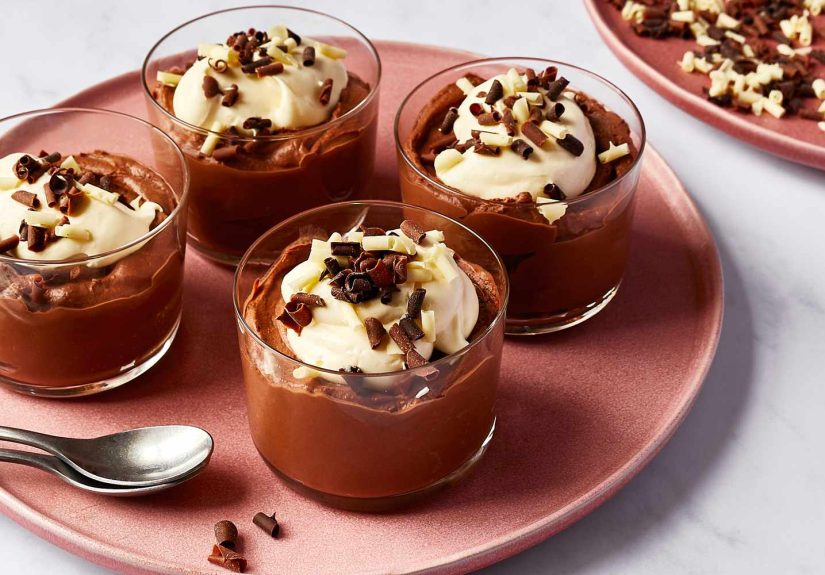
- Top with whipped cream and chocolate curls.
- Add berries for color and brightness.
- Serve in small glasses so you can see the airy texturemousse deserves a window seat.
- Pair with crisp cookies (tuile-style, shortbread, or even a simple butter cookie).
Troubleshooting: Fixes for Common Chocolate Mousse Problems
“My mousse is grainy.”
Usually temperature trouble: the chocolate cooled too much and set in tiny bits, or it seized from contact with cold/very wet ingredients.
Next time, keep the chocolate base warm and fluid. If it happens mid-process, you can sometimes gently warm the base very briefly over low heat,
then continue (carefully) folding.
“It’s runny and won’t set.”
Either the whites weren’t whipped enough, the folding was too aggressive (deflating the foam), or the mousse hasn’t chilled long enough.
Give it time: many mousses tighten up after several hours in the fridge. Also, check your chocolate: very low cacao chocolate can set softer.
“It tastes too sweet.”
Use darker chocolate (closer to 70%). Classic mousse should taste like chocolate first, sugar second.
“It tastes bitter.”
Some very high cacao chocolates (80%+) can read harsh in mousse. Try 60–70% cacao and add a tiny pinch more sugar or serve with whipped cream.
Make-Ahead and Storage Tips
- Make-ahead winner: Mousse is happiest made the night before. Texture improves as it sets.
- Cover well: Refrigerators have odors. Mousse is basically a chocolate sponge for smells if uncovered.
- Best window: Enjoy within 2–4 days for top texture and flavor.
Kitchen Notes & “Been There” Experiences (Extra )
If you’ve ever made chocolate mousse for the first time, you know the emotional journey is real. It starts with confidence (“I can totally do this”),
passes through mild suspicion (“Why does the chocolate look so shinyam I being tricked?”), and briefly visits panic (“Did I just ruin six eggs?”).
The good news is that most mousse mistakes are the kind you can learn from once and never repeat. The even better news is that “mousse mistakes”
still taste like chocolate.
One very common experience: the chocolate base is either too hot or too cold at exactly the wrong moment. Many cooks melt chocolate, get distracted
by a text message, and come back to a bowl that’s cooled into a thick paste. Then they fold in egg whites and wonder why it looks speckled.
The fix is mostly rhythm: have your bowls ready, whip whites while the chocolate cools slightly, and aim to combine everything while the chocolate
is still fluid. In other words, treat mousse like a short dance, not a long hike. Mise en place isn’t just a chef phraseit’s a stress-reduction
strategy.
Another relatable moment is overconfidence with folding. It’s tempting to “just stir it in.” But mousse is one of those desserts that rewards
gentleness. People who love to multitask often learn (the hard way) that mousse wants your full attention for about five minutes. Fold with a
flexible spatula, rotate the bowl, and stop when you no longer see obvious streaks. Overfolding is like over-telling a joke: it’s still the same
joke, but somehow less funny.
Then there’s the serving experience, which is half the fun. Mousse feels fancy even in a basic glass, and many home cooks discover that
presentation doesn’t require pastry-school skills. Spoon it into small cups, wipe the rim, add a dollop of whipped cream, and suddenly it looks like
dessert at a candlelit bistrominus the part where you pay $14 for it and pretend you’re not impressed. For gatherings, individual servings are also
a social win: no slicing, no crumbling, no “who touched the cake knife last?” drama.
Finally, there’s the make-ahead magic. People often report that mousse tastes better the next daybecause it does. Chilling gives the chocolate time
to set and the flavors time to mellow into something deeper and rounder. If you’ve ever tried a spoonful straight after mixing, you might think,
“This is good, but is it mousse yet?” After a night in the fridge, it becomes the thing you pictured: silky, airy, and intensely chocolate.
The biggest “experience tip” is simple: plan ahead and let the refrigerator finish the job. Mousse is a dessert with patience built into the recipe,
and once you accept that, it becomes one of the most satisfying (and surprisingly forgiving) French classics to master.






 Close
Close